Phone:
(701)814-6992
Physical address:
6296 Donnelly Plaza
Ratkeville, Bahamas.

Phone:
(701)814-6992
Physical address:
6296 Donnelly Plaza
Ratkeville, Bahamas.

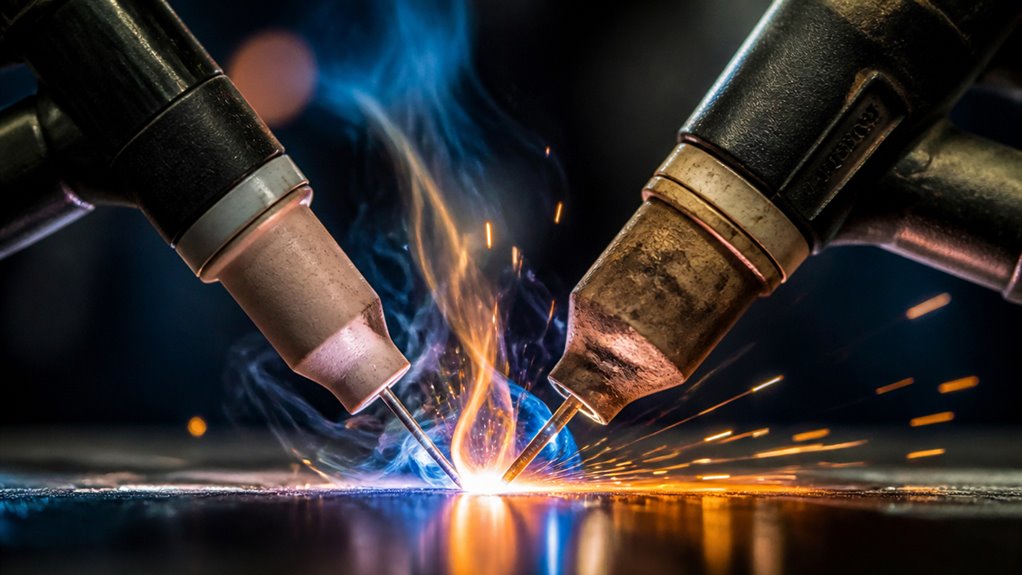
When you choose between TIG and Lift TIG, you balance arc-start precision with equipment complexity.
TIG uses a high-frequency, non-contact arc start that minimizes tungsten contamination and offers cleaner welds, especially on aluminum with AC.
Lift TIG starts the arc via a brief touch-and-lift, simplifying equipment and lowering costs but increasing tungsten wear and contamination risk.
Lift TIG suits DC welding on steel and environments sensitive to HF interference.
Understanding these differences helps optimize your welding approach.
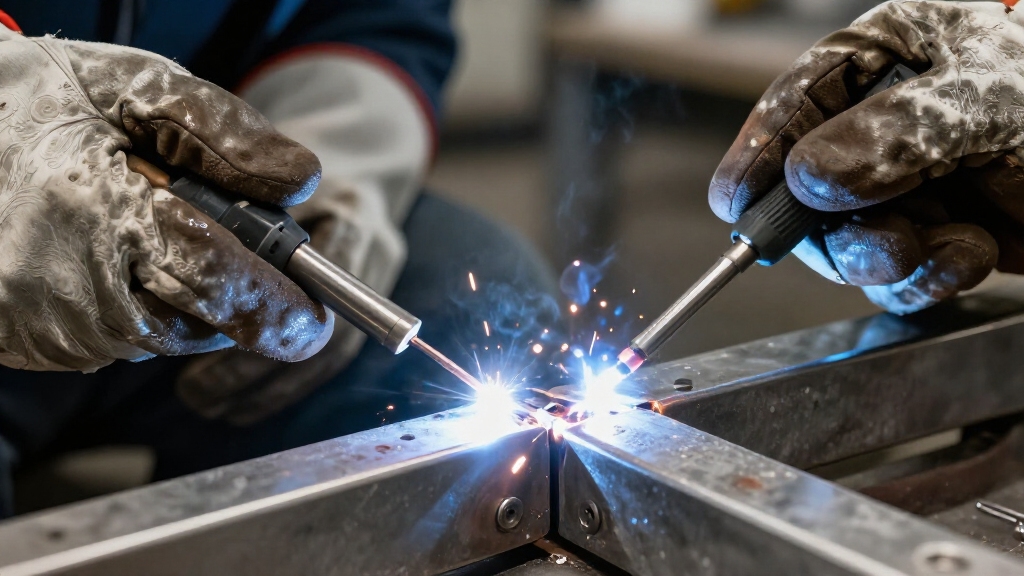
TIG welding, also known as Gas Tungsten Arc Welding (GTAW), relies on a non-consumable tungsten electrode to produce a precise, controllable arc for joining metals.
TIG welding uses a non-consumable tungsten electrode to create a precise, controllable arc for metal joining.
You control the arc’s heat to melt the base metal and, if needed, add filler material manually.
Shielding gas, typically argon, protects the weld pool from atmospheric contamination, ensuring weld integrity.
The process demands steady hand coordination and precise current control. The tungsten electrode must maintain a consistent arc length without contacting the workpiece.
TIG welding excels in producing high-quality, clean welds on thin sections and reactive metals.
Its strength lies in its ability to deliver excellent arc stability and weld detail, making it ideal for applications requiring precision and minimal distortion.
Proper tungsten electrode grinding is essential for achieving arc stability and reducing welding defects.
Although both arc-start methods serve to initiate the welding arc, Lift TIG distinguishes itself by requiring physical contact between the tungsten electrode and the workpiece before lifting to establish the arc.
Unlike high-frequency TIG, which uses a non-contact arc initiation, Lift TIG lowers current to a minimal level during contact to minimize electrode sticking and contamination.
You’ll need to lift the electrode smoothly once contact is made; hesitation can cause tungsten damage or inclusions.
This touch-and-lift sequence creates a controlled arc start that’s cleaner than scratch start but less so than high-frequency.
By relying on physical contact, Lift TIG simplifies equipment design, eliminating high-frequency circuits.
It requires careful operator technique to avoid compromising arc integrity during ignition.
Lift TIG is often preferred in environments where high-frequency interference could disrupt sensitive electronics or cause compliance issues.
Let’s talk about how the type of arc start in TIG welding can really impact your weld quality. It’s pretty fascinating when you think about it!
First off, a high-frequency start is a great option. It minimizes contact with the tungsten, which helps reduce contamination. This leads to more consistent welds, and who doesn’t want that?
On the other hand, if you go with a lift TIG start, you’re using a contact method. This can introduce some controlled contamination, which isn’t ideal.
Using a high-frequency start also helps to enable arc stability and improve electrode life, making it the preferred choice for most TIG applications.
Understanding how the arc-start method influences weld quality is crucial for achieving consistent, defect-free results. The way you initiate the arc directly affects tungsten integrity, contamination risk, and the overall weld appearance.
For example, a high-frequency start avoids electrode contact, minimizing contamination. In contrast, lift TIG involves brief contact, balancing cleanliness and equipment simplicity.
Consider these arc-start impacts on your weld:
Tungsten tip wear varies with contact. Lift TIG causes moderate wear compared to non-contact high-frequency starts.
Arc stability depends on the start method. Lift TIG requires a smooth lift to prevent sticking or erratic arcs.
Weld contamination risk increases with physical contact. Lift TIG reduces it versus scratch start but remains higher than high-frequency.
Equipment complexity and maintenance decrease with lift TIG, impacting operational reliability.
Choosing your arc-start method affects weld integrity and efficiency considerably.
Contamination plays a critical role in determining weld quality. The choice of TIG arc-start method directly influences this factor.
When you use high-frequency TIG, the arc starts without tungsten touching the workpiece. This minimizes tungsten contamination and maintains weld purity.
In contrast, Lift TIG involves brief contact, which inherently risks some tungsten inclusion and tip damage if your lift technique isn’t smooth.
While Lift TIG reduces contamination compared to scratch start, it doesn’t eliminate it entirely. You must control the current during contact and perform a steady lift to avoid sticking or tungsten transfer.
If weld cleanliness is paramount, especially for sensitive materials or critical specifications, high-frequency start remains superior.
Lift TIG offers a practical balance but demands careful execution to keep contamination risks acceptable.
Additionally, precise amperage control in modern TIG welders helps reduce contamination by stabilizing the arc during start and welding.
Consistently achieving high-quality welds often hinges on the TIG arc-start method you choose. The arc initiation affects electrode stability, contamination levels, and overall weld integrity. For example, high-frequency starts provide non-contact ignition, minimizing tungsten erosion and enhancing consistency.
Lift TIG’s touch-and-lift method, while cleaner than scratch start, introduces some variability due to physical contact.
Consider these factors impacting weld consistency:
Choosing the appropriate arc-start method guarantees predictable weld performance, essential for meeting stringent quality standards. Additionally, selecting the right gas flow rates during welding is crucial to maintain arc stability and prevent contamination.
Although both TIG and Lift TIG employ tungsten electrodes, the risk of electrode contamination differs markedly due to their arc-start methods.
In standard TIG with high-frequency start, the arc initiates without tungsten touching the workpiece. This minimizes contamination risk and preserves electrode integrity.
By contrast, Lift TIG requires brief physical contact during arc initiation. This increases the potential for tungsten inclusion or tip damage if the lift technique isn’t executed smoothly.
You must control current carefully during this contact to reduce sticking and contamination. While Lift TIG presents a cleaner alternative to scratch start, it remains more prone to tungsten wear than high-frequency start.
Consequently, if you prioritize maximum arc cleanliness, high-frequency TIG is superior. Lift TIG offers a practical compromise between contamination risk and equipment simplicity.
Additionally, choosing the correct polarity can further influence tungsten electrode wear and arc stability during welding.
When comparing equipment for high-frequency TIG and Lift TIG, you’ll notice that the key difference lies in the arc-start circuitry.
High-frequency TIG uses a non-contact start via a specialized circuit, while Lift TIG initiates the arc by briefly touching and lifting the tungsten electrode. This fundamental divergence affects complexity, cost, and maintenance demands.
High-frequency TIG starts the arc without contact, while Lift TIG requires touching and lifting the electrode.
Consider these equipment distinctions:
High-frequency TIG requires complex circuitry that generates a high-voltage, high-frequency spark to start the arc without contact.
Lift TIG eliminates this circuitry, relying on a controlled touch-and-lift sequence with low initial current.
Machines with Lift TIG are often simpler, less expensive, and easier to maintain.
High-frequency TIG gear is typically found on higher-end or aluminum-capable welders due to its superior arc cleanliness and non-contact start.
In applications where equipment simplicity and cost-efficiency matter, you’ll find Lift TIG an effective choice.
If your project involves DC welding on steel or stainless steel, Lift TIG provides a reliable arc start without the need for complex high-frequency circuitry.
You avoid the added cost and maintenance of high-frequency components while gaining a cleaner start than scratch methods.
Choose Lift TIG when your welding codes or procedure specifications allow contact arc starts and when you prioritize practicality over absolute arc purity.
It suits general-purpose tasks where slight tungsten contact won’t compromise weld quality.
However, you should avoid Lift TIG if your project demands the highest cleanliness or involves materials needing non-contact arc starts.
Proper torch assembly ensures consistent performance and weld quality when using Lift TIG.
Why might Lift TIG fall short for aluminum welding?
Unlike steel, aluminum TIG welding usually requires AC current and high-frequency arc starts to prevent tungsten contamination and guarantee arc stability.
Lift TIG’s touch-start method involves physical contact, increasing the risk of electrode wear and impurities in the weld pool.
When considering Lift TIG for aluminum, keep these points in mind:
Thus, Lift TIG generally isn’t suitable for aluminum welding where precision and cleanliness are critical. Additionally, using the correct tungsten type such as zirconiated tungsten is essential for achieving stable AC arcs and minimizing contamination during aluminum welding.
Though Lift TIG isn’t ideal for aluminum welding, it provides a notable advantage in other applications by delivering cleaner arc starts without the complexity of high-frequency systems.
You achieve a controlled, brief contact to initiate the arc, which reduces tungsten contamination compared to scratch start.
Plus, the equipment lacks high-frequency circuitry, simplifying maintenance and lowering costs.
This method relies on a continuous shielding gas flow to protect the weld zone from oxidation during arc initiation.
| Feature | Lift TIG | High-Frequency TIG |
|---|---|---|
| Arc Start Method | Touch-and-lift | Non-contact arc jump |
| Equipment Complexity | Lower | Higher |
| Tungsten Contamination | Moderate (less than scratch start) | Minimal |
While Lift TIG offers a cleaner start than scratch start and simplifies equipment requirements, it carries limitations that affect its suitability for certain applications.
You’ll find Lift TIG less ideal when your work demands absolute arc cleanliness or non-contact starts. It’s generally unsuitable for aluminum welding, which relies on high-frequency AC starts.
Additionally, some welding codes prohibit contact start methods, excluding Lift TIG from compliant procedures. However, Lift TIG fits well where moderate cleanliness and cost-effectiveness matter.
Consider these points for Lift TIG’s best use cases:
Because DC provides superior arc stability and control, Lift TIG is most effective in vertical and overhead welding when using direct current.
If your welding tasks don’t demand high-frequency start capability, choosing Lift TIG can markedly lower equipment complexity and cost.
Lift TIG eliminates the need for a high-frequency starting circuit, simplifying machine design and reducing components prone to failure.
This streamlined setup decreases initial investment and ongoing maintenance expenses, as fewer delicate electronic parts require servicing or replacement.
You’ll also benefit from reduced electromagnetic interference issues tied to high-frequency circuits, which can complicate equipment upkeep.
Lift TIG’s simpler inverter machines often integrate multiple welding modes, enhancing versatility without added cost.
However, this cost efficiency comes with trade-offs in arc-start cleanliness and suitability for certain materials.
Yes, you can use lift TIG effectively on thin materials without causing burn-through, but you need precise control.
Since lift TIG starts with a brief tungsten contact, you must keep the current low during initiation. Execute a smooth lift to avoid sticking or contamination.
Fine-tuning your amperage and travel speed is essential to prevent overheating.
With careful technique, lift TIG provides clean starts suitable for thin steel and stainless steel without excessive heat input.
You get slightly less consistent penetration with lift TIG than with high-frequency TIG because the arc initiation involves physical contact. This can cause momentary current fluctuations.
You experience a more controlled but potentially less stable arc start, leading to minor variations in heat input. While lift TIG still achieves adequate penetration, high-frequency TIG offers a cleaner, more stable arc start. This often translates to deeper, more uniform weld penetration.
When using lift TIG, you need to be more cautious about tungsten contamination and tip damage since the electrode physically contacts the workpiece.
Make sure a smooth lift motion to avoid sticking.
High-frequency TIG requires shielding against electromagnetic interference, so you must manage HF exposure carefully.
Lift TIG eliminates HF risks but demands strict control of current during contact to prevent arc instability.
Both require standard welding PPE, but your focus shifts to mechanical contact safety with lift TIG.
You’ll want to use thoriated or ceriated tungsten electrodes with lift TIG starting because they handle brief contact and low current better, minimizing tip damage.
Pure tungsten isn’t ideal since it’s less durable under touch-start conditions.
Also, make certain your electrode tip is well-shaped and clean to reduce sticking.
Proper maintenance extends electrode life and improves arc stability, vital when you’re relying on physical contact to initiate the arc.
You’ll notice lift TIG slightly slows welding speed compared to high-frequency start due to the touch-and-lift arc initiation.
However, it enhances productivity by reducing equipment complexity and maintenance downtime.
In industrial settings, this trade-off is often acceptable, especially for steel or stainless steel jobs where ultra-clean starts aren’t critical.
When choosing between TIG and Lift TIG, you’ll find that Lift TIG offers a cleaner arc start with simpler, cost-effective equipment. This minimizes tungsten contamination risks.
However, it’s not a one-size-fits-all solution, especially for aluminum welding where high-frequency start excels. Understanding these nuances guarantees you don’t put all your eggs in one basket.
Optimizing weld quality and equipment longevity based on your specific needs and applications is crucial.