Phone:
(701)814-6992
Physical address:
6296 Donnelly Plaza
Ratkeville, Bahamas.

Phone:
(701)814-6992
Physical address:
6296 Donnelly Plaza
Ratkeville, Bahamas.

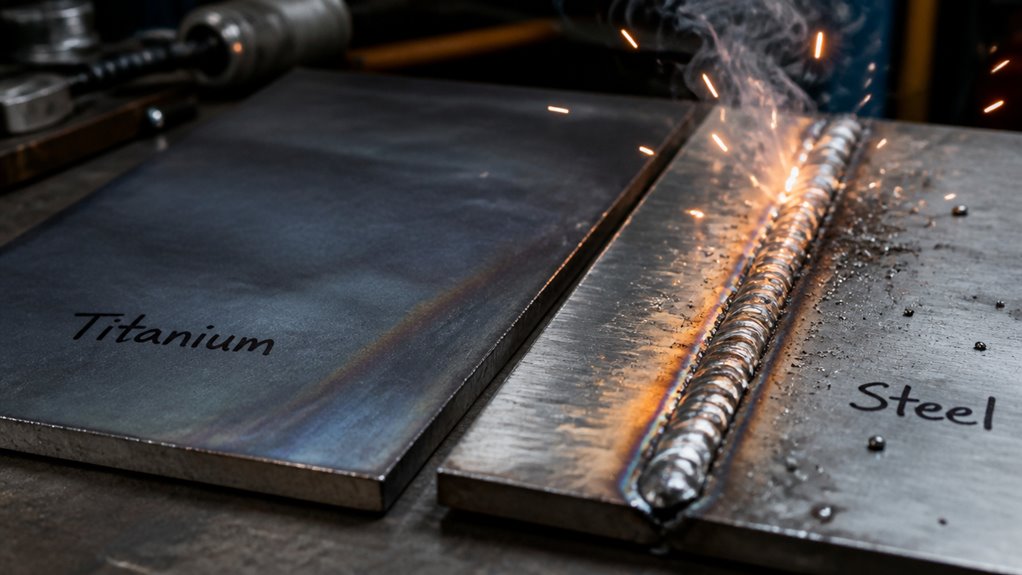
You can’t reliably weld metals like aluminum, cast iron, high-carbon steel, or dissimilar metal combinations using standard MIG welding.
Aluminum’s oxide layer and softness cause feeding and shielding problems. Cast iron needs preheating and controlled cooling to avoid cracking.
High-carbon steel risks brittle martensite formation. Dissimilar metals form weak, brittle intermetallics.
Contamination and oxide layers further complicate weld quality. Understanding these challenges helps you optimize MIG welding for tough materials and avoid common pitfalls.
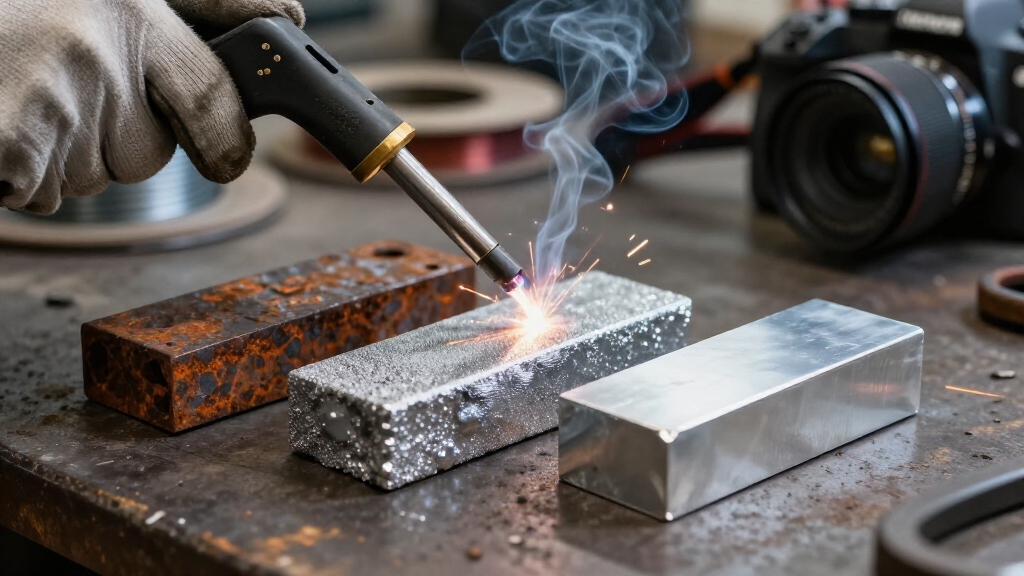
Although MIG welding is versatile, some metals are labeled “not weldable” because their physical and chemical properties challenge the process’s requirements for stable wire feed, proper shielding, and compatible filler metal.
MIG welding’s versatility is limited by metals whose properties hinder stable feeding, shielding, and filler compatibility.
You’ll find metals like aluminum require a spool gun and pure argon shielding due to their heavy oxide layers, which melt at higher temperatures than the base metal.
Cast iron’s high crack susceptibility demands preheating and controlled cooling to avoid brittleness in the heat-affected zone.
High-carbon steel faces similar risks from rapid cooling-induced hardening and cracking.
Additionally, dissimilar metals like aluminum and steel generally resist MIG welding because metallurgical incompatibilities prevent sound fusion.
Contaminants such as rust or paint further compromise weld integrity by causing porosity, making thorough surface preparation critical before attempting MIG welding on these challenging metals.
Successful aluminum MIG welding also requires maintaining a 10–15° push angle with steady gas flow to ensure proper shielding and prevent defects.
Understanding why certain metals pose challenges in MIG welding helps clarify which materials standard MIG setups struggle to join effectively.
You’ll find that aluminum, without a spool gun and argon shielding, is notoriously difficult due to its oxide layer and wire feed issues.
Cast iron also resists standard MIG welding because of its high cracking susceptibility without preheating and controlled cooling.
High-carbon steel can harden and crack in the heat-affected zone if you don’t carefully manage heat input.
Additionally, dissimilar metal joints, such as aluminum to steel, pose metallurgical incompatibility problems that standard MIG can’t overcome.
Finally, surfaces contaminated with rust, paint, or oil undermine weld quality and must be thoroughly cleaned before MIG welding.
These limitations highlight metals where standard MIG struggles without specialized equipment or procedures.
Successful aluminum MIG welding requires a spool gun or push-pull system to ensure reliable wire feeding and avoid common issues like bird-nesting.
When tackling aluminum with MIG welding, you’ll face several specific challenges that stem from its physical and chemical properties.
Aluminum’s oxide layer melts at a much higher temperature than the base metal, demanding thorough cleaning and higher heat input.
Feeding aluminum wire is tricky because it’s soft and tends to jam in standard MIG feeders.
You’ll also need inert shielding gas like pure argon to prevent contamination and porosity.
Finally, aluminum’s high thermal conductivity dissipates heat rapidly, making consistent weld pool control difficult.
Key challenges include:
Proper pre-weld cleaning with solvents such as acetone or MEK followed by mechanical oxide removal is essential to avoid weld defects caused by the aluminum oxide layer.
When you’re working with cast iron and planning to MIG weld, it’s really important to preheat the material first. This step helps reduce thermal stress and lowers the chances of cracking.
Now, let’s talk about cooling rates. You definitely want to manage how quickly the cast iron cools after welding. If it cools too fast, you risk brittle fractures in the heat-affected zone, which isn’t ideal.
Implementing controlled cooling methods, such as burying the weld in dry sand or using insulating blankets, can help prevent micro and macroscopic cracks during the cooling process.
Although MIG welding cast iron presents significant challenges, proper preheating can drastically reduce the risk of cracking caused by rapid cooling and thermal stress.
You need to uniformly raise the base metal temperature before welding to slow the cooling rate, minimizing thermal gradients that induce stress.
Preheat temperatures typically range from 300°F to 600°F depending on cast iron type and thickness.
This controlled heat input improves ductility in the heat-affected zone and reduces brittleness.
Key preheat considerations include:
Using nickel alloy fillers in conjunction with proper preheating further minimizes cracking and accommodates differences in thermal expansion.
Maintaining proper preheat is a fundamental step because cast iron‘s inherent microstructure makes it highly susceptible to cracking during MIG welding.
You need to understand that cast iron contains graphite flakes within a brittle matrix, which restricts ductility. When subjected to rapid thermal cycles, this microstructure undergoes uneven expansion and contraction, generating internal stresses that lead to cracks.
Additionally, the heat-affected zone hardens due to carbon diffusion, increasing brittleness. Without adequate preheating, these stresses become intolerable, causing both hot and cold cracks.
You must control heat input precisely and maintain a stable thermal gradient to reduce strain. Neglecting these precautions will almost certainly result in weld failure, making standard MIG welding unsuitable for cast iron unless you apply specialized cracking control measures.
Preheating between 400°F and 1200°F is critical to reduce residual thermal stresses and prevent formation of brittle white cast iron.
Because cast iron’s microstructure is highly sensitive to thermal stresses, controlling the cooling rate after MIG welding is critical to preventing crack formation.
If you allow rapid cooling, you risk creating brittle martensite in the heat-affected zone, which leads to cracking. You need to manage the cooling process carefully to maintain ductility and structural integrity.
Key cooling considerations include:
Preheating the cast iron to reduce thermal gradients.
Using slow, controlled cooling methods such as insulating blankets.
Avoiding quenching or rapid temperature drops post-weld.
Monitoring interpass temperatures to prevent excessive thermal shock.
Applying post-weld heat treatment or slow cooling can further minimize residual stresses and improve joint durability by reducing the risk of cracking in the heat-affected zone.
Welding different metals together with MIG can really be tricky. You’ll encounter some serious challenges because of the differences in melting points and how the metals react with each other.
Take aluminum, for example. It often has an oxide layer that can act like a barrier, making it tough to achieve a good fusion. That means you’ll need to clean it thoroughly and might even have to use specialized shielding gas to get it right.
If you don’t tackle these issues head-on, you’re risking the integrity and strength of your welds. This can lead to common failures in mixed-metal joints, which is definitely something you want to avoid. So, it’s crucial to prepare properly before diving into dissimilar metal welding! Direct fusion welding between stainless steel and aluminum, for instance, is generally not recommended due to brittle intermetallic compounds that severely weaken the joint.
When you try to MIG weld dissimilar metals, you face significant metallurgical challenges that complicate achieving a sound joint. Differences in melting points, thermal expansion rates, and chemical properties cause issues like uneven fusion and brittle intermetallic compounds.
These factors increase cracking risk and reduce weld integrity.
Key challenges include:
Formation of brittle intermetallic layers leading to weak joints.
Mismatched thermal expansion causing residual stresses and distortion.
Incompatible filler metal selection complicating weld pool stability.
Different melting temperatures causing uneven melting and poor fusion.
Because MIG relies on consistent wire feed and shielding, these disparities make welding dissimilar metals without specialized techniques impractical. You often must avoid standard MIG settings when joining metals like aluminum to steel or copper. Controlling heat input is critical to minimize residual stress and distortion when welding dissimilar metals.
Although MIG welding works well on many clean metals, oxide layers present a significant barrier to achieving a reliable weld. Oxides melt at higher temperatures than base metals, causing poor fusion and porosity.
You must remove or manage these layers before welding, especially on metals like aluminum and stainless steel, where oxide layers are tenacious.
| Metal | Oxide Layer Challenge |
|---|---|
| Aluminum | High melting point oxide; needs cleaning and inert gas |
| Stainless Steel | Chromium oxide inhibits fusion; requires proper gas |
| Copper | Thin oxide layer; can cause porosity |
| Titanium | Reactive oxide layer; needs shielding |
| Cast Iron | Surface scale varies; affects weld integrity |
Ignoring oxide layers leads to weak joints and weld defects. Thorough surface prep is essential for MIG success. Using a spool gun with 100% argon shielding gas can help overcome feeding and shielding challenges when welding aluminum with MIG.
Since surface contamination directly impacts weld integrity, you must make certain the metal is free of rust, paint, oil, or scale before MIG welding.
Ensuring metal is clean from rust, paint, oil, or scale is essential for strong, reliable MIG welds.
Contaminants disrupt the stable arc and shield gas coverage, leading to porosity, weak fusion, and inclusions.
These defects compromise mechanical properties and increase the likelihood of weld failure. You should prioritize thorough cleaning to avoid these issues.
Key contamination effects include:
You can use MIG welding on titanium alloys, but it’s challenging.
Titanium requires an inert atmosphere to prevent contamination; even slight exposure to oxygen or nitrogen can cause brittleness.
Standard MIG setups usually don’t provide adequate shielding.
You’ll need high-purity argon or helium shielding gas and precise control of heat input.
Without these precautions, weld quality suffers, making TIG or laser welding more common choices for titanium alloys in critical applications.
The best shielding gas for welding stainless steel with MIG is typically a mixture of argon and carbon dioxide, often around 90% argon and 10% CO2.
This blend provides good arc stability, reduces spatter, and helps control the heat input, preserving stainless’s corrosion resistance.
For higher-quality welds, you might use argon with small additions of oxygen or helium, depending on the stainless grade and desired weld characteristics.
You’ll find wire feed speed directly controls your weld’s penetration and bead profile in MIG welding.
If the speed’s too slow, you risk excessive heat input, causing burn-through or a wide, uneven bead.
Too fast, and the arc becomes unstable, leading to poor fusion, spatter, and weak welds.
Adjust wire feed speed precisely to match amperage and travel speed. This balance guarantees consistent, high-quality welds with proper penetration and minimal defects.
MIG welding can be used to repair galvanized steel, but you need to take precautions.
The zinc coating vaporizes during welding, creating toxic fumes and porosity in the weld.
You should remove the galvanizing around the weld area thoroughly, use proper ventilation, and wear respiratory protection.
Without these steps, the weld quality suffers, and health risks increase.
You’ll be pleased to know MIG welding can indeed be automated for thin sheet metals.
Automation offers precise control over heat input and wire feed, minimizing distortion and burn-through risks.
You’ll need specialized equipment with adjustable parameters to handle delicate gauges effectively.
Proper shielding and optimized travel speed guarantee consistent, high-quality welds.
You can’t weld every metal with MIG welding because some resist fusion.
Some demand special preparation, some require precise control, and some react unpredictably under heat.
You face challenges joining aluminum’s oxide layer, cast iron’s brittleness, and dissimilar metals’ incompatible properties.
Surface contamination only worsens these issues.
Understanding these limits helps you choose the right method, avoid flaws, and guarantee strong, reliable welds every time.
Master these factors, and you master MIG welding.