Phone:
(701)814-6992
Physical address:
6296 Donnelly Plaza
Ratkeville, Bahamas.

Phone:
(701)814-6992
Physical address:
6296 Donnelly Plaza
Ratkeville, Bahamas.

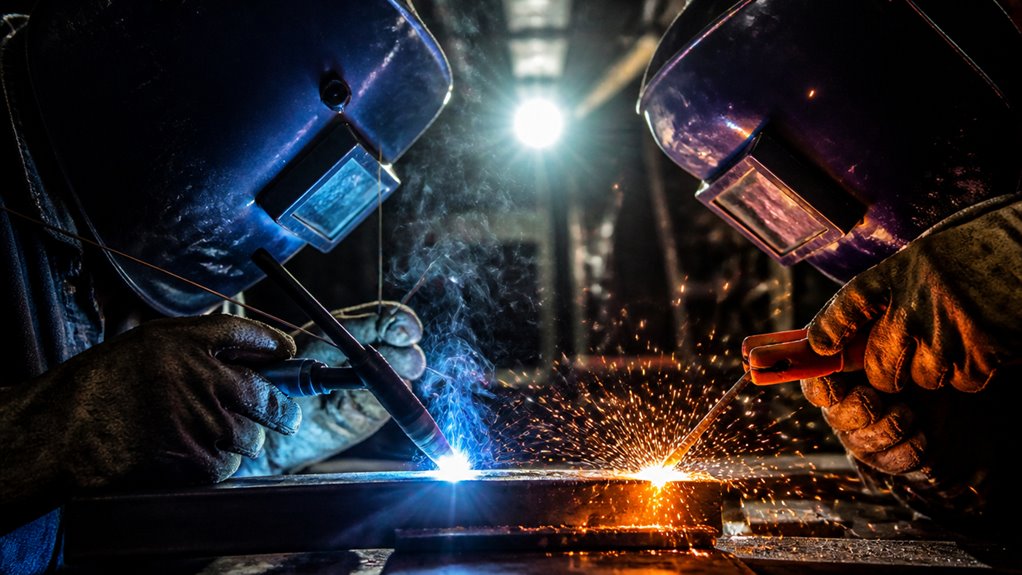
When choosing between TIG and MMA welding, consider your material and environment.
TIG offers precise, clean welds ideal for thin metals like stainless steel and aluminum. However, it needs a controlled, wind-free setting with shielding gas.
MMA suits thicker, rougher materials and outdoor jobs, offering robustness and portability with simpler gear.
TIG demands higher skill and clean surfaces, while MMA tolerates dirt and is easier for structural work.
If you want to optimize your welding process, understanding these distinctions will guide your decision.
| Feature | TIG Welding | MMA Welding |
|---|---|---|
| Electrode | Non-consumable tungsten | Consumable flux-coated electrode |
| Filler Material | Separate filler rod when needed | Electrode provides filler metal |
| Shielding | External shielding gas | Flux coating provides shielding |
| Best Materials | Stainless steel, aluminum, titanium | Steel and thicker structural materials |
| Thin Material Performance | Excellent | Limited |
| Thick Material Performance | Good | Excellent |
| Weld Appearance | Clean, smooth, refined | Rougher with more spatter and slag |
| Spatter | Minimal | More noticeable |
| Slag | None | Yes |
| Heat Control | Excellent | Less precise |
| Precision | Very high | Moderate |
| Surface Preparation | Requires clean surfaces | More tolerant of rust and dirt |
| Outdoor Performance | Limited by wind | Excellent |
| Portability | Lower due to gas equipment | High |
| Skill Requirement | Higher | Lower |
| Setup Complexity | Higher | Simpler |
| Equipment Cost | Generally higher | Generally lower |
| Best Applications | Precision work, thin metals, aesthetic welds | Structural repairs, heavy materials, outdoor jobs |
| Automation Potential | Higher | Lower |
| Main Advantage | Superior precision, control, and weld appearance | Rugged, portable, and versatile in harsh conditions |
| Main Drawback | Requires greater skill, clean surfaces, and shielding gas | Produces slag and spatter with less refined weld appearance |
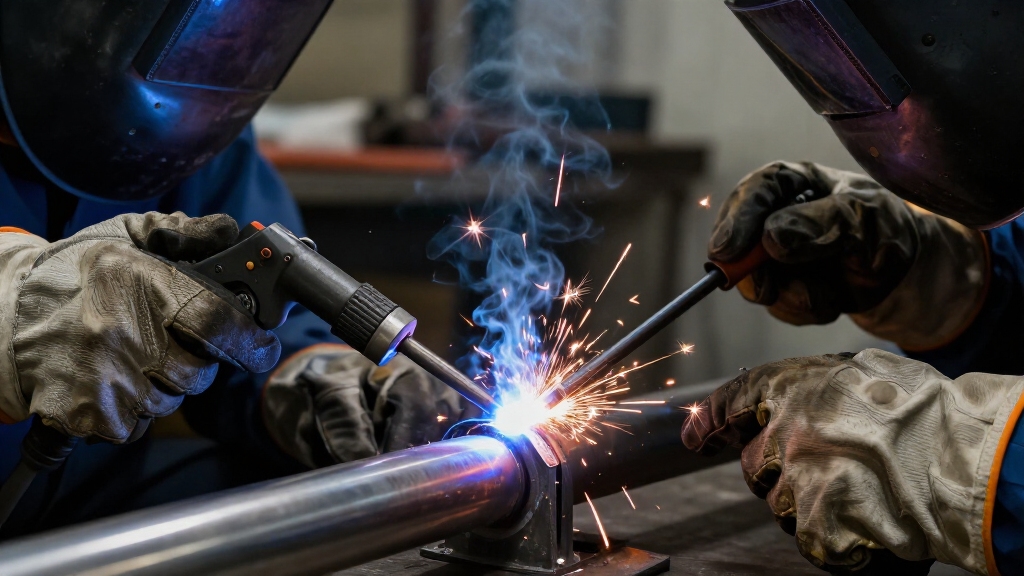
When choosing between TIG and MMA welding, you need to take into account the specific demands of your project, including material type, thickness, environment, and desired weld quality.
Consider material, thickness, environment, and weld quality when choosing between TIG and MMA welding methods.
If you’re working with thin materials like stainless steel or aluminum and require a clean, precise weld with excellent visual finish, TIG is the best choice.
Conversely, if your project involves thicker sections or structural components, MMA welding’s robustness and slag protection offer advantages.
Environmental conditions also influence your decision. MMA performs better outdoors and in windy settings, while TIG requires controlled atmospheres due to shielding gas sensitivity.
Ultimately, assess the balance between precision, material compatibility, and site conditions to select the process that meets your technical and operational requirements most effectively.
TIG welding generally requires higher skill levels due to its need for fine motor control and precise manual filler feeding.
Although both TIG and MMA welding generate strong joints through arc fusion, their techniques and equipment differ fundamentally.
TIG welding uses a non-consumable tungsten electrode to establish the arc, requiring a separate filler rod when additional material is needed. Its precision depends on controlling the arc and shielding gas flow, demanding specialized equipment like gas cylinders and regulators.
Conversely, MMA welding employs a consumable flux-coated stick electrode that melts, depositing filler metal and creating slag for shielding.
MMA equipment is simpler, just a power source, electrode holder, and electrodes, making it more portable and adaptable.
TIG provides superior arc control and cleaner welds but requires more complex apparatus and operator skill.
MMA sacrifices some finesse for robustness and ease of use, relying on the electrode coating for protection instead of external gas.
TIG welding’s use of an inert gas shielding system ensures minimal contamination and high-quality welds on non-ferrous and stainless metals.
Because TIG welding offers exceptional control over heat input and arc stability, it excels on thin materials and precision applications where minimizing distortion is essential.
You’ll find TIG ideal for delicate metals like stainless steel, aluminum, and titanium, particularly when working with sections as thin as 0.5 mm.
Conversely, MMA welding suits you better for thicker, heavy-duty materials and structural tasks.
Its consumable electrodes adapt well to rugged environments and larger thicknesses.
Consider these distinctions:
TIG handles thin gauges with superior heat control.
MMA accommodates heavy sections and rough surfaces.
TIG requires shielding gas, limiting outdoor use.
MMA tolerates rust and dirt better.
TIG uses separate filler rods, enhancing precision.
Due to TIG’s need for meticulous surface preparation, it is best used in controlled environments to ensure weld quality.
Select the process based on material type, thickness, and application demands for best results.
Material choice and thickness affect weld quality and appearance markedly, influencing whether TIG or MMA welding suits your project.
TIG welding delivers superior visual finishes and precise bead control, ideal for thin or delicate materials like stainless steel and aluminum.
Because it uses a non-consumable tungsten electrode and separate filler rods, TIG produces minimal spatter and no slag, resulting in clean, refined welds.
Conversely, MMA welding relies on a consumable flux-coated electrode that generates protective slag and more spatter, which can obscure the weld’s aesthetics.
While MMA welds are robust and well-suited for structural applications, they lack the polished appearance TIG provides.
If your priority is weld quality with a smooth, consistent surface, especially on fine sections, TIG welding will meet your needs more effectively than MMA.
However, TIG welding requires a clean environment and stable conditions to maintain its high-quality welds.
When working in varied environments, you’ll find that portability and operating conditions heavily influence whether TIG or MMA welding suits your needs.
MMA welding offers superior portability, requiring just a power source, electrode holder, clamp, and electrodes. This makes it ideal for outdoor and windy conditions.
TIG welding demands shielding gas and more setup, limiting its field use. Your skill level also matters: TIG requires precision and practice, while MMA is more forgiving and quicker to deploy.
Consider typical applications carefully:
MMA excels in structural repairs, heavy materials, and outdoor jobs.
TIG is preferred for thin materials, precision work, and aesthetic welds.
MMA tolerates rust and dirty surfaces better.
TIG suits controlled environments with clean materials.
MMA supports faster productivity on rugged sites.
Choose based on environment, skill, and weld quality priorities.
The flux coating in MMA electrodes provides internal shielding gas, eliminating the need for external gas tanks and enhancing performance in challenging conditions.
You need to prioritize shielding and ventilation with TIG welding since it uses inert gas that can displace oxygen, posing asphyxiation risks.
Also, avoid wind disrupting the gas shield.
With MMA welding, focus on protecting yourself from slag and spatter, which are more prevalent.
Be cautious of fumes from flux coatings.
Both require proper eye protection against UV radiation and gloves.
MMA’s portability demands extra attention to environmental hazards on site.
Think of TIG welding setup costs like assembling a high-performance sports car: precise, specialized, and pricier.
You’ll invest more upfront in a TIG machine, shielding gas, and quality torches.
MMA welding, on the other hand, resembles a rugged pickup truck: simpler and more affordable.
Its equipment is generally less expensive, requiring only a power source and consumable electrodes.
Yes, you can automate TIG welding more easily than MMA welding because TIG offers precise arc control and consistent shielding gas flow, which suits mechanization.
The non-consumable tungsten electrode and separate filler rod simplify integration with robotic systems.
MMA’s consumable stick electrodes and slag formation create variability and require manual handling, complicating automation.
Think of post-weld heat treatment as a cooling dance your metal must perform.
With TIG welding, the precise, low-heat input often means you’ll need less or gentler heat treatment. The weld zone experiences minimal thermal distortion.
MMA welding produces higher heat and more variable cooling. This typically requires more rigorous heat treatment to relieve stresses and avoid cracking.
You’ll adjust your approach depending on weld thermal cycles and material sensitivity.
You’ll find TIG welding better for joining dissimilar metals because it offers precise arc control and uses a non-consumable electrode, which reduces contamination risks.
Its separate filler rod lets you select compatible materials, minimizing cracking or weaknesses at the joint.
MMA’s consumable electrode and slag can introduce impurities, making it less suitable for dissimilar combinations where metallurgical integrity and fine control are critical.
Choose TIG for accuracy and joint quality.
When choosing between TIG and MMA welding, you’re basically picking between a scalpel and a sledgehammer.
TIG offers precision so fine it’s like threading a needle underwater, perfect for delicate, high-quality work.
MMA, on the other hand, is your rugged all-terrain warrior, ready for any environment with less fuss.
Understanding your material, skill level, and project demands makes certain you don’t just weld.
You engineer perfection every single time.