Phone:
(701)814-6992
Physical address:
6296 Donnelly Plaza
Ratkeville, Bahamas.

Phone:
(701)814-6992
Physical address:
6296 Donnelly Plaza
Ratkeville, Bahamas.

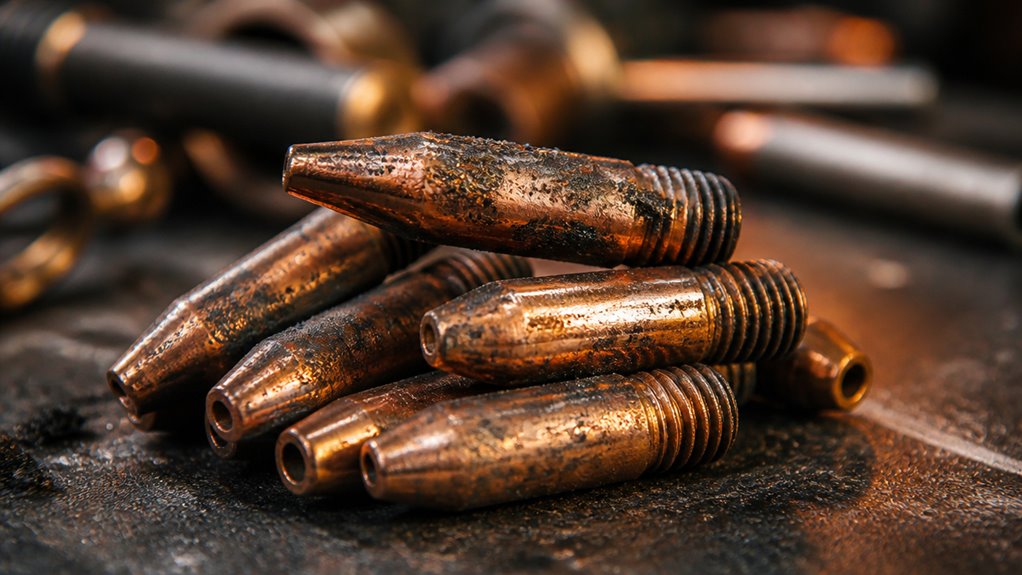
MIG welding contact tips transfer electrical current from your welding machine to the wire, ensuring stable arc performance and consistent weld quality.
You need to match the tip’s inner diameter to your wire size. A 0.035-inch wire fits a 0.035-inch tip, and similarly for 0.045-inch.
Proper installation avoids micro-arcing and tip damage. Regular inspection and cleaning prevent overheating and wire feed issues.
Understanding these details will help you optimize welding efficiency and equipment lifespan.
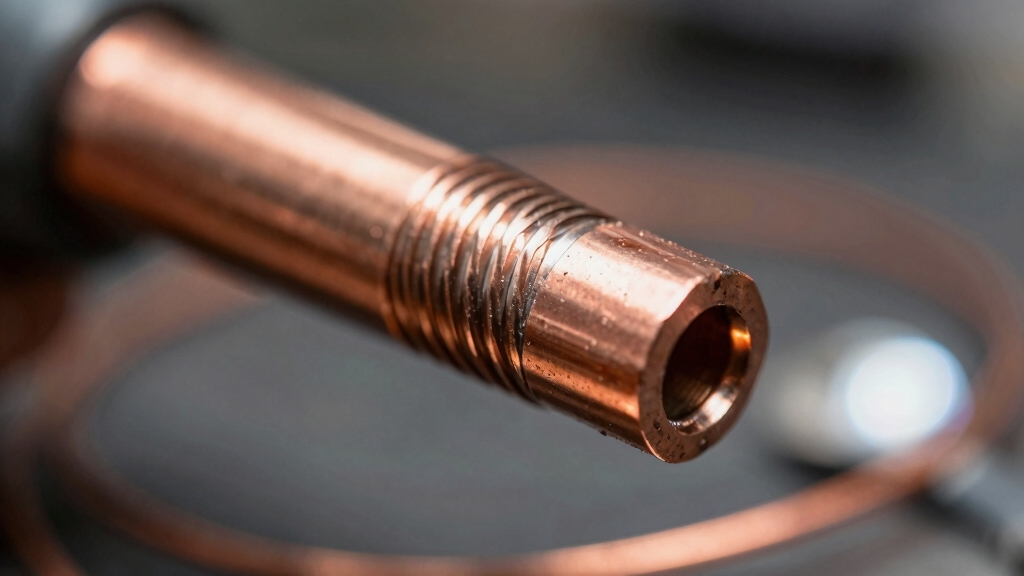
In MIG welding, the contact tip plays an essential role by transferring electrical current from the welding machine directly to the wire.
This current flow generates the arc necessary to melt both the wire and base metal, enabling fusion. The contact tip is a small, cylindrical component positioned at the MIG gun’s end, ensuring a stable electrical connection.
If the current transfer is effective, you’ll avoid micro-arcing and excessive tip heating, which can cause premature wear or wire burnback. Conversely, inefficient current transfer disrupts the arc’s stability, leading to inconsistent weld quality and potential equipment damage.
Maintaining proper contact tip function means ensuring a clean, secure connection, which is critical for achieving consistent arc performance and prolonging component life during welding operations. Selecting a tip material that offers superior conductivity and spatter resistance further enhances arc stability and tip durability.
Making effective current transfer begins with selecting the correct contact tip size for your welding wire. You need to match the tip’s inner diameter precisely to the wire diameter.
Using a 0.035-inch tip for 0.035-inch wire and a 0.045-inch tip for 0.045-inch wire guarantees optimal feeding and current flow. If the tip is oversized, it causes poor current transfer, micro-arcing, and excessive tip heating.
Conversely, an undersized tip increases friction, leading to wire jams and inconsistent feeding. When working with aluminum wire, opt for a slightly larger tip size to avoid feeding issues caused by the softer material.
Choosing the right tip size prevents burnback and maintains arc stability, guaranteeing efficient, consistent weld quality throughout your project. Proper tip sizing also supports maintaining a stable arc length and consistent heat input essential for quality welds.
Before you change a contact tip, cool down the MIG gun to prevent cross-threading and damage. Unscrew the nozzle carefully to expose the tip.
Then use pliers to remove the old tip without damaging threads. Install the new tip snugly; avoid over-tightening as it risks breakage.
Reattach the nozzle securely and test wire feed and arc stability to confirm proper installation.
Regular inspection and cleaning of the tip help maintain arc stability and prevent costly weld defects.
| Step | Action Detail |
|---|---|
| 1. Cool Down | Prevent thread damage |
| 2. Remove Nozzle | Expose contact tip |
| 3. Unscrew Tip | Use pliers, avoid thread harm |
| 4. Install Tip | Tighten snugly, no over-tightening |
| 5. Reattach Nozzle | Secure and test functionality |
Keep an eye out for signs that signal your MIG contact tip needs replacement to guarantee weld quality and equipment performance.
Inspect the tip for color changes like blue or purple hues, which indicate overheating.
Check for erosion, deformation, or excessive spatter buildup that restricts wire movement.
If the tip opening becomes oblong or shows evidence of wire burnback welding into it, replace it immediately.
Also, monitor for inconsistent wire feeding or frequent burnback, as these suggest compromised electrical current transfer.
Regular inspection before and after welding sessions guarantees timely detection of wear.
Addressing these indicators prevents micro-arcing, erratic feeding, and overheating, which ultimately prolongs gun life and improves arc stability.
Don’t wait for failure; replace your contact tip as soon as these critical symptoms appear.
Additionally, maintaining the correct wire feed speed ensures stable arc and reduces wear on the contact tip.
Regularly cleaning and maintaining your MIG contact tips directly impacts welding quality and equipment longevity.
You should remove spatter and debris after every session using a wire brush or a dedicated tip cleaner to maintain consistent electrical conductivity.
Inspect the tip for discoloration, erosion, or deformation that indicates overheating or wear.
Replace tips with oblong or fused openings to prevent wire feeding issues.
Store your tips in a dry, clean environment, preferably in a protective case to avoid corrosion and contamination.
Avoid dragging the gun liner on the floor to minimize debris accumulation.
Proper maintenance guarantees stable current transfer, reduces micro-arcing, and prevents overheating.
This systematic approach optimizes arc stability and prolongs tip life, ultimately enhancing your MIG welding performance and reducing equipment downtime.
Additionally, regularly inspecting and replacing worn drive rolls and liners helps prevent wire feeding issues and ensures smooth operation.
You can’t use contact tips with all welding machines because they’re specifically designed for MIG welding setups.
They transfer current to the wire in MIG processes, so they won’t work with TIG, stick, or flux-cored welding machines.
Always match the tip size to your wire diameter and machine specifications for proper functionality.
Using the wrong tip or machine can cause poor electrical transfer, wire feeding issues, and arc instability.
You might think replacing contact tips too often wastes money, but during heavy welding, you should inspect and replace them after every 8 to 12 hours of use.
Wear indicators like discoloration, erosion, or burnback signal reduced efficiency and potential arc instability.
Timely replacement guarantees consistent current transfer, prevents wire feeding issues, and avoids downtime.
Regular checks keep your weld quality high and your equipment running smoothly.
Yes, you’ll find brands like Tweco, Bernard, and Harris consistently deliver higher quality MIG contact tips.
These manufacturers use premium copper alloys for better conductivity and durability, reducing overheating and wear.
Choosing their tips helps you maintain stable arcs and less frequent replacements.
When selecting, focus on consistent diameter tolerances and heat resistance to optimize performance during heavy welding sessions.
Don’t overlook manufacturer recommendations aligned with your specific wire type.
When changing contact tips, first power off and cool the MIG gun to prevent burns and cross-threading.
Use pliers carefully to remove the old tip without damaging threads.
Avoid overtightening the new tip to prevent breakage.
Make sure the nozzle is securely reattached.
Always inspect the tip and gun parts for damage or debris before use.
These precautions minimize equipment damage and maintain safe, consistent operation.
You know what they say: “The devil is in the details.”
Contact tips directly impact weld bead appearance and quality by controlling current transfer and wire feed consistency.
If the tip size mismatches the wire diameter, you’ll see irregular arc stability, causing spatter, burnback, or uneven bead profiles.
Worn or clogged tips lead to erratic feeding and poor fusion, degrading bead integrity.
Precise tip maintenance guarantees peak, clean welds.
Mastering MIG welding means managing your contact tips meticulously. Choosing the correct contact tip size guarantees seamless current transfer. Proper installation prevents performance problems.
Regularly replacing worn tips and rigorously removing residue maintain reliable results. By focusing on flawless fitting, frequent fixes, and fastidious cleaning, you’ll forge a foundation for flawless finishes.
Stay sharp, stay steady, and safeguard your setup for superior, sustained success in every weld.