Phone:
(701)814-6992
Physical address:
6296 Donnelly Plaza
Ratkeville, Bahamas.

Phone:
(701)814-6992
Physical address:
6296 Donnelly Plaza
Ratkeville, Bahamas.

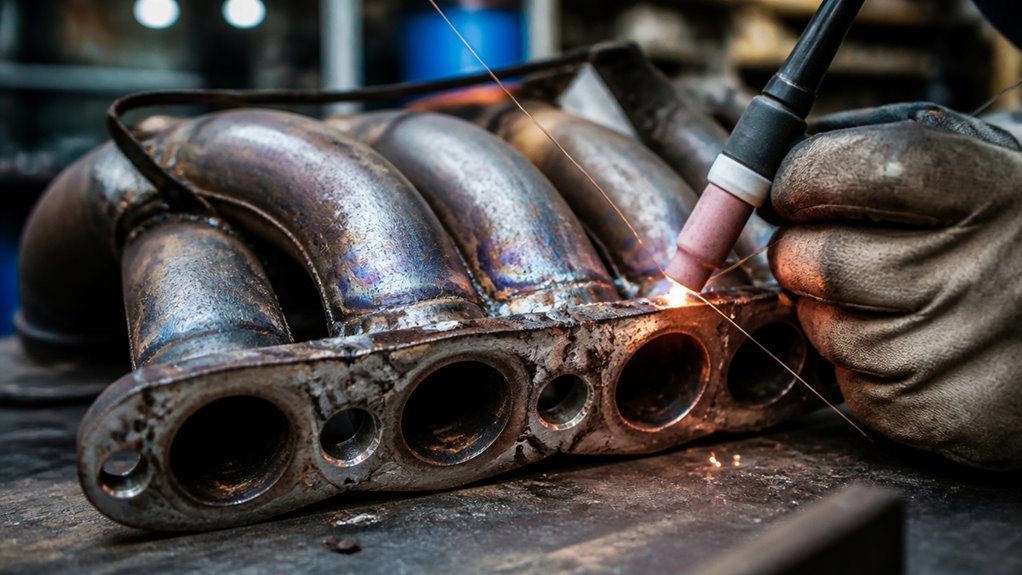
You can weld an exhaust manifold, but success depends on careful heat control and material choice.
Cast iron, common in manifolds, requires uniform preheating to around 500–600°F to prevent cracking from thermal stress.
Using nickel-rich fillers helps reduce brittleness and improve durability.
Weld short segments with controlled cooling and peening to manage expansion and contraction.
Improper technique risks temporary, fragile repairs.
Exploring proper preparation, welding methods, and post-weld handling will help guarantee a lasting fix.
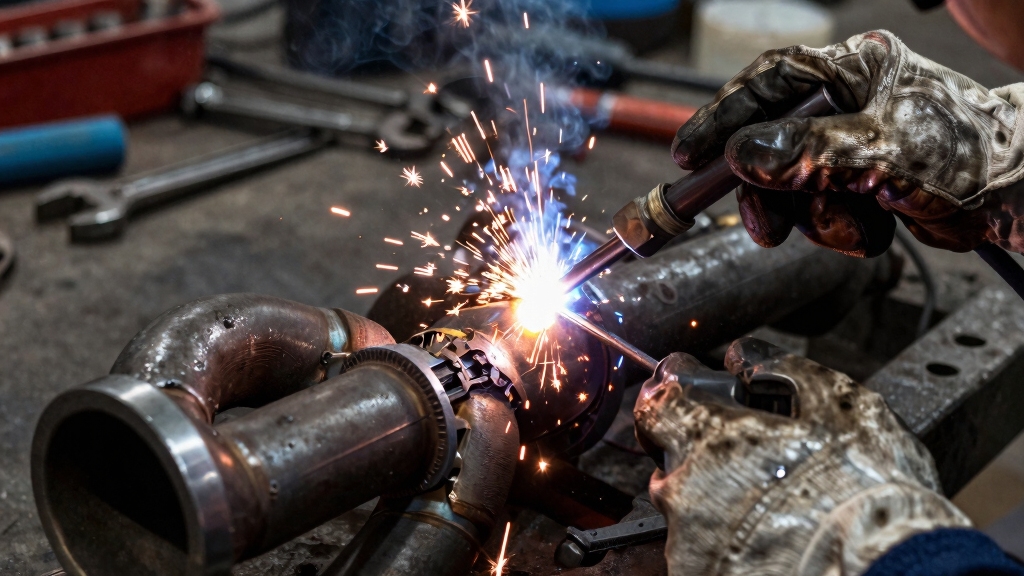
You can weld an exhaust manifold, but success depends heavily on the material and how you manage heat.
Welding an exhaust manifold is possible but hinges on material type and precise heat control.
Cast iron manifolds, common in exhaust systems, pose challenges due to their tendency to expand and contract markedly with temperature changes.
This cyclical stress often leads to cracking, so controlling heat input and distribution is critical.
Before welding, you must prepare by grinding or V-grooving cracks and drilling stop-holes to prevent propagation.
Welding in short segments, usually 1 to 2 inches, while allowing cooling intervals reduces thermal stress.
Peening between passes helps relieve residual stress.
Post-weld, slow cooling is essential to avoid new cracks; rapid cooling can cause fractures.
Keep in mind, even with precise technique, exhaust manifold welding is often a temporary repair due to the material’s inherent brittleness and operating conditions.
Using nickel alloy fillers during welding can minimize cracking and improve joint durability in exhaust manifold repairs.
Selecting the right filler material is essential for achieving a durable weld on exhaust manifolds, especially when dealing with cast iron.
Ordinary mild-steel rods often cause cracking due to thermal stress and brittleness. Nickel-based or nickel-rich fillers provide better crack resistance and compatibility.
Specialized cast iron electrodes, like Muggy Weld 72 and 77, offer high penetration and machinability tailored for exhaust manifold repair.
When choosing fillers, consider:
Using these materials improves weld integrity and longevity on challenging cast iron manifolds. Preheating the cast iron to 500–600°F before welding is critical to reduce thermal stresses and prevent cracking.
Although exhaust manifolds made from cast iron pose welding challenges due to their thermal sensitivity, careful preparation and heat control can markedly reduce cracking risks.
You should preheat the manifold uniformly to around 500°F (260°C) to minimize thermal shock and reduce stress concentration. Avoid uneven heating to prevent localized expansion that can reopen cracks.
Preheat the manifold evenly to 500°F to reduce thermal shock and prevent crack reopening.
Before welding, clean and grind the crack area thoroughly. Drill stop-holes at crack ends to halt propagation.
During welding, maintain the manifold temperature above 250°C to avoid rapid cooling. After each short weld pass, allow the area to cool slowly and evenly. Use insulated blankets or controlled oven cooling if possible.
This controlled thermal cycle helps prevent brittleness and cracking during solidification and cooling phases.
Preheating and slow cooling are essential to control the heat-affected zone and minimize residual stresses in cast iron welding.
When welding exhaust manifolds, controlling the welding technique is essential to prevent cracks from forming in the brittle cast iron. To minimize cracking, focus on precise and careful methods that reduce stress in the heat-affected zone.
Here are four key welding techniques to prevent cracks:
Post-weld inspections and ongoing monitoring are essential to detect any hidden cracks and ensure the integrity of the repair.
Controlling the cooling rate after welding an exhaust manifold plays a critical role in preventing new cracks and ensuring weld integrity.
You should cool the manifold slowly to avoid thermal shock, which can cause stress fractures in the brittle cast iron.
Using a heat blanket or insulating the part immediately post-weld helps maintain elevated temperatures, allowing gradual heat dissipation.
Alternatively, place the manifold in an oven set around 500°F, then step down to about 350°F before ambient cooling.
Avoid rapid air or water cooling unless using specialized electrodes and procedures designed for it, as quick cooling markedly increases crack risk.
Handle the manifold gently post-weld, minimizing mechanical stress until it fully cools to preserve the weld’s durability and prevent reopening of cracks.
Implementing controlled cooling techniques such as burying the manifold in dry sand can further reduce thermal stresses and prevent microstructural damage.
You can expect an exhaust manifold weld repair to last anywhere from a few months to a few years, depending on factors like material quality, welding technique, and heat control.
Because cast iron is brittle and prone to cracking, even well-executed repairs may eventually fail. Proper preheating, slow cooling, and using nickel-based filler rods improve longevity.
However, repairs are often considered temporary fixes rather than permanent solutions. Regular inspections are essential to catch recurring issues early.
Welding an exhaust manifold can subtly influence your engine’s performance.
If done precisely, it seals cracks that could cause exhaust leaks, improving backpressure and efficiency.
However, imperfect repairs might introduce minor restrictions or stress points, potentially affecting exhaust flow and sensor readings.
With proper technique and materials, you maintain near-original performance.
Keep in mind, a less-than-perfect weld could quietly undermine peak engine function over time.
Yes, you can use alternatives like high-temperature epoxy or exhaust manifold sealants to fill small cracks or leaks.
You might also consider replacing the manifold gasket or using a clamp-type exhaust repair kit for minor damage.
In severe cases, swapping in a new or remanufactured manifold is often more reliable.
Heat-resistant ceramic coatings can protect surfaces, but they won’t fix structural damage, so evaluate the extent before choosing a method.
When welding an exhaust manifold, imagine taming a fiery dragon with care.
You should wear heat-resistant gloves, a welding helmet with proper shading, and flame-retardant clothing to protect against sparks and hot metal.
Secure good ventilation to avoid toxic fumes, and keep a fire extinguisher nearby.
Preheat the manifold evenly to prevent cracking, and cool it slowly.
Always work in a clean, organized space to control hazards effectively.
You can expect to pay between $150 and $400 for professional exhaust manifold welding, depending on damage extent and labor rates.
Complex cracks or difficult-to-access areas raise costs, while minor repairs fall on the lower end.
Specialized filler metals and preheat/post-heat processes may increase charges.
Always get a detailed estimate upfront, since cast iron welding requires expertise and careful temperature control to reduce failure risk.
Welding an exhaust manifold is like tuning a high-performance engine. Precision and control matter. Just as a racer fine-tunes every part to avoid failure, you must select the right filler, prepare materials meticulously, and manage heat carefully to prevent cracks.
Remember, 70% of manifold weld failures stem from poor heat control. By following these guidelines, you guarantee a durable, crack-resistant weld. This extends your manifold’s life and performance reliably.