Phone:
(701)814-6992
Physical address:
6296 Donnelly Plaza
Ratkeville, Bahamas.

Phone:
(701)814-6992
Physical address:
6296 Donnelly Plaza
Ratkeville, Bahamas.

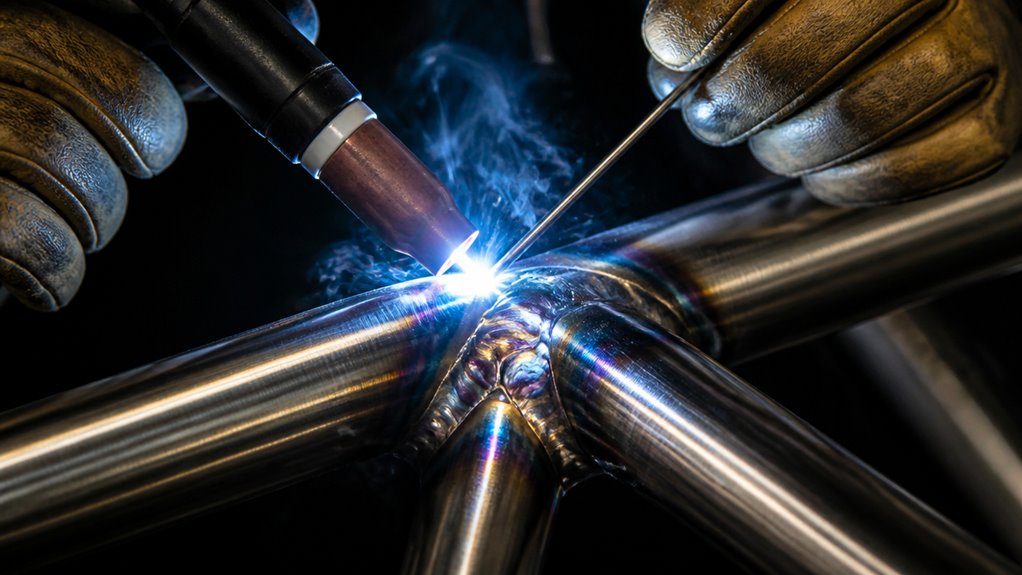
You can weld titanium effectively if you control contamination and use high-purity inert shielding gas like argon.
Prepare surfaces thoroughly by mechanically cleaning with dedicated tools and removing residues with solvents.
Choose welding methods based on thickness: autogenous GTAW for thin sections and filler metal with groove joints for thicker parts.
Maintain consistent gas flow and proper purge conditions to prevent embrittlement and porosity.
Mastering these fundamentals guarantees strong, corrosion-resistant welds.
Further details explain defects, gas handling, and joint design considerations.
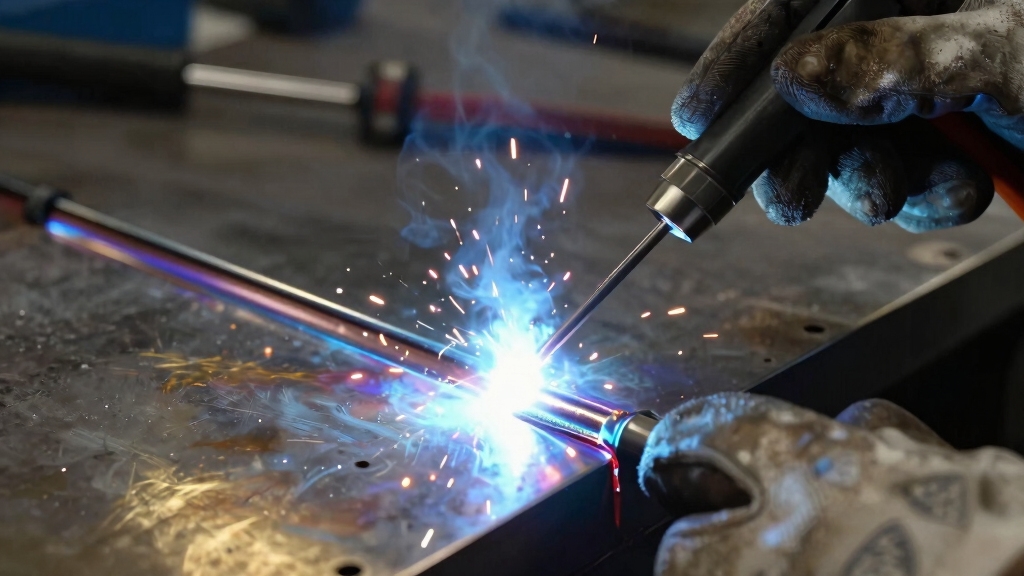
How do you weld titanium effectively? You must control contamination and prepare joints meticulously.
Titanium’s strong affinity for oxygen, nitrogen, hydrogen, and carbon at high temperatures means exposure leads to brittle contamination layers and reduced corrosion resistance.
To avoid these issues, maintain an inert atmosphere with proper shielding gases. You’ll find titanium welds aren’t prone to solidification or hydrogen cracking, but porosity remains a common defect to watch for.
Cleanliness is critical; use dedicated tools and remove any smearing or debris before welding. You’ll also need to ensure shielding gas coverage is flawless to prevent oxidation.
Maintaining pre-flow and post-flow shielding during welding is essential to protect the weld area from reactive gases and ensure weld integrity.
When it comes to welding titanium, you’ll mainly lean on gas tungsten arc welding, also known as GTAW or TIG. This method gives you the precision and control that you need, especially when working on thinner sections. It’s a pretty reliable choice!
Now, as you start dealing with thicker pieces, things change a bit. You’ll want to adjust your joint design, and that might mean using filler metal or preparing grooves like V- or U-grooves to ensure a solid weld.
One crucial aspect to keep in mind is the shielding and purge conditions. You really want to maintain exceptional conditions using high-purity argon. This step is vital to prevent contamination and ensure the integrity of your welds. Trust me, it makes a big difference!
Helium or argon gas is used as inert shielding to protect the weld pool from atmospheric contamination and achieve precise, defect-free welds.
Selecting the right welding process is essential to achieving strong, defect-free titanium joints. Gas Tungsten Arc Welding (GTAW or TIG) is the most common method due to its precision and control. You’ll use Direct Current Electrode Negative (DCEN) polarity for peak results.
For thicker titanium sections, Gas Metal Arc Welding (GMAW or MIG) is effective. Laser-beam welding is gaining traction, offering high-speed welds without vacuum chambers. However, shielding gas remains critical.
| Welding Process | Best Use Case |
|---|---|
| GTAW (TIG) | Thin to medium thickness |
| GMAW (MIG) | Thick sections (above ~3 mm) |
| Laser-beam | High precision, fast welding |
| Plasma Arc | Specialized applications |
Choose processes based on thickness and precision needed for your titanium project. Using inverter technology can enhance arc control and reduce distortion in welding applications.
Understanding the relationship between titanium thickness and joint design helps you determine the most effective welding approach. For titanium up to 2.5 mm thick, you can often weld autogenously without filler metal. When thickness exceeds this, you’ll typically need filler metal and groove preparation.
Consider these key guidelines:
Laser welds match parent metal strength for titanium, making them a reliable choice for high-quality joints with excellent structural integrity and minimal heat-affected zone (HAZ control).
Because titanium reacts strongly with oxygen and other atmospheric gases at elevated temperatures, you must guarantee exceptional shielding and purge protection during welding.
Use high-purity argon, typically 99.999%, to prevent oxidation and embrittlement. Both external shielding gas coverage and internal purging, especially for tubing and pipe, are critical to eliminate atmospheric contamination.
Inadequate coverage leads to discoloration, white contamination, and compromised mechanical properties. For gas tungsten arc welding (GTAW), maintain consistent argon flow around the weld zone and inside the joint.
Leak-check your shielding equipment meticulously to avoid oxygen or moisture intrusion. Proper purge setups, combined with clean surfaces and filler materials, ensure sound welds.
Selecting the right inert shielding gas and optimizing flow rates are essential to prevent contamination and maintain a stable welding arc.
When welding titanium, the material’s thickness directly influences your choice of welding technique and joint design. For thin sections up to about 2.5 mm, you can often weld autogenously without filler metal. Use square-butt joints for tubing under 5 mm.
As thickness increases, you need to modify your approach:
This methodical adjustment guarantees strong, contamination-free welds tailored to your titanium thickness. Additionally, use ultra-high-purity argon with minimal oxygen content (99.995% purity) to prevent contamination and ensure weld integrity when welding titanium.
Although titanium offers excellent weldability, the purity of your shielding gas directly determines whether you achieve a sound, contamination-free weld or face brittle, discolored defects.
Titanium’s high affinity for oxygen and nitrogen means even trace impurities in the gas cause embrittlement and color changes. Using high-purity argon (99.995% and above) guarantees stable arc and prevents contamination.
Contaminated shielding gas results in porosity and compromised mechanical properties.
Selecting the right inert shielding gases such as argon is essential to provide a protective cloak and maintain weld integrity.
| Gas Purity Level | Resulting Weld Quality |
|---|---|
| 99.9% | Discolored, brittle |
| 99.995% | Light gold, sound |
| 99.999% | Optimal, defect-free |
| <99.9% | Porosity, embrittlement |
| Impure gas mix | Immediate weld failure |
You must prioritize shielding gas purity to maintain titanium’s corrosion resistance and structural integrity.
When you’re getting ready to weld titanium, it’s super important to use tools that are dedicated just for titanium. This helps avoid any cross-contamination from other metals, which can really mess things up.
Before you start welding, make sure to clean off all the surface contamination. This includes any smudges left over from cutting or machining.
Trust me, taking the time to ensure that both your filler metal and the exposed titanium surfaces are squeaky clean is key to achieving high-quality welds.
Also, keep your tungsten electrode and filler rods consistently shielded under gas when not in use to prevent contamination and maintain weld integrity.
Assuring dedicated clean tools markedly reduces the risk of contamination during titanium welding.
Since titanium reacts aggressively with oxygen, nitrogen, and carbon at high temperatures, any residue from other metals can compromise weld integrity. You must use tools exclusively reserved for titanium preparation to maintain cleanliness.
Follow these essential practices:
Additionally, maintaining a properly assembled torch with components like the ceramic cup shield ensures effective gas shielding to protect titanium welds from contamination.
Removing surface contamination from titanium before welding is critical to prevent weld defects and preserve mechanical properties. You need to eliminate oils, grease, dirt, and any oxide layers that form on the surface.
Begin by mechanically cleaning the titanium using dedicated stainless steel wire brushes or grinding wheels reserved exclusively for titanium to avoid cross-contamination.
Follow this with solvent cleaning using acetone or isopropyl alcohol to remove residual contaminants. Avoid using organic materials that can leave residues.
Inspect the surface visually for discoloration or residues. Any smearing from cutting or machining must be removed thoroughly.
Only once the surface is visibly clean and contamination-free should you proceed to welding. This careful preparation guarantees the weld area remains inert under shielding gas, preventing embrittlement and porosity in the final weld.
Use gloves and ensure proper ventilation during solvent cleaning to maintain safety and prevent contamination from solvent residues, as solvent evaporation is essential before welding.
Although titanium welding offers excellent strength and corrosion resistance, it demands vigilance against specific defects that can compromise weld integrity. You must control contamination and ensure proper shielding to avoid common issues.
Titanium welding requires strict contamination control and shielding to maintain weld strength and corrosion resistance.
Watch for these key defects:
You need to ensure excellent shielding gas coverage to prevent oxidation and embrittlement, using high-purity argon.
Maintain a clean workspace and use dedicated tools to avoid contamination from other metals.
Always purge the weld area internally and externally to exclude oxygen, nitrogen, and moisture.
Wear appropriate protective gear, including gloves and eye protection.
Regularly inspect shielding equipment for leaks and control heat input to avoid discoloration and compromised weld integrity.
Imagine welding titanium like crafting a delicate watch. Precision and cleanliness add cost.
Titanium welding generally costs more than steel or aluminum due to stringent shielding gas requirements, specialized equipment, and contamination control.
You’ll spend more on ultra-pure argon and dedicated tools. Joint preparation and slower welding speeds also increase labor costs.
Yes, you can automate titanium welding for mass production. Processes like laser-beam welding and automated TIG systems provide precise control and repeatability essential for titanium’s strict shielding and cleanliness requirements.
You’ll need to guarantee consistent argon shielding and maintain contamination-free environments. Automation reduces variability and increases throughput, especially for simple joint designs and thin sections.
However, you must design fixtures and purge systems carefully to support reliable, high-quality automated titanium welds.
You should apply post-weld heat treatment to relieve residual stresses and improve ductility.
Vacuum or inert gas environments during stress relief prevent contamination.
Mechanical polishing or passivation can remove surface oxides and restore corrosion resistance.
Additionally, inspect welds for porosity and cracks using non-destructive testing.
These treatments collectively enhance titanium weld durability by maintaining mechanical integrity and corrosion resistance over time.
Like choosing the right key for a lock, you’ll want to use filler metals matched precisely to your titanium alloy.
Commonly, commercially pure titanium or Ti-6Al-4V filler rods suit most welds. They maintain alloy chemistry and mechanical properties.
Avoid mismatched fillers that can cause brittleness or corrosion. Always select filler metals certified for titanium welding to ensure strong, contamination-free joints with consistent performance.
You absolutely can weld titanium, but it demands your utmost precision and care. One tiny impurity or misstep can turn your perfect joint into a catastrophic failure.
From choosing the right welding method and controlling thickness to maintaining impeccable shielding gas purity and surface cleanliness, every detail matters. Master these technical steps, and you’ll conquer titanium welding like a pro.
Neglect any aspect, and you risk ruining what’s supposed to be the strongest, most corrosion-resistant metal you’ll ever work with.