Phone:
(701)814-6992
Physical address:
6296 Donnelly Plaza
Ratkeville, Bahamas.

Phone:
(701)814-6992
Physical address:
6296 Donnelly Plaza
Ratkeville, Bahamas.

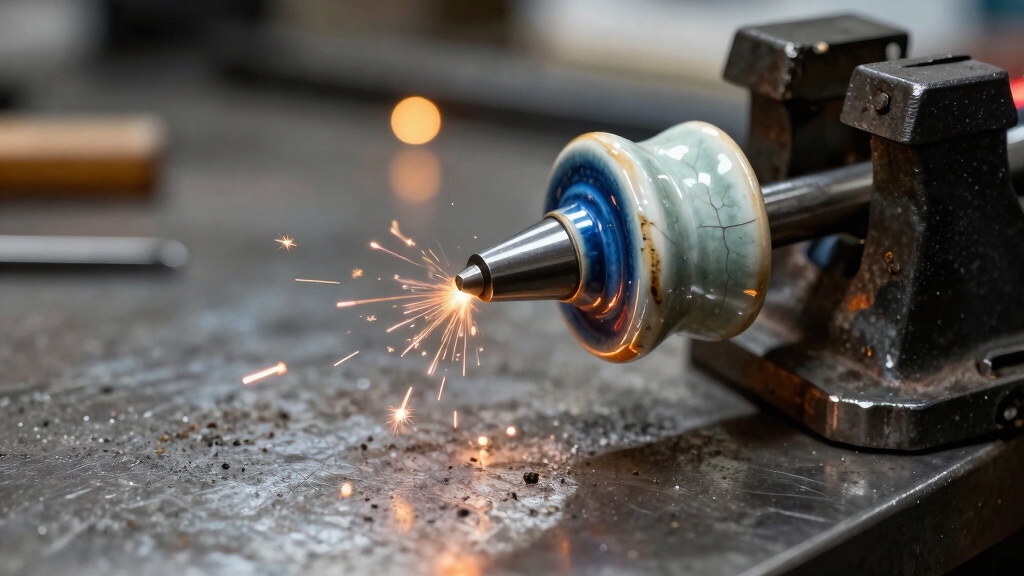
You’ll want to choose ceramic MIG welding nozzles because they withstand higher temperatures and reduce slag buildup better than steel.
Match nozzle diameter precisely to the contact tip for ideal gas flow and consistent shielding.
Install nozzles securely to avoid leaks and maintain concentric alignment.
Keep gas flow between 20–25 CFH and maintain proper standoff distance to prevent turbulence.
With correct selection, installation, and care, you’ll extend nozzle life and improve weld quality.
There’s more to learn for maximizing these benefits.
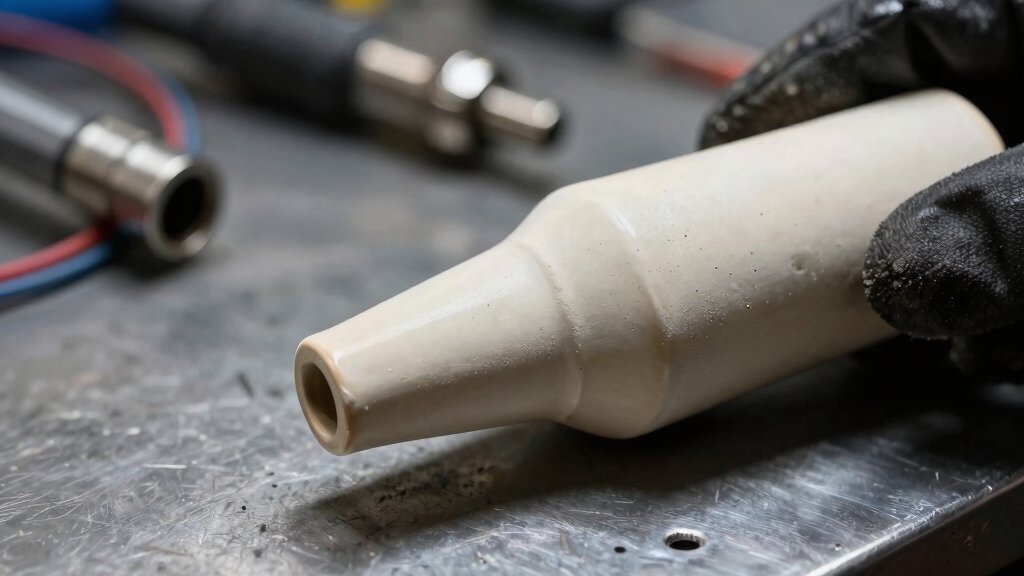
When selecting nozzles for MIG welding, choosing ceramic options offers distinct advantages that directly impact weld quality and operational efficiency.
Ceramic nozzles, especially those made from silicon nitride, withstand higher temperatures and mechanical stresses far better than steel counterparts. Their smooth, non-porous surfaces prevent weld spatter and slag from adhering, reducing maintenance frequency and prolonging service life.
This material’s wear resistance guarantees consistent gas coverage, which is critical for shielding the weld pool and minimizing contamination. You’ll also benefit from improved visibility and precision due to the typically shorter nozzle length, which helps control gas flow and weld pool protection.
Proper maintenance, including regular cleaning of nozzles after use, is essential to maintain gas flow and prevent contamination.
Picking the right ceramic nozzle size boils down to balancing gas coverage with weld area accessibility.
Larger nozzles provide greater shielding gas coverage, ideal for high-amperage spray or pulse welding, but may limit access in tight joints.
Smaller nozzles improve visibility and maneuverability in confined spaces but reduce gas flow volume.
You should match the nozzle’s inner diameter closely to the contact tip’s outer diameter to maintain peak gas flow and prevent turbulence.
Consider your welding process and joint geometry: recessed nozzles suit high-amperage welding by controlling porosity, while flush nozzles work better for short circuit modes with minimal wire stick-out.
Ultimately, evaluate your weld’s surface area and gas volume requirements to select a nozzle size that maximizes shielding efficiency without compromising accessibility.
Maintaining proper shielding gas flow between 20–25 CFH is essential to prevent oxidation and ensure consistent weld quality.
Achieving peak performance with ceramic nozzles starts by ensuring proper installation that directs shielding gas efficiently into the weld puddle.
First, match the nozzle’s inner diameter precisely to the contact tip’s outer diameter to maintain optimal gas flow and prevent turbulence.
Secure threaded nozzles tightly to avoid gas leaks and ensure concentric alignment with the wire feed. This is critical for consistent arc stability.
Position the nozzle so the shielding gas envelopes the weld area uniformly. Adapt placement according to the welding mode; flush nozzles suit manual MIG for better visibility, while recessed nozzles handle high amperage efficiently.
Finally, confirm the nozzle’s length complements your welding setup. Ceramic nozzles are shorter than metal ones, which aids accessibility without compromising gas coverage or nozzle longevity.
Choosing the correct shielding gas, such as argon blends, enhances arc stability and weld quality when using ceramic nozzles.
Managing ceramic nozzle performance requires attention to potential issues like gas leaks, improper alignment, and contamination buildup.
You must guarantee the nozzle seats securely, especially with threaded designs, to prevent gas escape that compromises shielding integrity.
Check concentricity between the nozzle and contact tip to avoid misdirected gas flow, which can cause weld defects.
Contamination from welding spatter or slag can accumulate despite the ceramic’s smooth surface; regularly inspect and clean the nozzle to maintain consistent gas coverage and prevent blockages.
Avoid excessive mechanical stress during installation to prevent cracks in the silicon nitride material.
Finally, monitor nozzle wear or surface damage, as these can alter gas flow dynamics, reducing weld quality and shortening service life.
Proactive maintenance assures peak ceramic nozzle function.
Regular cleaning and inspection support consistent arc stability and reduce spatter during welding.
Sure! Here’s a more conversational version of your text:
—
When it comes to managing gas flow with ceramic MIG nozzles, it’s all about optimizing that gas coverage. First off, you’ll want to choose the right nozzle size and make sure it’s positioned just right in relation to the weld puddle. It’s like finding the sweet spot!
A good tip is to match the inner diameter of the nozzle to the outer diameter of the contact tip. This way, you’ll ensure a consistent distribution of shielding gas, which helps minimize any turbulence. Plus, getting this alignment and sizing spot on can really make a difference in your weld quality. It helps maintain a stable gas envelope and reduces the risk of contamination.
Choosing the appropriate shielding gas can also significantly impact arc stability and weld appearance.
So, keep those details in mind, and you’ll be well on your way to achieving better welds!
—
When working with ceramic MIG nozzles, controlling the gas flow directly influences weld quality and consistency.
You need to select a nozzle size that matches your gas volume and weld area precisely. Larger ceramics provide broader gas coverage, while smaller nozzles enhance visibility in confined spaces.
Make certain the contact tip’s outer diameter aligns with the nozzle’s inner diameter to maintain an ideal gas envelope around the weld puddle.
The ceramic material’s smooth surface reduces turbulence, promoting laminar flow and minimizing contamination.
Adjust your gas flow rate to balance shielding effectiveness and prevent gas wastage or porosity.
Properly managed gas coverage guarantees consistent arc stability and fusion, especially at high amperages.
Focus on these parameters to maximize the ceramic nozzle’s performance and extend service life.
Additionally, maintaining controlled heat input during welding helps prevent brittleness and cracking, ensuring weld integrity when joining dissimilar metals.
Although ceramic MIG nozzles inherently optimize gas flow due to their material properties, the nozzle’s position relative to the weld puddle critically influences shielding effectiveness and weld quality.
You need to maintain an ideal standoff distance. Too close risks turbulence that disrupts the gas envelope; too far weakens gas coverage, exposing the weld to atmospheric contamination.
Aligning the nozzle concentrically with the contact tip guarantees uniform gas distribution, preventing porosity and oxidation.
Also, adjust the angle to suit the welding mode. A slight tilt can direct gas flow into joint recesses, enhancing penetration.
For optimal results, consider that shielding gas blends significantly affect arc stability and penetration when positioning the nozzle.
Selecting the correct ceramic nozzle size directly influences gas flow efficiency and weld quality. When you match the nozzle inner diameter to the contact tip’s outer diameter, you guarantee optimal shielding gas coverage and prevent turbulence that can cause porosity.
Larger nozzles offer greater gas coverage, suitable for wide weld areas, while smaller nozzles improve visibility and access in confined joints. Consider welding mode and amperage: recessed nozzles handle high currents better by maintaining gas envelope integrity.
Flush nozzles favor short circuit modes with minimal wire stick-out. The nozzle size also affects gas volume requirements; oversizing wastes shielding gas, while undersizing restricts flow.
Consequently, analyze joint geometry, welding parameters, and gun compatibility carefully to select a ceramic nozzle that balances gas flow control with practical welding conditions.
Because ceramic nozzles offer superior heat resistance and reduce slag adhesion, you can achieve markedly cleaner welds with fewer interruptions for maintenance.
Ceramic nozzles enhance weld cleanliness and minimize maintenance by resisting heat and reducing slag buildup.
Their silicon nitride composition minimizes metal spray and slag buildup, preserving consistent shielding gas coverage and weld pool protection.
This leads to fewer defects and improved weld bead appearance.
The smooth, wear-resistant surface maintains uniform gas flow, essential for stable arc characteristics and precise penetration.
By selecting the correct nozzle size, you optimize gas distribution tailored to your weld joint and process.
Additionally, ceramic nozzles’ resistance to thermal stress extends service life, reducing downtime for replacements.
Implementing ceramic nozzles enables better control over weld consistency and quality, especially in demanding MIG welding conditions where maintaining a clean, stable arc environment is critical.
Using solid welding wires with the appropriate shielding gas further enhances weld quality by minimizing contamination and stabilizing the arc.
You’ll really appreciate the benefits of ceramic nozzles when it comes to high-temperature welding. They’ve this amazing heat resistance that totally outshines steel, especially when things get intense.
Because of this, you won’t have to worry as much about thermal stress or nozzle failure, which means your nozzles last a lot longer.
Plus, since they maintain their integrity even at those high temperatures, you can count on consistent weld quality, no matter how demanding the job gets. It’s a game changer for anyone looking to improve their welding operations!
Additionally, the water-cooled copper nozzle used in plasma welding helps maintain arc stability and prevents overheating, enhancing the performance and longevity of the nozzle.
Withstanding elevated temperatures during high-intensity welding is crucial for maintaining nozzle integrity and weld quality.
Ceramic nozzles, especially those made from silicon nitride, provide superior heat resistance compared to metal alternatives.
This capability guarantees the nozzle maintains shape and function under thermal stress, preventing deformation that could disrupt gas flow and welding accuracy.
You’ll benefit from a smooth surface that resists weld spatter adherence and slag buildup, reducing downtime for cleaning.
Key heat resistance benefits include:
Using ceramic nozzles enhances reliability when welding at elevated temperatures. Proper tuning of the welding transformer’s magnetic shunt can further stabilize current flow to complement the nozzle’s heat resistance benefits.
The superior heat resistance of ceramic nozzles directly contributes to their extended service life in high-temperature welding environments.
Made from silicon nitride SL200BG, these nozzles withstand thermal stresses that quickly degrade steel alternatives.
Their smooth, non-adhesive surfaces minimize slag and welding drop build-up, reducing cleaning frequency and preventing premature wear.
You’ll notice less contamination and fewer replacements, which maintains consistent gas shielding and weld quality.
Additionally, the nozzle’s design guarantees precise gas flow and optimal contact tip alignment, further preserving component integrity.
By choosing ceramic nozzles, you effectively reduce downtime and costs associated with nozzle maintenance, especially under demanding MIG/MAG welding conditions where high amperage and temperature accelerate nozzle degradation.
This durability makes ceramic nozzles an efficient, long-lasting solution for high-temperature welding tasks.
Although ceramic nozzles inherently offer superior heat resistance and reduced slag adhesion, maximizing their lifespan requires careful attention to installation, positioning, and maintenance.
You need to verify the nozzle is correctly aligned with the contact tip to prevent uneven wear and gas leakage.
Positioning the nozzle for optimal gas flow minimizes thermal stress and slag buildup.
Regular cleaning of the ceramic surface prevents metal deposits that degrade performance, and inspecting for chips or cracks avoids premature failure.
Key practices include:
These steps extend service life and maintain weld quality efficiently.
You can use ceramic nozzles with most MIG welding machines, but compatibility depends on your gun’s design and tip dimensions.
Threaded ceramic nozzles fit securely and prevent gas leaks if matched correctly, while slip-on types suit specific guns.
Make sure the nozzle’s inner diameter matches your contact tip’s outer diameter.
Consider your welding mode and wire type.
Proper selection optimizes gas flow and weld quality across various MIG setups.
Like upgrading from a slow horse to a racecar, ceramic nozzles boost your welding speed and efficiency by reducing slag buildup and metal spray adhesion.
You’ll spend less time cleaning and replacing parts, maintaining a steady, precise gas flow that optimizes weld quality.
Their superior heat resistance lets you weld longer at higher amperages without interruptions, enhancing overall productivity and ensuring consistent, high-quality results in demanding MIG welding operations.
Yes, you should clean ceramic nozzles gently with a soft brush or non-abrasive cloth to avoid surface damage.
Avoid harsh chemicals or wire brushes that can degrade the silicon nitride material. Regular cleaning prevents slag buildup and maintains peak gas flow.
Since ceramic nozzles resist deposits better than metal ones, you won’t need frequent cleaning.
However, inspecting them for residue after each use guarantees consistent weld quality and prolongs service life.
You’ll find ceramic nozzles cost more upfront than metal ones due to advanced materials like silicon nitride.
However, their extended service life and reduced cleaning frequency lower long-term expenses.
While metal nozzles need frequent replacement and maintenance, ceramics resist wear, heat, and deposits better.
So, despite higher initial costs, ceramics deliver better value over time through durability and performance.
This makes them cost-effective for consistent, high-quality welding operations.
You might think off-the-shelf nozzles limit your welding precision, but ceramic nozzles can indeed be customized for specialized applications.
Manufacturers tailor their size, thread type, and length to optimize gas flow and fit unique joint geometries.
This customization enhances shielding efficiency, weld quality, and access in confined spaces.
By choosing and installing the right ceramic MIG welding nozzles, you’ll drastically boost your weld quality and efficiency.
Pay close attention to nozzle size and gas flow to avoid common issues and ensure consistent performance.
Managing high temperatures becomes a breeze, and with proper care, your nozzles will last longer than you ever imagined.
Master these tips, and your welding results will reach a level of precision that’s nothing short of extraordinary.