Phone:
(701)814-6992
Physical address:
6296 Donnelly Plaza
Ratkeville, Bahamas.

Phone:
(701)814-6992
Physical address:
6296 Donnelly Plaza
Ratkeville, Bahamas.

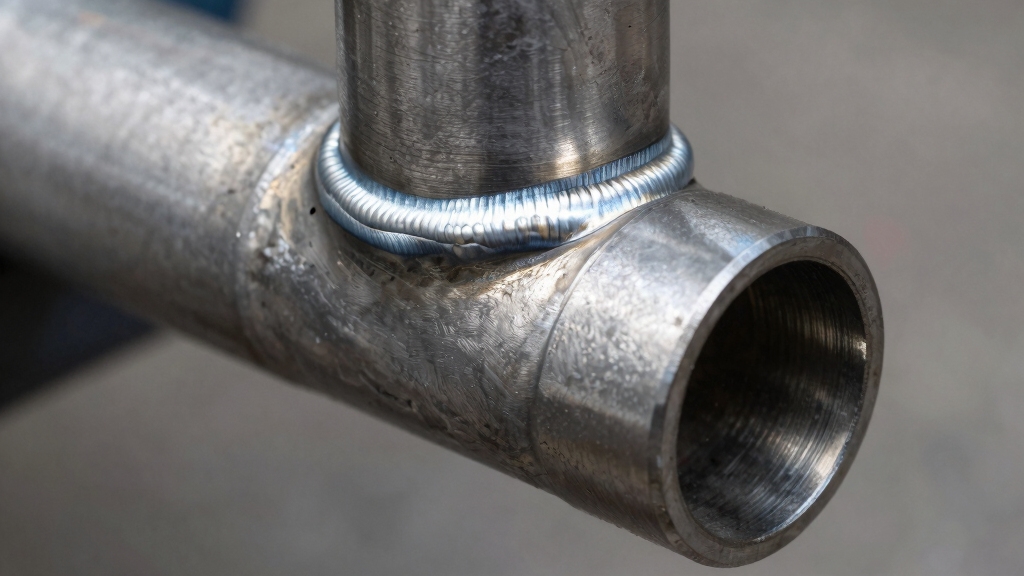
A socket weld joins small-diameter pipes by inserting the pipe into a recessed fitting and securing it with a continuous fillet weld around the joint’s outer edge.
You’ll seat the pipe fully, then retract it slightly to form a thermal expansion gap, enhancing durability under vibration and thermal cycling.
This method provides a leak-proof, high-pressure connection without beveling.
While it limits inspection access and pressure rating, it excels in robust, small-scale piping.
Understanding its installation and limits reveals its practical value.
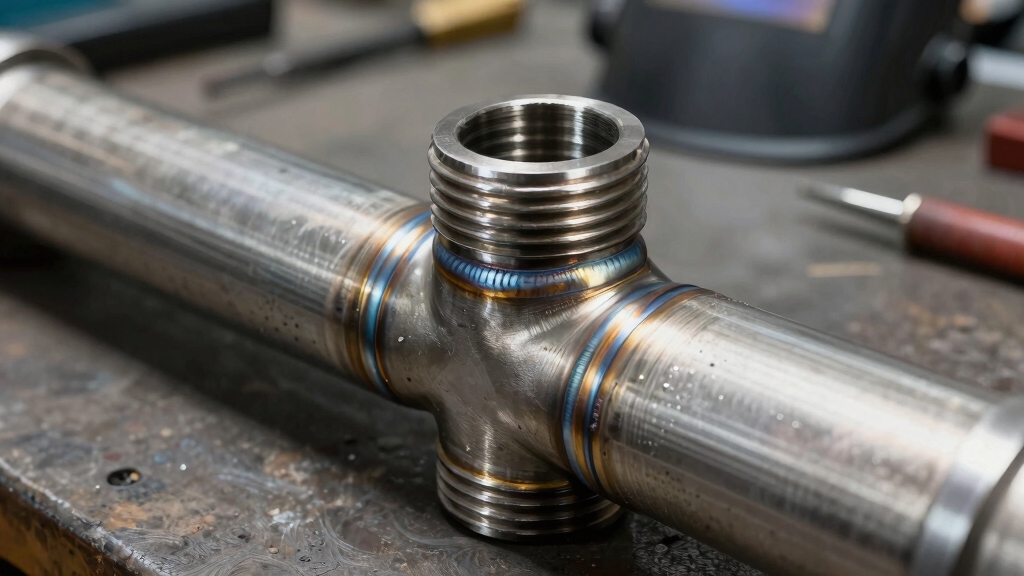
When joining small-diameter pipes, a socket weld works by inserting the pipe into a recessed fitting and applying a fillet weld around the joint’s outer edge.
You insert the pipe fully into the socket, then retract it slightly to create a 1/16-inch gap that accommodates thermal expansion and prevents stress cracking during welding.
Afterward, you apply a continuous fillet weld around the pipe’s outer circumference to secure a metallurgical bond.
This technique eliminates the need for beveling or open-root welds, simplifying installation for pipes up to 4 inches.
Socket welds guarantee leak-proof, high-pressure connections ideal for liquids or gases.
They’re commonly used with fittings like reducers, tees, and elbows, providing strong structural integrity and resistance to vibration and thermal cycling in permanent piping systems.
Proper welding preparation and positioning are essential to avoid misalignment and ensure reliable, leak-proof joints, especially in high-pressure applications.
Socket welds provide a reliable solution for small-diameter pipe connections where leak-proof integrity and structural strength are priorities.
You’ll prefer socket welds over threaded joints when vibration resistance and metallurgical bonding are critical.
Socket welds eliminate thread-related leaks and loosening.
Compared to butt-weld joints, socket welds simplify alignment without beveling or open root welds.
This saves time on smaller pipes up to 4 inches.
However, you should avoid socket welds in high-pressure or highly corrosive applications since their pressure rating caps at ASME 600.
Also, consider the difficulty in weld inspection and removal.
Ultimately, socket welds suit permanent installations requiring robust sealing and moderate pressure.
They are especially effective in compact piping networks with frequent fittings like elbows, tees, and reducers, where mechanical strength and leak prevention outweigh high-integrity inspection demands.
Additionally, ensuring proper edge preparation and alignment is critical to achieving a strong leak-proof connection with socket welds.
To begin, you’ll want to insert the pipe into the fitting socket. Just make sure to leave a precise 1/16-inch gap. This little space is really important; it allows for thermal expansion.
Once you’ve got the pipe in place, pull it back just a bit. This will create the necessary setback before you start applying those fillet welds around the joint.
Managing that gap is crucial! It helps prevent weld cracking and ensures you’ve got a strong, leak-proof connection. So, pay attention to those details, and you’ll be on the right track!
Using a weld-through primer on the joint before welding can enhance corrosion resistance and protect the connection from rust and oxidation.
Inserting the pipe correctly into the fitting’s socket is essential for guaranteeing a reliable weld and maintaining the joint’s integrity.
Begin by thoroughly cleaning the pipe end to remove debris or contaminants.
Insert the pipe fully into the socket recess, guaranteeing it seats firmly without force.
Then, retract the pipe slightly—approximately 1/16 inch (1.5 mm)—to establish a controlled gap.
This setback accommodates thermal expansion during welding, preventing stress and cracking.
Maintain precise alignment to avoid misfit or uneven welds.
Avoid excessive insertion depth, which compromises gap consistency.
This technique guarantees proper joint geometry, enabling effective fillet weld application.
Ensure to remove the zinc coating within about 2 inches of the joint to prevent zinc contamination and promote a strong weld bond.
When managing the welding and gap during installation, maintaining the 1/16-inch setback is critical to accommodate thermal expansion and prevent stress-induced cracking.
After fully inserting the pipe into the socket, retract it slightly to achieve this gap. This clearance allows the pipe to expand during welding without exerting excessive stress on the joint.
You’ll apply fillet welds evenly around the pipe’s outer diameter, guaranteeing a consistent, metallurgically sound bond. Avoid eliminating the gap, as this risks weld distortion and cracking.
Additionally, control heat input carefully to minimize warping. For unions, tighten internal threads before welding to stabilize components.
Proper gap management combined with precise welding technique guarantees a durable, leak-proof joint capable of withstanding thermal cycling and operational stresses in high-pressure piping systems.
Controlling heat input is especially important to reduce zinc vaporization and prevent weld porosity and defects when working with galvanized materials.
Although socket welds may seem straightforward, they deliver exceptional structural strength and leak-proof integrity that surpass many other connection methods, especially threaded joints.
When you use socket welds, you benefit from:
Proper fillet weld size and leg length measurement are critical to achieving the required joint strength and ensuring compliance with industry standards.
These factors combine to make socket welds highly reliable for small-diameter, high-pressure applications where joint strength and leak prevention are critical.
It’s important to understand that socket welds have a pressure limit set at ASME class 600. This means they aren’t suitable for very high-pressure systems.
When it comes to inspecting these welds, it can get a bit tricky. Since socket welds don’t have an open root, using methods like ultrasonic or radiographic examination becomes challenging.
And that’s not all. If the installation gaps aren’t done right, it can create stress concentrations. This can lead to premature joint failure, especially when the system goes through thermal cycling or pressure fluctuations. So, paying attention to these details is crucial for ensuring the longevity and safety of the joint.
Proper inspection techniques and maintenance are essential to detect issues early and maintain joint integrity over time.
Because socket weld joints are limited to ASME 600 pressure class, they can’t be used in systems requiring extremely high pressure ratings. This constraint stems from their fillet weld design and socket recess, which inherently restrict pressure capacity.
You should consider these key pressure class limitations:
Understanding these limits helps you select appropriate welding methods. This ensures safety and compliance in your piping design without risking joint failure or leakage. Additionally, the lack of full joint penetration in socket welds compared to CJP welds contributes to their lower pressure and fatigue performance.
Socket weld joints often pose significant challenges during inspection, primarily due to the fillet weld configuration and the recessed pipe insertion.
You’ll find it difficult to perform thorough non-destructive testing (NDT) because the weld throat and root areas are partially obscured. This limits ultrasonic or radiographic inspection effectiveness, especially on small diameters.
| Inspection Method | Limitations | Impact on Integrity Assessment |
|---|---|---|
| Ultrasonic Testing | Access limited by socket depth | Reduced defect detectability |
| Radiographic Testing | Weld overlap causes shadowing | Incomplete weld visualization |
| Visual Inspection | Fillet weld geometry restricts | Surface defects may be missed |
Because of these challenges, you must rely on qualified welding procedures and strict process controls rather than solely on post-weld inspections. Proper joint preparation and fit-up are essential to minimize inspection difficulties and ensure weld integrity.
The risk of stress failure in socket welds stems largely from their inherent pressure limitations and inspection difficulties. Socket welds are typically limited to ASME 600 pressure class, restricting their use in high-pressure systems. Additionally, welding-induced stresses concentrate near the fillet weld and the pipe-to-fitting interface, increasing failure potential if the expansion gap isn’t properly maintained.
Consider these critical factors:
You must account for these constraints to mitigate stress failure risks and guarantee joint integrity in socket weld applications. Applying proper post-weld heat treatment can help relieve residual stresses and reduce the likelihood of cracking in these welds.
Piping systems often require reliable joints to change direction, branch off, or connect components without compromising integrity.
Socket welds excel in small-diameter pipes (½ to 2 inches), providing strong, leak-proof connections in high-pressure liquid or gas lines.
You’ll find them widely used in ASME B31.3 permanent piping setups, non-critical service lines, and systems demanding vibration resistance.
Their design suits reducers, tees, elbows, and flanges, enabling compact, efficient layouts.
| Application Area | Typical Use Case |
|---|---|
| High-pressure piping | Chemical plants, refineries |
| Branch connections | Sockolets for smaller pipe branches |
| Directional changes | Elbows and tees in process lines |
| Small pipe diameter lines | ≤ 2 inches in water or gas distribution |
| Non-critical systems | HVAC, fire protection systems |
When you select fittings to create strong, leak-proof joints in small-diameter, high-pressure lines, understanding standard types and components is key.
Socket weld fittings typically include various shapes designed for specific pipeline functions, all relying on a recessed socket and fillet weld. You’ll encounter:
Socket weld fittings come in diverse shapes, each designed for specific pipeline functions using recessed sockets and fillet welds.
Each component guarantees a metallurgically bonded joint, critical to maintaining integrity under pressure without pre-weld machining.
You must choose based on application requirements and pipe specifications.
Achieving a leak-proof socket weld demands meticulous attention to preparation, joint fit-up, and welding technique.
First, clean pipe ends thoroughly to remove contaminants that compromise weld integrity. Insert the pipe fully into the fitting’s socket, then retract it slightly to maintain the critical 1/16-inch gap for thermal expansion.
This setback prevents stress-induced cracking during welding. Use consistent fillet welds around the pipe’s outer diameter, ensuring uniform penetration and avoiding undercuts or excessive reinforcement.
Control heat input carefully to minimize distortion and residual stresses. After welding, visually inspect the fillet for discontinuities and perform non-destructive testing as required.
You need to regularly inspect socket weld joints for cracks, corrosion, and weld integrity, especially in high-pressure or thermal cycling environments.
Clean around the weld to prevent debris buildup that could induce stress.
Monitor for signs of leakage or deformation.
If you detect defects, perform non-destructive testing like radiography or dye penetrant inspection.
Maintain proper support to minimize vibration and thermal expansion stresses.
Ensure the expansion gap remains intact to avoid stress failures.
You generally shouldn’t use socket welds with plastic piping materials because the welding process involves high heat and metal filler, which can damage plastics.
Socket welds create metallurgical bonds suited for metal pipes, not thermoplastics that require fusion or solvent welding methods.
If you want to join plastic pipes, consider specifically designed mechanical fittings or heat fusion techniques that accommodate their thermal and chemical properties safely and effectively.
Like a knight’s armor facing a fiery dragon, your socket weld must withstand temperature fluctuations carefully. Rapid thermal changes cause expansion and contraction, stressing the fillet weld and pipe.
Without that essential 1/16-inch gap for expansion, cracks or stress failures can occur. Proper setback and gap management guarantee durability by accommodating movement.
This prevents weld fatigue and maintains structural integrity under thermal cycling in your piping system.
You must guarantee a 1/16-inch gap between pipe and fitting to allow thermal expansion, preventing stress cracks.
Always clean pipe ends thoroughly to avoid weld defects.
Use proper PPE, including welding helmets, gloves, and protective clothing, to guard against burns and fumes.
Avoid overtightening unions before welding to minimize warping.
Follow ASME guidelines strictly and ensure ventilation in confined spaces to reduce toxic fume exposure during socket weld installation.
Imagine prying apart a tightly fused joint. Removal demands precision tools like socket weld removal machines designed to grip and separate without damaging adjacent pipes.
You’ll also need pipe cutters, grinders, and specialized welding equipment for repairs. Using these tools, you can carefully grind away fillet welds and reshape surfaces before re-welding.
This approach guarantees structural integrity while minimizing stress concentrations and preserving the piping system’s longevity and safety.
When you choose socket welds, you tap into a connection method known for up to 20% higher joint strength compared to butt welds. This makes them ideal for high-pressure systems requiring leak-proof seals.
By following precise installation and inspection protocols, you guarantee structural integrity and durability. Understanding their pressure limits and common applications helps you apply socket welds effectively, optimizing safety and performance in critical piping systems.