Phone:
(701)814-6992
Physical address:
6296 Donnelly Plaza
Ratkeville, Bahamas.

Phone:
(701)814-6992
Physical address:
6296 Donnelly Plaza
Ratkeville, Bahamas.

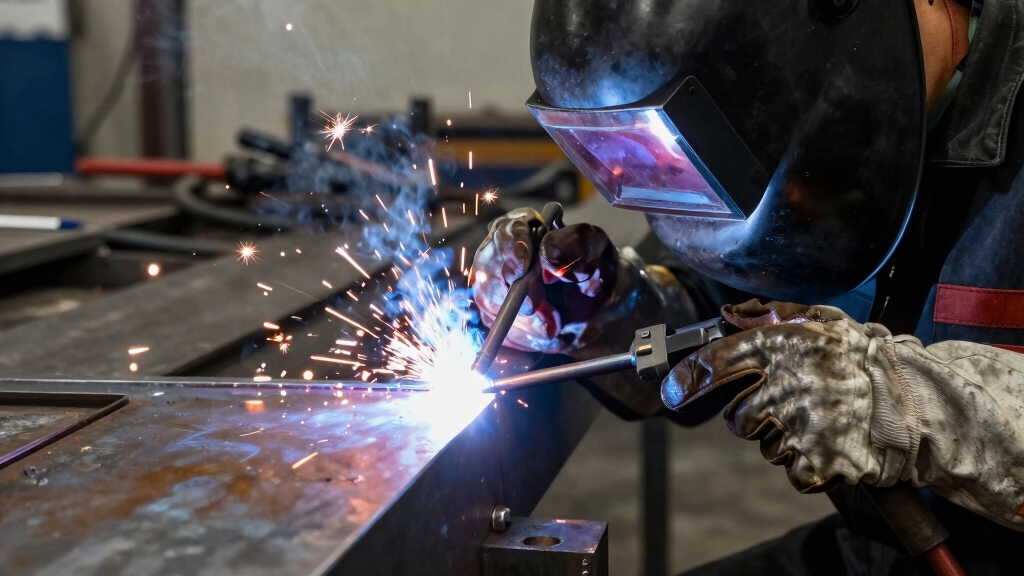
You use Gas Metal Arc Welding (GMAW) to join metals by continuously feeding a consumable wire electrode through a welding gun. An electric arc melts the wire and base metal to form a strong weld pool.
Shielding gas protects the weld from contamination, ensuring clean, precise welds on materials like carbon steel, aluminum, and stainless steel.
This semi-automatic process offers high deposition rates and versatility. Keep exploring to understand key equipment, transfer modes, and best practices.
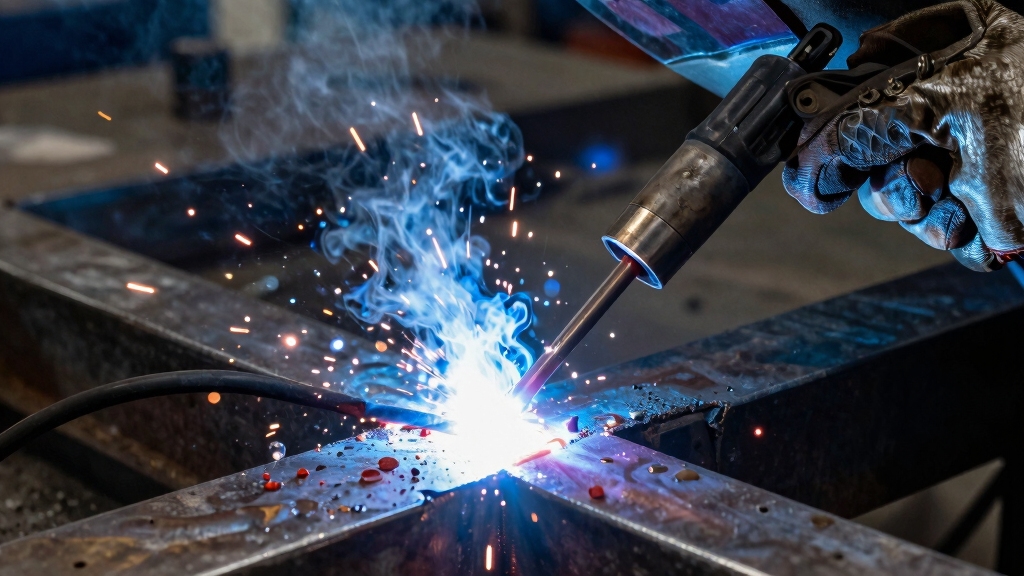
Understanding GMAW welding means recognizing how it uses a continuous wire electrode and shielding gas to join metals efficiently.
You feed a solid wire electrode continuously through the welding gun while an electric arc forms between the wire and the workpiece.
This arc melts both the wire and base metal, creating a molten weld pool.
The shielding gas flows around the weld area, protecting the pool from atmospheric contamination that could weaken the joint.
You control travel speed manually, while the power source regulates wire feed and arc length, making the process semi-automatic.
The consumable electrode melts and fuses with the workpiece, providing a strong bond.
This method, developed in the late 1940s, offers a faster, cleaner alternative to older welding techniques.
The use of shielding gas is essential to prevent oxidation and ensure weld integrity throughout the process.
To perform GMAW effectively, you’ll need some essential equipment. First on the list is a welding gun, which is crucial for directing the weld. You’ll also need a power source to provide the necessary energy, along with a wire feed unit to supply the filler material. And don’t forget about the shielding gas cylinder—it plays a vital role in the process.
Now, when it comes to choosing the right shielding gas, you’ve got a couple of solid options. Argon is popular, but many welders also opt for an argon-CO2 mix. Why? Well, it helps protect the weld pool and keeps the arc stable, which is super important for achieving quality results. For example, a 75% Argon / 25% CO2 blend is commonly used for deep penetration on mild steel.
The welding gun directs the continuous wire electrode and shielding gas precisely to the weld area. Your power source controls current and voltage, maintaining a stable arc for consistent heat input.
The wire feed unit guarantees a steady wire delivery rate, critical for maintaining arc stability and weld quality. Meanwhile, the shielding gas cylinder supplies inert or active gas mixtures to protect the molten weld pool from atmospheric contamination, preventing porosity and oxidation.
Choosing the right combination and maintaining these components guarantees efficient, high-quality welds and smooth operation throughout your GMAW work.
Additionally, selecting the appropriate shielding gas based on the base metal and welding conditions is essential to optimize weld quality and minimize spatter.
Alongside the welding gun, power source, and wire feed unit, the choice of shielding gas markedly influences weld quality and process stability in GMAW.
You’ll select gases based on metal type, desired arc characteristics, and transfer mode. Argon, an inert gas, provides a stable arc and smooth welds, especially with nonferrous metals like aluminum.
For carbon steels, argon mixed with CO2, commonly 75% argon and 25% CO2, balances arc stability, penetration, and spatter control.
Pure CO2 boosts penetration but increases spatter and weld porosity. You might also encounter helium blends, which can increase heat input and weld pool fluidity.
Choosing the right shielding gas optimizes arc stability, bead appearance, and mechanical properties. It’s essential to match gas composition with your specific welding application.
Additionally, small controlled amounts of oxygen (typically 1–5%) can be added to improve arc stability and enhance fusion in certain welding processes.
You’ll encounter four primary modes: short-circuiting, globular, spray, and pulsed spray transfer.
Short-circuiting transfer involves the wire touching the workpiece, creating repeated short circuits. It’s ideal for thin materials and out-of-position welding.
Globular transfer sends larger molten droplets across the arc but produces more spatter, reducing weld quality.
Spray transfer delivers fine droplets at high velocity, resulting in smooth, deep-penetration welds. This mode is best for thicker metals.
Pulsed spray transfer modifies spray mode by pulsing current, granting better control over heat input and minimizing distortion.
Understanding these modes helps you select parameters that optimize weld integrity and appearance for your specific application.
Selecting the appropriate mode also depends on factors like material thickness and welding position to balance heat input, spatter, and penetration.
You’ll notice that GMAW really stands out when it comes to welding speeds. It’s significantly faster than many other methods, which means you can get more done in less time without compromising on quality.
Plus, one of the best things about GMAW is that it produces cleaner welds with minimal spatter. This reduces the hassle of post-weld cleanup, saving you both time and effort.
Adjusting the wire feed speed and voltage properly is key to achieving consistent, high-quality welds with minimal defects.
Experience faster welding speeds with GMAW, which outperforms traditional methods like GTAW and SMAW by delivering continuous wire feed and stable arc conditions.
This efficiency lets you complete welds quickly while maintaining quality. The semi-automatic nature reduces downtime compared to manual stick welding. The steady arc enhances deposition rates.
| Welding Method | Deposit Rate (lb/hr) | Typical Travel Speed (in/min) |
|---|---|---|
| GMAW | 8-25 | 20-40 |
| GTAW | 1-5 | 5-20 |
| SMAW | 3-10 | 10-30 |
| FCAW | 6-20 | 15-35 |
Choosing GMAW means you’ll benefit from faster production cycles and improved throughput in diverse applications. Proper wire feed speed adjustment is crucial to maintain consistent weld quality and avoid defects.
When aiming for a cleaner weld appearance, GMAW stands out by producing minimal spatter and virtually no slag, thanks to its effective shielding gas coverage.
This results in smoother weld beads and less post-weld cleanup compared to SMAW or FCAW. You’ll notice the weld pool remains stable, allowing better control over bead shape and size.
The continuous wire feed and consistent arc reduce surface defects, making GMAW ideal for applications where aesthetics and precision matter.
Key factors contributing to cleaner welds include:
Effective shielding gas prevents atmospheric contamination.
Reduced spatter minimizes surface imperfections.
No slag layer eliminates the need for chipping or grinding.
Stable arc allows precise bead control.
Consistent wire feed assures uniform weld appearance.
These advantages make GMAW a preferred choice for high-quality, visually appealing welds. Additionally, proper shielding gas selection is critical in minimizing spatter and ensuring arc stability during the welding process.
GMAW welding excels at joining a wide range of common metals, making it highly versatile in various industrial applications.
You’ll find it effective for carbon steel, which benefits from high deposition rates and strong welds. It also handles stainless steel well, providing corrosion resistance with clean, precise weld beads.
Aluminum is another metal suited for GMAW, though it requires specific shielding gases and parameters due to its high thermal conductivity. Additionally, GMAW can weld nonferrous metals like copper and its alloys, though these demand careful control to prevent oxidation.
Selecting the correct filler wire and shielding gas is essential to achieving strong, defect-free welds across different metals.
Mastering the welding of various metals opens opportunities across numerous industries relying on strong, efficient joins. You’ll find GMAW widely used due to its speed, precision, and versatility.
It excels in automotive manufacturing for assembling vehicle frames and components. Aerospace industries use GMAW for fabricating lightweight, corrosion-resistant parts.
In construction, GMAW guarantees durable steel structures and pipelines. Shipbuilding benefits from its ability to weld thick sections reliably.
Finally, manufacturing sectors employ GMAW in automated production lines for consistent, high-quality welds. Its suitability for automation enables increased throughput and reduced human error in mass production.
Typical applications and industries using GMAW include:
Achieving clean, high-quality welds requires careful control of key parameters such as wire feed speed, voltage, and travel angle.
You need to balance wire feed speed with voltage to maintain a stable arc and consistent metal transfer mode.
Keep your travel angle between 10° to 15° from vertical to guarantee optimal penetration and minimize spatter.
Proper shielding gas flow, typically 20-25 cubic feet per hour, protects the weld pool from atmospheric contamination.
Maintain a steady travel speed to avoid defects like undercut or lack of fusion.
Clean the base metal thoroughly before welding to remove rust, oil, and dirt.
Use the correct wire diameter and composition for your material and thickness to optimize weld quality and mechanical properties.
Following these tips will help you produce consistent, defect-free GMAW welds.
Even with proper technique and setup, you may encounter common welding issues that affect weld quality. Understanding and quickly addressing these problems guarantees consistent results.
For instance, porosity often results from inadequate shielding gas coverage or contaminated base metal. Excessive spatter may indicate incorrect voltage or wire feed speed settings. Lack of fusion typically stems from insufficient heat input or improper torch angle.
Burn-through happens when heat input is too high for thin materials. Finally, wire feeding issues like bird-nesting occur due to improper tension or worn liners.
To troubleshoot effectively:
You need to wear appropriate personal protective equipment, including a welding helmet with a proper shade lens, flame-resistant clothing, gloves, and safety boots.
Ensure good ventilation to avoid inhaling harmful fumes. Keep flammable materials away from the welding area.
Use proper grounding and inspect equipment regularly to prevent electric shock.
Always follow established safety protocols and stay alert to avoid burns, eye damage, and respiratory hazards during GMAW welding.
Imagine balancing speed, quality, and expense in your welding projects.
GMAW welding often costs less than GTAW due to its faster deposition rates and reduced labor time.
However, it can be pricier upfront than SMAW because of equipment and shielding gas needs.
Over time, though, its efficiency and minimal cleanup lower overall costs, especially in high-volume or automated production.
You’re investing in speed and consistency that often pay off quickly.
You’ll find that GMAW welding emits fewer fumes and less slag compared to SMAW, reducing airborne contaminants.
However, the shielding gases like argon and CO2 can contribute to greenhouse gas emissions, especially CO2.
Energy consumption is moderate, but continuous wire feed and gas use increase resource demand.
Proper ventilation and gas recovery systems help minimize environmental impact, making your process cleaner and more sustainable in industrial applications.
You can cautiously use GMAW on painted or coated metals, but it’s generally advisable to remove coatings beforehand.
Coatings can introduce impurities and disrupt the arc stability, potentially compromising weld quality.
While GMAW’s shielding gas offers some protection, residual paint or contaminants may cause porosity or weak bonding.
For best results, prepare surfaces by cleaning or stripping coatings to guarantee a clean weld pool and consistent fusion.
The wire electrode diameter directly influences your weld quality by affecting heat input, penetration, and deposition rate.
Smaller diameters offer better control and precision, ideal for thin metals. Larger diameters provide higher deposition rates and deeper penetration suited for thicker materials.
Choosing the right diameter helps maintain arc stability and reduces spatter. Using an improper size can cause poor fusion, excessive spatter, or insufficient weld strength.
Tailor it to your specific application.
Now that you know GMAW welding’s ins and outs, imagine the precision and speed you can achieve with the right equipment and technique.
By selecting proper shielding gas and understanding metal transfer modes, you’ll consistently create strong, clean welds.
Remember, mastering GMAW isn’t just about following steps. It’s about refining your skill to troubleshoot and optimize every weld. Ready to weld smarter, faster, and better? GMAW is your gateway to welding excellence.