Phone:
(701)814-6992
Physical address:
6296 Donnelly Plaza
Ratkeville, Bahamas.

Phone:
(701)814-6992
Physical address:
6296 Donnelly Plaza
Ratkeville, Bahamas.

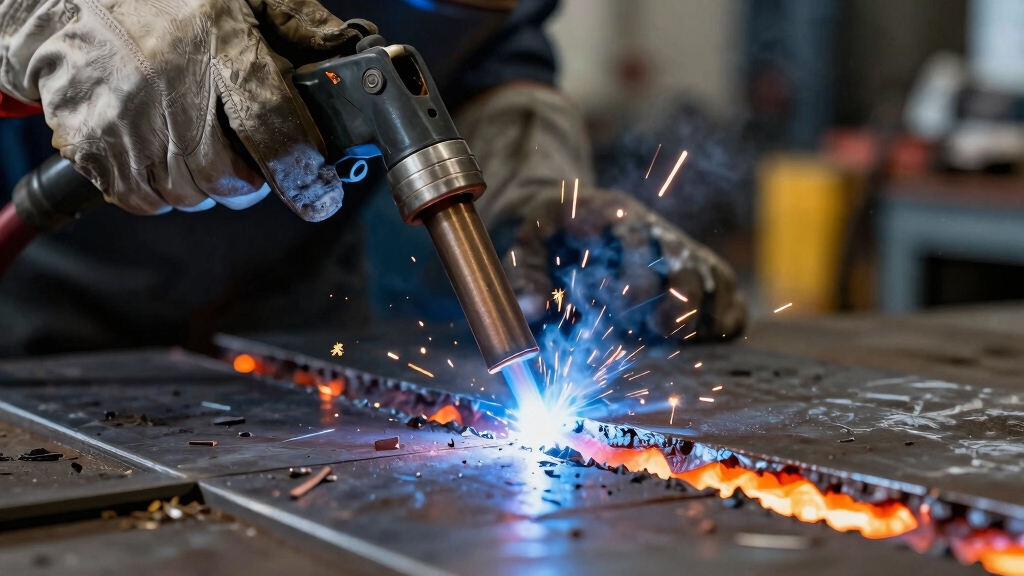
Gouging in welding is a controlled metal removal process where you use an electric arc or plasma stream to melt and eject unwanted metal.
This prepares joints or fixes defects. You’ll often use techniques like air carbon arc or plasma gouging to shape workpieces or remove flawed welds.
This ensures proper fit-up and structural integrity. Matching the right equipment and settings is critical for efficiency and safety.
Understanding these fundamentals helps you optimize welding quality and repair effectiveness.
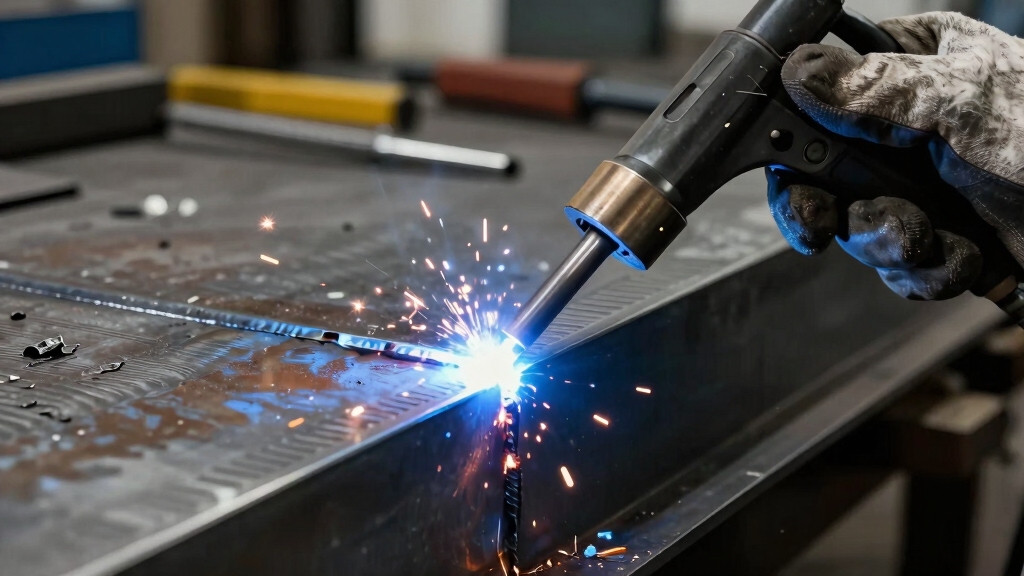
Understanding welding gouging involves recognizing it as a controlled metal removal process essential for preparing joints, correcting defects, or removing old welds.
You’ll find that gouging precisely cuts or shapes the workpiece by melting and ejecting molten metal. This creates clean, defined areas ready for subsequent welding.
Unlike welding, which adds material, gouging subtracts metal to guarantee structural integrity and proper joint fit-up.
This technique is vital in repair and maintenance, especially for removing flawed welds or back gouging full-penetration joints.
By using an electric arc or plasma source, you control the metal removal rate and depth, tailoring the process to specific applications.
Mastering gouging means you can prepare surfaces efficiently, improving weld quality and extending component life.
Proper torch settings and gas flow are essential to perform gouging precisely without causing excessive damage.
When you initiate welding gouging, an electric arc or plasma stream melts the targeted metal area. This allows molten material to be efficiently ejected by a high-velocity air or gas flow.
This controlled melting and expulsion process enables precise metal removal without damaging the surrounding base material. You manipulate the electrode or torch to maintain consistent arc intensity and travel speed, optimizing gouge depth and width.
Key operational factors include:
Understanding these elements lets you execute accurate, repeatable gouging for welding preparation or repair. Proper adjustment of the arc current is essential to maintain a stable arc and achieve the desired metal removal rate.
Mastering the operational factors of welding gouging naturally leads to examining the various techniques that achieve specific metal removal goals.
You’ll primarily encounter air carbon arc gouging, which uses a carbon electrode, a high-intensity arc, and compressed air to eject molten metal rapidly. This method suits both deep and broad cuts.
Plasma gouging offers heightened precision, ideal for thin metals or detailed work, employing a focused plasma stream.
Oxy-fuel gouging applies a controlled oxygen-fuel torch, effective across metal thicknesses but less precise than plasma.
Carbon arc gouging also functions portably for swift, deep cuts in field or shop settings.
Selecting electrode geometry—cylindrical, flat, jointed, or hollow—further refines gouging efficiency. This balances travel speed, stub loss, and surface finish according to the application.
Proper surface preparation, including mechanical profiling, is essential to ensure coating integrity after gouging operations.
Welding gouging plays a critical role in preparing surfaces for peak weld bonding by removing contaminants and irregularities that compromise joint integrity.
When you use gouging, you enhance weld quality by precisely eliminating flaws and shaping metal for optimal fusion.
Key applications include:
Removing defective welds, cracks, or flaws to prevent joint failure.
Back gouging full-penetration welds for structural strength.
Cleaning surfaces of rust, slag, or mill scale for sound bonding.
Shaping and contouring metal to meet design and fit-up requirements.
Repairing castings by gouging out defects before weld overlay.
Proper surface preparation is essential to avoid lack of fusion and ensure the strength of the welded joint.
Selecting the right gouging equipment materially impacts both the efficiency and safety of your metal removal process. Match electrode type, amperage, and air pressure to the material and thickness for peak performance.
Always wear protective gear and guarantee proper ventilation to mitigate molten metal spray and fumes. Maintain equipment settings within manufacturer specifications to avoid damage and incomplete cuts.
| Equipment Type | Peak Settings | Safety Precautions |
|---|---|---|
| Carbon Arc Gouging | 230-240A, 80-85 psi | Use face shield, gloves |
| Plasma Gouging | Lower amperage, precise | Ventilation, protective wear |
| Oxy-fuel Gouging | Variable flame size | Flame-resistant clothing |
| Electrode Geometry | Match joint requirements | Handle carefully, avoid stub loss |
Adhering to these parameters guarantees precision and operator safety. Plasma gouging relies on the high-temperature plasma arc to rapidly remove metal while maintaining cut quality and minimizing heat distortion.
Gouging affects weld joint strength by ensuring proper surface preparation and defect removal. This prevents stress concentrators and crack initiation.
If you gouge correctly, you maintain joint integrity by removing flawed metal without over-thinning the base material.
However, improper gouging, like excessive depth or irregular profiles, can weaken the joint. This introduces stress risers or reduces effective cross-section, leading to premature failure under cyclic loads or high stress over time.
You might be surprised, but yes, you can automate gouging in robotic welding systems. Integrating precise sensors and CNC controls lets robots perform gouging with consistent depth and speed.
This automation enhances repeatability and reduces human error, especially in complex or hazardous environments. However, you’ll need advanced programming and real-time feedback to handle variations in metal thickness or defects.
This ensures ideal gouge quality without compromising weld integrity.
You need to recognize that welding gouging fumes contain harmful particulates and gases, including metal oxides and ozone.
These emissions can degrade air quality and pose respiratory risks.
They contribute to workplace contamination and may impact surrounding environments if not properly controlled.
You must ensure adequate ventilation and use appropriate filtration systems to minimize fume dispersion.
This protects both operator health and environmental safety during gouging operations.
To troubleshoot gouging equipment malfunctions, first check electrode condition. Replace if worn or damaged.
Verify amperage and air pressure settings match specifications. Adjust if inconsistent cuts occur.
Inspect air supply for leaks or blockages reducing flow.
Clean electrode holder and cables to guarantee solid connections.
If molten metal spray is erratic, confirm proper electrode geometry and maintain correct arc length.
Regularly service plasma or air arc tools to prevent performance drops.
You’ll find industry standards like AWS A4.1 and ASME Section IX govern welding gouging practices with near-religious precision.
These standards ensure safety and quality by regulating electrode types, gouging parameters, and operator qualifications to minimize defects and hazards.
You must adhere to these protocols strictly, as they control everything from air pressure to amperage settings.
This guarantees consistent, reliable gouging results while protecting both the workpiece and your safety.
Now that you understand welding gouging, don’t let its complexity intimidate you. While it may seem time-consuming, mastering gouging techniques can materially improve weld quality and structural integrity.
By choosing the right equipment and following safety protocols, you’ll work more efficiently and confidently.
Remember, precision in gouging isn’t optional—it’s essential. Embrace the process, and you’ll see how this skill elevates your welding projects to a professional standard.