Phone:
(701)814-6992
Physical address:
6296 Donnelly Plaza
Ratkeville, Bahamas.

Phone:
(701)814-6992
Physical address:
6296 Donnelly Plaza
Ratkeville, Bahamas.

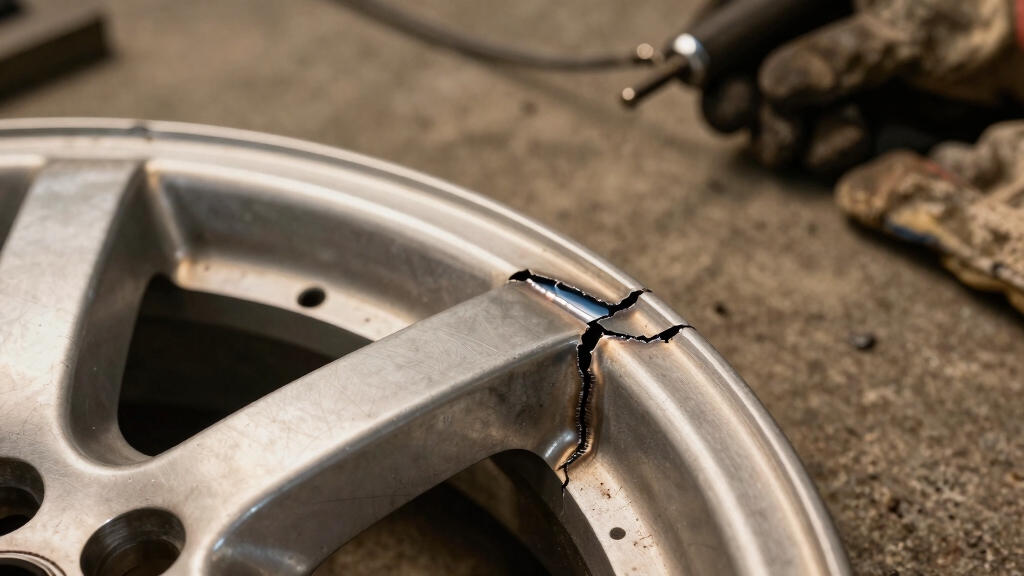
You can weld a cracked rim only if the crack is minor, located in low-stress areas like the inboard side or inner rim lip.
Repairs should be done with expert TIG welding to maintain safety and structural integrity.
Avoid welding cracks in high-stress zones such as spokes or hubs, as this risks failure.
Welding affects rim strength and balance, so professional inspection and careful heat control are essential.
Understanding crack location, direction, and material helps you decide when repair is feasible versus replacement.
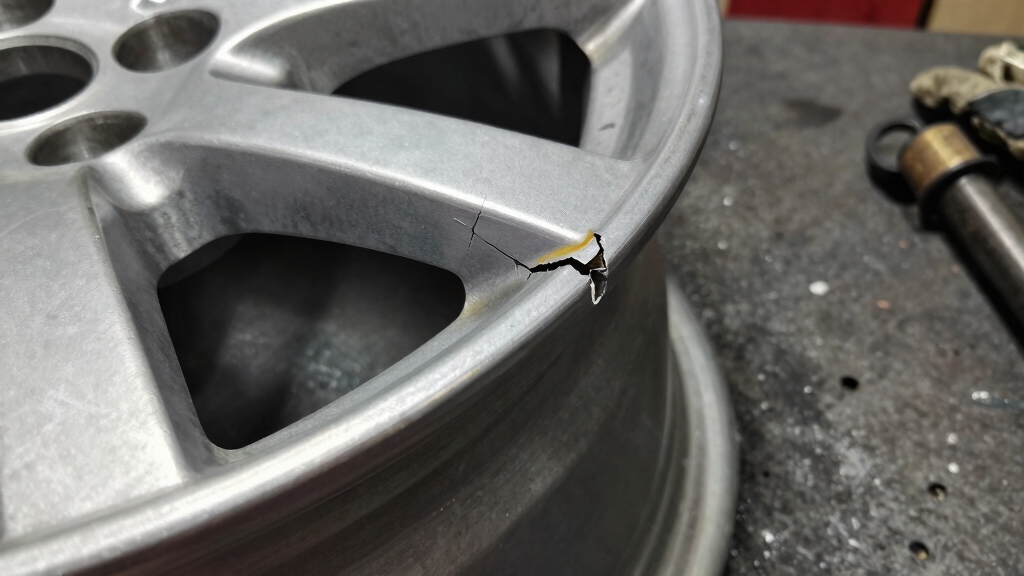
Although welding can restore some cracked rims, you need to know which cracks are safe to repair and which aren’t.
Cracks located on the inboard side or the back of the wheel are generally safer to weld because these areas endure less stress during operation.
Inner or outer rim lips also allow straightforward welding with minimal risk.
However, cracks on spokes, the front face, or hub areas are unsafe to weld due to high stress concentrations that increase failure risk.
Cracks inside the barrel compromise strength and balance, making welding inadvisable there.
Multiple or large front cracks pose significant safety hazards and should prompt rim replacement instead.
Always prioritize professional inspection to determine if welding a crack will maintain structural integrity and guarantee safe driving conditions.
Proper welding techniques and parameters are essential to minimize heat input and avoid weakening the rim during the repair process.
When you evaluate a cracked rim for welding, the direction of the crack plays a critical role in determining safety and effectiveness.
The crack’s direction is crucial in assessing rim welding safety and success.
Cracks running perpendicular to the wheel’s rotation, across the rim, are generally safer to weld, especially if located in low-stress areas. This orientation minimizes the risk of imbalance and preserves post-weld structural integrity.
Conversely, cracks parallel to the wheel’s spin axis pose significant safety hazards. These cracks compromise balance and increase the likelihood of weld failure under dynamic loads.
Welding parallel cracks often results in weakened metal that can fracture during operation. Always assess crack direction carefully.
Welding across-direction cracks in appropriate locations may be viable, but parallel cracks usually necessitate rim replacement to guarantee safe, reliable performance.
For thicker rim sections, employing multi-pass welding techniques with controlled heat input is essential to ensure full penetration and minimize the risk of distortion during repair.
Because rim materials have distinct properties, the welding approach and risks vary markedly between aluminum alloy and steel wheels. When you weld aluminum alloy rims, you must use expert techniques to avoid brittleness caused by improper heat control.
Aluminum’s thermal conductivity and oxide layer demand precise fusion welding for adequate penetration and strength. In contrast, steel rims tolerate welding more forgivingly, allowing for simpler electric arc methods with less risk of weakening.
You should never attempt aluminum rim repairs without specialized TIG welding skills, as poor welds degrade metal integrity and safety. Always consider that welding alters the metal’s microstructure; even with steel, repaired rims won’t regain original factory strength.
Prioritize professional assessment to make certain your rim material’s characteristics align with safe welding practices. For aluminum rims, using an AC/DC TIG welder with adjustable AC balance is essential to break the oxide layer and achieve a strong, clean weld.
Since aluminum rims demand precise heat control and deep fusion to maintain strength, TIG welding stands out as the preferred method. Unlike stick or MIG welding, TIG offers superior precision and control, minimizing heat distortion and preserving alloy integrity.
TIG welding ensures precise heat control and fusion, preserving aluminum rim strength and alloy integrity.
This reduces brittleness and the risk of micro-cracks forming post-weld. You’ll notice TIG’s focused arc allows for thorough fusion in tight crack areas, essential for structural reliability.
Consider these key advantages of TIG welding:
Other methods often lack the finesse required for aluminum alloys, increasing the risk of failure. For a safe, reliable repair, TIG welding by an experienced technician is your best choice. Additionally, using AC TIG with inverter technology assists in breaking down oxide during welding, improving weld quality.
Mastering TIG welding provides the control needed for effective crack repair. However, preparing the rim correctly sets the foundation for a strong, safe weld.
First, clean the rim thoroughly to remove paint, debris, and contaminants. Next, drill small holes at crack ends to prevent propagation. Then, gouge the crack edges to create a clean groove for penetration. Assess the crack location and direction to confirm weld suitability.
| Step | Action | Purpose |
|---|---|---|
| Cleaning | Remove paint and dirt | Guarantee weld adhesion |
| Drilling | Hole at crack ends | Stop crack spreading |
| Gouging | Grooving crack edges | Improve weld fusion |
Proper prep minimizes weld defects and preserves structural integrity. Using the correct welding method for the metal thickness and project ensures optimal results in crack repair.
Welding a cracked rim can really compromise its original structural integrity. This isn’t something to take lightly!
When you weld it, you might reduce the overall strength and safety of the rim.
Now, here’s where it gets tricky: post-weld durability can be pretty unpredictable. You see, there might be hidden micro-cracks that could propagate under stress, which can ultimately lead to failure.
Additionally, unintended heat from welding can cause localized hardened zones that act as stress concentrators, further increasing the risk of cracks.
Although welding can restore a cracked rim’s appearance, it doesn’t fully recover the original structural integrity.
Welding alters the metal’s properties, often causing brittleness and hidden micro-cracks. These changes increase the risk of rim failure, especially under stress.
When deciding whether to weld, consider these structural factors:
Cracks in high-stress areas like spokes or hub zones compromise safety and are unsafe to weld.
Welding aluminum alloys requires expert TIG welding to avoid weakening the rim’s strength.
Cracks parallel to the wheel’s rotation direction are more prone to failure post-weld due to imbalance and stress concentration.
Keep in mind, a welded rim rarely regains factory-grade strength. Prioritize safety over repair convenience.
Proper heat control during welding is essential to minimize thermal stress and reduce the risk of cracking.
Since welding changes the metal’s microstructure, you face increased risks of brittleness and hidden cracks that can worsen over time.
These microstructural alterations reduce the rim’s original strength and increase the chance of failure under stress. You must consider crack location, direction, and rim material to assess post-weld durability accurately.
| Factor | Impact on Durability | Safety Consideration |
|---|---|---|
| Crack Location | Inboard/back safer | Front/spokes risky |
| Crack Direction | Perpendicular cracks safer | Parallel cracks threaten balance |
| Rim Material | Steel more forgiving | Aluminum needs expert TIG welding |
| Weld Quality | Proper fusion critical | Poor welds cause brittleness |
| Post-Weld Risks | Hidden cracks can expand | Vibration and re-cracking possible |
Always prioritize professional inspection and replacement if risks prevail. Preheating the metal and controlling the cooling rate are essential to minimize the risk of cracking and weld failure in repaired rims.
Determining whether to repair or replace a cracked rim hinges on the crack’s size, location, and severity. You should never attempt repairs on cracks in high-stress areas like spokes, the front face, or hub, as these pose serious safety risks.
Minor cracks on the inboard rim or inner barrel may be repairable with expert TIG welding. However, multiple cracks or large fractures require rim replacement to maintain structural integrity and safety.
Consider these factors before deciding:
Proper welding technique and heat control are critical to reduce defects and maintain rim safety during repairs.
When you weld a cracked rim, you’re changing its original structural integrity. This can introduce brittleness and weaken the metal. It’s important to keep in mind that this change can really compromise the rim’s strength, especially if the crack is in a high-stress area or if the welding isn’t done properly.
And let’s not forget about wheel balance. Welding can definitely affect that too. If the weld isn’t executed correctly, it can lead to vibrations and uneven tire wear. So, it’s crucial to ensure everything is balanced out afterward. Controlled heat input and proper post-weld heat treatment can help prevent residual stresses that further weaken the rim.
Although welding can restore a cracked rim’s shape, it inevitably alters the metal’s structural integrity. This affects both strength and balance. When you weld, the heat changes the metal’s microstructure, often causing brittleness or residual stresses. These changes reduce the rim’s ability to withstand impact and flexing.
This compromise means the rim won’t regain its original factory strength.
Keep these important factors in mind:
TIG welding aluminum requires expert skill to minimize weakening and avoid micro-cracks.
Welding cracks in high-stress or load-bearing areas risks sudden failure.
Post-weld inspections and non-destructive testing are essential to guarantee safety.
You should always consider that even a well-executed weld may not fully restore the rim’s structural integrity. Ongoing monitoring is vital for safe use.
Welding a cracked rim doesn’t just affect the metal’s strength; it also impacts the wheel’s balance. When you weld, uneven heat distribution and filler material can alter the rim’s original weight, causing imbalance.
If cracks run parallel to the wheel’s rotation, welding may worsen vibrations and tire wear due to disrupted rotational symmetry. Properly addressing cracks on the rim’s inner or outer lips with TIG welding helps maintain balance.
However, welding in high-stress or spoke areas risks permanent imbalance and structural failure. After welding, you must have the wheel professionally rebalanced.
Keep in mind that even expertly welded rims rarely regain factory-level integrity or balance. Frequent inspections and cautious driving are essential to guarantee your safety.
In maintaining and inspecting welded rims, you should prioritize regular visual and tactile checks for new cracks, corrosion, or signs of metal fatigue, especially around the weld seams and high-stress zones.
Focus on areas prone to stress such as the inner and outer rim lips, and avoid ignoring subtle surface irregularities. Use proper lighting and a magnifying glass to detect micro-cracks that could compromise safety.
Additionally, balance the wheel periodically to identify any vibration caused by structural changes.
Key tips include:
Consistent care enhances safety and prolongs rim lifespan.
A welded rim typically lasts several months to a few years under normal driving conditions.
However, you shouldn’t expect factory-level durability. The repair weakens the metal and can lead to hidden micro-cracks or imbalance over time.
You’ll need regular inspections to catch issues early. For safety, if you drive frequently or spot multiple cracks, it’s better to replace the rim rather than rely on a weld repair alone.
You might think welding a cracked rim won’t affect tire mounting, but it can.
Welding can cause slight warping or uneven surfaces, making it harder to seat the tire bead properly.
This leads to leaks or difficulty during mounting and removal.
To avoid problems, secure a professional weld, followed by precise machining and inspection.
Improperly welded rims can compromise safety and tire fitment, so don’t skip thorough checks.
Yes, you’ll find that some brands and rim designs are more prone to cracking, especially those using softer aluminum alloys or intricate spoke patterns.
Lightweight, performance-focused rims often sacrifice durability, increasing crack risk.
Designs with thin spokes or large cutouts concentrate stress, making cracks likelier.
You should prioritize rims made from higher-grade alloys with robust construction and consult manufacturer data to understand specific vulnerabilities before choosing or repairing wheels.
Welding a cracked rim can cost you a mere fraction of replacing it. Think $50 to $150 versus $300 to over $1,000 for new rims.
But don’t let the low price fool you; welding demands expert precision. It can compromise safety if done poorly.
You’re risking structural integrity and potential failure, so weigh the savings against the hazards. Professional inspection is essential before choosing welding over full replacement.
You shouldn’t use welded rims for high-performance or racing vehicles.
Welding changes metal properties, risking brittleness and hidden micro-cracks that can worsen under extreme stress.
Even expert TIG welding can’t fully restore factory strength, especially on aluminum alloys common in performance rims.
For safety and reliability, always choose new or professionally certified rims designed for racing conditions to avoid catastrophic failure during high-speed driving or intense cornering.
You might think welding a cracked rim is a quick fix, but it’s not always safe or effective. Before you decide, consider crack direction, rim material, and welding method carefully. These factors can make or break your repair.
Improper welding risks rim integrity and your safety on the road. Don’t rush; sometimes replacement is the smarter choice. Ready to dive deeper? Understanding these nuances could save you from costly mistakes and dangerous outcomes.