Phone:
(701)814-6992
Physical address:
6296 Donnelly Plaza
Ratkeville, Bahamas.

Phone:
(701)814-6992
Physical address:
6296 Donnelly Plaza
Ratkeville, Bahamas.

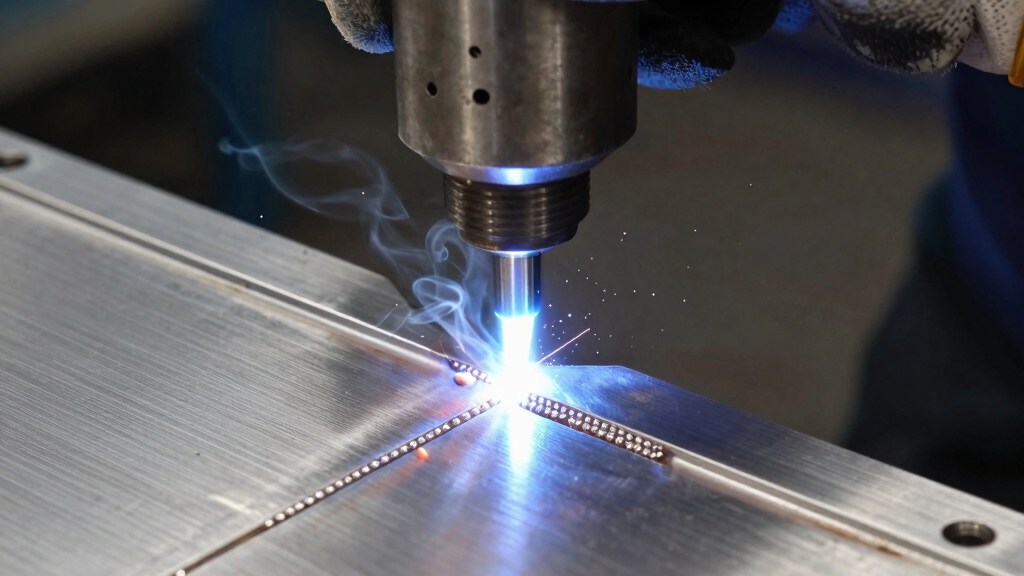
You can laser weld aluminum effectively by carefully controlling laser power, focus, and welding speed to overcome aluminum’s high reflectivity and thermal conductivity.
Using fiber or diode lasers improves energy absorption and precision, while pulsed or continuous wave modes suit different thicknesses.
Proper surface cleaning and argon or helium shielding prevent oxidation and porosity.
Selecting compatible alloys and filler materials reduces cracking risks.
Exploring these factors will help optimize your aluminum laser welding process for quality, strength, and minimal distortion.
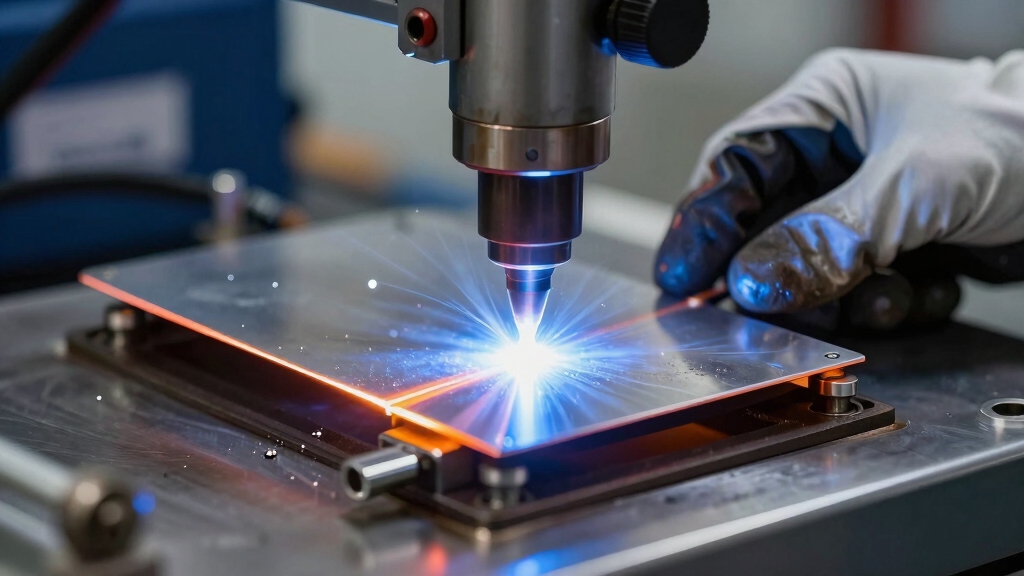
Although aluminum presents unique welding challenges, laser welding offers a highly precise method by focusing a concentrated laser beam to melt and join the material.
Laser welding overcomes aluminum’s challenges by delivering precise, concentrated heat to efficiently melt and join the material.
You direct the laser beam onto the aluminum workpiece, creating a small, intense heat spot with high energy density that enables rapid melting and solidification.
This focused energy input provides exceptional control over heat application, reducing thermal distortion.
You can adjust laser power and focus precisely to optimize weld quality for different aluminum thicknesses.
Compared to conventional welding, laser welding’s controlled heat and extreme precision yield cleaner joints with minimal thermal impact.
Laser welding shares similarities with plasma cutting in utilizing a high-energy concentrated heat source for effective metal fusion.
When it comes to laser welding aluminum, there are definitely some challenges you should be aware of. One major issue is aluminum’s high thermal conductivity. This means that heat dissipates quickly, which can lead to distortion in your welds.
Another thing to consider is aluminum’s high reflectivity. This can be a bit tricky because it reduces how much of the laser energy is actually absorbed. So, you’ll need to be really careful with the beam parameters to get the best results.
And let’s not forget about the alloys! Some aluminum alloys can be quite sensitive to cracking. This means you’ll have to make precise adjustments to your process and choose the right filler materials to keep everything together and maintain joint integrity.
It can be a bit of a balancing act, but with the right approach, you can overcome these hurdles. Using argon shielding gas during welding helps prevent oxidation and contamination, which is critical for clean aluminum welds.
Since aluminum exhibits exceptionally high thermal conductivity, managing heat flow during laser welding becomes a critical challenge. You need to account for rapid heat dissipation away from the weld zone, which can hinder melting and reduce penetration depth.
This fast heat spread demands higher laser power and precise focus to maintain adequate energy density at the joint. Without careful control, uneven thermal gradients cause distortion and residual stresses, compromising joint integrity.
You also have to optimize welding speed to balance melting and solidification rates, preventing heat-affected zone enlargement. Employing pulsed laser modes can minimize thermal input, limiting heat diffusion into surrounding material.
Ultimately, mastering aluminum’s thermal conductivity means tailoring laser parameters meticulously to achieve consistent, defect-free welds without excessive distortion or loss of mechanical properties. Understanding and adjusting beam parameters such as focal spot size and power density is essential to overcoming these challenges.
When welding aluminum, you must overcome its high reflectivity. This causes significant laser energy loss and challenges consistent melting. Aluminum reflects up to 90% of incident laser light, especially at longer wavelengths. This reduces absorption and requires precise laser parameters.
Using fiber or diode lasers with shorter wavelengths improves energy coupling. You also need to consider crack sensitivity in certain alloys, particularly the 6000 series. These are prone to solidification cracks due to thermal stresses and alloy composition.
Managing this involves selecting appropriate filler materials, like 4032 or 4047 alloys. Optimizing welding parameters helps control cooling rates. By addressing reflectivity and crack sensitivity, you enhance weld quality. This minimizes defects and guarantees robust joints in laser-welded aluminum components.
For improved weld quality, incorporating filler wires like ER4043 or ER5356 matching the aluminum alloy can be beneficial in laser welding setups.
When it comes to working with aluminum, picking the right laser type is crucial. You want something that maximizes absorption on aluminum’s shiny surface. Generally, fiber and diode lasers tend to outperform CO2 and Nd:YAG options in this area.
Now, let’s talk about the modes—pulsed and continuous. The choice here really depends on what you need for your welds. Pulsed mode is great if you’re looking for precise heat control, plus it helps reduce distortion. On the other hand, continuous mode allows for deeper penetration, which is especially useful for thicker materials. For optimal results on thick aluminum sections, incorporating helium into argon can increase heat input and improve weld penetration.
Although several laser types exist for welding aluminum, selecting the right one depends on factors like material thickness, absorption characteristics, and desired weld quality.
Fiber and diode lasers stand out due to their shorter wavelengths, which enhance aluminum’s low absorption rates. They deliver high energy density with superior beam quality, enabling precise heat control and minimal distortion.
Nd:YAG lasers offer versatility but have lower absorption efficiency compared to fiber lasers.
CO2 lasers, with longer wavelengths, face challenges due to aluminum’s reflectivity and are less common.
You’ll find fiber and diode lasers more effective for thin to medium thicknesses. Higher power continuous wave fiber lasers excel for deeper penetration on thicker sections.
Your choice should align with the specific aluminum alloy and weld joint requirements to optimize process stability and weld integrity.
For thicker aluminum sections, using appropriate shielding gases is critical to prevent oxidation and ensure weld quality during laser welding.
Since aluminum’s thermal properties demand precise heat management, selecting between pulsed and continuous laser modes becomes critical for optimizing weld quality.
Pulsed lasers deliver energy in short bursts, controlling heat input and minimizing distortion. This makes them ideal for thin or delicate aluminum parts.
Continuous wave (CW) lasers provide steady energy, enabling deep penetration and stronger joints. They are suited for thicker sections. Your choice depends on material thickness and desired weld characteristics.
| Aspect | Pulsed Mode |
|---|---|
| Heat Input | Controlled, low |
| Penetration | Shallow, precise |
| Distortion Risk | Minimal |
| Applications | Thin sheets, small components |
| Welding Speed | Moderate |
| Aspect | Continuous Mode |
| Heat Input | High, steady |
| Penetration | Deep |
| Distortion Risk | Higher |
| Applications | Thick sections, structural |
| Welding Speed | Fast |
Effective joining of aluminum often requires managing localized heat to avoid defects, a principle similar to how ultrasonic welding uses precise energy control for strong, reliable bonds.
When welding aluminum, selecting the correct power settings and parameters is critical to achieving ideal penetration and minimizing defects.
Choosing the right power settings and parameters is essential for perfect aluminum welds with minimal defects.
For thin aluminum sheets (0.5-3mm), you’ll typically use 500-1,500W power output. Thicker sheets require 2-4kW.
Set the focal point about 0.5mm below the surface to reduce reflection and improve energy absorption. Maintain a beam diameter between 0.2 and 0.5mm to concentrate heat effectively.
If you use continuous wave lasers, feed rates should range from 25 to 100 inches per minute to avoid overheating and distortion.
Adjusting these parameters precisely helps you control the weld pool size and solidification rates. This ensures consistent weld quality while overcoming aluminum’s high thermal conductivity and reflectivity challenges.
Controlling heat input and travel speed is essential to minimize thermal distortion during the welding process.
Proper surface preparation and shielding gas selection play a critical role in ensuring high-quality laser welds on aluminum. To achieve optimal results, you must remove contaminants like oils and oxides that hinder laser absorption and promote defects. Use acetone, alcohol-based solvents, or laser cleaning to prepare the surface.
Shielding gas prevents oxidation and contamination of the molten pool, directly impacting weld integrity. Key considerations include:
Helium blends increase arc temperature and fluidity, which can enhance heat input and weld quality when welding thicker aluminum sections, making them a valuable option for certain laser welding applications involving thick aluminum.
Following these steps maximizes weld strength and minimizes defects in aluminum laser welding.
Although aluminum presents welding challenges, certain alloys respond particularly well to laser welding due to their metallurgical properties. Alloys like 1050, 2219, 3003, 5052, 6061, and 4047 exhibit favorable weldability, balancing thermal conductivity and crack resistance.
You’ll find conduction mode welding effective for thin sheets up to 3mm, producing shallow, precise welds. For small, intricate components, pulsed laser welding offers superior heat control by delivering energy in bursts, minimizing distortion.
When dealing with thicker or complex joints, hybrid laser welding combining laser with TIG or MIG provides enhanced penetration and joint integrity. Additionally, laser stir welding excels in crack-prone alloys without filler metals, promoting sound microstructures.
Selecting the right alloy and technique directly impacts weld quality, strength, and performance in your aluminum laser welding applications. Proper post-weld cleaning and application of protective coatings can significantly improve corrosion resistance and extend the service life of welded aluminum parts.
You’ll need proper eye protection with laser safety goggles rated for the laser wavelength to prevent retinal damage.
Make certain adequate ventilation or fume extraction to avoid inhaling aluminum vapor and fumes.
Use flame-resistant clothing and gloves to protect against spatter and heat.
Keep the welding area enclosed or shielded to prevent accidental exposure to laser beams.
Finally, follow strict machine operation protocols and emergency shutdown procedures to maintain a safe working environment.
Laser welding aluminum generally costs more upfront due to equipment and setup expenses, but you’ll save long-term.
Its precision reduces material waste, rework, and post-processing, lowering overall production costs.
Compared to traditional methods like TIG or MIG, laser welding boosts speed and automation, enhancing throughput.
So, while initial investment might be higher, you’ll benefit from improved efficiency, quality, and reduced labor costs.
This makes it economically competitive for many applications.
Yes, you can automate laser welding aluminum for mass production effectively. Its high precision and controllable heat input enable consistent, repeatable welds at high speeds.
Integrating fiber or diode lasers with robotic arms allows precise beam positioning and real-time parameter adjustments. Pulsed modes reduce thermal distortion, improving quality.
Automation enhances throughput while minimizing defects, making laser welding ideal for scalable production in industries requiring tight tolerances and complex aluminum assemblies.
You won’t believe how much post-weld treatments can boost aluminum’s durability!
To enhance strength and corrosion resistance, you should apply stress-relief annealing to reduce residual stresses.
Then, consider mechanical polishing or shot peening to refine surface integrity.
Anodizing plays a vital role in creating a protective oxide layer, while sealing treatments prevent oxidation.
These precision techniques guarantee your aluminum welds withstand demanding environments and extend service life markedly.
Yes, laser welding aluminum has specific environmental impacts you should consider.
The process uses high energy, increasing electricity consumption, which may raise your carbon footprint depending on the energy source.
Additionally, you might release fumes containing aluminum oxides and other particulates, requiring proper ventilation and filtration.
However, laser welding’s precision minimizes material waste and reduces the need for post-processing. This helps you lower overall environmental impact compared to traditional welding methods.
Laser welding aluminum demands precision and careful control, yet its challenges don’t make it impossible.
While aluminum’s high reflectivity and thermal conductivity complicate the process, choosing the right laser type and parameters transforms obstacles into opportunities.
With proper surface preparation and shielding, you can achieve strong, clean welds.
The contrast between aluminum’s tricky nature and the laser’s precision highlights that, with expertise, you can master even the most demanding materials efficiently.