Phone:
(701)814-6992
Physical address:
6296 Donnelly Plaza
Ratkeville, Bahamas.

Phone:
(701)814-6992
Physical address:
6296 Donnelly Plaza
Ratkeville, Bahamas.

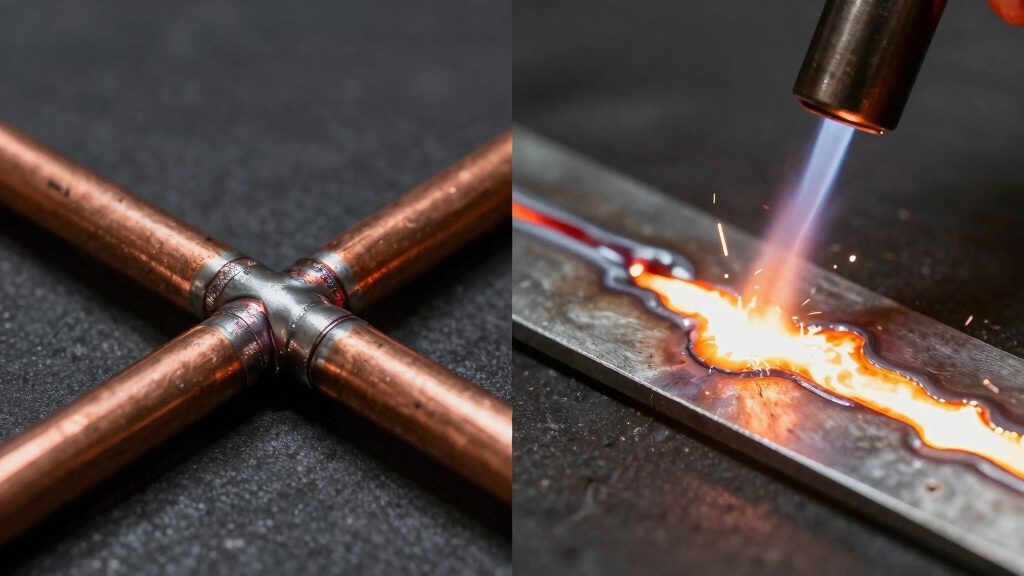
You’ll find brazing joins metals using filler metal melted above 840°F without melting the base metals. It relies on capillary action and uniform heat to preserve microstructure.
Braze welding applies higher, localized heat to deposit filler faster, creating stronger joints mainly in steel without fusion.
Brazing suits varied metals with minimal distortion, while braze welding demands compatible steels and precise heat control to avoid defects.
Understanding these distinctions helps optimize joint strength and material compatibility in your project.
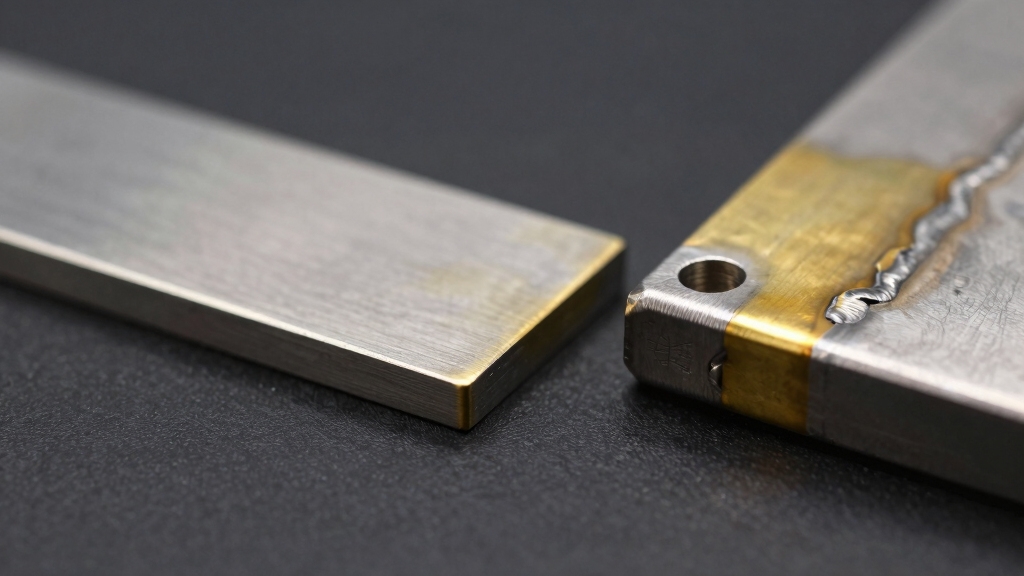
While both brazing and braze welding join metals without melting the base materials, they serve distinct roles in metal joining processes.
In brazing, you melt a filler metal above 840°F but below the base metals’ melting points. This process relies on capillary action to draw the molten filler into tight joint gaps.
This creates a metallurgical bond that preserves the base metals’ properties.
Braze welding, on the other hand, resembles welding by applying heat similar to gas welding. It deposits brazing filler metal directly onto the joint, while the base metals remain solid.
You’ll find brazing ideal for joining dissimilar metals with precision.
Braze welding suits applications demanding visible filler contrast and localized heat application.
Both methods avoid fusion of base metals but differ in heat application and filler placement.
When metal joints require corrosion resistance and protection during heat application, using weld-through primer can enhance joint durability and prevent rust.
Brazing is pretty interesting because it uses moderate heat—usually between 1150°F and 1600°F. This heat is just enough to melt the filler metal while keeping the base metals intact.
On the other hand, braze welding takes a different approach. It applies higher localized heat, often from a gas torch, to work with the brazing filler. But don’t worry, it still avoids melting the base metals.
How do brazing and braze welding differ in applying heat to join metals?
In brazing, you apply heat broadly using torches, furnaces, induction, or resistance methods to elevate the base metals’ temperature uniformly just enough to melt the filler metal.
This controlled heat prevents the base metals from melting, enabling capillary action to draw the molten filler into the joint.
Braze welding, however, uses a more focused heat source, typically a gas torch similar to gas welding, to locally heat the joint area.
The heat is intense enough to melt the filler but carefully controlled so the base metals don’t melt.
This localized heating demands precise manipulation to achieve a strong metallurgical bond without base metal fusion, differentiating it from conventional brazing’s broader heat application.
The choice of heat application also relates to welding power supply characteristics, as braze welding often benefits from a constant current source to maintain arc stability during precise manual control.
The way heat is applied in brazing and braze welding directly influences the temperature ranges each process uses. When you brazing, you operate within a controlled range, typically between 1150°F and 1600°F (620°C to 870°C), keeping base metals solid while melting the filler metal.
In contrast, braze welding uses a gas torch to apply more intense, localized heat, increasing temperature closer to welding levels but still below base metal melting points.
Consider these key points:
Proper heat input control is essential to avoid distortion and residual stress that can weaken joints during thermal processes.
Understanding these ranges helps you select the most suitable process for your application.
Understanding the fundamental difference in base metal melting between brazing and braze welding is essential for selecting the appropriate joining technique.
In brazing, you apply heat sufficient to melt only the filler metal, typically between 1150°F and 1600°F, while the base metals remain solid. This process preserves their microstructure and mechanical properties.
The molten filler flows into the joint by capillary action without altering the base metals.
Conversely, braze welding uses a higher heat input from a gas torch, similar to gas welding, but still avoids melting the base metals.
Instead, you fuse the filler metal onto the solid base metals, creating a joint that visually resembles welding while retaining brazing’s thermal advantages.
This subtle heat control directly impacts metallurgical bonding and joint integrity in your application.
Proper heat control and the use of appropriate filler wires such as ER4043 or ER5356 are crucial for achieving strong and reliable joints in aluminum brazing and braze welding.
Although brazing and braze welding both utilize filler metals to join base metals without melting them, their base metal reactions differ markedly due to heat application and filler interaction.
When you braze, the heat is applied broadly but kept below the base metal’s melting point, minimizing thermal distortion. Braze welding, however, uses more localized heat, closer to welding temperatures, causing subtle changes in the base metal microstructure without full melting.
Consider these key differences:
You must understand these distinctions to optimize joint integrity and performance. Additionally, controlling the welding atmosphere with inert shielding gas during braze welding is critical to prevent oxidation and maintain weld quality.
Brazing is pretty versatile when it comes to base metals. It can handle a wide variety, even allowing for dissimilar combinations. This flexibility comes from its lower temperature and unique filler metal properties.
On the flip side, braze welding tends to zero in on steels. It primarily uses bronze-based fillers that don’t melt the base metal, but getting the thermal control just right is crucial. Proper control of heat input and filler composition is essential to avoid defects such as brittleness, especially when working with metals that have been cut using processes like plasma cutting, which can introduce oxidation and nitriding layers.
Metal compatibility plays a pivotal role when selecting between brazing and braze welding. The choice of base metals and filler materials directly influences joint quality and performance.
When you work with brazing, you can join dissimilar metals like copper to steel or ceramics to alloys without melting base metals. Braze welding, however, mainly suits steels and similar metals where the filler metal creates a weld-like bond without melting the base.
Consider these points:
Additionally, brazing can reduce the risk of brittle intermetallic compounds formation that often compromise direct fusion welds between dissimilar metals.
Choosing the right filler metal plays a significant role once you’ve identified compatible base metals for brazing or braze welding.
In brazing, you often select filler metals with melting points below the base metals, such as silver, copper, or aluminum alloys. This optimizes capillary flow and metallurgical bonding without melting the base.
Braze welding uses similar filler alloys but applies them with higher heat input, typically gas torch, to form a joint that resembles welding yet avoids base metal melting.
Because brazing accommodates dissimilar metals effectively, filler metals must match thermal expansion rates and corrosion resistance requirements.
In braze welding, filler metals emphasize mechanical strength and visual contrast, as seen with bronze on steel. Your choice impacts joint integrity, thermal compatibility, and overall performance in both processes.
Using fillers with compatible thermal expansion rates is critical to minimize residual stresses and prevent cracking in joints involving dissimilar metals.
Although both brazing and braze welding rely on capillary action to draw molten filler metal into joint gaps, the mechanisms differ slightly due to heat application and joint conditions.
In brazing, you apply heat broadly, allowing molten filler to flow by surface tension and adhesion into narrow gaps between base metals without melting them.
In braze welding, localized torch heat raises temperature rapidly, promoting faster filler flow under slightly different thermal gradients.
Key distinctions include:
Understanding these differences helps you optimize joint quality and filler penetration. Plasma welding, with its highly concentrated arc and precise heat control, illustrates how advanced heat management can improve weld quality and penetration in related processes like braze welding through focused plasma jet technology.
When evaluating joint strength, you’ll find brazed connections offer robust bonds that often match or exceed the strength of the base metals without altering their microstructure.
This is because brazing relies on metallurgical bonding via capillary action, distributing filler metal without melting the base metals, preserving their inherent properties.
In contrast, braze welded joints use a similar filler but involve localized heating akin to welding. This produces stronger mechanical interlocks but not full fusion of base metals.
While braze welding can yield higher strength than conventional brazing in steel assemblies due to increased filler penetration and heating, it still falls short of true welds where base metals fuse.
Consequently, you’ll balance strength needs against metallurgical preservation when choosing between brazing and braze welding.
For refined weld quality and improved joint integrity, techniques such as pulsed current control are often employed in braze welding processes.
Frequently, brazing outperforms braze welding in applications requiring precise, clean joints with minimal thermal distortion.
Brazing often surpasses braze welding when precision and minimal heat impact are essential.
Brazing’s ability to join dissimilar metals with controlled heat input preserves base metal properties, making it ideal in these contexts.
You’ll find brazing excels particularly in:
In these cases, brazing’s lower temperature range and use of flux facilitate superior control and joint integrity over braze welding, which involves higher localized heat and less finesse.
Since braze welding combines brazing filler application with localized high heat similar to welding, you’ll want to choose it when stronger joints are necessary without fully melting base metals.
This method is ideal for steel assemblies requiring visible, robust bronze filler that resists moderate mechanical stresses while preserving base metal integrity.
Braze welding suits repairs and fabrications where welding’s heat might cause distortion or metallurgical issues.
| Factor | Braze Welding Advantage |
|---|---|
| Joint Strength | Higher than brazing, less than welding |
| Base Metal Integrity | Preserved, no melting |
| Heat Input | Localized, minimizing distortion |
| Suitable Materials | Steel, alloys sensitive to welding |
Use braze welding when you need a balance of strength, heat control, and metallurgical stability beyond brazing’s capacity.
Selecting between brazing and braze welding hinges on balancing joint strength requirements, base metal sensitivity, and heat input control. You need to analyze your project specifics carefully:
Choosing between brazing and braze welding depends on joint strength, metal sensitivity, and heat management.
You need to wear flame-resistant gloves, safety goggles, and a proper welding helmet to protect against sparks and intense light.
Make certain good ventilation to avoid inhaling fumes from flux and filler metals. Use fire-resistant clothing and remove flammable materials nearby.
Always have a fire extinguisher accessible and work in a controlled environment. Following these precautions helps you minimize risks during brazing and braze welding operations.
Think of joint design as the gatekeeper to successful brazing and braze welding. You must guarantee tight, uniform gaps to promote effective capillary action, typically between 0.002 to 0.010 inches.
Uneven or wide joints hinder filler flow, causing weak bonds or voids. Proper joint clearance and fit-up control heat distribution and filler flow, directly influencing joint strength and integrity.
You need to regularly clean and inspect brazing torches, assuring no clogged tips to maintain consistent heat and prevent oxidation.
Flux application tools require careful handling to avoid contamination.
For braze welding, maintain gas supply lines and regulators rigorously, checking for leaks and pressure stability.
Clean filler rods and monitor torch tip condition to assure proper flame characteristics.
Both processes demand precise calibration to avoid overheating and assure joint integrity.
You’ll find brazing generally produces fewer environmental emissions since it uses lower temperatures and less energy, minimizing greenhouse gases.
Braze welding involves higher heat and localized torch use, which can release more fumes and metal particulates, requiring better ventilation.
Both processes may emit flux residues or metal vapors, but brazing’s milder conditions reduce these risks.
You should still implement proper fume extraction and waste disposal to limit environmental impact effectively.
Think of brazing as the budget-friendly sibling of braze welding.
You’ll spend less on energy because brazing uses lower temperatures and simpler equipment, reducing operational costs.
Braze welding demands more skilled labor and precise heat control, pushing expenses higher.
While brazing saves on filler metal and post-processing, braze welding’s costs climb due to increased torch fuel and time.
Now that you understand the subtle yet critical differences between brazing and braze welding, which method will truly optimize your metal joining project?
Consider heat application, base metal reaction, and joint strength carefully. You might be surprised how your choice impacts durability and performance.
Don’t rush; the right technique can save time and resources while enhancing quality. Ready to make that decisive call? Your next project’s success depends on it.