Phone:
(701)814-6992
Physical address:
6296 Donnelly Plaza
Ratkeville, Bahamas.

Phone:
(701)814-6992
Physical address:
6296 Donnelly Plaza
Ratkeville, Bahamas.

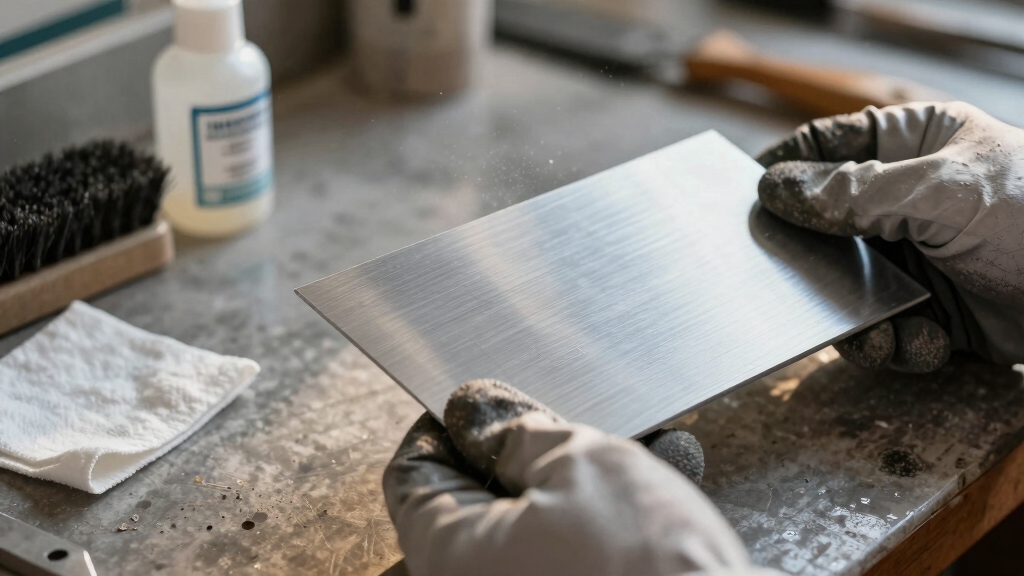
To clean aluminum for welding, start by thoroughly degreasing with acetone or MEK applied using a lint-free cloth.
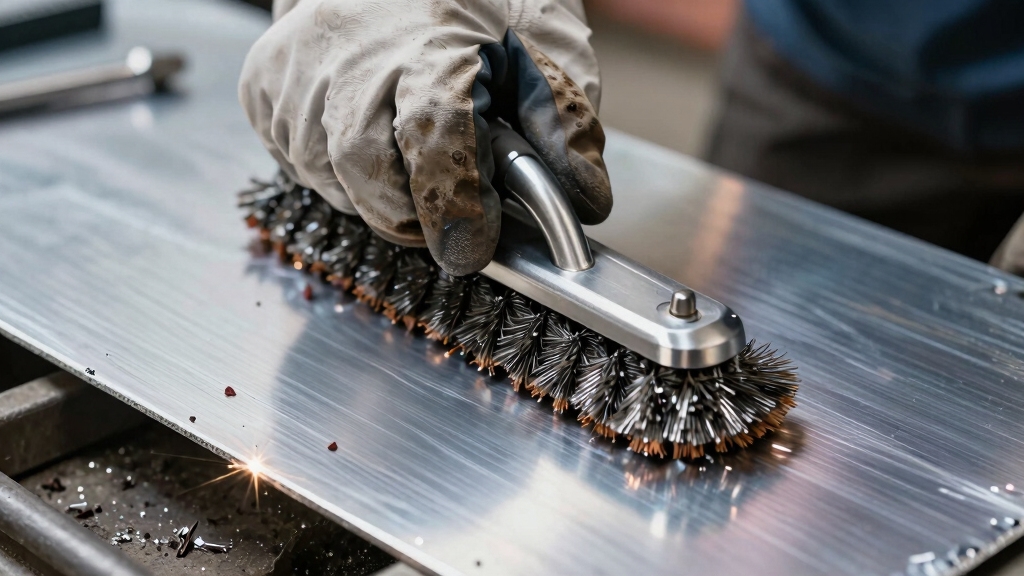
Next, remove the tough oxide layer mechanically with a stainless steel wire brush, making multiple passes only after degreasing.
Make certain all solvents fully evaporate and avoid touching the surface to prevent contamination.
Weld promptly after cleaning to minimize re-oxidation and use pure argon shielding gas for better results.
Understanding these steps ensures stronger, defect-free welds and helps avoid common pitfalls.
Although aluminum is prized for its strength and lightweight properties, you must clean it thoroughly before welding to guarantee weld integrity. Contaminants like grease, oils, and dirt create barriers that prevent proper fusion and lead to porosity or weak joints.
You can’t simply wipe grease away. Improper cleaning traps residues in surface scratches or spreads contaminants further. Removing the native oxide layer is equally critical, as this hard, high melting point film inhibits weld penetration.
Mechanical methods such as wire brushing or grinding after degreasing assure oxide elimination. You should also avoid delayed welding after cleaning since aluminum rapidly re-oxidizes. Following a precise cleaning protocol, including solvent degreasing and oxide removal, is essential to achieve consistent, defect-free welds that meet structural standards.
Additionally, using non-abrasive scrubbing tools can help remove corrosion without damaging the aluminum surface or compromising its integrity during preparation.
Several effective solvents exist to remove grease and oils from aluminum surfaces before welding. Each is chosen for its ability to clean without leaving residues.
Effective solvents clean aluminum surfaces thoroughly before welding without leaving any residues behind.
You want a solvent that thoroughly degreases without compromising the metal’s integrity or introducing contaminants that affect weld quality. Here are the top choices:
Avoid alcohol and chlorinated solvents as they either fail to clean or produce toxic gases near the welding arc. Always apply solvents with lint-free cloths and allow full evaporation before welding. Proper cleaning is essential because the molten aluminum weld pool is highly susceptible to atmospheric contamination, which can cause oxidation and porosity.
Once you’ve removed grease and oils with the appropriate solvents, the next step is to eliminate the aluminum oxide layer that forms naturally on the metal’s surface.
Use a stainless steel wire brush to mechanically strip this oxide; multiple passes guarantee thorough removal. Avoid premature brushing before degreasing, as it can trap contaminants in scratches.
Grinding the aluminum provides a clean, oxide-free finish but requires a subsequent solvent wipe to remove debris.
Mechanical removal is essential because aluminum oxide has a higher melting point than the base metal, potentially causing weld defects if left intact.
Work methodically, covering all joint areas evenly. Using an AC TIG welder with inverter technology further assists in breaking down the oxide layer during welding for superior results.
When preparing aluminum for welding, selecting the right tools and applying precise techniques guarantees effective removal of contaminants and oxide layers.
Proper tools and techniques ensure thorough removal of contaminants and oxide layers before aluminum welding.
Start with a solvent like acetone or methyl ethyl ketone applied via a lint-free rag to degrease thoroughly.
Follow with mechanical oxide removal using a stainless steel wire brush, making multiple passes for completeness.
Use gloves to avoid skin absorption of solvents and wipe both sides of the joint to prevent impurity transfer.
Here’s how to ensure superior cleaning:
Proper ventilation and protective gear should always be used during cleaning to avoid exposure to harmful fumes and chemicals, ensuring safety and preserving the metal integrity. proper ventilation and protective gear
These steps help you achieve a clean, weld-ready aluminum surface.
Always clean aluminum immediately before welding to prevent rapid re-oxidation that compromises weld integrity. After degreasing with acetone or methyl ethyl ketone, remove oxides using a stainless steel wire brush.
Avoid delays; oxidation reforms within minutes, so weld promptly after cleaning. If you can’t weld immediately, re-clean the surface to eliminate new contaminants. Make certain solvents fully evaporate and surfaces dry before fitting parts.
Avoid touching cleaned surfaces to prevent oil transfer. When using alkaline solutions, immerse fully and allow complete drying before welding. Monitor welds for black sooty residue, indicating contamination and insufficient cleaning.
Follow this strict timing protocol to maintain a clean bonding surface, prevent porosity, and ensure strong, defect-free welds in aluminum fabrication. Using 100% pure argon as a shielding gas during welding helps prevent oxidation and contamination of the molten aluminum pool.
You shouldn’t use alcohol to degrease aluminum before welding because it’s ineffective at removing grease and oils.
Instead, opt for solvents like acetone, methyl ethyl ketone, or lacquer thinner, which clean thoroughly without leaving residues.
Proper degreasing combined with oxide removal guarantees a clean surface, critical for weld quality.
Alcohol only spreads grease, risking contamination and weld defects.
Always follow with mechanical oxide removal and immediate welding to prevent re-oxidation.
Premature wire brushing is like scratching a freshly painted wall before the primer dries. It traps grease deep in aluminum’s microscopic scratches.
When you brush too soon, you embed contaminants rather than remove them, undermining weld integrity. Always degrease first with solvents, and let them evaporate fully.
Then mechanically remove oxide layers. This method prevents grease entrapment, ensuring a clean, reactive surface for welding. It also reduces porosity and fusion defects.
When handling acetone, you should always wear gloves to prevent skin absorption, as it’s a strong solvent.
Work in a well-ventilated area to avoid inhaling fumes, which can be harmful.
Keep acetone away from open flames and sparks since it’s highly flammable.
Store it in a tightly sealed container, away from heat sources.
Avoid prolonged exposure, and dispose of rags soaked in acetone properly to prevent spontaneous combustion.
Plasma cutting benefits your aluminum welding preparation by minimizing hydrogen introduction, which reduces porosity risks.
It delivers a clean, precise cut with minimal heat-affected zones, preserving base metal integrity.
This method limits oxidation and contamination compared to mechanical cutting, so your weld surface stays cleaner.
By reducing thermal distortion, plasma cutting guarantees better fit-up, leading to improved weld quality and structural performance.
It streamlines your prep, saving time and enhancing consistency.
Black sooty residue on a weld indicates contamination during welding, usually from grease, oil, or dirt left on the aluminum surface.
You’ve likely skipped thorough degreasing or oxide removal, causing impurities to burn and deposit carbon.
This residue signals poor weld quality and potential porosity or fusion defects.
To avoid it, clean your aluminum meticulously with appropriate solvents, remove oxide layers mechanically, and weld promptly after cleaning to prevent recontamination.
To make certain a strong, clean weld, you’ve got to clean aluminum thoroughly. No cutting corners here.
Using the right solvents and mechanical methods removes contaminants and aluminum oxide effectively. Timing matters too; weld soon after cleaning to keep surfaces pristine.
With proper tools and techniques, you’ll hit the nail on the head every time. This prevents weld defects and guarantees quality results. Keep your process sharp, and your welds will speak for themselves.