Phone:
(701)814-6992
Physical address:
6296 Donnelly Plaza
Ratkeville, Bahamas.

Phone:
(701)814-6992
Physical address:
6296 Donnelly Plaza
Ratkeville, Bahamas.

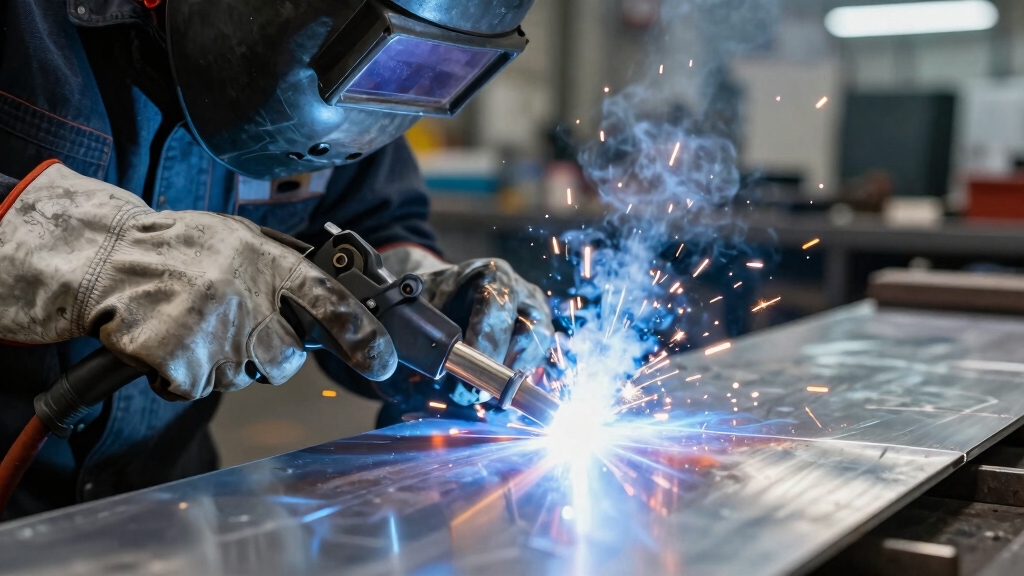
Yes, you can MIG weld aluminum effectively by using 100% argon or an argon-helium gas blend for thicker sections to guarantee proper heat and penetration.
Use solid aluminum wire like ER5356, a spool or push-pull gun to avoid feeding issues, and maintain voltage around 18–20 V with wire feed speeds of 200–300 inches per minute.
Proper surface cleaning and torch angle are vital for stable arcs and clean welds.
Learn how to optimize your setup and technique for best results.
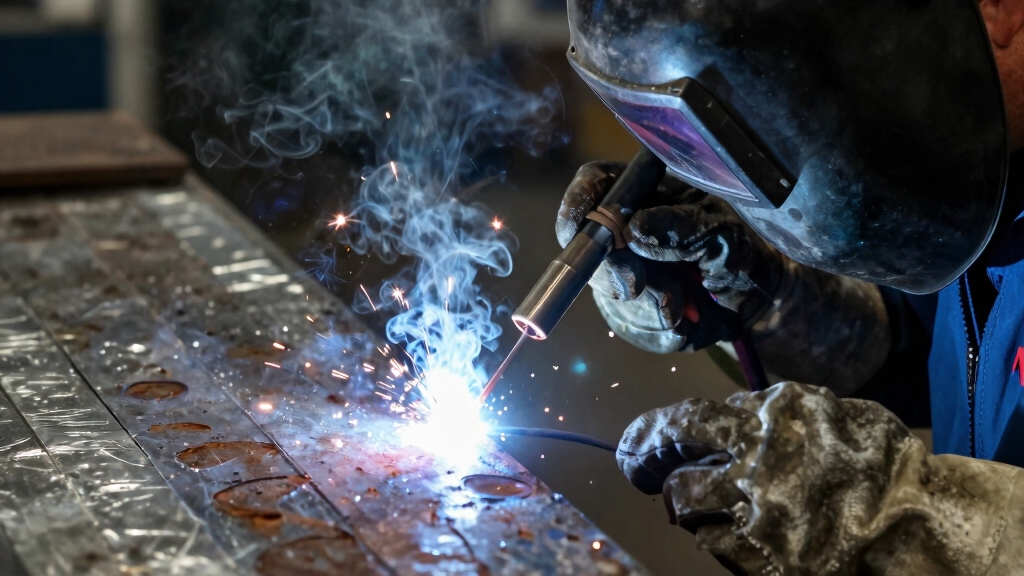
You can MIG weld aluminum effectively if you set up your equipment correctly and use the right technique. The process requires a shielding gas, typically pure argon, to prevent oxidation during welding.
Aluminum demands spray transfer mode for consistent, high-deposition welds with minimal spatter. You’ll want to use the push technique, directing the gun at a 10-15 degree angle away from the weld puddle, which guarantees optimal gas coverage and cleans the weld zone.
Controlling wire feed is vital; that’s why spool guns or push-pull guns are recommended to avoid bird-nesting caused by aluminum’s softness. Proper stick-out and contact tip positioning further stabilize the arc and improve weld quality.
For aluminum thicker than 1/4 inch, using an argon-helium blend can provide the additional heat input necessary for proper penetration and fusion.
To MIG weld aluminum effectively, you’re going to need some specialized gear. First off, make sure you have contact tips specifically designed for softer aluminum wire. This little detail helps prevent those pesky feeding issues that can really slow you down.
Now, let’s talk about shielding gas. Pure argon is a must-have here. It plays a crucial role in protecting the molten weld pool from oxidation, ensuring you get a clean and strong bond. Trust me, the right equipment choices make a world of difference in the quality and consistency of your welds throughout the entire process. So, gear up right, and you’ll be set for success! Using 100% argon provides excellent arc stability and minimal spatter for aluminum up to 1/2 inch thick.
Getting the right contact tips is essential for smooth aluminum MIG welding, as standard tips often struggle with the softer, more reactive wire. You need tips designed specifically for aluminum wire to avoid feeding issues and guarantee consistent electrical contact.
Here’s what to contemplate:
Selecting specialized contact tips guarantees reliable wire feed and stable arcs, critical for quality aluminum welds. Additionally, using a spool gun or push-pull system is recommended to overcome feeding difficulties common in standard MIG setups when welding aluminum.
Shielding gas plays a critical role in MIG welding aluminum by protecting the molten weld pool from atmospheric contamination and oxidation.
You need to use pure argon as your shielding gas to guarantee proper coverage and prevent weld defects like porosity and oxidation.
Unlike steel welding, aluminum requires higher argon flow rates, typically between 20 to 30 cubic feet per hour, to maintain a stable arc and consistent gas coverage.
Avoid gas mixtures; argon’s inert properties provide the clean environment necessary for spray transfer mode.
Proper flow rate and gas purity help you achieve smooth, high-quality welds with minimal spatter.
Always check for leaks and make certain your regulator and hoses are compatible with argon to maintain consistent shielding throughout the weld.
For thicker aluminum sections, adding helium to argon can increase heat input and improve weld penetration.
Before you dive into welding, it’s really important to give that aluminum a good clean. You want to make sure you remove the oxide layer and any dirt or grease that could lead to porosity in your weld. Trust me, spending a bit of time on this will pay off.
Once it’s clean, don’t forget to file the joint edges. This step helps with proper fusion and ensures you end up with a strong weld. Good surface prep is key, as it keeps the arc stable and helps you achieve consistent penetration. So, take your time and get it right!
Using a spool gun with 100% argon shielding gas will help ensure smooth wire feeding and a stable arc during MIG welding aluminum.
Removing the oxide layer and surface contaminants is critical when preparing aluminum for MIG welding. Aluminum oxide forms rapidly, and if not removed, it prevents proper fusion and causes porosity.
To clean aluminum effectively, follow these steps:
Controlling the oxide layer is essential because it directly impacts reliable arc initiation and weld quality.
When preparing aluminum for MIG welding, you’ll want to file the joint edges carefully to promote ideal fusion and weld strength. Filing removes surface irregularities and guarantees a consistent bevel angle, which facilitates proper weld penetration.
Since aluminum oxidizes quickly, filing immediately before welding helps expose clean metal, enhancing arc stability and fusion. Use a fine-toothed file or a rotary tool with a non-ferrous brush to avoid contamination.
Maintain uniform edge geometry, typically a 30 to 45-degree bevel depending on thickness, to allow prime access for the welding torch. For thicker aluminum, consider double bevels or V-grooves to improve weld pool penetration.
Precise joint edge preparation minimizes defects like incomplete fusion or porosity, guaranteeing a robust and clean weld bead during your MIG welding process. Additionally, using argon shielding gas is essential for aluminum to provide excellent arc stability and prevent contamination during welding.
Although aluminum demands specific parameters for effective MIG welding, dialing in the right voltage, wire feed speed, and shielding gas flow can markedly improve weld quality.
You’ll want to optimize these settings for stable spray transfer and minimal spatter. Here’s what to focus on:
Fine-tuning these parameters helps you overcome aluminum’s thermal conductivity and achieve clean, strong welds. Using 100% argon is ideal for aluminum MIG welding due to its ability to provide a stable arc and clean, precise welds.
Mastering MIG welding techniques for aluminum requires precise control over your torch angle, travel speed, and wire feed to guarantee a stable arc and consistent bead formation.
Maintain a 10-15 degree push angle, directing the torch away from the weld puddle to optimize gas coverage and ensure effective oxide removal.
Use a steady, fast travel speed to promote spray transfer, minimizing spatter and heat input.
Keep a consistent wire feed rate between 200-300 inches per minute, paired with 18-20 volts, to sustain a smooth arc.
Employ a stitch or weave motion for uniform bead width and penetration.
Maintain a 3/4-inch stick-out and use pure argon shielding gas at higher flow rates to prevent porosity.
Preheat only when necessary to avoid distortion while ensuring proper fusion.
Since spray arc transfer delivers high deposition rates and deep penetration, it is ideal for thick aluminum in flat or horizontal positions.
Since aluminum’s high thermal conductivity and oxide layer present unique challenges, troubleshooting MIG welding issues requires careful attention to setup and technique. If you encounter problems, consider these key steps:
Choosing the correct solid welding wire such as ER5056 or ER5356 is essential for achieving flexible, high-quality aluminum welds.
Following these steps will help you overcome common MIG welding aluminum problems efficiently.
You can MIG weld aluminum outdoors in windy conditions, but you’ll face significant challenges.
Wind disrupts the argon shielding gas, leading to oxidation and porosity in your welds.
To counter this, you’ll need windshields or enclosures to protect the gas zone.
Without proper shielding, your weld quality will degrade quickly.
Picture sparks flying like tiny stars as you weld aluminum; you need essential safety gear. Always wear a welding helmet with a proper shade to protect your eyes from intense UV and infrared rays.
Use flame-resistant gloves and a long-sleeve jacket to shield your skin from burns. Respirators guard against harmful fumes, and safety boots protect your feet from hot metal.
Make certain your workspace is well-ventilated to reduce inhalation risks.
Aluminum thickness directly impacts weld strength by influencing heat input and penetration.
Thicker aluminum needs higher amperage and voltage to achieve proper fusion and avoid weak joints. If you underheat thick sections, the weld won’t penetrate fully, reducing strength.
Overheating thin aluminum risks burn-through and distortion. You’ll want to preheat thicker parts for consistent penetration while adjusting travel speed to maintain weld integrity across varied thicknesses.
You might worry automation struggles with aluminum’s rapid heat spread and cleaning needs, but you can automate MIG welding aluminum effectively.
With precise control of spray transfer mode, pure argon shielding, and spool gun wire feeding, you safeguard consistent, high-quality welds.
Automated systems handle preheating, travel speed, and push technique to minimize porosity and distortion.
You’ll commonly face porosity, caused by trapped gases from surface oxides or contamination.
Cracking occurs due to aluminum’s high thermal expansion and contraction.
Lack of fusion or incomplete penetration happens if you don’t preheat thick sections or maintain proper technique.
Distortion is frequent because aluminum spreads heat rapidly.
To prevent these, clean thoroughly, use pure argon shielding, control heat input, and maintain consistent travel speed and correct gun angle.
MIG welding aluminum might seem like chasing lightning, but with the right gear and settings, you can tame the metal’s unique nature.
Preparing your aluminum meticulously and mastering precise techniques will make your welds shine like polished silver. Keep troubleshooting common issues as your compass, guiding you through challenges.
With focused practice and attention, you’ll transform tricky aluminum into strong, clean joints. Welding success is well within your grasp.