Phone:
(701)814-6992
Physical address:
6296 Donnelly Plaza
Ratkeville, Bahamas.

Phone:
(701)814-6992
Physical address:
6296 Donnelly Plaza
Ratkeville, Bahamas.

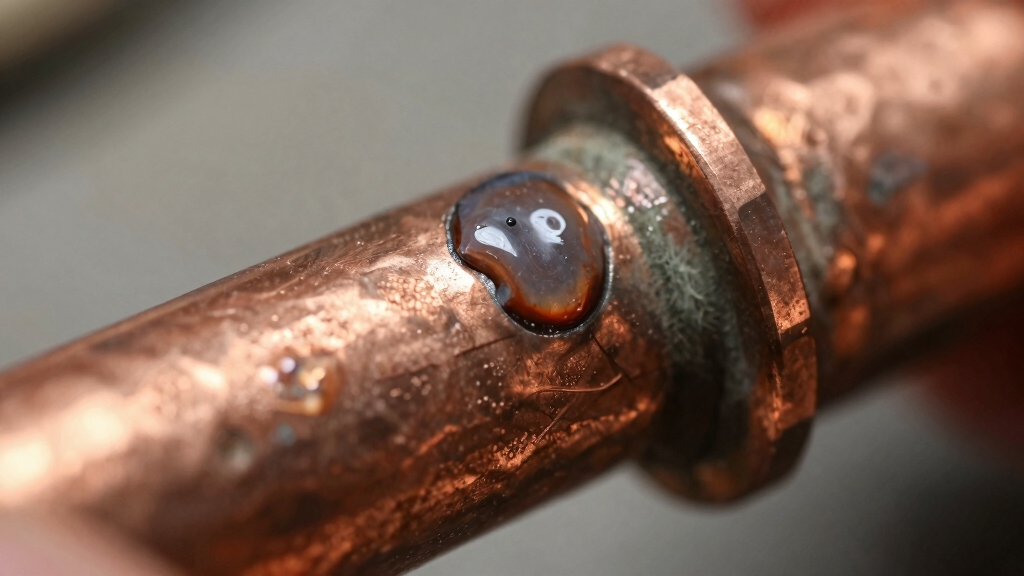
You can use JB Weld effectively on copper pipes if you prepare the surface properly. Clean, dry, and roughened surfaces ensure maximum adhesion.
It forms a strong, thermoset bond that seals cracks and resists heat up to 500°F. Note that it becomes rigid and non-conductive after curing.
While durable under moderate pressure, it may fail with thermal expansion or prolonged water exposure. If you want to understand the application process, curing, and alternatives, there’s more to explore.
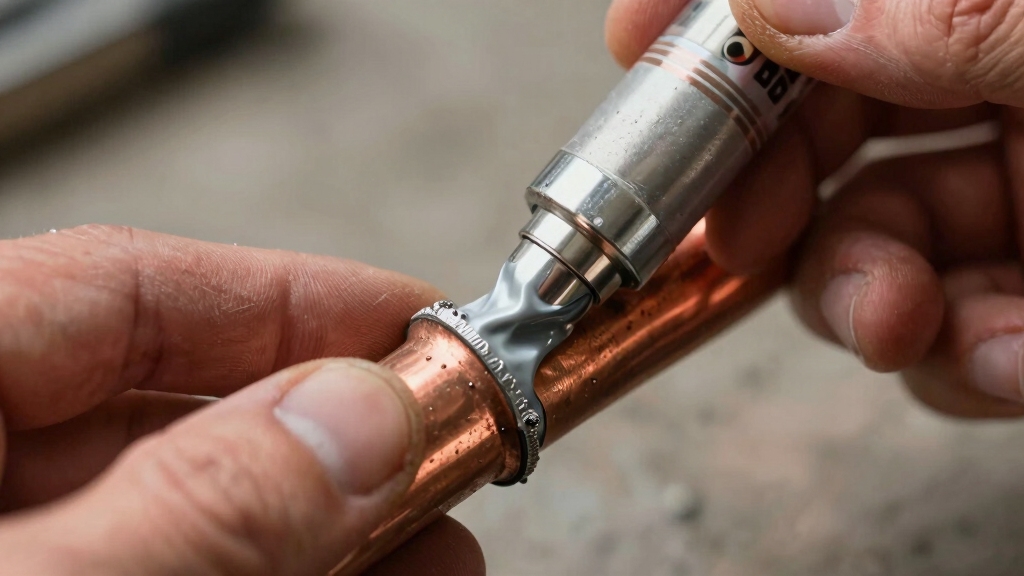
When bonding JB Weld to copper pipes, you rely on its ability to create a rigid, durable adhesion on clean, dry metal surfaces. The epoxy’s two-part formula chemically reacts to form a strong, thermoset polymer that mechanically interlocks with copper’s microtexture.
To maximize bond strength, you must thoroughly clean and dry the pipe, removing oxidation and contaminants that impede adhesion. After mixing equal parts of resin and hardener, you apply the putty over the defect, guaranteeing full coverage.
As it cures, JB Weld hardens into a solid mass that seals cracks and leaks effectively, maintaining integrity under mechanical stress and thermal cycling. This precise, chemical bonding process guarantees a leak-proof repair when applied correctly on copper plumbing. It is important to note that JB Weld is non-conductive after curing, making it ideal for mechanical repairs but not for electrical conductivity applications.
Though JB Weld forms a strong, durable bond on clean copper surfaces, many plumbers hesitate to recommend it for pipe repairs.
Its rigidity after curing limits flexibility, which is essential in plumbing systems subject to thermal expansion and vibration.
Additionally, JB Weld requires a fully dry, clean surface and significant curing time, up to 24 hours before full use, which may not be practical for urgent repairs.
While JB Weld resists high temperatures, prolonged exposure to water pressure and fluctuating conditions can compromise the seal over time.
For these reasons, plumbers often prefer soldering or mechanical fittings, which provide more reliable, flexible, and faster solutions tailored specifically for copper plumbing systems.
Proper surface preparation, including cleaning and roughening, is critical for achieving a strong bond with JB Weld, but this can be difficult to ensure in plumbing environments, further limiting its practical use. surface preparation
Before applying JB Weld on copper pipes, you must thoroughly clean and dry the surface to guarantee peak adhesion.
Next, mix equal parts of the two components until you form a uniform gray putty.
Apply this putty generously over the damaged area, ensuring full coverage to seal cracks or leaks effectively.
Use a utility knife or a dry cloth to smooth the patch for better bonding.
Proper surface preparation with cleaning and drying is crucial to prevent adhesion failure caused by contaminants or moisture.
Here’s a quick reference to guide your process:
| Step | Emotional Impact |
|---|---|
| Clean & dry surface | Confidence in adhesion |
| Mix equal parts | Assurance of consistency |
| Apply generously | Control over repair |
| Smooth & seal | Satisfaction from finish |
This method maximizes bond strength and leak resistance on copper pipes.
Since proper curing is critical for achieving a durable bond, you should allow JB Weld on copper pipes to set for 4 to 6 hours before handling the repair.
This set time enables the epoxy to harden sufficiently, preventing displacement or weakening during initial stress.
However, a full cure requires 15 to 24 hours, during which the bond attains maximum strength and chemical resistance.
You can work below water after the initial set, but full operational pressure should be avoided until complete curing.
Temperature and humidity affect curing speed; warmer, drier conditions accelerate the process.
Adhering strictly to these curing times guarantees a rigid, leak-proof seal on copper surfaces, optimizing JB Weld’s efficacy for plumbing repairs and maximizing joint longevity under normal use conditions.
For best results, ensure proper surface preparation before application to significantly improve adhesion and pressure resistance.
When you’re considering using JB Weld on copper pipes that might get hot, it’s important to think about its temperature resistance. Standard JB Weld can handle temperatures up to 500°F once it’s fully cured. That’s pretty impressive and should keep the bond strong under most high-heat situations.
But here’s the catch: if the pipes are exposed to heat for a long time or if the temperatures go above that limit, you might run into some issues. So, it’s a good idea to really evaluate your specific setup and how much heat the pipes will actually experience.
Better safe than sorry! Keep in mind that prolonged exposure to extreme heat can degrade the bond, so assessing temperature conditions carefully is essential.
Although JB Weld offers strong adhesion on copper pipes, its heat resistance varies by product type. This directly impacts its suitability for high-temperature applications.
Standard JB Weld withstands temperatures up to 500°F once fully cured. This makes it appropriate for many copper pipe repairs involving moderate heat.
However, Quick Weld and stick variants have lower limits around 300°F, restricting their use in hotter environments. For intermittent exposure up to 700°F, the Ultimate Copper Silicone formulation is preferable.
Exceeding these thresholds risks chemical degradation and bond failure. You should select the JB Weld product based on the anticipated maximum temperature of your copper pipes to guarantee structural integrity.
Understanding these temperature resistance limits helps prevent premature repair breakdown under heat stress, maintaining long-term reliability.
For best results, ensure proper surface preparation before application to maximize bond strength and durability under heat.
When evaluating JB Weld’s durability under high heat on copper pipes, you must consider the specific product variant and its curing characteristics.
Standard JB Weld withstands temperatures up to 500°F once fully cured, making it suitable for many copper pipe applications exposed to moderate heat.
However, if your copper pipes experience intermittent temperatures nearing 700°F, you should opt for Ultimate Copper Silicone, which offers enhanced thermal resistance.
Keep in mind that curing time directly impacts heat tolerance; the bond reaches peak strength after 15-24 hours.
Applying JB Weld to a clean, dry surface guarantees maximum adhesion and thermal stability.
While Quick Weld and stick versions cure faster, their heat resistance tops out at 300°F, limiting their use in high-heat environments.
Proper product selection and curing are critical for sustained durability under thermal stress.
For optimal results, ensure that the surface preparation and application follow precise thinning and compatibility guidelines to maintain strong adhesion under heat.
JB Weld comes in handy for repairing leaks and cracks on copper pipes, providing a durable and rigid bond that restores pipe integrity.
JB Weld effectively repairs leaks and cracks on copper pipes, creating a strong, lasting bond.
You’ll often use it to seal pinholes, small fractures, or corrosion-induced perforations on dry, clean copper surfaces. It’s especially effective when you need a quick, permanent fix without replacing entire pipe sections.
Applying JB Weld allows you to reinforce weakened areas, preventing further damage and leaks under moderate pressure. Additionally, its resistance to heat and chemicals makes it suitable for copper pipes exposed to hot water or fuel lines.
You can also shape and sand the cured epoxy for a smooth finish, ensuring minimal flow disruption. Overall, JB Weld serves as a reliable solution for localized repairs, extending the service life of copper piping systems. For enhanced corrosion protection in welded joints, using a copper-based primer can improve electrical conductivity and weld integrity.
Several effective alternatives exist for repairing copper pipes, each suited to different repair scenarios and performance requirements. When JB Weld isn’t ideal or you need specialized performance, consider these options.
Harvey Epoxy Putty offers strong adhesion and quick curing, making it suitable for emergency leak repairs. Ultimate Copper Silicone RTV provides excellent temperature resistance and flexibility, ideal for gasket sealing or joints under thermal stress.
For harsh environments, J-B Weld Marine Weld resists salts and acids, ensuring durability in marine or chemical exposure.
Harvey Epoxy Putty: fast cure, strong bond on copper leaks.
Ultimate Copper Silicone RTV: high heat resistance, flexible sealant.
J-B Weld Marine Weld: corrosion resistant, suited for marine conditions.
Each alternative addresses specific repair challenges beyond standard epoxy limitations. Proper surface preparation, including thorough cleaning and degreasing, significantly improves adhesion and repair longevity.
To make certain a durable repair on copper pipes using JB Weld, you must meticulously prepare the surface by thoroughly cleaning and drying it to remove any oils, dirt, or oxidation that could compromise adhesion.
Properly cleaning and drying copper pipes is essential to ensure strong adhesion when using JB Weld for repairs.
Use a wire brush or fine sandpaper to abrade the copper, increasing surface roughness for better mechanical bonding.
Mix equal parts of JB Weld resin and hardener until uniform gray putty forms. Apply generously over the damaged area, ensuring full coverage beyond the crack or leak.
Avoid moisture during application, as JB Weld requires dry conditions for optimal curing.
Allow the repair to set for 4-6 hours before handling and cure fully for 15-24 hours to achieve maximum strength and temperature resistance.
This ensures a reliable, long-lasting seal on your copper pipes.
For best results, always ensure the metal is dry before applying any repair material to avoid solution dilution and reduced efficacy, as emphasized in surface preparation.
You can’t use JB Weld effectively on wet copper surfaces because it requires a clean, dry area to bond properly.
Moisture interferes with adhesion and curing, leading to weak or failed repairs.
To guarantee a durable, rigid bond, you need to thoroughly clean and dry the copper before application.
If you attempt to apply JB Weld on wet copper, the epoxy won’t set correctly and won’t provide a reliable seal or structural repair.
Think of JB Weld as a skilled craftsman. While it bonds strongly to copper and seals leaks, you shouldn’t rely on it for drinking water pipes.
Its chemical inertness is good, but most plumbers avoid it for potable water due to potential contamination risks.
If you want safety and compliance with health standards, choose products specifically certified for drinking water. JB Weld’s strength is undeniable, but cautious use is key where water quality matters.
JB Weld maintains structural integrity on copper in freezing temperatures but may experience reduced flexibility, increasing brittleness risk during severe freeze-thaw cycles.
You should make certain full curing before exposure to cold, as uncured epoxy is more susceptible to cracking.
While it resists thermal stress up to 500°F, repeated freezing can challenge its bond if moisture infiltrates.
Proper surface prep and sealing minimize freeze-related damage in cold environments.
Yes, you can paint or coat JB Weld repairs once fully cured, typically after 15-24 hours.
Make certain the surface is clean and dry before applying paint or coating for peak adhesion.
Use compatible coatings designed for epoxy surfaces to avoid chemical reactions or peeling.
Keep in mind that applying paint too soon can trap solvents, compromising the bond strength.
Properly coated JB Weld repairs improve durability and corrosion resistance in your application.
Think of JB Weld as a rigid armor on your copper pipe. It creates a hard, inflexible bond.
When you apply JB Weld, it doesn’t preserve the pipe’s natural flexibility; instead, it adds brittleness at the repair site. This means if your copper pipe contracts or bends, the epoxy could crack.
You’ll want to use it only where rigidity is acceptable. Avoid flexible or moving sections to prevent failure.
When repairing copper pipes, JB Weld can act like a modern-day Prometheus, delivering strength where you need it most.
However, its bond relies on meticulous surface prep and curing time, especially under heat stress. While not always the go-to for plumbers, you can achieve durable results if you apply it correctly and consider alternatives for extreme conditions.
Master these steps, and JB Weld becomes a reliable tool in your copper repair arsenal.