Phone:
(701)814-6992
Physical address:
6296 Donnelly Plaza
Ratkeville, Bahamas.

Phone:
(701)814-6992
Physical address:
6296 Donnelly Plaza
Ratkeville, Bahamas.

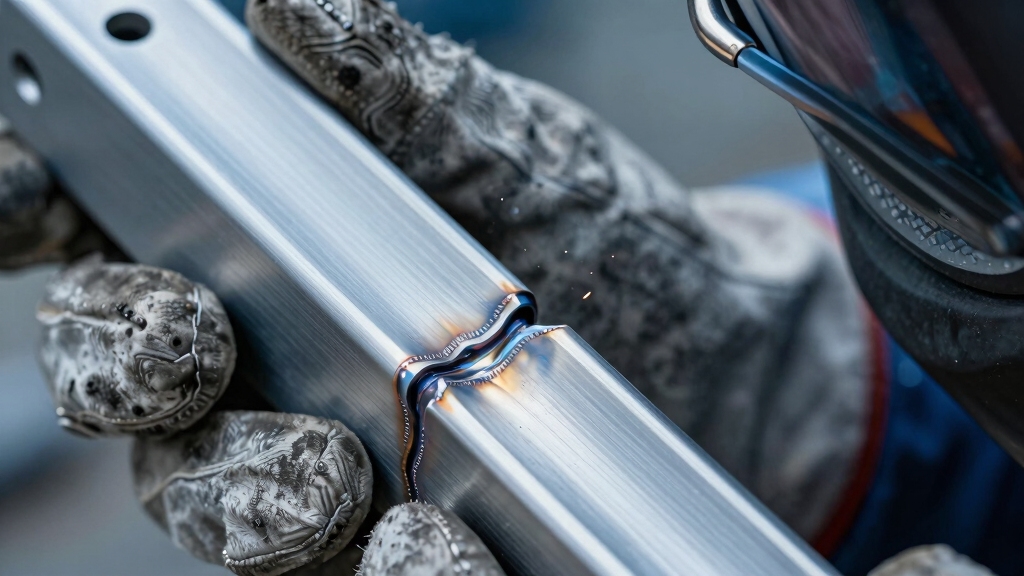
You can spot weld aluminum, but you need to manage its high thermal and electrical conductivity carefully.
You’ll apply 2–3 times more current than steel in very short pulses (under 0.1 seconds) to avoid heat loss and weak welds.
Surface preparation is critical. Removing oxides and contaminants guarantees good electrical contact.
Use water-cooled copper electrodes with controlled force to maintain nugget quality.
Specialized equipment like MFDC inverters and proper shielding gas also improve consistency.
Understanding these factors greatly enhances your welding outcomes.
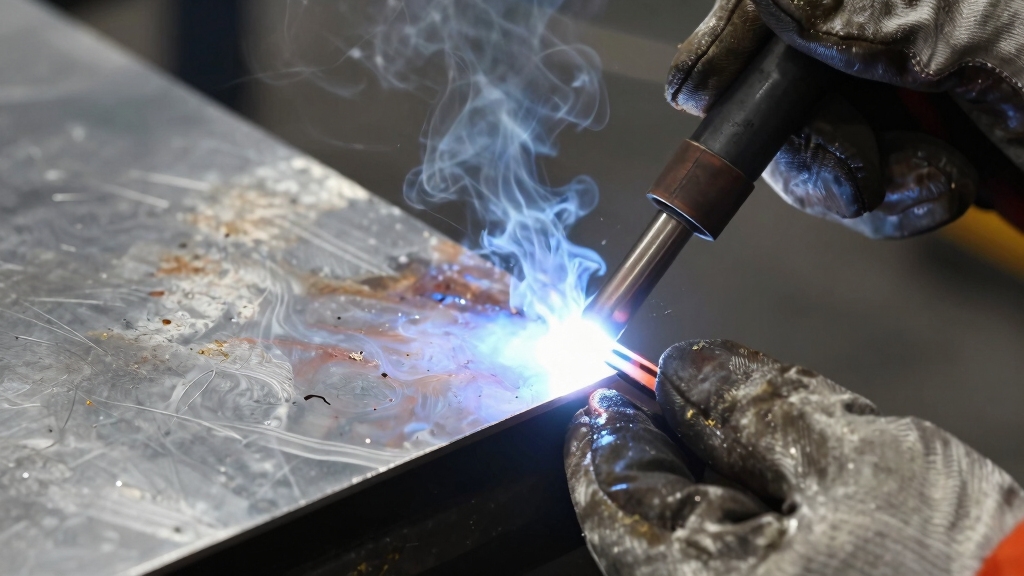
Although aluminum offers advantages like light weight and corrosion resistance, you’ll find welding it markedly more challenging than steel due to its high thermal and electrical conductivity.
Welding aluminum is tougher than steel because its thermal and electrical conductivity quickly dissipate heat and current.
Aluminum’s thermal conductivity dissipates heat rapidly, forcing you to use considerably higher welding currents to achieve proper fusion.
Its electrical conductivity demands 2-3 times more current than steel, coupled with very brief weld times to prevent heat loss.
Additionally, the persistent aluminum oxide layer acts as an electrical insulator, hindering contact and weld formation, requiring careful surface preparation.
You’ll also notice aluminum’s surface variability causes irregular welds, including shunting effects, complicating process control.
Pure aluminum poses even greater difficulty, prompting you to favor harder alloys that respond better to spot welding parameters and produce more consistent, reliable weld nuggets.
Using argon as an inert shielding gas is essential to prevent oxidation and ensure weld integrity when spot welding aluminum.
When you’re working with aluminum, it’s important to remember its high thermal conductivity. This means that heat dissipates quickly, which can be a bit tricky. To make sure you get a good weld, you’ll need to crank up the welding current and speed up your cycles a bit.
And that’s not all—aluminum has superior electrical conductivity too. Because of that, you’re going to need to deliver 2 to 3 times more current compared to steel to achieve a solid weld. Using an AC/DC TIG welder is essential to break the aluminum oxide layer and ensure proper penetration for a strong weld.
Because aluminum’s high thermal conductivity rapidly dissipates heat away from the weld zone, you must apply substantially higher welding currents and precisely control weld time to achieve consistent spot welds.
The rapid heat loss demands shorter weld durations, often under 0.1 seconds, to prevent inadequate fusion. If weld time extends, heat spreads beyond the intended zone, reducing nugget size and joint strength.
You also need to optimize electrode force carefully; excessive pressure thins the molten pool, while insufficient force leads to erratic heat transfer. Water-cooled electrodes help maintain thermal stability during high-current pulses, preventing overheating.
This thermal management is critical because any imbalance can cause weak welds or cracking. Mastering these parameters guarantees reliable joints despite aluminum’s challenging heat dissipation characteristics.
Using water-cooled systems is a proven method for maintaining arc stability and reducing thermal distortion during high-heat processes on aluminum.
Managing heat flow during spot welding is only part of the challenge when working with aluminum. Its high electrical conductivity demands careful control of current and timing to create effective welds.
You’ll need to account for:
These factors force you to use specialized equipment like MFDC welders and carefully optimize electrode force and materials.
Precise current control and surface preparation are critical to overcoming aluminum’s conductive properties and achieving strong, reliable spot welds.
Using the correct shielding gas is also essential to prevent oxidation and ensure weld integrity during the spot welding process.
Although aluminum’s surface oxide layer poses a significant barrier to effective spot welding, you can improve weld quality by thoroughly cleaning and preparing the metal beforehand.
Start by mechanically removing oxides and contaminants through abrasion with a fine-grit abrasive pad or wire brush, ensuring uniform surface roughness.
Follow with degreasing using a suitable solvent to eliminate oils and residues that impair electrical contact.
Avoid excessive surface deformation, which can cause irregular current flow.
Immediately before welding, remove any residual particles or oxidation by wiping with a clean, lint-free cloth.
Maintain a controlled environment to minimize reoxidation, as aluminum rapidly forms a new oxide layer.
Proper surface preparation enhances electrode contact, reduces shunting effects, and stabilizes weld nugget formation, critical for consistent, high-quality aluminum spot welds.
Additionally, using non-abrasive scrubbing tools helps prevent damage to the oxide layer, preserving the metal’s corrosion resistance during preparation.
Once you’ve properly prepared the aluminum surface to guarantee ideal electrical contact, focus shifts to selecting welding parameters that accommodate aluminum’s unique thermal and electrical properties.
You’ll need markedly higher currents than steel, typically 2 to 3 times more, to overcome aluminum’s high electrical conductivity and oxide layer.
Weld times must be kept very short, usually under 0.1 seconds, to minimize heat dissipation caused by aluminum’s thermal conductivity.
Electrode force is critical; too much pressure thins the molten metal, weakening the weld.
Key parameters to control include:
Additionally, ensuring proper shielding gas coverage during welding is essential to prevent oxidation and maintain weld quality.
Because electrode performance directly impacts weld quality and consistency, optimizing electrode material, design, and applied pressure is essential when spot welding aluminum.
You should use water-cooled copper alloy electrodes to handle high currents and dissipate heat efficiently. This prevents rapid wear and deformation.
Electrode tip geometry must balance contact area and pressure distribution. Typically, a truncated cone shape limits indentation while ensuring stable current flow.
Applying the correct force is critical. Too little pressure causes poor electrical contact and irregular nugget formation, while excessive pressure thins the molten pool and weakens the joint.
Limit electrode indentation to about 25% of sheet thickness. Frequent electrode inspection and cleaning prevent aluminum oxide buildup, which impedes conductivity.
Fine-tuning these parameters enhances nugget consistency and extends electrode life in demanding aluminum spot welding applications.
Additionally, maintaining proper shielding gas control during welding helps minimize oxidation and ensures better weld quality on aluminum surfaces.
When it comes to aluminum spot welding, having the right equipment is key. You’ll want to use MFDC inverter weld guns. Why? Well, they provide the stable, high currents that aluminum needs during the welding process. Plus, they can boost energy efficiency by up to 50%. That’s a pretty great bonus!
Now, it’s not just about the weld guns. You should also consider pairing them with water-cooled electrode systems. These help prevent overheating during those quick, intense weld cycles.
When you combine these tools, you get precise heat control and consistent weld quality, which is super important given aluminum’s tricky thermal characteristics. So, make sure you have this equipment on hand for the best results! Adjusting current, pressure, and weld time specifically for aluminum is crucial to avoid weak welds or burn-through.
Key advantages you gain include:
Stable, high-power output for rapid, controlled heating.
Enhanced current regulation to prevent weld defects.
Compact, lightweight design for improved maneuverability.
Integration capability with robotic and automated systems.
Using MFDC inverter weld guns guarantees you achieve strong, repeatable welds quickly.
Overcoming aluminum’s welding challenges with precision and efficiency.
These weld guns utilize high-frequency inverter technology to provide precise arc control and energy-efficient operation.
Building on the precise current control offered by MFDC inverter weld guns, managing the intense heat generated during aluminum spot welding requires effective thermal regulation.
Water-cooled electrode systems play a critical role by dissipating heat rapidly, preventing electrode overheating and deformation under high current and short weld times.
You must guarantee continuous water flow through hollow electrodes to maintain consistent temperature, which preserves electrode tip geometry and prolongs service life.
Without this cooling, excessive heat leads to electrode wear, contamination, and erratic weld quality.
Integrating water-cooled electrodes with MFDC guns optimizes thermal stability, enabling you to apply the higher currents aluminum demands without risking electrode damage or inconsistent weld nuggets.
Proper maintenance, including frequent inspection for blockages or leaks, is essential to sustain system performance and weld reliability.
Maintaining a steady arc during welding also contributes to consistent heat input and weld quality, reducing the risk of defects.
Mastering aluminum spot welding requires addressing its unique challenges to prevent defects like porosity, weak joints, and shunting.
You’ll need to optimize parameters carefully due to aluminum’s high thermal and electrical conductivity.
To guarantee consistent weld quality, focus on these critical techniques:
Clean workpiece surfaces thoroughly to remove oxide layers and contaminants.
Use high welding currents with very short weld times (around 0.1 seconds) to minimize heat dissipation.
Apply precise electrode force and maintain electrode condition, limiting indentation to 25% of sheet thickness.
Employ stable current sources like MFDC inverters to deliver controlled, repeatable energy pulses.
Although aluminum spot welding presents unique challenges, its applications span a wide range of industries where strength-to-weight ratio and corrosion resistance are critical.
In automotive manufacturing, you’ll find aluminum spot welding extensively used to replace steel parts, reducing vehicle weight and improving fuel efficiency.
Aerospace sectors rely on it for joining aerospace-grade alloys, where defect control like porosity is essential.
Industrial production benefits from high-volume, efficient spot welding processes tailored for aluminum’s conductivity and oxide layer.
Restoration projects, such as repairing vintage aluminum components, also employ spot welding, balancing traditional aesthetics with modern techniques.
Additionally, the process adapts to alloys beyond aluminum, including magnesium and titanium, broadening its applicability.
Understanding these applications helps you optimize welding parameters and equipment choices for each specific use case.
You’ll find that harder aluminum alloys weld more easily than pure aluminum. Alloys like 5000 and 6000 series, which contain magnesium and silicon, offer better weldability due to their mechanical properties and oxide layer behavior.
Pure aluminum’s high thermal conductivity and oxide film make spot welding challenging. So, focus on medium-strength alloys with stable oxides to achieve consistent weld nuggets and minimize defects during resistance spot welding.
Think of electrodes as the tires on a race car. They wear down quickly under intense conditions.
You should replace aluminum welding electrodes after about five welds or when you notice contamination and surface degradation.
Frequent inspections and cleaning help, but once erosion or pitting appears, performance drops.
Timely replacement guarantees consistent heat transfer, stable current flow, and quality welds.
This prevents weak joints caused by electrode fatigue or overheating.
Yes, you can spot weld aluminum sheets below 1mm, but it’s challenging.
You’ll need precise control of high welding currents with very short weld times, around 0.1 seconds or less, to prevent burn-through and distortion.
Use water-cooled electrodes and optimize electrode force to avoid thinning the molten metal excessively.
Clean surfaces thoroughly and monitor electrode condition closely to maintain consistent weld quality on such thin material.
You need to prioritize handling the high currents, up to 3 times that used for steel, carefully to prevent electrical hazards.
Since aluminum dissipates heat rapidly, wear heat-resistant gloves and use water-cooled electrodes to avoid burns.
Guarantee excellent ventilation because aluminum welding fumes can contain hazardous oxides.
Also, clean the oxide layer thoroughly to prevent irregular arcs, which could cause spatter and eye injuries.
Always use proper eye protection against intense UV radiation.
Ambient temperature directly influences aluminum spot weld quality by affecting heat dissipation and material behavior.
When temperatures drop, aluminum’s thermal conductivity increases, causing faster heat loss and potentially weaker weld nuggets.
Conversely, higher ambient temperatures reduce heat dissipation, risking overheating or excessive melting.
You must adjust welding current and time accordingly to maintain consistent nugget formation.
This ensures stable mechanical properties and prevents defects like cracking or porosity during spot welding.
While spot welding aluminum may seem like negotiating a delicate dance, mastering its unique challenges opens doors to advanced applications.
By understanding aluminum’s quirks, preparing surfaces meticulously, and fine-tuning parameters with precision, you’ll transform complexity into opportunity.
The right equipment and technique don’t just make welding possible; they make it reliable.
Embrace these nuances, and you’ll quietly elevate your welding craft beyond the ordinary, turning potential frustrations into seamless success.