Phone:
(701)814-6992
Physical address:
6296 Donnelly Plaza
Ratkeville, Bahamas.

Phone:
(701)814-6992
Physical address:
6296 Donnelly Plaza
Ratkeville, Bahamas.

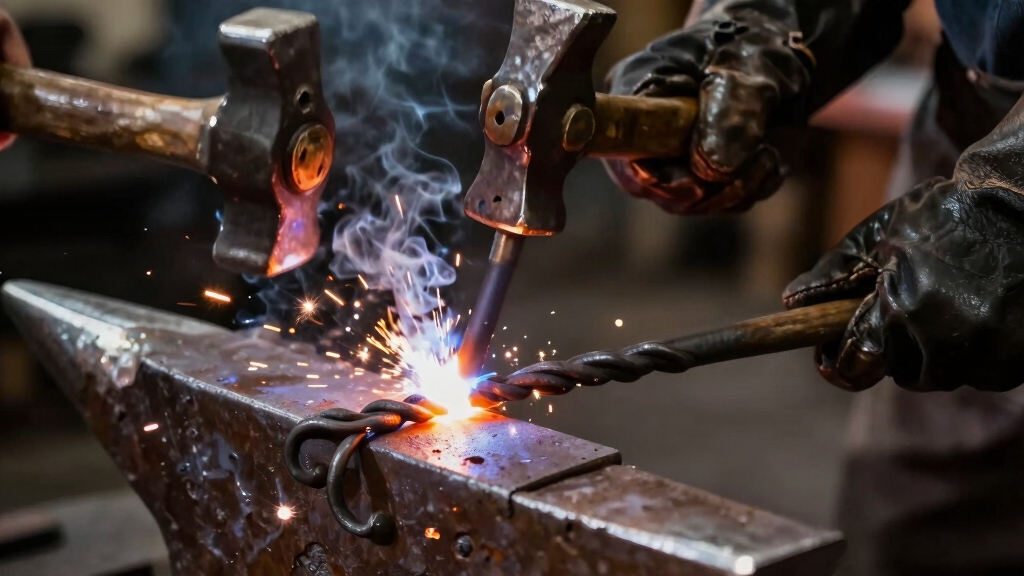
You can weld wrought iron, but its fibrous slag inclusions require careful heat control and specific filler materials to maintain joint strength.
Use low current and small-diameter electrodes to avoid mobilizing slag and causing porosity.
Methods like forge welding, oxyacetylene with mild steel rods, or controlled SMAW are effective.
Managing slag and heat precisely preserves wrought iron’s fibrous microstructure, preventing cracking and weakness.
To master these nuances and optimize weld quality, keep exploring tailored techniques and consumables.
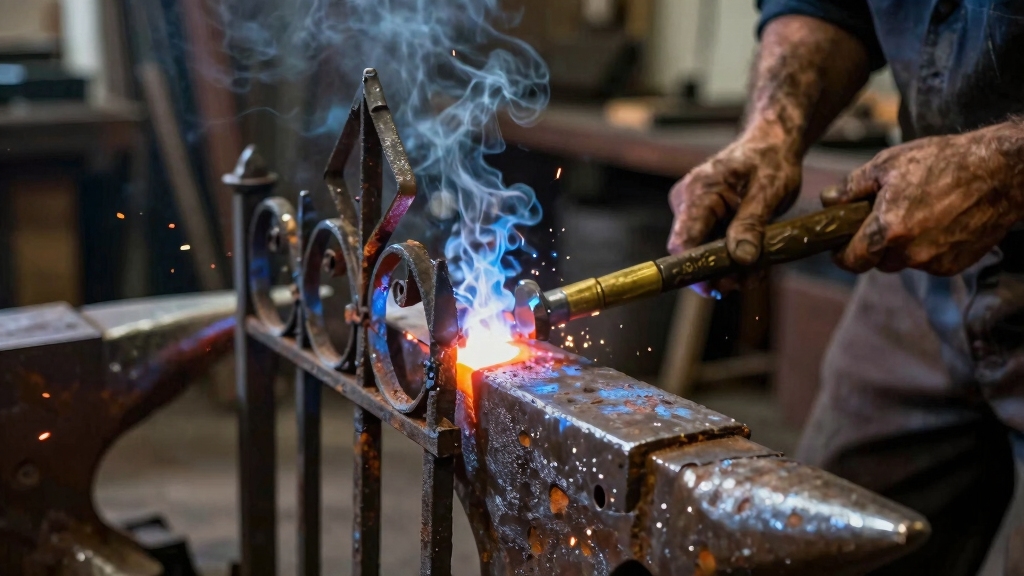
Because wrought iron contains fibrous slag inclusions and has a low carbon and sulfur content, welding it requires specialized techniques to preserve its toughness and ductility.
These slag inclusions act as a natural flux, melting at lower temperatures and affecting the weld pool’s behavior.
When welding wrought iron, excessive heat can mobilize these slag stringers, weakening the joint and reducing mechanical integrity.
High penetration risks burning out slag, causing porosity and trapped gases.
Additionally, the low carbon and sulfur levels enhance weldability but demand controlled heat input and welding speed to avoid compromising the fibrous microstructure.
You must carefully manage molten pool time and electrode choice to maintain wrought iron’s characteristic strength and resilience during welding.
Selecting the best welding methods for wrought iron hinges on controlling heat input and penetration to preserve its fibrous slag structure and mechanical properties.
Forge welding, reaching 1350°C, joins wrought iron by melting the slag inclusions without compromising toughness.
Oxyacetylene welding applies low-carbon steel rods without flux, limiting slag disruption.
Shielded metal arc welding (SMAW) treats wrought iron like mild steel but requires low current and small-diameter rutile-coated electrodes to reduce penetration and slag melting.
Gas metal arc welding (GMAW) and gas tungsten arc welding (GTAW) are effective when you reduce welding speed, allowing proper puddle formation and degasification.
Resistance, flash, seam, spot, and thermite welding methods also work by minimizing heat concentration.
Proper surface preparation and heat input control are essential to prevent defects and maintain weld integrity in wrought iron applications.
Maintaining the integrity of wrought iron’s fibrous slag structure starts with choosing the right filler rods and electrodes. For shielded metal arc welding (SMAW), low-carbon rutile-coated electrodes like BS EN 499 E38 X R XX or AWS E6013 effectively match wrought iron’s composition while controlling penetration.
When using gas metal arc welding (GMAW), select filler wires compliant with BS EN440 G2Si or AWS ER70S-2 to maintain fusion compatibility and minimize slag disruption. Oxyacetylene welding requires mild steel rods to melt the silicon-rich slag portion without additional flux.
Avoid high-carbon or aggressive flux-coated rods, as they risk melting slag inclusions and reducing toughness. Use small-diameter electrodes with low current to limit penetration depth and preserve slag stringers, ensuring weld strength and ductility remain optimal. Proper heat control and preheating are also essential to minimize cracking risk and maintain weld quality through thermal management techniques.
When welding wrought iron, controlling heat input is essential to prevent melting the fibrous slag inclusions that contribute to the material’s toughness and ductility.
You need to apply low current and small-diameter electrodes, especially with SMAW, to limit penetration and avoid slag mobilization.
Concentrate heat on the filler rod to develop a stable puddle before advancing, reducing thermal shock.
Monitoring welding speed is critical; slower speeds allow gases to escape, minimizing porosity and slag entrapment.
Since slag melts at lower temperatures, excessive heat can cause it to pool and weaken the weld zone.
Employ stringer beads and back-stepping techniques to distribute heat evenly and reduce shrinkage stresses.
Using electrodes with a low-hydrogen iron‑powder coating can improve arc stability and reduce cracking risks in wrought iron welding.
Although wrought iron offers excellent weldability compared to other ferrous materials, you must address specific challenges to avoid common welding problems such as slag entrapment, porosity, and loss of toughness.
Wrought iron welds well but requires careful technique to prevent slag, porosity, and toughness loss.
To prevent slag inclusions, maintain controlled heat input by using low current and small-diameter electrodes, especially with SMAW. Avoid excessive penetration that melts fibrous slag, which compromises ductility.
Reduce welding speed to allow degasification and prevent porosity. Concentrate heat on the filler rod, developing a stable molten puddle before advancing the arc.
Use stringer beads and back-stepping techniques to minimize shrinkage stresses. Opt for low-carbon, rutile-coated rods or appropriate filler wires matching wrought iron’s composition.
Proper selection and storage of welding consumables ensure consistent weld quality and reduce defects in wrought iron welding.
Yes, you can weld wrought iron to mild steel without preheating, but you need to be cautious.
Using processes like SMAW with low-carbon rutile-coated electrodes or GMAW with appropriate filler wire reduces risks.
Keep welding speed moderate to avoid porosity and slag entrapment. Excessive heat risks weakening wrought iron’s fibrous structure.
Focus heat on the filler rod and use stringer beads to minimize shrinkage stresses for a strong, durable joint.
Before you strike the arc on wrought iron, you must control slag hazards unique to its fibrous inclusions. They can trap gases, causing dangerous porosity.
You’ll need low amperage settings and small electrodes to avoid deep penetration melting slag, which weakens the metal. Always wear heat-resistant gloves and use adequate ventilation since slag mobilization releases hazardous fumes.
Don’t rush; slower welding reduces gas entrapment, ensuring both your safety and a sound weld.
Welding wrought iron can diminish its historical value because it alters original material properties and introduces modern filler metals.
You risk reducing ductility and toughness due to slag inclusions and heat-affected zones. Repairs with mild steel plates or welding may compromise authenticity.
However, careful techniques like forge welding or low-heat TIG can preserve integrity if done by skilled artisans.
Still, any alteration impacts provenance, so weigh restoration benefits against historical preservation.
You absolutely can’t ignore post-weld care; it’s like giving your wrought iron a spa day!
After welding, you’ve got to clean the weld thoroughly to remove slag and flux residues.
Then inspect for cracks or porosity.
Apply a protective coating to prevent rust and consider gentle preheating next time to reduce stress.
Regularly monitor welded joints for any fatigue or corrosion, ensuring your piece stays structurally sound and visually flawless.
Yes, you can use machine forge welding for small wrought iron projects, but it’s less common due to setup complexity and equipment size.
Machine forge welding excels with larger objects and high-speed hydraulic rolls, which might be impractical for small pieces.
For precise control and reduced heat input, manual forge welding or specialized arc welding methods usually suit small wrought iron work better.
This ensures integrity without overexposure to heat or slag mobilization.
You can weld wrought iron effectively if you use the right methods and materials.
While some worry wrought iron’s impurities make welding tricky, choosing appropriate filler rods and managing heat properly prevents cracks and slag issues. By understanding these nuances, you ensure strong, clean welds.
Don’t let concerns about wrought iron’s unique composition stop you. Precision in technique and preparation makes welding not only possible but reliable and durable.