Phone:
(701)814-6992
Physical address:
6296 Donnelly Plaza
Ratkeville, Bahamas.

Phone:
(701)814-6992
Physical address:
6296 Donnelly Plaza
Ratkeville, Bahamas.

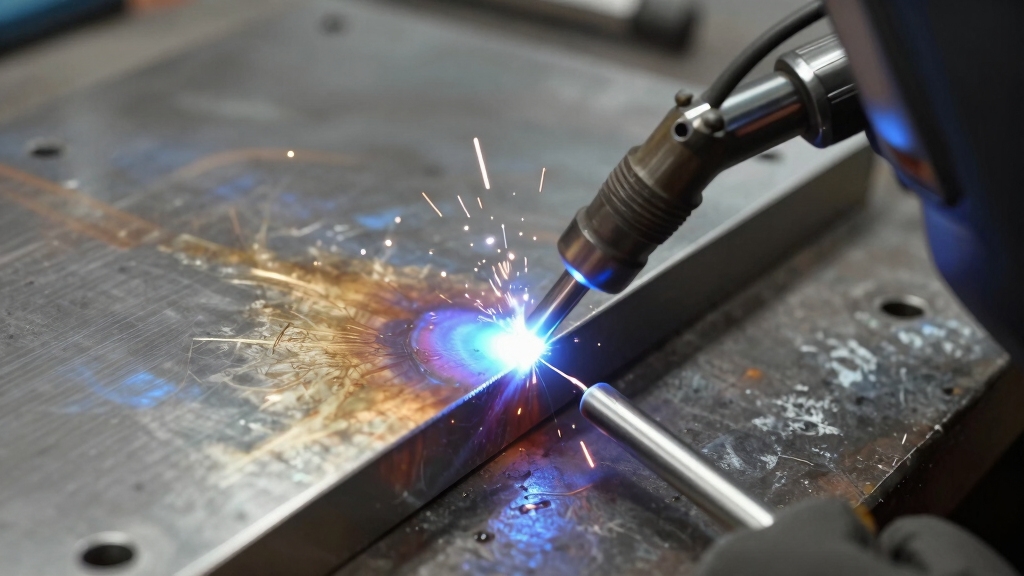
You can weld titanium to steel by using precise techniques that control heat input and shield both metals from contamination.
You’ll need inert gas shielding, typically high-purity argon, to prevent oxidation and embrittlement.
Surface preparation, including chemical cleaning of titanium and light abrasion of steel, is essential.
Methods like resistance butt welding or GTAW offer controlled heat with minimal defects.
Managing thermal mismatch and shielding gas purity reduces cracking risks.
To fully optimize joint integrity, exploring specialized processes and quality verification is key.
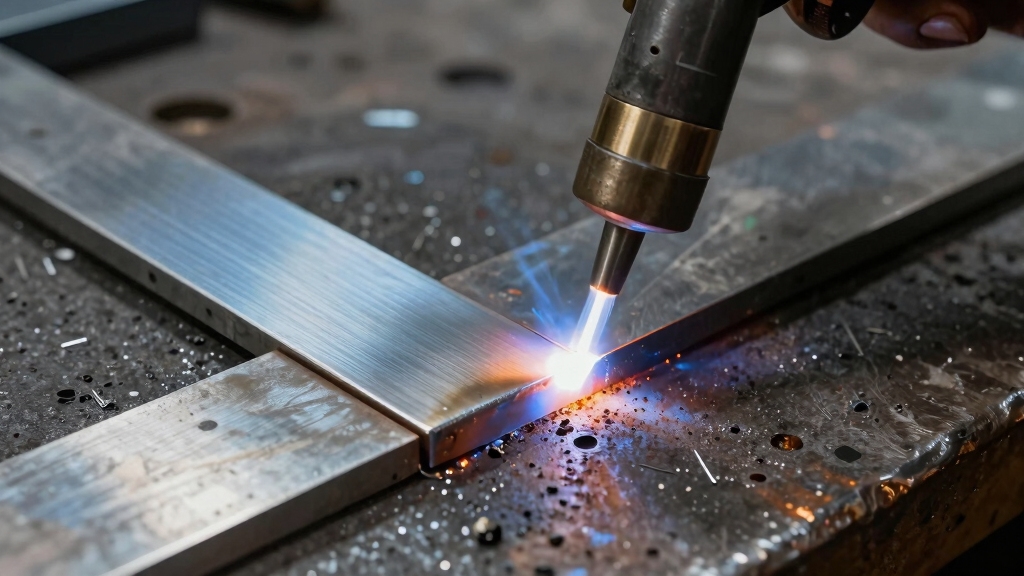
Although welding titanium to steel offers valuable opportunities for combining their unique properties, it presents significant challenges that require careful management.
You must address differences in melting points and thermal conductivity to prevent joint distortion and cracking.
Titanium’s high reactivity with oxygen and nitrogen mandates stringent shielding gas control; even minor contamination compromises weld integrity.
Managing thermal expansion mismatch is critical to avoid residual stresses and joint failure.
Additionally, you need precise control over heat input to limit the heat-affected zone, as titanium’s low heat conduction can exacerbate localized overheating.
Surface preparation is essential; any oxide layers or contaminants can cause weld defects.
Finally, you must develop and verify welding parameters rigorously to ensure that the process produces consistent, defect-free joints suitable for demanding applications.
Using inert gas shielding with appropriate gas mixtures helps reduce oxidation and improve weld quality in dissimilar metal joints.
The complex challenges posed by welding titanium to steel can be effectively addressed through resistance butt welding, a technique that provides strong, contamination-free joints.
This method excels by applying pressure and electric current directly to the joint, minimizing heat input and thus reducing titanium’s exposure to oxygen and nitrogen.
Maintaining proper inert gas shielding, typically with 100% argon, is essential to prevent contamination during and immediately after welding.
You must carefully control parameters like current intensity and weld duration to ensure the molten zone doesn’t exceed critical temperatures, which can degrade joint quality.
Additionally, surface preparation is vital. Clean, oxide-free titanium and steel surfaces improve weld integrity.
Careful control of heat input and cooling rates is crucial to minimize residual stresses and prevent cracking in dissimilar metal joints, as noted in thermal expansion management techniques.
Mastering gas tungsten-arc welding (GTAW or TIG) for titanium-to-steel joints demands strict control of heat input and shielding gas to prevent contamination and guarantee metallurgical compatibility.
You’ll need to maintain an inert atmosphere, typically with 100% argon, ensuring oxygen levels stay below 20 ppm. Precision is key to avoid excessive heat that can degrade titanium’s properties or cause brittle intermetallics at the interface.
Focus on these critical steps:
Following these protocols helps you achieve sound, contamination-free titanium-steel joints with GTAW. Using inert shielding gas is essential to prevent nitrogen absorption and weld metal embrittlement during the process.
Gas metal-arc welding is a fantastic option if you’re looking to join titanium to steel without breaking the bank. It’s particularly useful for heavy section fabrication, which is a big plus.
One of the standout features of GMA welding is its ability to handle thicker materials. This not only speeds up production time but also ensures that the joint remains strong and reliable. So, if you’re working on large-scale titanium-steel assemblies, GMA welding really shines as a practical choice. Proper wire electrode selection and polarity settings are essential to maintain a stable arc and ensure consistent weld quality in such applications.
Consider gas metal-arc welding (GMAW) when you need an economical yet effective method for joining titanium to steel, especially with thicker titanium sections.
GMAW offers advantages in cost-efficiency and productivity compared to other titanium welding processes, provided you control critical parameters precisely.
Key benefits include:
Maintaining proper shielding gas flow between 20–25 CFH is essential to prevent oxidation and ensure weld integrity when working with titanium-steel joints.
Although welding thick titanium sections to steel presents challenges, gas metal-arc welding (GMAW) offers distinct advantages that address heavy section compatibility effectively.
GMAW provides higher deposition rates and deeper penetration, vital for joining heavy titanium to steel sections without excessive heat input that can degrade metallurgical properties.
Its adaptability to automated welding setups guarantees consistent weld quality across thick sections, reducing the risk of contamination and defects.
You can optimize shielding gas flow and welding parameters to maintain titanium’s purity and prevent oxidation in large welds.
Additionally, GMAW’s economical operation enables efficient material use and reduced cycle times.
When welding heavy sections, controlling heat input via GMAW minimizes distortion and guarantees strong, reliable titanium-steel joints essential for structural integrity in demanding applications.
Flux-cored wires and solid wires can be selected based on the specific welding environment to optimize penetration and weld quality in such dissimilar metal joints, highlighting the importance of wire selection.
If you’re considering welding options for titanium-to-steel joints, electron beam welding might be the way to go. It’s great for achieving precise, deep penetration while keeping the heat-affected zones to a minimum. That’s a real plus if you need accuracy in your work.
On the other hand, there’s friction welding, which has its own set of benefits. It’s particularly good for bonding dissimilar metals because it generates heat through mechanical friction rather than melting the materials. This solid-state bonding can be a game changer in certain applications.
However, it’s important to remember that both methods come with their own limitations and advantages. You’ll want to weigh these carefully based on factors like joint design, material thickness, and your specific production needs. It’s all about finding the right fit for your project!
Additionally, when using traditional welding processes, understanding the role of the welding transformer in controlling current and voltage can be critical to achieving successful metal fusion.
Electron beam welding (EBW) offers a high-precision alternative for joining titanium to steel. It utilizes a focused electron beam to generate localized heat with minimal distortion.
You’ll appreciate its ability to produce deep, narrow welds with controlled heat input. This reduces the heat-affected zone and prevents contamination.
EBW occurs in a vacuum, which eliminates atmospheric interference. This is a critical factor when working with titanium.
When considering EBW, focus on:
Additionally, selecting the appropriate shielding gases and controlling heat input are essential to minimize oxidation and ensure weld integrity when joining dissimilar metals like titanium and steel.
Friction welding provides another effective method for joining titanium to steel, especially when controlled heat input and minimal contamination are priorities. You’ll generate heat through mechanical friction, causing interface plasticization without melting, resulting in a strong metallurgical bond.
This solid-state process limits oxidation and intermetallic formation common in fusion welding. You must precisely control parameters like rotational speed, pressure, and time to optimize joint integrity. Inverter welding machines offer precise heat input control that is similarly critical for achieving strong, defect-free welds in sensitive materials.
| Parameter | Effect on Joint | Typical Range |
|---|---|---|
| Rotational Speed | Heat generation | 1000–3000 rpm |
| Axial Pressure | Material plasticization | 30–60 MPa |
| Friction Time | Bond formation | 1–5 seconds |
| Cooling Rate | Microstructure control | Controlled, slow |
Although alternative welding methods like electron beam and friction welding offer specialized advantages for joining titanium to steel, they come with distinct limitations that you must carefully evaluate.
Electron beam welding delivers deep penetration with minimal distortion but requires a vacuum environment, increasing setup complexity and cost.
Friction welding produces solid-state joints free of fusion defects yet demands precise control of rotational speed and pressure to avoid weak interfaces.
Consider these key points:
Plasma welding, with its ability to provide deep penetration and precise heat control, presents an alternative that can address some challenges in joining dissimilar metals.
You need to weigh these factors against your project’s specifications.
When you set up a titanium welding operation, you’ll need to lock in proper shielding gas parameters to prevent contamination. Use 100 percent argon with purity levels as high as 99.999 percent in critical applications. Maintain oxygen content below 20 ppm.
Guarantee a dew point between -50 and -76°F to minimize moisture ingress. Implement a pre-flow of 2-5 seconds before arc initiation to establish effective gas coverage. Inspect all shielding gas lines and connections meticulously for leaks that could introduce oxygen or moisture, both detrimental to titanium weld integrity.
Avoid fluxed processes and prevent tungsten electrode contact with the weld puddle to reduce contamination risk. Maintaining these precise shielding gas conditions is essential to produce clean, oxide-free titanium-to-steel joints with reliable mechanical properties.
Controlling temperature and maintaining continuous shielding gas coverage are critical to preventing weld defects in titanium-to-steel joints. Titanium’s reactivity above 500°F demands strict thermal management and uninterrupted argon shielding to avoid contamination and embrittlement.
Strict temperature control and continuous argon shielding prevent contamination and embrittlement in titanium-to-steel welds.
To guarantee weld integrity, you should:
These steps help you avoid porosity, discoloration, and cracking. They produce sound, defect-free titanium-to-steel welds.
In preparing titanium and steel surfaces for welding, you must ensure they are impeccably clean and free of oxides to prevent contamination. Titanium’s high reactivity demands the removal of all oxide layers and any surface oils.
Steel surfaces require thorough degreasing and light abrasive cleaning to expose bare metal. Avoid fluxes, as titanium reacts adversely with oxygen, nitrogen, and hydrogen.
| Surface Type | Preparation Method |
|---|---|
| Titanium | Chemical cleaning, pickling |
| Steel | Degreasing, abrasive blast |
| Both | Immediate welding post-clean |
You should also inspect filler metals and electrodes for contamination. Any tungsten pickup or shielding gas leaks can compromise weld integrity. Proper surface preparation guarantees a sound metallurgical bond when welding titanium to steel.
Although welding titanium to steel demands exacting technique, maintaining rigorous quality assurance and testing protocols is vital to guarantee joint integrity. You must develop certified welding procedures and verify parameters consistently before production authorization.
Welding titanium to steel requires precise techniques and strict quality controls to ensure joint integrity.
Implement non-destructive testing methods, such as liquid penetrant and full radiography, to detect any discontinuities or defects accurately.
To make certain quality, focus on these key aspects:
You’ll find titanium-to-steel welding most common in aerospace, chemical processing, and marine industries.
These sectors demand corrosion resistance and strength, combining titanium’s lightweight properties with steel’s durability.
You’ll also encounter this welding in power generation and medical device manufacturing, where precise, contamination-free joints are critical.
Understanding the specific welding techniques and maintaining strict quality control guarantees your joints meet the high performance and safety standards required across these industries.
Welding titanium to steel can affect corrosion resistance by creating galvanic couples, which accelerate corrosion at the joint if not properly managed.
You’ll need to guarantee complete inert gas shielding to prevent contamination and maintain titanium’s oxide layer integrity.
Also, controlling heat input minimizes intermetallic formation that compromises corrosion resistance.
Proper filler choice and post-weld treatments help preserve joint durability in corrosive environments, so always verify weld parameters carefully.
Think of titanium-steel welds as a bridge between two kingdoms. If a crack appears, you can restore it, but only with expert care.
You’ll need thorough cleaning, precise heat control, and inert gas shielding to prevent contamination.
Then, carefully re-weld using verified parameters and inspect via liquid penetrant or radiography.
This meticulous approach guarantees the repaired joint regains strength and corrosion resistance, maintaining the integrity of your critical fusion.
Welding titanium to steel increases costs due to specialized processes like resistance butt or GTAW welding, requiring strict parameter control and high-purity argon shielding.
You’ll face higher expenses from meticulous surface preparation, contamination prevention, and extensive quality assurance testing, including radiography.
Additionally, slower welding speeds and the need for skilled operators add labor costs. Overall, expect markedly greater material and operational costs compared to welding similar metals.
When welding titanium to steel, you’ve got to remember, “An ounce of prevention is worth a pound of cure.”
You must control oxygen and moisture strictly; titanium reacts above 500°F. Use 100% argon shielding and maintain gas flow until cooling below 800°F to avoid contamination.
Avoid tungsten electrode contact with molten metal and make certain surfaces are oxide-free. Neglecting these can cause weld defects, contamination, and potential safety hazards like toxic fume exposure.
Welding titanium to steel is like bridging two worlds with precision and care. You’ll face challenges in temperature control, shielding gas purity, and contamination prevention.
By mastering methods like resistance butt or gas tungsten-arc welding and ensuring meticulous surface preparation, you forge a flawless bond.
Think of it as engineering an unbreakable link, where every parameter aligns perfectly to overcome material differences and deliver a joint that’s both strong and reliable.