Phone:
(701)814-6992
Physical address:
6296 Donnelly Plaza
Ratkeville, Bahamas.

Phone:
(701)814-6992
Physical address:
6296 Donnelly Plaza
Ratkeville, Bahamas.

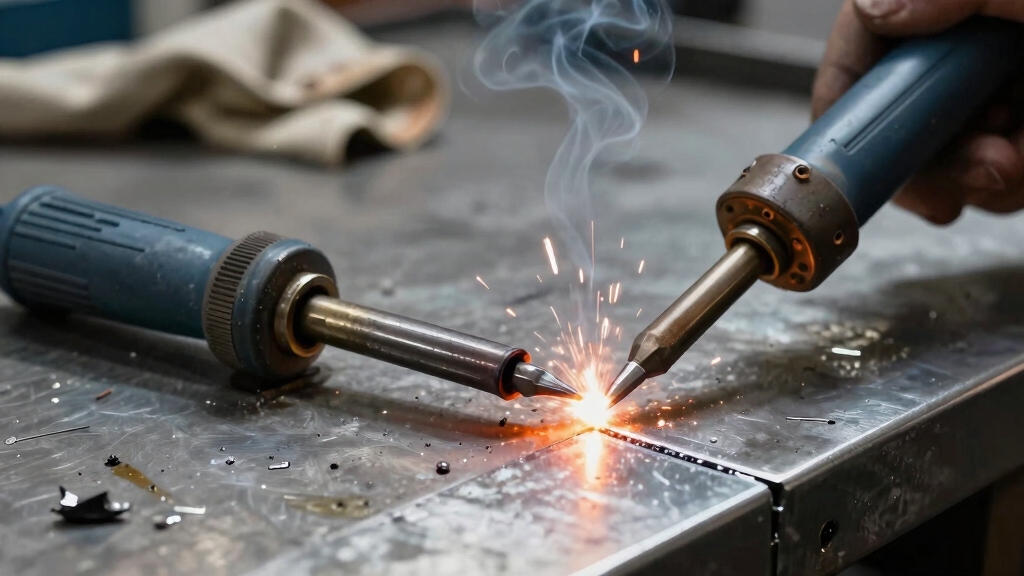
You can’t weld metal with a soldering iron or electric gun because they only reach temperatures up to about 600°C. This is far below the 1000°C or higher needed to melt and fuse base metals.
These tools melt filler solder without altering the metals themselves. They create bonds through adhesion rather than fusion.
Their power and heat output suit delicate, precise tasks but aren’t enough for structural joins. Understanding these limits clarifies when welding equipment is truly necessary.
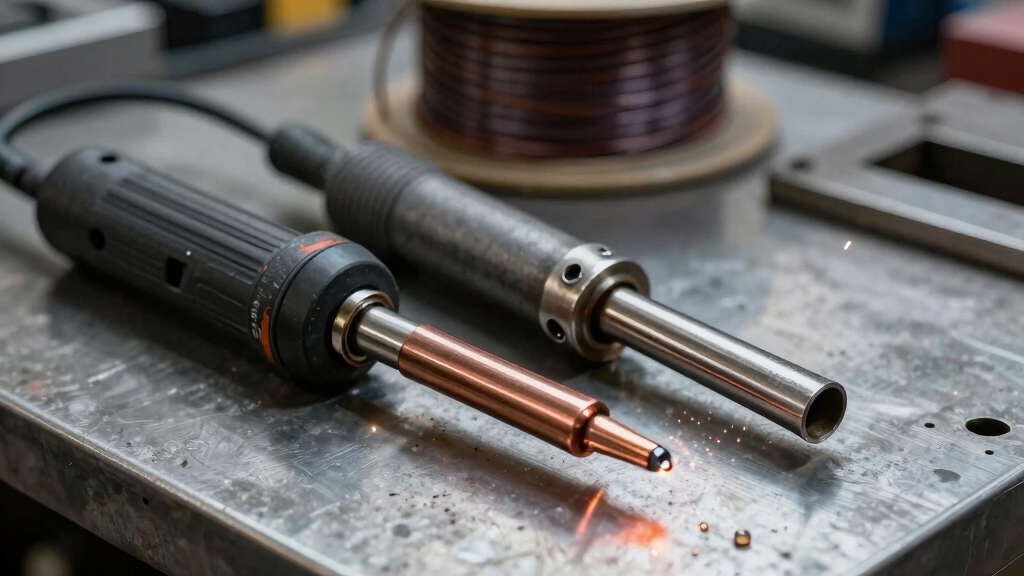
Understanding the difference between soldering and welding is essential when choosing the right method for joining metals.
You’ll find that soldering melts a filler metal, or solder, below 400°C, creating a bond without melting the base metals.
Welding, on the other hand, melts the base metals themselves, typically above 1000°C, fusing them together.
When you use a soldering iron or gun, you rely on lower heat and a solder alloy for adhesion, not fusion.
Electric soldering guns lack the necessary heat to melt base metals, so despite sometimes being labeled “welding” tools, they perform soldering only.
Knowing these distinctions helps you avoid misapplications and select tools based on temperature requirements and the nature of the metal joint you need.
Proper welding requires controlling amperage and voltage to achieve sufficient heat input for fusion.
When you grab a soldering iron or gun, you’re actually applying controlled heat—usually below 400°C—to melt the solder.
But here’s the key point: you’re not melting the base metals themselves. Instead, this process joins metals like copper or iron by creating a bond using the filler material. It’s like using glue instead of welding them together.
Now, it’s super important to understand the heat levels you’re working with and which metals are compatible. This knowledge is crucial for effective soldering and for avoiding any damage to your components.
Knowing what you’re doing can save you a lot of hassle down the line! Unlike welding torches that operate at temperatures ranging from 3,000 to 20,000°F, soldering irons work at much lower temperatures, limiting them to joining rather than melting base metals, which is explained in temperature requirements.
Soldering irons and guns work by heating a filler metal, typically a solder alloy, to a temperature below 400°C. This allows you to join metal surfaces without melting the base materials themselves.
When you apply the heated solder to prepared metal surfaces, it melts and flows into microscopic gaps. This creates a mechanical and electrical bond upon cooling.
You must make certain surfaces are clean and fluxed to remove oxides, promoting solder wetting and adhesion. Unlike welding, soldering relies on the solder’s low melting point to bond parts without altering the base metals structurally.
You control heat via tool power and tip temperature, applying solder precisely to joints. This process suits delicate electronics and thin metals but lacks the strength of metal fusion welding.
To ensure proper handling and fit during soldering work, using gloves made of shrinkable materials like leather or neoprene can provide safety and dexterity.
Achieving reliable metal joints with soldering irons and guns depends on managing heat levels carefully to suit the metals involved.
Unlike welding, soldering melts a filler metal below 400°C without melting the base metals.
You need to take into account:
Since soldering guns max out near 600°C, they lack the heat to fuse base metals like welding does.
You must use them strictly for soldering applications, not welding.
For welding aluminum, selecting the correct tungsten electrode type is crucial to ensure arc stability and prevent contamination.
Understanding the temperature range of soldering irons and guns is essential for selecting the right tool for your task.
Typical soldering irons operate between 200°C and 450°C, sufficient to melt solder alloys but far below the melting point of most base metals.
High-power irons can reach up to 500°C, while soldering guns heat rapidly to around 600°C.
Despite their wattage, ranging from 35W to 300W, these tools focus on heating solder, not fusing base metals.
You’ll find that neither irons nor guns achieve temperatures necessary for welding, which requires well above 1000°C to melt metals.
This temperature limitation confines their use to soldering applications, where low-melting filler metals bond surfaces without altering the structural integrity of the base metals.
For comparison, arc welding produces electric arcs up to ~6,000°F, highlighting the vast difference in heat levels required for welding versus soldering.
When you work with metals like copper, aluminum, or iron, you can join them effectively using soldering irons and guns without melting their base structure. These tools rely on solder alloys with melting points below 400°C, enabling secure bonds without altering the metal’s integrity.
Here are three common metals you can solder but not weld with these tools:
Understanding these metals’ compatibility with soldering clarifies why soldering irons and guns excel in precision joining rather than fusion-based welding. Unlike soldering, welding requires much higher heat and sometimes specialized coatings like weld-through primer to ensure corrosion resistance and joint integrity during the fusion process.
Although soldering irons and guns generate significant heat, they can’t reach the temperatures required to melt base metals and create a true weld.
Welding demands melting base metals, typically above 1000°C, to fuse them into a single piece.
In contrast, soldering irons operate below 600°C, sufficient only to melt filler metals with low melting points, like tin-based solder alloys.
This temperature gap prevents base metal fusion, restricting soldering tools to joining surfaces by adhesion rather than metallurgical bonding.
Additionally, soldering guns lack the energy density and thermal conduction necessary for metal fusion.
Their power ratings (max ~300W) focus heat on small areas without sustaining the prolonged, intense heat required for welding.
Consequently, you can’t rely on these tools for true welding, as they fundamentally lack the thermal capacity and mechanism for base metal melting.
Welding requires a primary power source that delivers controlled current and voltage to maintain a stable arc and sufficient heat for fusion.
You know, a soldering gun is your best bet when you’re working with small metal parts or wiring. It’s perfect for jobs that need temperatures below 600°C since it won’t melt the base metals like a welder would. This makes it super handy for delicate tasks!
Plus, with a power range between 120W and 300W, it’s designed for precision and quick heat-up, which is really important when you’re working on intricate projects. Unlike traditional welders, soldering guns are much more portable and give you better control, making them ideal for electronics and light metalwork. So, next time you’re faced with a small job, grab that soldering gun! Wearing heat-resistant gloves is still important to protect your hands from burns and electrical shocks even with soldering guns.
Soldering guns excel at joining electrical wires and small metal parts where high heat and base metal fusion aren’t required. You should use a soldering gun when tasks demand controlled heat for melting solder but not the base metals themselves. Here are ideal scenarios:
In these cases, the soldering gun provides efficient heat transfer and rapid solder melting. This ensures solid joints without risking thermal damage to sensitive components. For true metal fusion, a welder remains essential. Soldering is distinct from welding as it does not involve metal fusion and instead relies on filler metals melting at lower temperatures.
When choosing between a soldering gun and a welder, understanding their power and temperature limits is essential to guarantee proper metal joining.
Soldering guns typically deliver 120 to 300 watts and reach maximum temperatures around 600°C. This is sufficient to melt solder alloys but far below the threshold to melt base metals.
Welding, in contrast, requires temperatures exceeding 1000°C to fuse metals effectively.
Because soldering guns lack the heat to achieve base metal fusion, they’re suitable only for tasks involving low-melting-point filler metals and small or thin components.
You should use soldering guns when working on electrical wiring or delicate metal parts, where precision and minimal heat impact matter.
For any task demanding structural metal fusion or heavy-duty joints, a true welder with higher power and temperature capacity is necessary.
Proper surface preparation, including cleaning and roughening, is crucial for achieving a strong bond when using any metal joining method, including adhesives like epoxy, which is an alternative to heat-based joining techniques such as welding or soldering. surface preparation
Consider opting for a soldering gun over a traditional welder when working on delicate electrical components or fine metal parts that require precise heat control.
Soldering guns provide a controlled, lower temperature environment ideal for sensitive tasks. You’ll appreciate these advantages:
Use a soldering gun when joining electrical wires, delicate copper parts, or small metalwork. These tasks are unsuited for the high-heat, invasive nature of traditional welders.
Why do some soldering guns often get mistaken for welders? The confusion arises mainly because soldering guns deliver substantial heat (up to 600°C) and have a pistol-like design resembling welding tools.
However, they only melt solder, not the base metals. Misleading marketing labels and similar power ratings (up to 300W) contribute to this misconception.
Here’s a quick comparison:
| Feature | Soldering Gun | Welder |
|---|---|---|
| Max Temp | ~600°C | >1000°C |
| Metal Fusion | No (only solder melts) | Yes (base metals fuse) |
| Power Range | 120-300W | Varies, usually higher |
| Application | Electronics, wiring | Structural metal joining |
| Tool Design | Pistol-shaped, trigger | Various, often heavy |
You’ll see that despite superficial similarities, soldering guns lack the temperature and mechanism to perform true welding.
Although soldering tools are useful for joining small electronic components, real metal welding requires specialized equipment designed to generate the intense heat needed to melt base metals.
You’ll need tools that can reach temperatures well above 1000°C to achieve proper fusion. Here are three essential tools for real metal welding jobs:
1. Arc Welding Machine (MIG, TIG, or Stick)
Provides the high current and voltage necessary to create an electric arc that melts the base metals.
2. Welding Helmet and Protective Gear
Shield your eyes and skin from harmful UV radiation, sparks, and molten metal.
3. Welding Electrodes or Filler Rods
Supply additional metal to strengthen the joint during fusion.
Without these, your work will lack the heat and safety standards required for authentic metal welding.
Yes, soldering guns can damage sensitive electronic components. Their higher wattage and rapid heating can cause excessive heat transfer, risking component overheating or thermal stress.
You should avoid prolonged contact and use temperature-controlled irons for delicate parts. Precise heat application is vital to prevent damage to circuit boards or semiconductors.
Always guarantee proper heat dissipation and avoid using guns on small or heat-sensitive electronics to maintain component integrity.
How quickly do you expect your soldering gun to be ready for work?
Typically, a soldering gun heats up within 30 seconds to 2 minutes, depending on its wattage and design.
Higher-power models around 150 to 300 watts reach operating temperature faster, often under 30 seconds.
Lower-power or USB models might take closer to 2 minutes.
Knowing this helps you plan precise, efficient soldering without unnecessary delays or overheating risks.
Yes, you can safely use soldering irons on plastic parts, but you need to control the temperature carefully.
Plastics have lower melting points, so overheating can cause melting or deformation. Use low-temperature soldering irons or adjust settings accordingly.
Also, ensure good ventilation to avoid harmful fumes from heated plastics.
Applying heat precisely and briefly minimizes damage, making soldering irons suitable for small plastic repairs or electronics housing modifications.
Think of your soldering iron like a car engine. It needs regular care to run smoothly.
You should clean the tip after every use, removing oxidation with a damp sponge or brass wire cleaner.
Tinning the tip prevents corrosion and improves heat transfer.
Inspect cables for damage and replace worn parts.
Proper maintenance guarantees consistent temperature and prolongs tool life.
Just like tuning your engine keeps your car performing at its best.
Yes, you can use soldering guns for jewelry repairs, especially for joining small metal parts like chains or clasps. Their rapid heating and higher wattage help you work efficiently on metals like copper or silver.
However, soldering guns don’t melt the base metals, so you rely on solder to bond pieces. For delicate or precious metals, precise temperature control and proper flux application are critical to avoid damage.
So, can a soldering iron or gun weld metal? Not really. These tools heat just enough to melt solder, not the base metals themselves, which is essential for welding.
If you need a strong, permanent joint on metals, soldering won’t cut it. Why settle for a weak bond when proper welding equipment can deliver the strength and durability you require?
Use soldering guns for electronics or thin metals, but rely on welders for serious metalwork.