Phone:
(701)814-6992
Physical address:
6296 Donnelly Plaza
Ratkeville, Bahamas.

Phone:
(701)814-6992
Physical address:
6296 Donnelly Plaza
Ratkeville, Bahamas.

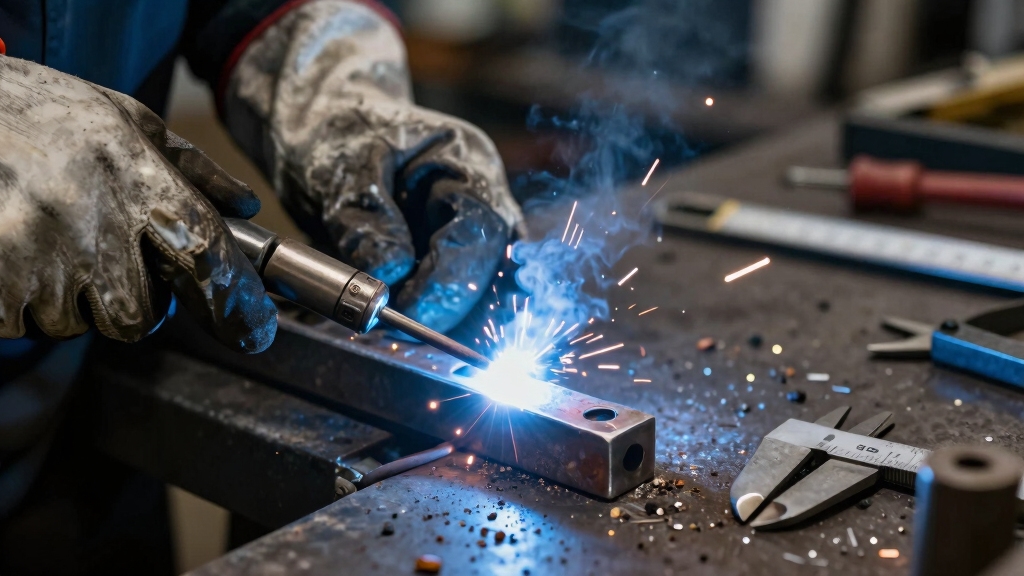
To operate a welding machine, first set up a stable, clean workspace free from flammables and ensure good ventilation.
Wear flame-resistant clothing, a welding helmet, leather gloves, and proper footwear.
Inspect all cables and machine components for damage, confirm grounding, and select the right electrode and settings for your project.
Position the workpiece securely, then strike the arc at a proper angle, maintaining steady movement.
Follow safety protocols to manage hazards, and you’ll build strong, consistent welds.
Learn how to optimize each step for best results.
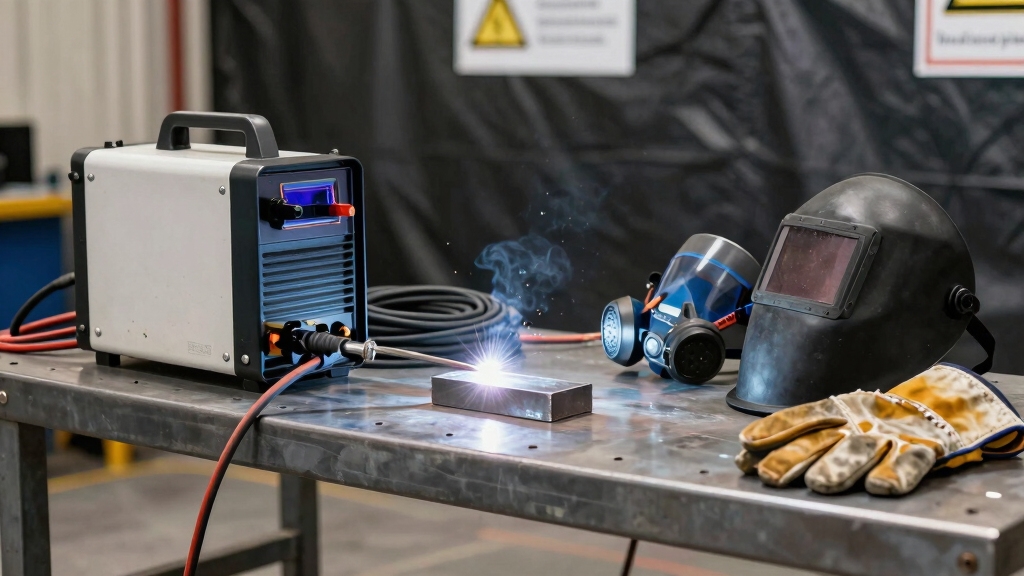
Before you start welding, set up your workspace on a stable, flat surface free from flammable materials and moisture.
Prepare your welding area on a stable, flat surface clear of moisture and flammable materials.
Remove all combustibles at least 35 feet away to minimize fire risk. Position your welding machine and tools securely, ensuring cables and hoses are untangled and off the floor to prevent tripping hazards.
Cover nearby holes or openings to stop sparks from igniting hidden flammables. Install fume extraction systems close to the welding area, directing smoke away from your breathing zone.
Place hazard warning signs clearly visible to others. Confirm a clear emergency egress path exists, and keep a fire extinguisher accessible.
Inspect all equipment for damage before use, and verify proper grounding of the welding unit per electrical codes. This setup guarantees a controlled, safe environment for welding operations.
Regularly inspecting tools and replacing worn or damaged parts is essential to maintain electrical safety and prevent hazards during welding.
When you prepare to weld, selecting and wearing the correct protective gear is critical to safeguard yourself from burns, radiation, and harmful fumes.
Always choose flame-resistant clothing, a welding helmet with ANSI-certified auto-darkening or flip-shade, leather gloves, and high-top leather shoes.
In wet or humid conditions, add rubber gloves, boots, and pads. Use respiratory protection in confined or poorly ventilated spaces.
Make certain all gear fits properly and is free from damage.
Wearing gloves is essential safety gear to prevent thermal injuries and electrical shocks.
| Protective Gear | Purpose | Key Feature |
|---|---|---|
| Welding Helmet | Protect eyes/face | Auto-darkening, ANSI-certified |
| Flame-Resistant Clothing | Prevent burns | Long sleeves, buttoned cuffs |
| Leather Gloves | Shield hands | Dry, hole-free |
| Respiratory Mask | Filter fumes | Use in enclosed spaces |
Although setting up your welding machine may seem straightforward, thorough inspection and proper configuration are essential to guarantee safe and efficient operation.
Start by examining all cables for frays or exposed wires and replace damaged components immediately. Confirm that the electrode holder is well-insulated and free from grease.
Verify the machine’s grounding according to electrical codes, and make certain it’s positioned on a stable, non-flammable surface. Check that all connections are tight and secure to prevent electrical faults.
Test the power supply and controls to confirm correct voltage and settings for your welding task. Remove any combustible materials from the vicinity.
Finally, verify that your personal protective equipment is ready and fit for use before proceeding with welding operations. This careful setup reduces risks and optimizes machine performance.
Ensure that the power source, whether generator or inverter, is compatible with your welding equipment to provide stable electrical output during operation.
To kick off welding, secure your personal protective equipment and confirm that your workspace is clear of hazards.
Next, guarantee the welding machine is properly grounded and cables are intact with no frays or grease.
Connect the electrode holder, then select the correct electrode type and size for the material thickness.
Power on the machine and adjust the amperage according to specifications.
Position the workpiece on a stable, insulated surface and ground it properly.
Hold the electrode at the recommended angle, usually 15 degrees from vertical, and strike the arc by tapping or scratching the electrode against the workpiece.
Maintain a consistent travel speed, making sure the weld pool forms evenly.
Finally, monitor the weld for uniform bead and adjust settings if needed for optimum penetration and fusion.
Be sure to set the correct current type and polarity on the machine based on the material you are welding to ensure proper weld quality.
After you’ve established your welding setup and initiated the arc properly, focus on managing hazards to maintain a safe working environment.
Remove all flammable materials at least 35 feet from the welding area and ensure fire extinguishers are accessible.
Inspect cables and electrode holders for damage, and always wear dry, flame-resistant clothing with proper PPE, including gloves, helmet, and safety glasses.
Ground your equipment and workpiece correctly, using rubber mats or dry wood to insulate yourself.
Position fume extraction systems to draw smoke away from your breathing zone.
Avoid striking the arc near unprotected personnel and verify that ventilation meets site requirements.
Always disconnect power before maintenance or electrode changes.
Wet skin dramatically lowers body electrical resistance, elevating shock risk during welding operations.
You’ll need special welding techniques for metals like aluminum, stainless steel, and cast iron.
Aluminum requires precise heat control to avoid warping and porosity.
Stainless steel demands careful shielding gas use to prevent oxidation.
Cast iron needs preheating and slow cooling to minimize cracking.
Titanium, magnesium, and some high-strength steels also call for specialized processes.
Always adjust parameters and choose appropriate filler materials for each metal type.
Picture your welding machine humming smoothly, sparks flying just right. To keep it that way, regularly inspect cables for frays.
Clean dust and debris from vents, and tighten all connections. Lubricate moving parts as specified in the manual.
Always disconnect power before maintenance and store it in a dry place. Replace worn components promptly.
These steps guarantee your machine runs efficiently and lasts longer, saving you costly repairs down the line.
You’ll notice electrical failure signs like inconsistent arc stability, sudden power drops, or sparks from cables.
Inspect for frayed wires, damaged insulation, or overheating connectors. If your machine trips breakers frequently or displays error codes, that’s another indicator.
Also, check electrode holders and cables for grease or moisture, which can cause shorts. Address these issues immediately to prevent hazards and equipment damage.
Regular inspections keep your welding safe and efficient.
You can improve welding skill accuracy and consistency by practicing steady hand movements and maintaining a consistent travel speed.
Use the correct electrode or wire for your material’s thickness and make multiple passes when needed.
Position fume extraction properly to keep visibility clear.
Regularly inspect your equipment and PPE to guarantee peak performance.
Finally, seek feedback and review your welds critically to identify areas for improvement and reinforce good technique.
Think of certification as your welding “license to craft,” like a pilot’s license proving they can navigate complex skies.
You should get certified by the American Welding Society (AWS), especially the Certified Welder (CW) or Certified Welding Inspector (CWI) programs.
These validate your skills, knowledge, and safety adherence. Also, consider certifications from the American Society of Mechanical Engineers (ASME) if you work on pressure vessels or pipelines.
They’re essential for credibility and career growth.
Now that you know how to operate a welding machine safely and effectively, it’s almost ironic how simple it is to avoid turning your workspace into a fireworks show.
By setting up properly, wearing your protective gear, inspecting your machine, and following the steps carefully, you’ll weld with precision, not panic.
Remember, the only sparks you want are from your weld, not from neglecting safety. Stay sharp, stay safe, and weld smart.