Phone:
(701)814-6992
Physical address:
6296 Donnelly Plaza
Ratkeville, Bahamas.

Phone:
(701)814-6992
Physical address:
6296 Donnelly Plaza
Ratkeville, Bahamas.

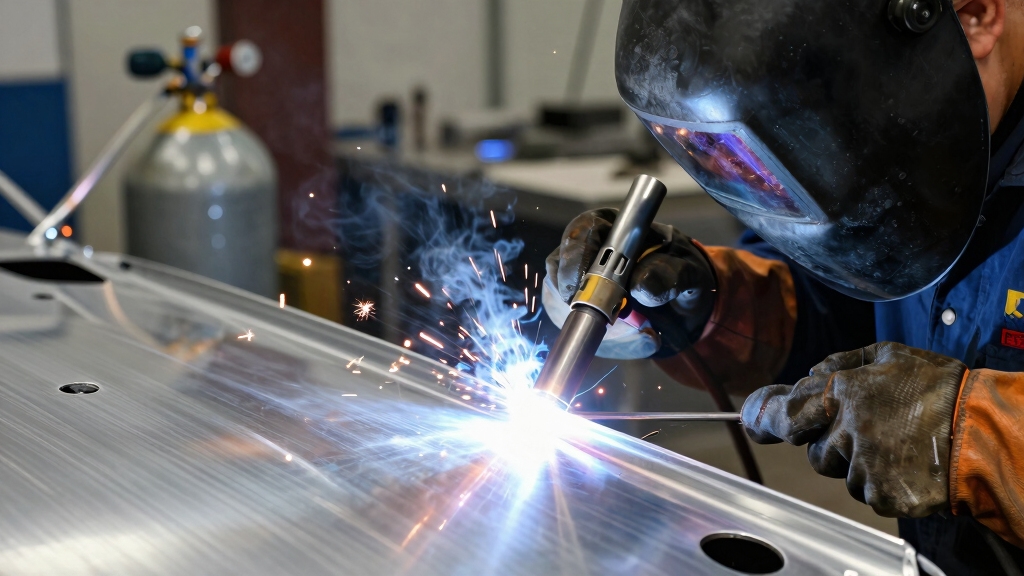
You use 100% pure argon for most aluminum welding because it provides excellent arc stability, prevents oxidation, and guarantees superior weld quality, especially on materials up to 1/4 inch thick.
For thicker aluminum, argon-helium blends improve penetration and weld pool fluidity by increasing heat input. However, they require higher flow rates and careful control.
Avoid CO2, as it causes contamination and porosity. Understanding when to select pure argon versus blends helps optimize weld integrity and efficiency for your projects.
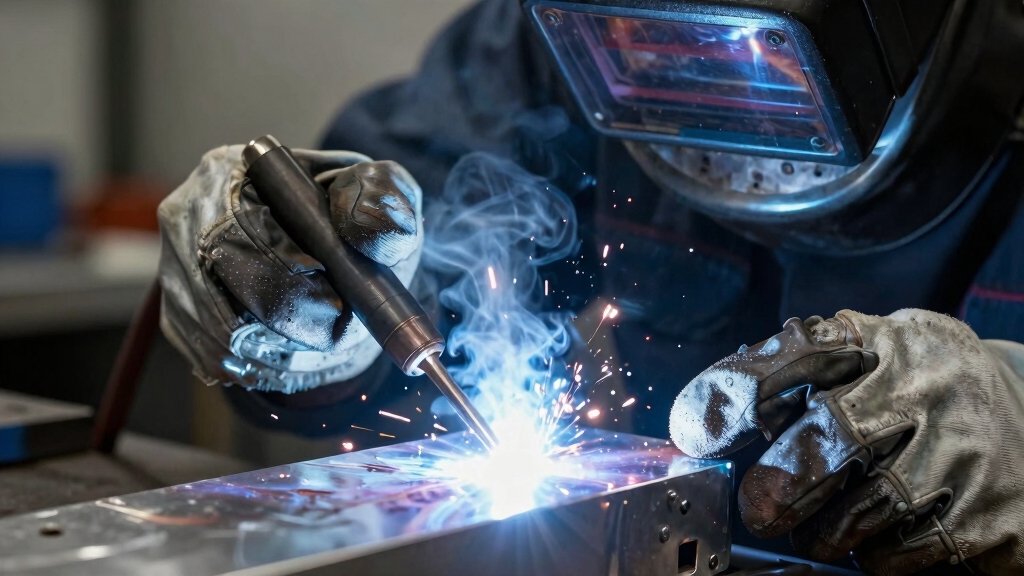
Choosing pure argon for aluminum welding guarantees you achieve peak arc stability and weld quality.
Selecting pure argon ensures optimal arc stability and superior weld quality for aluminum projects.
With at least 99.99% purity, argon’s inert nature prevents oxidation and contamination of the molten aluminum pool, preserving the integrity of your weld.
Its higher density compared to air shields the weld pool effectively, minimizing porosity and defects.
Whether you’re using MIG or TIG processes, pure argon provides consistent performance across various welding conditions, making it ideal for aluminum thicknesses up to 1/4 inch.
Additionally, argon’s low ionization potential facilitates smooth arc initiation and stable transfer modes, reducing spatter and wire feeding issues.
Its cost-effectiveness and versatility further cement its status as the industry standard for aluminum welding, delivering reliable, clean, and structurally sound welds in most common applications.
For optimal coverage and to prevent porosity, maintaining recommended argon gas flow rates of 20–25 CFM is essential during welding.
While pure argon works exceptionally well for aluminum up to 1/4 inch thick, changing the material thickness demands adjustments in your shielding gas selection.
For aluminum thicker than 1/4 inch, pure argon may not provide sufficient heat input to achieve proper penetration and fusion.
You’ll need to take into account gas mixtures that increase thermal conductivity, such as argon-helium blends, to enhance arc energy and weld pool fluidity.
These mixtures enable deeper penetration and faster travel speeds on thicker sections without sacrificing weld quality.
However, for thinner materials, pure argon’s arc stability and inertness prevent oxidation and porosity effectively.
Selecting the appropriate gas based on material thickness optimizes weld integrity, minimizes defects, and improves process efficiency.
This ensures consistent mechanical properties across varying aluminum thicknesses.
Optimal aluminum TIG welding often pairs helium blends with zirconiated tungsten electrodes for improved arc stability.
If you’re welding thicker aluminum, it’s a good idea to add helium to your shielding gas. This boosts heat input and improves penetration, making your welds stronger.
Now, when it comes to picking the right argon-helium mix, it really depends on how thick the material is and what kind of weld characteristics you’re aiming for. You’ll want to find that sweet spot between arc stability and thermal conductivity.
Helium-rich mixes produce hotter welds and better fusion, which is especially beneficial for thicker aluminum applications.
The addition of helium to argon shielding gas markedly enhances heat input during aluminum welding, enabling deeper penetration and faster travel speeds.
You’ll benefit from helium’s superior thermal conductivity, which increases arc energy transfer to the weld pool. This is essential for thicker aluminum sections.
This enhanced heat input reduces the need for multiple passes, improving efficiency and weld consistency. Helium also promotes a hotter, more fluid weld pool, facilitating better fusion and minimizing defects like incomplete penetration.
However, you should note that higher helium content demands increased flow rates and may challenge arc stability, requiring careful control.
Using argon-helium blends strategically lets you optimize welding parameters, balancing arc stability with penetration depth to achieve superior weld quality on demanding aluminum applications.
Additionally, maintaining proper gas flow rates is crucial to prevent turbulence and ensure consistent shielding performance when using argon-helium mixtures.
Selecting the appropriate helium-argon mix ratio hinges on the thickness of your aluminum workpiece and the specific welding goals you aim to achieve.
For thinner materials up to 1/4″, pure argon remains the best choice due to its arc stability and cost-effectiveness.
As thickness increases, integrating helium enhances heat input and penetration. A 75% argon/25% helium blend offers moderate heat transfer, balancing stability and improved weld quality on medium-thickness aluminum.
For thicker sections, 50% argon/50% helium markedly boosts thermal conductivity, enabling deeper penetration and faster travel speeds.
When welding very thick aluminum or using high-speed automation, 25% argon/75% helium maximizes heat input despite requiring higher flow rates and skilled handling due to reduced arc stability.
Your selection must balance penetration, arc control, and operational costs for best weld performance.
Proper gas mixture and flow rate management are critical to prevent contamination and ensure consistent weld quality.
Balancing penetration depth and arc stability from your chosen helium-argon mix ratio naturally leads to evaluating the specific welding scenarios where helium and argon-helium blends outperform pure argon.
You’ll want to use helium-rich mixtures for thicker aluminum sections requiring deeper penetration or faster travel speeds. Argon-heavy blends suit moderate thicknesses, maintaining arc stability and heat input balance.
| Application | Gas Mix Ratio |
|---|---|
| Thin aluminum (≤1/4″) | 100% Argon |
| Moderate thickness | 75% Argon / 25% Helium |
| Thick sections | 50% Argon / 50% Helium |
| Very thick/high-speed welding | 25% Argon / 75% Helium |
| Automated spray transfer | 64% Argon / 35% Helium |
Choose based on material thickness and welding speed for peak performance. The selection of shielding gas also influences arc stability and heat distribution, which are critical for maintaining weld quality in aluminum welding.
When it comes to MIG welding aluminum, you’ll want to know about the gas choices available. A popular option is 100% argon. It’s great for achieving ideal arc stability and really helps to minimize spatter. That’s why it’s the go-to choice for most applications.
Now, if you’re working with thicker materials, you might consider argon-helium mixtures. They can really boost heat input and penetration, which is beneficial. Just keep in mind that they can be pricier and you’ll need to be careful with flow rate adjustments to get it right.
One thing to definitely avoid is CO2. It’s not a good match for aluminum welding since it can introduce contamination. This can compromise the integrity and quality of your welds, and you definitely don’t want that!
100% argon provides a clean, precise weld with stable arc characteristics ideal for aluminum MIG welding.
Pure argon stands out as the preferred shielding gas for MIG welding aluminum due to its ability to deliver stable arcs and consistent weld quality.
Using 100% argon guarantees excellent arc stability because of its low ionization potential, which facilitates smooth spray or pulsed spray transfer. Its inert nature prevents oxidation and contamination of the molten aluminum pool, preserving weld integrity.
Argon’s higher density compared to air effectively displaces atmospheric gases, minimizing porosity and producing clean, defect-free welds. This gas also reduces spatter and wire feeding irregularities, enhancing process reliability.
For aluminum up to 1/4″ thickness, pure argon provides peak performance across varying conditions. It’s both technically effective and economically practical for most MIG welding applications without compromising weld strength or appearance.
Blending argon with helium can increase heat input and penetration, which is beneficial for welding thicker or high-conductivity aluminum alloys, but requires careful control of the blend ratios.
Optimizing heat input is critical when welding thicker aluminum sections. Argon-helium mixtures excel in this role by increasing thermal conductivity compared to pure argon.
These blends enhance penetration and improve weld pool fluidity, enabling deeper fusion and faster travel speeds. Common ratios like 75% argon/25% helium balance arc stability with moderate heat increase.
Meanwhile, 50/50 mixtures deliver markedly higher heat input for thicker materials. Higher helium content, such as 75%, suits very thick sections or high-speed automated processes but requires increased gas flow due to helium’s lower density.
Although argon-helium mixtures offer superior performance over pure argon, their cost and more challenging arc starting characteristics make them better suited for experienced welders. They’re ideal for specific applications demanding enhanced thermal input and weld quality.
Selecting appropriate shield gases like nitrogen or argon-hydrogen is also important to reduce edge oxidation and porosity during welding, improving arc stability and weld quality.
Although CO2 is commonly used in welding steels, you should avoid it for MIG welding aluminum due to the high risk of contamination.
Aluminum’s sensitivity to oxidation makes CO2 unsuitable, as it introduces oxygen and carbon into the weld pool, causing porosity and compromising mechanical properties.
Instead, rely on 100% argon for clean, stable arc performance and excellent weld pool protection.
Argon’s inert nature prevents oxidation and guarantees consistent, high-quality welds without spatter or irregular wire feeding.
While helium-argon mixtures enhance heat input for thicker sections, CO2’s reactive qualities negate these benefits by promoting weld defects.
To maintain integrity and maximize weld strength, strictly exclude CO2 in your shielding gas selection for aluminum MIG welding.
This disciplined approach safeguards weld quality and prevents costly rework.
Additionally, the lack of suitable flux chemistry and feeding issues make flux core welding impractical for aluminum compared to MIG with argon shielding.
When selecting shielding gases for TIG welding aluminum, prioritize arc stability and contamination prevention to guarantee clean, high-quality welds.
Pure argon at 99.99% purity remains the industry standard, offering excellent arc stability, low ionization voltage, and effective shielding to prevent oxidation and porosity.
Pure argon at 99.99% purity ensures superior arc stability and protection against oxidation.
For aluminum up to 1/4″ thick, argon secures consistent weld pool protection and workpiece integrity.
When welding thicker sections or requiring increased penetration, contemplate argon-helium mixtures.
Increasing helium content elevates heat input and travel speed but demands higher flow rates and may challenge arc stability.
Typical blends range from 75% argon/25% helium for moderate heat to 25% argon/75% helium for heavy-duty applications.
Ultimately, your gas choice will impact weld quality, penetration depth, and operational efficiency.
Contamination is the primary reason you won’t use CO2 for aluminum welding. Aluminum’s molten pool is highly reactive, and CO2 introduces oxygen, causing oxidation and compromising weld integrity.
This oxidation leads to porosity, embrittlement, and reduced mechanical strength. CO2’s reactive nature disrupts arc stability, resulting in inconsistent welds and increased spatter.
Unlike inert argon, CO2 can’t adequately shield the weld pool from atmospheric contamination. Additionally, CO2’s ionization characteristics are unsuitable for aluminum’s low-voltage arc requirements, causing erratic metal transfer and poor bead appearance.
Using CO2 also increases the risk of weld defects, making it incompatible with aluminum’s sensitivity to contamination. Consequently, you rely on inert gases like pure argon or argon-helium blends to guarantee clean, stable, and high-quality aluminum welds.
Since CO2 generally harms aluminum weld quality, specialized gas blends including small amounts of CO2 are formulated carefully to balance arc stability, penetration, and corrosion resistance in specific welding processes.
For instance, a tri-gas mixture with 90% helium, 7.5% argon, and 2.5% CO2 supports short-circuit transfer. This provides deeper penetration and enhanced arc stability.
This blend minimizes oxidation while improving weld bead characteristics and corrosion resistance, especially in multi-pass welds.
You’ll find these blends advantageous in automated or high-speed welding where maintaining weld integrity and consistent arc behavior is critical.
However, such mixtures demand precise flow control and experienced operators. CO2’s reactive nature can induce defects if not managed properly.
These specialized blends extend aluminum welding capabilities beyond pure argon or helium mixtures, optimizing performance for niche applications.
Optimizing aluminum welding requires carefully balancing gas selection to control both cost and performance.
You should prioritize 100% argon for most welding tasks due to its cost-effectiveness, excellent arc stability, and contamination prevention, especially for materials up to 1/4″ thick.
When welding thicker sections, incorporating helium or argon-helium blends increases heat input and penetration but markedly raises gas expenses.
Assess your project’s thickness, required penetration, and travel speed to determine the best gas mixture.
For example, a 75% argon/25% helium blend moderately boosts heat transfer without excessive cost.
Keep in mind that higher helium percentages demand increased flow rates and skilled operation.
Ultimately, your goal is to select the shielding gas that meets weld quality requirements while maintaining budget constraints and operational efficiency.
Gas flow rate directly affects your aluminum weld quality by controlling shielding effectiveness.
Too low a flow allows atmospheric contamination, causing porosity and oxidation.
Too high a flow creates turbulence, drawing in oxygen and nitrogen, which also degrades weld integrity.
You need to optimize flow, typically 15-25 cubic feet per hour for argon, to maintain a stable, inert shield around the weld pool.
This ensures consistent penetration, clean welds, and minimal defects in your aluminum welds.
Sure, you could use argon purity below 99.99% for aluminum welding if you enjoy oxidation, porosity, and welds resembling Swiss cheese.
But seriously, anything less compromises arc stability and weld integrity. Aluminum’s sensitivity demands ultra-high purity argon to prevent contamination.
Lower purity gases introduce impurities that degrade weld quality, causing weak joints and costly rework. To nail strong, clean aluminum welds, stick with 99.99% purity or better—no shortcuts here.
When handling helium-argon mixtures, you need proper ventilation to prevent asphyxiation since both gases can displace oxygen.
Always store cylinders upright and secure them to prevent tipping. Use appropriate regulators rated for helium-argon blends to control flow accurately.
Wear safety goggles and gloves to protect against high-pressure leaks. Regularly inspect equipment for leaks and never inhale the gas directly.
Follow all OSHA and ANSI guidelines for compressed gas safety.
You might think ambient temperature can wreck your shielding gas performance, and in a way, it can.
Colder temperatures increase gas density, reducing flow and possibly causing insufficient shielding, leading to weld porosity.
Conversely, hotter temps thin the gas, risking turbulence and contamination.
You must adjust flow rates precisely, compensating for temperature-induced density changes, to maintain a stable arc and prevent oxidation.
This ensures consistent, high-quality aluminum welds every time.
You won’t find widely adopted environmentally friendly alternatives to argon and helium for aluminum welding yet.
Both gases are inert and non-toxic, ensuring clean welds without emissions.
Some research explores nitrogen or CO2 blends, but these cause oxidation or contamination in aluminum welding.
Until new inert, sustainable gases emerge, you’ll rely on argon or helium despite their extraction energy costs, balancing weld quality with environmental impact.
So, if you thought CO2 was the magic bullet for aluminum welding, think again. It’s about as useful as a screen door on a submarine.
Stick to pure argon or argon-helium mixes unless you want your welds looking like modern art. Remember, balancing cost and performance isn’t rocket science; it’s welding science.
Choose wisely, or prepare to explain why your “budget” welds failed under pressure. Your aluminum deserves better precision, not your wallet’s heartbreak.