Phone:
(701)814-6992
Physical address:
6296 Donnelly Plaza
Ratkeville, Bahamas.

Phone:
(701)814-6992
Physical address:
6296 Donnelly Plaza
Ratkeville, Bahamas.

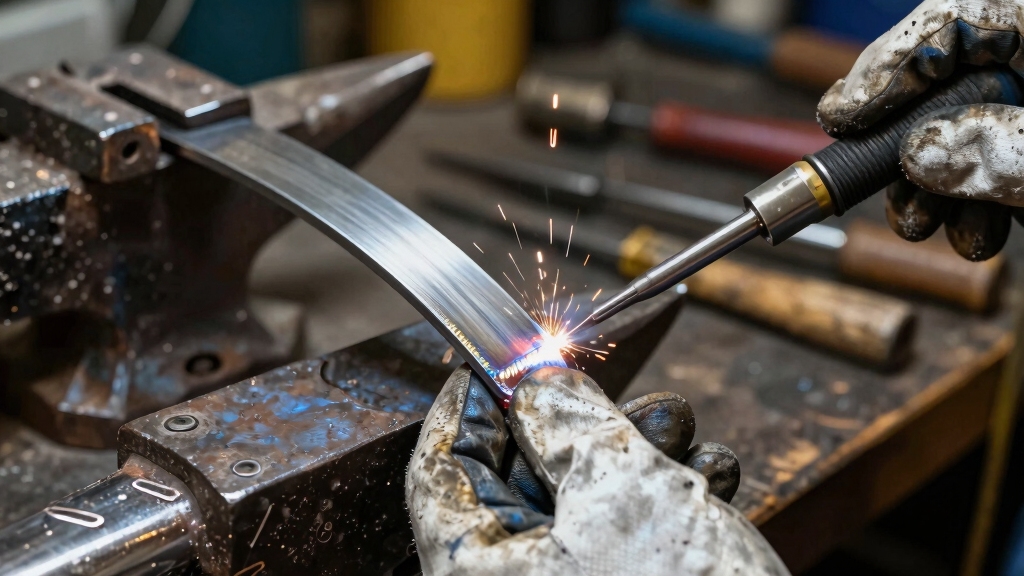
You can weld spring steel, but only if you strictly control preheat and post-weld heat treatments to avoid stress cracking and preserve its mechanical properties.
Preheat the material uniformly to 800–900°F and maintain interpass temperatures. Use low-hydrogen fillers like ER312 or 4140 for strength and crack resistance.
After welding, temper and control cooling carefully to restore ductility and toughness. Without these precautions, weld failure and brittle zones are likely.
Understanding these steps guarantees better performance.
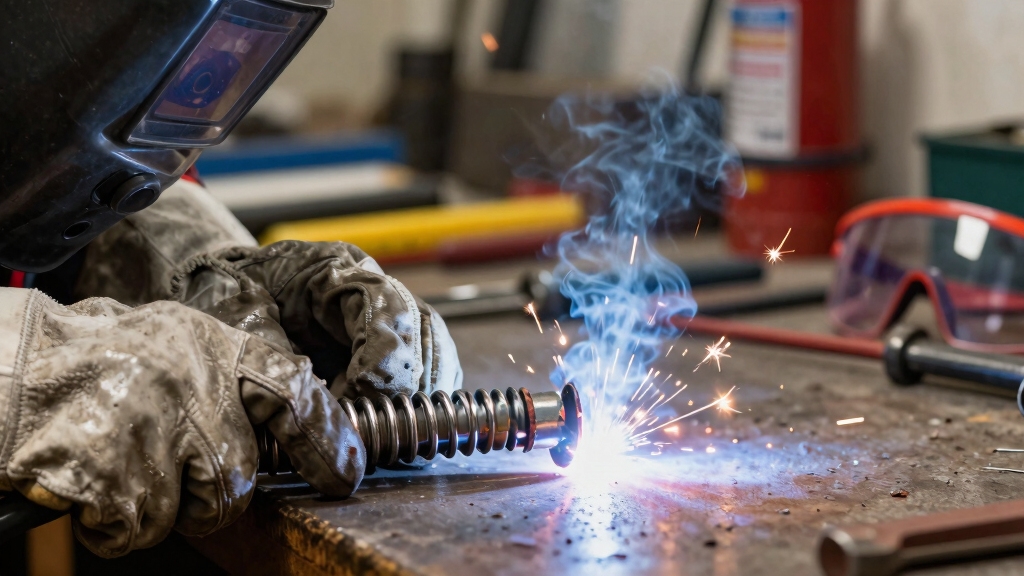
Although welding spring steel is feasible with the right precautions, you should avoid it unless you can strictly control preheat and post-weld heat treatment.
Without adequate preheating, typically between 800-900°F, the steel is prone to stress cracking due to rapid thermal gradients.
If you skip or improperly manage post-weld heat treatment, the weld zone becomes brittle and loses essential spring properties.
Emergency repairs in the field may justify welding, but only with strict temperature monitoring.
If you lack the means to maintain uniform heating and controlled cooling cycles, you risk catastrophic weld failure.
Also, standard filler materials and welding approaches often fail to replicate spring steel’s mechanical characteristics.
This makes welding inadvisable for critical or load-bearing components.
You must weigh these risks carefully before proceeding.
Additionally, using low-hydrogen filler metals and controlling heat input are crucial to minimizing weld-zone brittleness and cracking risk.
When welding spring steel, you must preheat the material to between 800 and 900°F to prevent stress cracking and guarantee uniform temperature distribution.
Preheating spring steel to 800–900°F prevents stress cracking and ensures even temperature distribution during welding.
Achieving this temperature range minimizes thermal gradients that cause brittle weld zones. Use a controlled heating source to uniformly raise the entire workpiece temperature, avoiding localized overheating.
For thinner sections, reduce preheat by roughly 50% to prevent warping or distortion. Maintain the interpass temperature consistently at the preheat level throughout welding to ensure even heat distribution.
In emergency repairs, you can increase preheat to about 1000°F (dull red heat) to enhance ductility. Proper preheating preserves the steel’s microstructure, reduces residual stresses, and supports post-weld heat treatment effectiveness.
This is critical to restoring spring properties after welding. Additionally, slow and controlled cooling is essential to prevent cracking and ensure a durable weld by minimizing residual stresses and thermal shock, a principle well established in welding cast iron to steel.
Choose filler materials carefully to maintain the mechanical integrity and spring characteristics of spring steel welds. The ideal filler must offer high tensile strength and resistance to cracking under stress.
ER312 stainless steel filler is preferred due to its 100,000–120,000 PSI tensile strength and crack resistance. 4140 filler is a strong alternative, compatible with heat treatment processes.
While ER70 and 7018 are usable, they lack reliability for critical spring applications.
| Filler Material | Key Features |
|---|---|
| ER312 Stainless | High tensile, crack-resistant |
| 4140 | Heat-treatable, high strength |
| ER70 | Moderate strength, less reliable |
| 7018 | Common, but less crack-resistant |
Choosing the right filler guarantees weld durability and preserves spring performance. Proper selection of welding consumables, including filler metals, is essential to ensure weld quality and strength.
Maintaining the spring properties of welded spring steel hinges on executing proper post-weld heat treatments.
After welding, you must heat the assembly to approximately 900°F and hold it for one hour per inch of thickness to relieve residual stresses and prevent brittle welds.
This tempering step restores ductility and toughness lost during welding. Following heating, a brief oil quench after the color change hardens the weld zone, preserving the original spring characteristics.
Uniform heating to a dull red heat guarantees consistent microstructure transformation throughout the part, avoiding localized overheating or soft spots.
Skipping or improperly performing this heat treatment risks immediate weld failure and loss of the steel’s critical elasticity.
Therefore, controlled post-weld heat treatment is indispensable for retaining the mechanical performance of spring steel assemblies.
Additionally, managing residual stresses through slow and uniform cooling can further enhance joint durability and prevent cracking.
Although welding spring steel demands careful control of heat and technique, you can achieve reliable joints by following specific procedures.
First, preheat the workpiece uniformly to 800-900°F to prevent stress cracking and maintain spring temper.
Use filler materials like ER312 stainless or 4140 for crack resistance and strength compatibility.
Maintain interpass temperatures to avoid localized overheating.
Apply slow, steady welding to control heat input, and consider pulse spot welding for thin sections.
Adjust current and pulse duration for optimal fusion.
Employ jigs to guarantee alignment in batch work.
After welding, perform post-weld heat treatment promptly to restore spring properties.
Avoid rapid cooling without tempering, which risks brittle welds.
Controlling heat input is crucial to prevent microstructure alteration and hardness reduction in the heat-affected zone.
You can weld spring steel without specialized equipment, but you’ll need careful preparation.
Preheat the steel to around 800-900°F to avoid stress cracking and maintain uniform heat throughout the process.
Use suitable filler material like ER312 stainless for better crack resistance.
After welding, perform post-weld heat treatment to restore spring properties.
Without these steps, your weld may become brittle or fail quickly.
Controlling temperature is critical even in basic setups.
You’ll be thrilled to know spring steel welding isn’t a five-minute job.
Typically, the process takes several hours, factoring in preheating to 800-900°F, careful welding with pulse currents, and essential post-weld heat treatment lasting about an hour per inch thickness.
Skipping these steps risks brittleness or cracking.
So, expect patience; the weld demands uniform heating, slow technique, and precise treatment to maintain strength and temper.
Rushing just breaks your work.
Yes, you face unique safety hazards when welding spring steel.
The high preheat temperatures (800-900°F) increase burn risks and require careful thermal management to avoid cracks and brittle welds.
Handling heat-treated materials demands protective gear against sparks and hot surfaces.
Also, stress cracking potential means you must control cooling rates precisely.
You should guarantee proper ventilation to mitigate fumes from specialized filler materials like ER312 stainless steel.
Yes, emergency repairs can compromise spring steel’s strength if you don’t follow proper procedures. You’ll need to preheat the material to dull red heat (around 1000°F) and maintain this temperature throughout welding.
Skipping preheat or post-weld heat treatment risks brittle welds and loss of temper. While emergency welding is feasible, it often reduces the spring’s original mechanical properties.
Plan for full restoration through proper heat treatment afterward.
Spot welding isn’t effective for all spring steel thicknesses; it works best on thin sections around 3mm diameter using pulse currents.
When you deal with thicker spring steel, the heat input and control become critical. This requires preheating and slower welding methods to avoid stress cracking.
While spot welding suits thin parts, you’ll need alternative techniques like TIG or MIG with proper preheat and post-weld treatment for thicker spring steel to maintain integrity.
Welding spring steel demands a delicate balance, like conducting a symphony of heat and precision. You can’t rush preheating or ignore filler choice if you want to preserve its resilient nature.
Post-weld heat treatments act as the final brushstrokes, restoring strength and flexibility. Approach each weld with calculated care, or risk turning your spring steel’s potential into brittle silence.
Master these steps, and you’ll weld with both strength and finesse.