Phone:
(701)814-6992
Physical address:
6296 Donnelly Plaza
Ratkeville, Bahamas.

Phone:
(701)814-6992
Physical address:
6296 Donnelly Plaza
Ratkeville, Bahamas.

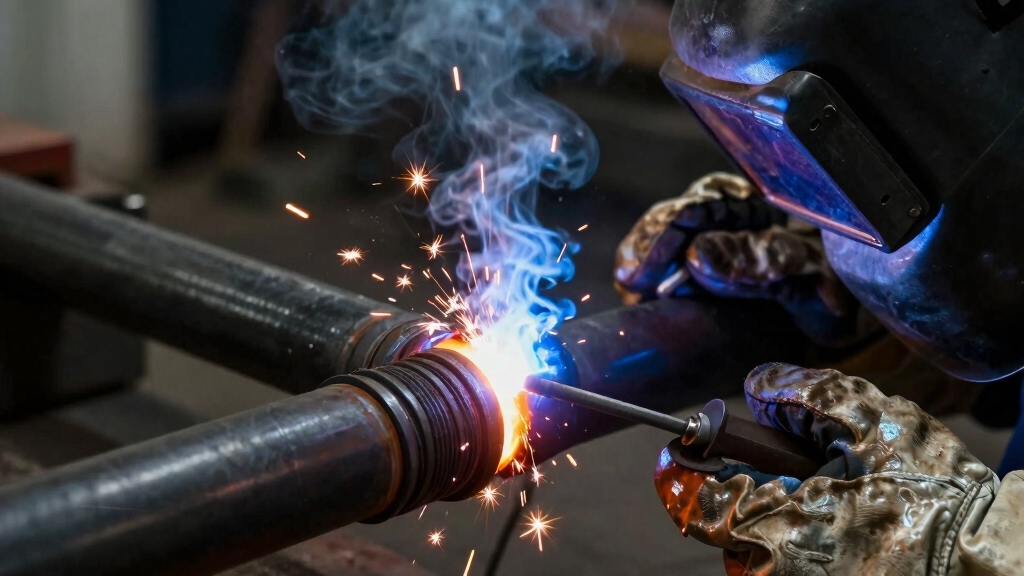
Yes, you can weld black iron pipe effectively using common arc welding methods like stick (SMAW), MIG (GMAW), or TIG (GTAW).
Proper surface preparation, including removing rust and oxidation, guarantees strong fusion and leak-proof joints essential for pressurized systems.
Select electrodes or filler wires matched to carbon steel properties, control heat input carefully, and use correct welding techniques from root to cap pass for durable welds.
Understanding these details improves reliability and safety for your projects.
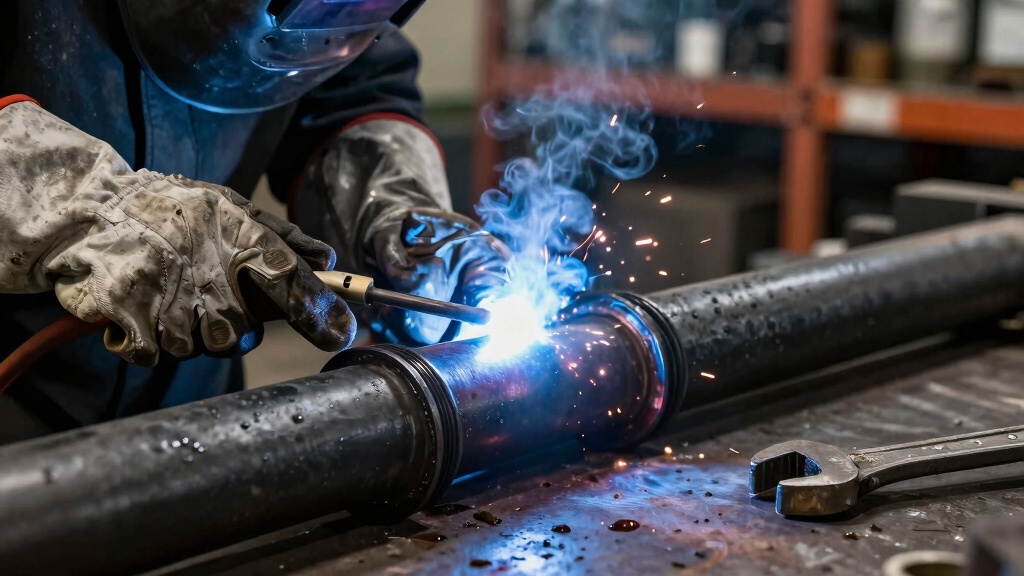
Black iron pipe, often called black steel pipe, is a carbon steel pipe characterized by its dark, oxide-coated surface.
You’ll find it widely used in plumbing, gas lines, and construction due to its strength and durability.
When you weld black iron pipe, you create robust, leak-proof joints essential for maintaining system integrity under pressure.
Its material composition lets you fuse it easily with standard arc welding techniques without special restrictions.
You’ll typically weld it to connect sections, repair damage, or fabricate custom piping systems.
Proper welding guarantees safety and longevity, especially where threaded connections might fail.
Understanding this pipe’s properties helps you select appropriate methods and materials, guaranteeing effective, reliable welds in practical industrial or residential applications.
The thickness of black iron pipe often corresponds to carbon steel gauge standards, influencing welding techniques and joint strength.
When it comes to welding black iron pipe, you’ll often hear about techniques like Shielded Metal Arc Welding (SMAW), Gas Metal Arc Welding (GMAW), and Gas Tungsten Arc Welding (GTAW). Each of these methods has its own strengths, so it’s good to know what they bring to the table.
Now, selecting the right electrode or wire is crucial. For instance, using E7018 for fill passes can really make a difference in achieving strong and consistent welds. It’s all about getting that solid connection!
Another thing to consider is multiprocess welding systems. These systems are pretty versatile because they allow you to combine stick, TIG, and wire methods. This flexibility can really help optimize both root penetration and fill speed. So, depending on your project, you can pick what works best!
Choosing the appropriate primary power source is essential for stable arc conditions and optimal weld quality.
Mastering the right welding technique is essential for achieving strong, leak-free joints on black iron pipe.
You’ll start with a root pass to establish fusion, followed by hot, fill, and cap passes to build strength and integrity.
Controlling arc length, travel speed, and heat input according to pipe thickness guarantees peak penetration without burn-through.
Maintain a consistent angle and steady movement to avoid defects like lack of fusion or porosity.
Key practical points to keep in mind include:
Preheating may be necessary to reduce thermal stresses and ensure weld integrity on thicker black iron pipes, especially those over 10 mm thickness.
These techniques guarantee durable, high-quality welds on black iron pipe.
Choose electrodes and wires that match the mechanical properties and chemical composition of black iron pipe to guarantee weld integrity and compatibility.
For stick welding, E7018 electrodes provide excellent strength and ductility, ensuring sound fill and cap passes.
When using GMAW or FCAW, select flux-cored or solid wires designed for mild carbon steel with similar tensile strength. Flux-cored wires also offer self-shielding, making them ideal for outdoor conditions.
TIG welding requires ER70S-series filler rods for precise root passes. Match wire diameter and amperage settings to pipe thickness and joint configuration to optimize penetration and minimize defects.
Avoid mismatched consumables, as they can cause cracking or weak fusion. Proper electrode and wire choice directly influences weld quality, longevity, and resistance to operational stresses in black iron pipe applications.
To ensure quality welds, it is critical to follow proper storage and handling procedures for low-hydrogen electrodes like E7018 to prevent moisture absorption and cracking.
Multiprocess welding systems combine multiple arc welding techniques into a single versatile setup. This streamlines fabrication and repair tasks on black iron pipe.
You’ll save time switching between methods since you can perform root passes with TIG or stick and complete fill passes using MIG or flux-cored wire without changing equipment. This flexibility enhances weld quality and adaptability in different environments.
Key advantages include:
Versatility: Handle various joint configurations and thicknesses with ideal processes.
Cost-efficiency: Reduce equipment investment and maintenance by using one system.
Improved control: Match welding parameters precisely to material requirements, ensuring strong, defect-free joints.
Using multiprocess welding, you can confidently address diverse pipe welding challenges with a single, efficient tool. Additionally, the use of inverter welding technology in multiprocess systems allows for rapid current adjustments and precise arc control, which significantly improves weld quality on sensitive metals.
Before you start welding, it’s really important to clean the surface of the black iron pipe thoroughly.
You want to get rid of any rust, dirt, or coatings, and using a wire brush or grinder works wonders for that.
Now, let’s talk about edge beveling.
This step is crucial, especially for butt joints.
It helps ensure full penetration and a strong fusion.
So, take your time with it!
And don’t forget to aim for a smooth, oxide-free finish.
This will really help in promoting reliable welds.
Trust me; it makes a difference!
Additionally, implementing proper ventilation during welding helps control hazardous fumes and maintain a safe working environment.
Proper surface cleaning is essential to guarantee strong, defect-free welds on black iron pipe.
Before welding, you need to remove any rust, dirt, paint, and the black oxide coating that can inhibit proper fusion.
Use a wire brush or grinder to expose clean metal, focusing on the weld zone and tack areas.
Also, grind the cut edges to eliminate oxides formed during cutting processes, assuring a consistent, contamination-free surface.
Key steps include:
Removing all surface contaminants to prevent porosity and inclusions.
Cleaning tack and ground clamp areas to a shiny finish for reliable electrical contact.
Eliminating oxides on cut edges to enable solid root penetration.
Following these cleaning techniques guarantees peak weld integrity and longevity.
Additionally, integrating local exhaust ventilation during welding helps reduce harmful fume exposure and improve operator safety.
Beveling pipe edges guarantees a precise fit-up and promotes full penetration during welding of black iron pipes. You’ll need to prepare the edges by grinding or machining a bevel, typically at a 30° to 37.5° angle for single-V joints.
This ensures consistent bevel geometry along the circumference and creates an adequate groove for the weld metal to fill. This improves fusion and minimizes defects.
Use a portable grinder with a flap disc or a beveling machine for accuracy and efficiency. After beveling, clean the edges to remove oxides and contaminants that could cause weld flaws.
Proper beveling also helps control weld reinforcement and reduces the risk of undercut or lack of fusion. This is essential for structural integrity and leak-proof joints in piping systems.
Selecting the correct groove design based on pipe thickness and material type is critical to achieving full penetration and a strong weld.
Start your weld by laying the root pass carefully to ensure full fusion between pipe edges. This critical step secures a sound foundation for subsequent passes and prevents defects like lack of fusion or porosity.
Maintain a steady travel speed and correct electrode angle for consistent penetration. After the root, apply hot and fill passes to build weld volume and reinforce sidewalls.
Finally, complete with a cap pass that smooths the surface and seals the joint. Focus on these essentials: control heat input to avoid burn-through or undercut.
Tie in sidewalls properly to prevent fusion gaps. Maintain a consistent arc length and travel speed throughout. Following this structured pass sequence guarantees a strong, leak-free black iron pipe weld. Proper preparation including precise machining of pipe edges is essential to ensure proper fit-up and consistent root penetration.
When you’re picking electrodes and wires for black iron pipe, it’s all about making sure they match the pipe’s carbon steel makeup and the welding method you’ve chosen. For instance, E7018 electrodes are a popular pick if you’re stick welding, and if you’re working outdoors, flux-cored wires can really come in handy.
Now, let’s talk about wire selection a bit more. It’s important to consider things like shielding requirements and the deposition rate. These factors play a huge role in ensuring your welds are strong and free of defects. So, taking the time to choose the right materials will definitely pay off in the long run! Proper consumable-parent metal compatibility prevents defects that compromise weld quality and durability.
Choosing the right electrodes and wires is essential for achieving strong, reliable welds on black iron pipe. You need electrodes compatible with the pipe’s carbon steel composition to guarantee proper fusion and mechanical strength.
Common electrode types include:
Selecting electrodes depends on your welding process and environmental conditions. Make sure to match the electrode’s tensile strength and usability with your pipe thickness and joint design to guarantee weld integrity.
Although selecting the right wire may seem straightforward, you must consider several critical factors to guarantee peak performance and weld integrity on black iron pipe.
First, match the wire’s composition to the carbon steel properties of the pipe. Commonly, E70 or E71 series wires guarantee compatibility and strength.
Consider the welding process: use solid MIG wires for clean, controlled environments. Flux-cored wires excel outdoors or on rusty surfaces due to self-shielding.
For root passes, select wires that provide proper penetration, such as a smaller diameter or specific alloy blend.
Also, factor in wire feed speed and shielding gas requirements to optimize arc stability and minimize defects.
Finally, make certain your wire selection supports the pipe’s thickness and joint design for consistent, defect-free welds.
Because controlling heat input directly affects weld integrity, you need to carefully manage temperature during welding black iron pipe to prevent common defects such as warping, cracking, and lack of fusion.
Managing heat input is crucial to prevent warping, cracking, and fusion defects in black iron pipe welding.
Excessive heat can distort the pipe or degrade metallurgical properties, while insufficient heat leads to poor fusion and weak joints.
To maintain ideal heat control:
Adjust travel speed and arc length to balance penetration without overheating.
Use intermittent welding or back-stepping techniques to minimize heat buildup.
Monitor interpass temperature closely, allowing cooling between passes as needed.
Consistently managing these factors guarantees sound welds with minimal residual stresses or defects. This preserves joint strength and leak tightness essential for black iron pipe applications.
Managing heat effectively sets the foundation for sound welds. Combining different welding methods can further enhance the strength and quality of black iron pipe joints.
You can start with GTAW (TIG) for the root pass to guarantee precise fusion and deep penetration without contamination. Then, switch to FCAW or GMAW (MIG) for fill and cap passes to increase deposition rates and maintain consistent heat input.
This hybrid approach balances control and speed, reducing distortion and minimizing defects like lack of fusion or porosity.
Make sure your equipment settings correspond to each process’s parameters and clean between passes to avoid inclusions.
Using multiprocess welders simplifies switching methods, letting you optimize weld integrity and productivity on black iron pipe projects effectively.
When you inspect black iron pipe welds, you confirm the joint’s integrity and safety before service.
Start with a thorough visual examination, checking for surface defects like cracks, porosity, or incomplete fusion.
Use nondestructive testing methods, such as ultrasonic or radiographic, to detect internal flaws invisible to the eye.
Assure proper fit-up and clean tack removal, as these affect weld quality.
Focus on these key points during inspection:
This precise inspection process helps you guarantee leak-free, robust joints.
It safeguards the pipe system’s performance under operational stresses.
Although welding black iron pipe demands skill and precision, prioritizing safety is equally critical to prevent injuries and equipment damage.
You must always wear appropriate personal protective equipment, including flame-resistant gloves, helmets with proper filter lenses, and full face shields to guard against sparks and UV radiation.
Always wear flame-resistant gloves, helmets with filter lenses, and full face shields for welding safety.
Make sure your workspace is well-ventilated to avoid inhaling hazardous fumes released during welding.
Secure the pipe and maintain a clean, dry environment to prevent slips or electrical hazards.
Ground your equipment properly to avoid electric shock.
Keep fire extinguishers nearby and clear combustibles from the area.
Regularly inspect cables, electrodes, and tools for damage.
Welding black iron pipe requires careful attention to detail, as common mistakes can compromise joint strength and lead to leaks or failures. To guarantee durable welds, avoid these pitfalls:
Poor surface preparation: Neglecting to remove rust, dirt, or the black coating results in contamination, causing porosity and weak fusion.
Incorrect electrode or wire choice: Using incompatible filler material reduces weld integrity. Always match the electrode to the pipe’s carbon steel properties.
Improper welding technique: Failing to control arc length, travel speed, or angle leads to lack of fusion, slag inclusions, or burn-through.
Black iron pipe welding differs from stainless steel welding primarily in material properties and technique.
You’ll use electrodes like E7018 for black iron, focusing on controlling heat input to prevent distortion.
Stainless steel requires specialized filler metals and precise heat control to avoid sensitization and corrosion.
Surface prep varies too; stainless demands cleaner surfaces free from contamination.
You often employ TIG welding for stainless for precision, whereas black iron commonly uses stick or flux-cored methods.
Yes, you can weld black iron pipe underwater or in extreme conditions, but it demands specialized techniques like underwater wet welding or hyperbaric welding inside a sealed chamber.
You’ll need appropriate electrodes designed for wet environments and strict safety measures.
Extreme temperatures require preheating and controlled cooling to avoid cracking.
Always prepare the surface meticulously, control heat input, and use qualified inspection methods to guarantee structural integrity under challenging conditions.
You generate fumes, consume energy, and produce slag when welding black iron pipe.
You risk air pollution from welding gases, contribute to noise pollution from arc strikes, and deal with metal waste and slag disposal.
You must manage these impacts by using ventilation, proper protective gear, and responsible waste handling.
Minimizing spatter, controlling heat input, and adhering to environmental regulations help reduce your welding’s ecological footprint effectively.
A typical black iron pipe weld takes roughly 20 to 60 minutes to cool to a safe handling temperature, depending on pipe thickness, ambient temperature, and welding heat input.
Thicker pipes or higher heat inputs extend cooling time. You should allow slow, controlled cooling to minimize residual stress and cracking.
Using insulation blankets can help regulate cooling rates. Always verify weld temperature before post-weld handling or further processing.
You should inspect welded black iron pipe joints regularly for cracks, corrosion, and leaks.
Keep joints clean and dry, removing any rust or debris promptly.
Apply protective coatings or paint to prevent oxidation.
Check for signs of stress or deformation, especially in high-pressure systems.
Tighten or replace any loose fittings.
Following these steps extends joint life and maintains system integrity, ensuring your welds perform reliably over time.
When welding black iron pipe, you’ll want to choose the right process, prepare surfaces meticulously, and use proper electrodes to guarantee strong joints.
Remember, a chain is only as strong as its weakest link. So avoid common mistakes and inspect welds thoroughly. Follow safety protocols closely to protect yourself.
By combining precise technique with careful preparation, you’ll achieve durable, high-quality welds that stand up to demanding conditions every time.