Phone:
(701)814-6992
Physical address:
6296 Donnelly Plaza
Ratkeville, Bahamas.

Phone:
(701)814-6992
Physical address:
6296 Donnelly Plaza
Ratkeville, Bahamas.

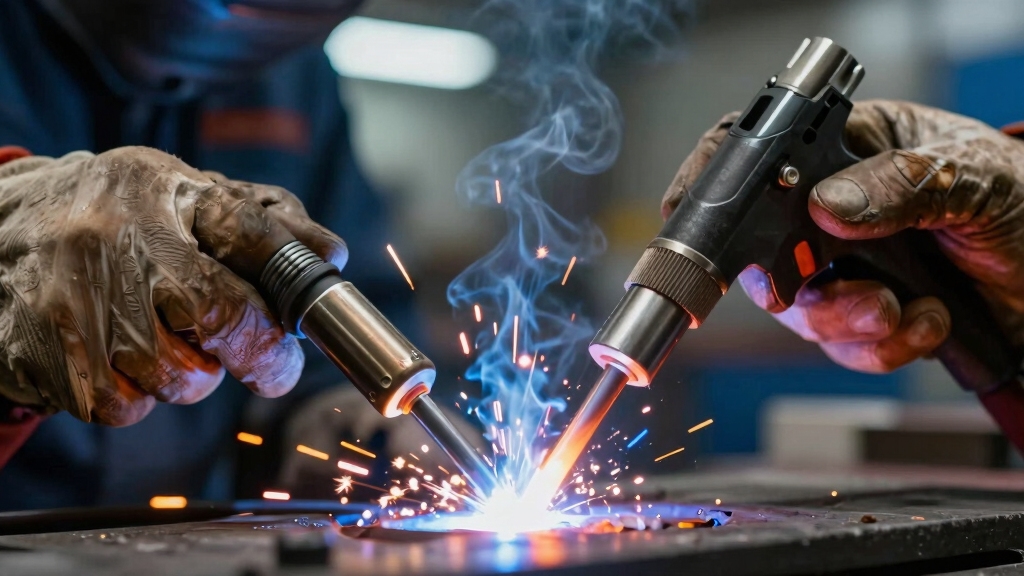
In CC welding, you get a nearly constant current with voltage adjusting to maintain arc stability. This is ideal for manual processes like TIG and stick welding where arc length varies.
CV welding holds voltage steady, allowing current to fluctuate. This suits semi-automatic methods like MIG that rely on consistent wire feed.
CC gives stable power despite gap changes. CV excels in automation and melt rate control.
Understanding these distinctions helps you optimize your welding setup and performance further.
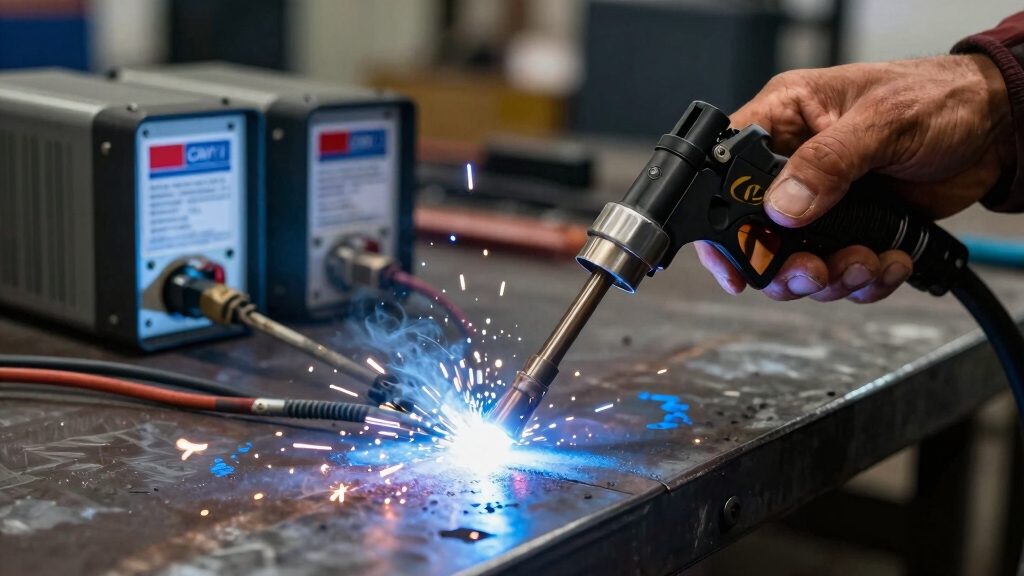
Although you mightn’t notice it during welding, CC and CV power supplies operate fundamentally differently to control the arc.
In CC mode, the power supply maintains a nearly constant current by allowing voltage to droop as amperage increases. This stabilizes total power output despite variations in arc length.
This drooping arc voltage characteristic prevents notable current spikes, ensuring steady amperage suitable for manual processes like TIG and stick welding.
Conversely, CV power supplies regulate voltage tightly, holding it constant regardless of current changes. This causes current to fluctuate markedly with minor arc length variations, enabling self-regulation of wire feed and melting rate in semi-automatic processes like MIG welding.
Understanding these operational distinctions helps you select the appropriate power supply for specific welding tasks. This optimizes arc stability and process control.
Additionally, CC power supplies are often preferred for processes requiring steady, precise arcs due to their ability to minimize arc length fluctuations and maintain consistent heat input.
When you weld using a constant current (CC) power supply, the arc behaves with stable power output because current remains nearly fixed despite changes in arc length. This allows voltage to adjust accordingly.
Constant current welding keeps current steady, letting voltage vary to maintain stable arc power despite gap changes.
This drooping voltage characteristic keeps wattage consistent, helping you maintain arc stability even if your hand motion causes slight gap variations.
In contrast, with constant voltage (CV), the arc voltage stays steady while current fluctuates markedly in response to arc length changes.
This self-regulating behavior means small gap adjustments create large current shifts, which helps match the wire feed rate and melting rate in semi-automatic welding.
However, CV’s sensitivity to arc length demands steadier control, as sudden current swings can destabilize the arc.
Understanding these differences lets you anticipate arc response and optimize weld quality.
Inverter welding machines enhance arc stability by allowing rapid current adjustments that respond in microseconds to changes in welding conditions.
Selecting the appropriate welding process hinges on understanding how CC and CV power supplies optimize performance.
You’ll use CC power supplies primarily in manual welding applications like Shielded Metal Arc Welding (SMAW) and Gas Tungsten Arc Welding (GTAW). Here, maintaining a stable current despite arc length variations is vital.
CC’s drooping voltage characteristic ensures consistent arc power, accommodating welder hand movement. Conversely, CV power supplies excel in semi-automatic and automatic processes such as Gas Metal Arc Welding (GMAW) and Submerged Arc Welding (SAW).
CV’s stable voltage output, combined with precise wire feed synchronization, allows self-regulation of the arc, maintaining consistent melt rates.
When selecting, consider that CC suits variable arc gaps requiring current constancy. CV matches continuous wire feed with voltage constancy for smooth, automated operation.
A well-maintained wire feed mechanism is essential in CV systems to ensure consistent wire delivery and stable arc conditions.
Understanding the pros and cons of Constant Current (CC) and Constant Voltage (CV) power supplies is essential for optimizing both manual and semi-automatic welding processes.
In manual welding, CC excels by maintaining stable current despite arc length variations. This offers consistent arc power and better control, especially with stick or TIG welding.
However, CC can complicate arc initiation with large filler wires.
Conversely, CV suits semi-automatic welding by regulating voltage to match wire feed rate. It provides self-correcting current adjustments for a more stable arc during continuous wire feed.
Hence, you must weigh CC’s arc stability against CV’s ease of automation when selecting the appropriate power supply for your welding method.
Adjusting voltage in CV welding helps control arc length and bead profile, optimizing weld quality and consistency.
Balancing the strengths of CC’s arc stability against CV’s automation ease requires you to evaluate specific welding conditions and priorities. You must consider the welding process, operator skill, and whether automation or manual control dominates your workflow. Additionally, understanding the impact of polarity types on arc stability and weld quality can further refine your selection between CC and CV.
For manual stick or TIG welding, CC offers stable current despite arc length variations. For semi-automatic MIG or submerged arc, CV aligns better with consistent wire feed and voltage regulation.
| Factor | CC (Constant Current) |
|---|---|
| Welding Process | Manual SMAW, GTAW |
| Arc Stability | Maintains power despite gap changes |
| Automation Suitability | Less compatible with wire feeders |
| Factor | CV (Constant Voltage) |
| Welding Process | Semi-automatic GMAW, SAW |
| Arc Stability | Self-regulates current via voltage |
| Automation Suitability | Ideal for continuous wire feed |
Yes, you can use CC and CV welding simultaneously in a single project, but it depends on your application.
You’ll typically apply CC for manual processes like SMAW or TIG where arc stability with variable arc length is essential.
Meanwhile, you’d use CV for semi-automatic processes like MIG welding, which require consistent voltage for steady wire feed.
Coordinating both demands careful control to manage different arc characteristics and prevent interference.
When ambient temperature swings, it can throw a wrench in your welding performance.
In CC welding, cooler temps might stiffen the arc initiation, making it tougher to strike. Hotter conditions could cause inconsistent arc stability.
For CV welding, temperature changes affect wire feed and melting rate, causing voltage fluctuations.
You’ll need to adjust parameters carefully to keep arc characteristics stable. This ensures your weld quality doesn’t go off the rails.
You’ll find CC machines need regular checks on voltage droop and high-frequency start circuits to ensure stable arc initiation.
CV machines demand consistent calibration of voltage sensors and wire feed synchronization to guarantee proper arc voltage.
Both types require cleaning and inspection of electrical contacts and cooling systems.
However, CV units need tighter maintenance on wire feeder mechanisms to prevent feed issues.
Safety concerns with CC or CV welding are like balancing on a tightrope. You must stay precise.
With CC, the high open-circuit voltage can increase shock risk. Always use proper insulation and grounding.
CV systems, due to voltage stability, might cause unexpected current surges if arc length fluctuates. Steady control and monitoring are essential.
Always wear protective gear and ensure proper ventilation to mitigate electrical hazards and fumes, regardless of the system.
You’ll find that CC power supplies maintain nearly constant current, leading to stable energy use despite arc length changes. This can optimize consumption during manual welding.
CV supplies adjust current to maintain voltage, causing current swings that may increase energy consumption during minor arc length variations.
Consequently, CV systems might use more energy in semi-automatic setups, while CC systems offer more consistent energy efficiency under varying arc conditions.
So, whether you’re Team CC or Team CV, remember: choosing your welding power supply isn’t about picking a favorite superhero. It’s about matching the arc to your mission.
CC’s steady current won’t quit on you, while CV’s steady voltage loves a good wire feed dance. Just don’t expect either to fix your coffee spill or negotiate your deadlines.
In welding, as in life, it’s all about knowing when to hold steady and when to let the sparks fly.