Phone:
(701)814-6992
Physical address:
6296 Donnelly Plaza
Ratkeville, Bahamas.

Phone:
(701)814-6992
Physical address:
6296 Donnelly Plaza
Ratkeville, Bahamas.

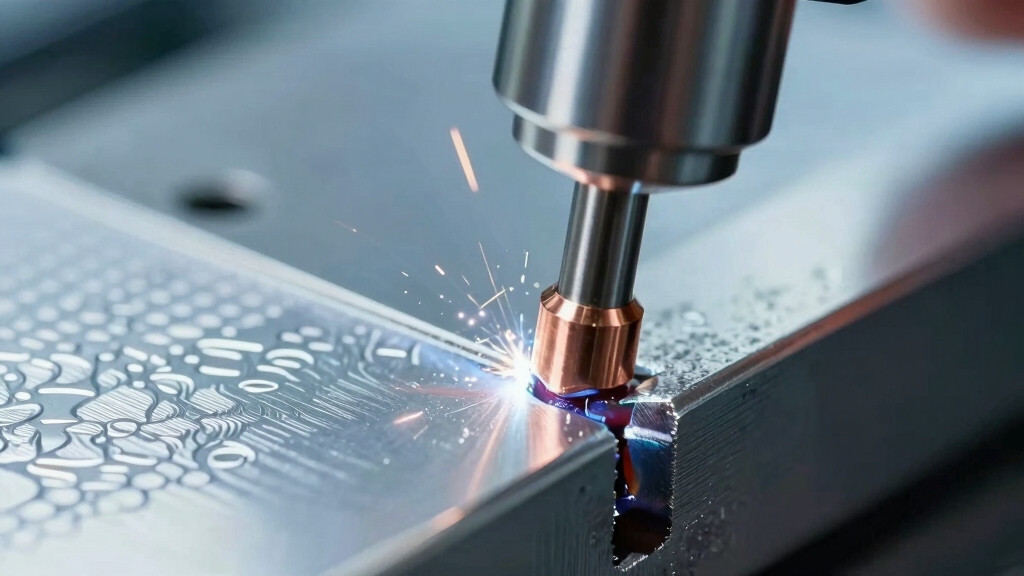
Ultrasonic welding joins materials by applying high-frequency (20–40 kHz) vibrations under pressure.
This creates solid-state bonds without melting or adhesives. It generates localized frictional heat that softens thermoplastics or disrupts oxide layers on metals, enabling strong, rapid welds.
The process precisely controls amplitude, frequency, pressure, and time to guarantee consistent quality.
You’ll discover how key machine components, material compatibility, and process parameters influence weld strength and efficiency in advanced applications.
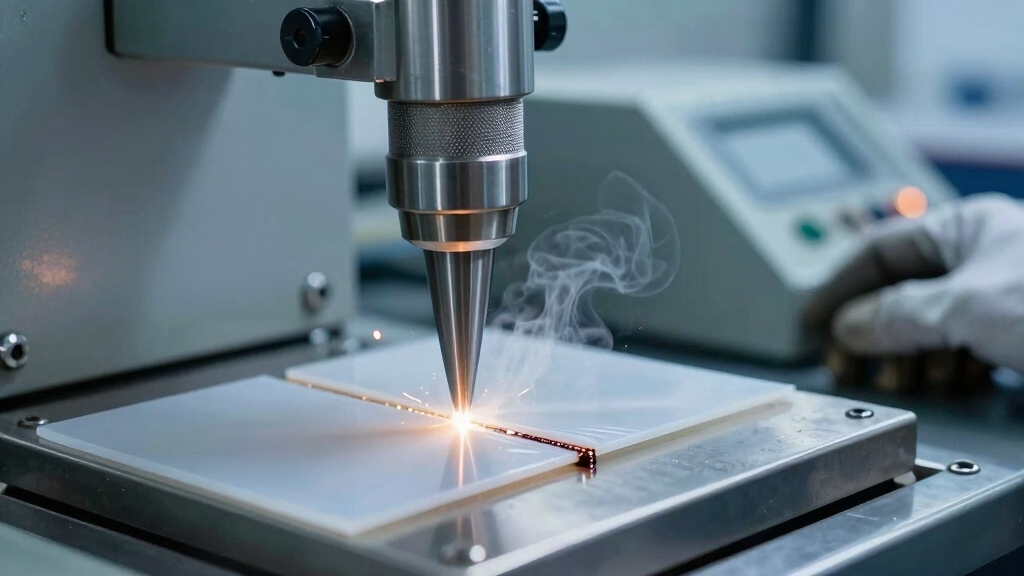
Ultrasonic welding joins materials by applying high-frequency acoustic vibrations under pressure. This creates solid-state bonds without melting the entire workpiece.
Ultrasonic welding uses high-frequency vibrations and pressure to bond materials without melting them.
You’ll use ultrasonic waves, typically between 20-40 kHz, generated by an electrical signal. These vibrations induce molecular friction at the interface, producing localized heat that softens thermoplastics or disrupts metal oxides, enabling effective joining.
The process requires no adhesives, fasteners, or solder, making it clean and efficient. The temperature remains below metals’ melting points, preserving structural integrity.
Key components convert and amplify the electrical signal into mechanical vibrations applied precisely via a horn under controlled pressure. This results in strong, reproducible welds in seconds, ideal for thermoplastics and thin metals.
It accommodates dissimilar material combinations with minimal thermal impact and high process reliability. Precise control of vibration amplitude, frequency, weld force, and time enables consistent energy delivery and high-quality welds.
First off, you begin by carefully arranging the parts in a lap joint within the welding stack. This step is crucial because it ensures everything is properly aligned and making good contact.
Next, you move on to applying ultrasonic vibrations through the horn. At the same time, you need to exert some controlled pressure on the interface. This combination is what creates localized frictional heat, allowing the materials to bond effectively without actually reaching their melting point.
The process relies on high-frequency sound waves to generate the ultrasonic energy necessary for bonding.
Begin by carefully arranging the parts in a lap joint configuration on the welding stack to guarantee proper alignment and contact.
Ensure each component seats securely in the anvil or nest to prevent movement during welding. The stack must position the energy director or interface precisely under the sonotrode to maximize ultrasonic energy transmission.
Pay attention to part cleanliness and surface finish, as contamination can impede molecular friction and weld quality. Confirm that the stack components, anvil, fixture, and parts are free from defects or wear that could cause misalignment.
Proper clamping and stack height directly influence pressure distribution and vibration efficiency. By optimizing the welding stack setup, you ensure consistent energy delivery and uniform weld formation, vital for repeatability and structural integrity in ultrasonic welding.
Always inspect and maintain equipment regularly to ensure safe operation and prevent equipment malfunctions during the welding process.
Apply controlled pressure to the welded parts while initiating high-frequency vibrations to generate localized frictional heat at the interface. You rely on the ultrasonic horn to deliver vibrations at 20-40 kHz, causing molecular friction without exceeding the metal’s melting point.
This frictional heat softens thermoplastics or disrupts oxide layers on metals, enabling solid-state bonding. The pressure guarantees intimate contact, concentrating energy at the joint and avoiding heat dissipation. You must maintain ideal amplitude and force; insufficient pressure reduces friction, while excess pressure dampens vibration efficiency.
The process lasts only seconds, with vibrations ceasing once adequate plasticization or metal diffusion occurs. You then hold the parts under pressure during cooling, solidifying the joint and preventing defects. This precise coordination of vibration and pressure is critical for repeatable, high-strength welds. Additionally, selecting the right shielding gas is essential in related welding processes to ensure arc stability and prevent contamination.
Understanding the key components of an ultrasonic welding machine is essential for optimizing its performance and maintenance.
Each part plays a vital role in converting electrical energy into mechanical vibrations, enabling precise and efficient welds.
You’ll find these key components in every system:
Ultrasonic welding machines often incorporate advanced electronic components to precisely regulate energy input and ensure consistent weld quality.
Selecting appropriate materials is critical for achieving reliable ultrasonic welds, as the process relies on specific physical and chemical properties. For thermoplastics, you want materials with compatible melting points and similar acoustic impedance to guarantee efficient energy transfer and localized melting at the interface.
Common choices include ABS, polycarbonate, polypropylene, and polyethylene. Metals suited for ultrasonic welding are typically thin and have clean, oxide-free surfaces. Aluminum, copper, and nickel alloys work well due to their favorable hardness and thermal conductivity.
You should avoid highly reflective or very hard metals like steel without surface preparation, as they dissipate vibrations inefficiently. Additionally, joining dissimilar materials requires careful consideration of their mechanical and thermal properties to prevent weak or brittle welds.
Proper material selection optimizes weld strength, consistency, and process efficiency. It is also important to recognize that surface oxidation and contamination can significantly reduce weld quality, making surface cleaning essential before ultrasonic welding.
Ultrasonic welding is really making waves in the automotive industry! It’s widely used for assembling components, and for good reason. The precision and speed it offers ensure that you get reliable joints, especially when working with complex thermoplastics and lightweight metals.
But it doesn’t stop there! In the packaging sector, ultrasonic welding is a game-changer. It allows for fast and clean sealing without the need for adhesives, which not only boosts production efficiency but also enhances product integrity.
When you take a closer look at these applications, it’s clear how ultrasonic welding meets the high demands of various industries for both strength and speed. It’s pretty impressive, right? Unlike traditional welding methods such as MIG and TIG welding, ultrasonic welding does not require shielding gases, making it suitable for a wider range of environments.
Automotive manufacturers rely on ultrasonic welding to join intricate plastic components and lightweight metals efficiently. This process ensures strong, reliable bonds without compromising material integrity.
You’ll find this critical in assembling dashboards, lighting systems, and sensor housings where precision and repeatability matter. Ultrasonic welding enables you to create robust joints quickly, reducing cycle times and minimizing thermal distortion.
It also accommodates dissimilar materials, expanding design possibilities. Key benefits for automotive assembly include:
Additionally, maintaining tight tolerance and controlling thermal distortion are essential to ensure the structural integrity of welded components.
Ultrasonic welding frequently plays a crucial role in the packaging industry by enabling fast, reliable seals on thermoplastic materials without compromising package integrity.
You’ll find this process particularly efficient for heat-sensitive packaging, as it generates localized frictional heat below the melting point, preventing deformation.
It eliminates the need for adhesives or solvents, reducing contamination risks and speeding up production cycles.
When you weld packaging films, ultrasonic welding guarantees hermetic seals that maintain barrier properties essential for shelf life.
Additionally, it handles multilayer films and diverse polymer blends effectively, enhancing joint strength and consistency.
Ultrasonic welding benefits from precise control of energy delivery, ensuring consistent weld quality across varied materials.
Frequently, manufacturers prefer ultrasonic welding over traditional joining methods because it delivers faster, cleaner, and more reliable bonds without the need for adhesives, soldering, or mechanical fasteners.
Manufacturers often choose ultrasonic welding for faster, cleaner, and more reliable bonds without extra materials.
You’ll find ultrasonic welding reduces cycle times significantly, enhancing production efficiency. It also eliminates post-processing steps since it produces precise, consistent welds free of contaminants.
Unlike soldering or adhesives, it avoids introducing additional materials, reducing failure points and environmental concerns. Furthermore, the low thermal input preserves the integrity of sensitive components and allows you to join dissimilar materials effectively.
Key benefits include:
Ultrasonic welding optimizes your production with superior joint quality and operational safety. Its inert environment and precise heat control help prevent contamination and distortion, similar to how argon shielding gas benefits welding processes.
Understanding the mechanisms behind strong ultrasonic welding joints requires examining how ultrasonic vibrations generate localized frictional heat that softens or plastifies materials at the interface.
As you apply high-frequency vibrations under pressure, molecular friction causes rapid, controlled heating without reaching the bulk melting point.
In thermoplastics, this heat melts an energy director, concentrating the weld zone, which solidifies to form a robust bond.
For metals, vibrations disrupt oxide layers and promote interfacial diffusion and plastic deformation, creating a solid-state weld.
The simultaneous application of pressure guarantees intimate contact, expelling contaminants and voids.
This combination of frictional heating, material softening or plasticizing, and mechanical pressure results in joints with high strength and integrity.
These strong joints are achieved within milliseconds without compromising the base materials’ structural properties.
The quality of welded joints hinges on several interrelated factors that influence the generation and control of frictional heat, material deformation, and pressure distribution at the interface.
You need to precisely manage these variables to achieve consistent weld strength and avoid defects such as voids or incomplete fusion.
Key factors include:
Controlling these factors secures prime molecular intermixing and mechanical interlocking necessary for a robust ultrasonic weld.
To get the best results from ultrasonic welding, you need to fine-tune key parameters like vibration amplitude, weld pressure, and joint design to match your specific materials and application requirements. Adjusting these factors guarantees peak energy transfer and weld strength while avoiding defects.
| Parameter | Effect on Weld Quality | Optimization Tip |
|---|---|---|
| Vibration Amplitude | Controls frictional heat | Set amplitude for material type |
| Weld Pressure | Ensures intimate contact | Apply consistent, adequate force |
| Joint Design | Affects energy concentration | Use energy directors for plastics |
Monitor process variables closely. Use appropriate tooling and maintain equipment calibration. These practices improve weld consistency and reproducibility for your ultrasonic welding applications.
You maintain ultrasonic welding equipment by regularly inspecting components like the horn, booster, and transducer for wear or cracks.
Clean contact surfaces to avoid contamination, and check electrical connections for stability.
Calibrate frequency and amplitude settings periodically to guarantee precise vibration output.
Lubricate moving parts if specified by the manufacturer.
Schedule professional servicing to test generator performance and replace worn parts.
This minimizes downtime and preserves weld quality and machine reliability.
You should know that 95% of ultrasonic welding incidents result from improper handling or lack of PPE.
Always wear hearing protection since ultrasonic frequencies can cause hearing damage.
Use gloves to avoid burns from hot parts and eye protection against debris.
Keep the work area clean to prevent contamination.
Regularly inspect equipment for leaks or electrical faults to avoid hazards.
Follow machine-specific lockout/tagout procedures during maintenance to guarantee your safety.
Yes, you can use ultrasonic welding for medical device assembly. It provides precise, clean, and strong joints without adhesives or contaminants, which is vital in medical applications.
The low thermal impact minimizes material degradation, preserving biocompatibility.
You’ll also benefit from fast cycle times and reproducibility, guaranteeing consistent quality.
Just ensure your materials are compatible thermoplastics or thin metals, and maintain strict process control to meet medical standards.
You’ll find ultrasonic welding environmentally friendly since it generates minimal waste and uses no adhesives or solvents, reducing chemical emissions.
The process consumes less energy due to rapid cycle times and low heat generation, limiting carbon footprint.
It avoids fumes and excess heat, improving workplace air quality.
Plus, by enabling strong joints without consumables, you reduce material use and enhance recyclability, supporting sustainable manufacturing practices effectively.
Think of ultrasonic welding as a precision scalpel compared to a bulky hammer. You’ll find it’s cost-effective long-term: it cuts down material waste and energy use, unlike adhesives or soldering that need drying or cooling.
While initial equipment costs might be higher, you save substantially on cycle time, labor, and post-processing.
So, you’ve mastered the art of bonding materials without heat, screws, or adhesives. How revolutionary!
Ultrasonic welding quietly proves that high-frequency vibrations can outperform traditional methods in speed, strength, and cleanliness.
Ironically, the secret to such powerful joints lies in microscopic friction you can’t even hear.
If you’re aiming for precision and efficiency, ultrasonic welding isn’t just an option; it’s the sophisticated solution you didn’t know you desperately needed.