Phone:
(701)814-6992
Physical address:
6296 Donnelly Plaza
Ratkeville, Bahamas.

Phone:
(701)814-6992
Physical address:
6296 Donnelly Plaza
Ratkeville, Bahamas.

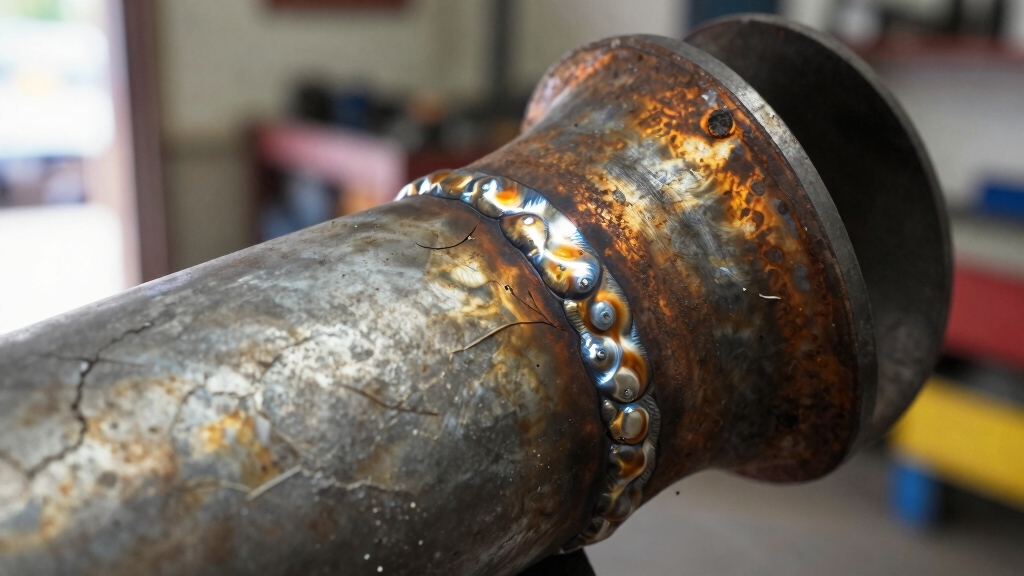
You can expect J-B Weld to last from several hundred miles up to 2–3 years on your exhaust, provided you prepare the surface properly and use clamps for support.
It resists temperatures up to 850°F but performs best below 500°F for continuous exposure.
Premature failure usually comes from poor surface prep, excessive heat, or vibration.
While it’s a reliable temporary fix, understanding its limits and proper application can help maximize durability and performance.
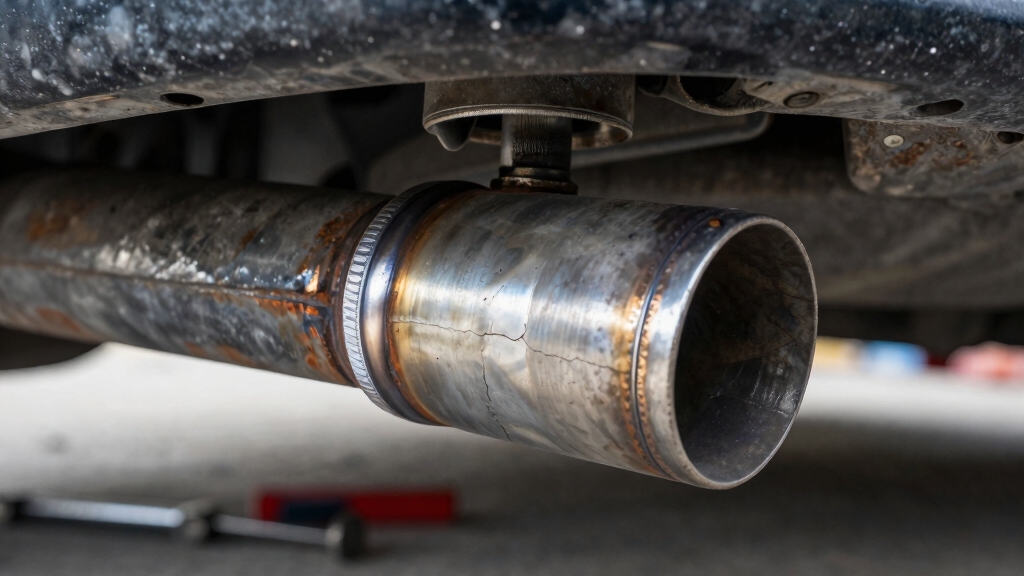
Although J-B Weld is designed to withstand high temperatures and provide a strong seal on exhaust systems, its durability varies markedly depending on application and conditions.
Typically, you can expect it to last anywhere from a few hundred miles to multiple years.
Effective sealing for 2-3 years when properly applied and cured, especially when used alongside exhaust clamps.
Others experience failure within the first drive if the surface wasn’t cleaned or the product wasn’t fully cured.
J-B Weld’s heat resistance up to 850°F supports its longevity under constant high-temperature exposure.
However, mechanical stress and vibration can reduce lifespan.
It’s important to note that this epoxy serves best as a temporary repair rather than a permanent fix on exhaust pipes.
For optimal results, ensure proper surface preparation and allow full curing time before exposing the repair to heat or stress.
When you apply J-B Weld to exhaust pipes, several critical factors directly influence how long the repair will last.
Surface preparation, curing time, and application thickness play key roles. You must thoroughly clean and roughen the metal to guarantee peak adhesion.
Proper curing, including overnight setting and engine heat activation, solidifies the bond. Controlling the thickness prevents cracking or sagging under vibration and thermal expansion.
| Factor | Impact on Durability | Best Practice |
|---|---|---|
| Surface Cleanliness | Enhances adhesion | Wire brush to remove rust/grease |
| Cure Time | Ensures full strength | 12-14 hours plus engine running |
| Application Thickness | Avoids cracking or sagging | Apply even, moderate layers |
| Vibration Exposure | Can cause premature failure | Use exhaust clamps for support |
| Gap Size | Limits material effectiveness | Fill small cracks, avoid large gaps |
For the strongest and longest-lasting repair, it is essential to mix equal parts of resin and hardener thoroughly until the mixture is uniform gray before application, ensuring optimal bond strength.
Hey there! So, let’s talk about how temperature affects J-B Weld. It can actually handle temperatures up to 850°F, which is pretty impressive. However, if it’s exposed to temperatures over 500°F for too long, that’s where things can get tricky.
You see, repeated heat cycles lead to expansion and contraction, and over time, that can weaken the bond. It’s kind of like stretching a rubber band repeatedly—eventually, it just doesn’t snap back like it used to.
To keep things running smoothly, it’s really important to stick to the temperature limits. This way, you can ensure a reliable seal, especially on your exhaust. Just something to keep in mind!
Also, proper surface preparation before application is crucial to maximize durability under high-temperature conditions.
Temperature plays a critical role in the durability of J-B Weld on exhaust systems. This epoxy withstands constant temperatures up to 500°F (260°C) and can tolerate short bursts reaching 600°F (316°C) for about 10 minutes.
According to product specifications, it resists heat as high as 850°F (454°C), but prolonged exposure near this upper limit can degrade the bond. You need to make certain the exhaust surface is clean before application, as contaminants reduce adhesion under thermal stress.
The epoxy’s negligible shrinkage and high-temperature resistance make it effective for sealing gaps and pipe connections. However, repeated exposure to extreme heat without proper curing can compromise its integrity.
Keep in mind, J-B Weld is a durable sealant but not a permanent fix for exhaust repairs exposed to continuous high heat. Proper maintenance and cleaning of the surface, similar to material-specific cleaning of welding gloves, can help ensure better adhesion and longevity.
Although J-B Weld can withstand high heat levels, repeated heat cycles markedly influence its durability on exhaust systems.
Each cycle of heating and cooling causes expansion and contraction in both the metal and the epoxy. This can induce stress at the bond interface.
Over time, this thermal fatigue may lead to microcracking or delamination, reducing the epoxy’s sealing effectiveness. You’ll notice that while J-B Weld resists temperatures up to 850°F, frequent cycling near these limits accelerates degradation.
Proper surface preparation and allowing the epoxy to fully cure before exposure helps improve adhesion and resilience against thermal stress. However, expect some loss of mechanical strength after multiple heat cycles.
This makes J-B Weld more suitable as a temporary repair rather than a permanent fix under continuous thermal cycling conditions. Understanding the impact of thermal fatigue on adhesives is crucial for assessing repair longevity in high-heat environments.
Understanding how J-B Weld handles high heat is essential after considering its response to repeated heat cycles.
J-B Weld withstands temperatures up to 850°F (454°C), making it suitable for exhaust repairs exposed to extreme heat.
However, its effective durability generally caps at a constant 500°F (260°C), withstanding brief spikes up to 600°F (316°C) for about 10 minutes without degradation.
Prolonged exposure beyond these limits can cause breakdown, leading to crumbling or loss of adhesion.
To maximize performance, apply J-B Weld on clean, dry metal and allow proper curing by running the engine for 10 minutes after the initial set.
While it tolerates thermal shock and vibration well, remember it’s a high-temperature sealant, not a permanent weld replacement.
It may require reapplication under intense or fluctuating heat conditions.
Proper surface preparation, including degreasing and removal of coatings, is critical to reduce defects and ensure bonding, as outlined in welding preparation techniques.
To ensure you get a durable J-B Weld seal on your exhaust, it’s really important to start with a clean surface. Begin by using a wire brush to scrub away any dirt and loose rust. This step is crucial, because you want a nice, clear area for the epoxy to bond with.
Once you’ve done that, tackle any remaining rust. You can either use a chemical rust remover or grab some sandpaper to sand down to the bare metal. Just take your time with this part—exposing the clean metal is key for a strong seal.
Finally, don’t forget to check that the area is completely dry before you apply the epoxy. Moisture can really mess with adhesion and curing, so it’s worth double-checking. Proper drying also helps prevent the formation of white rust, which can compromise the bond.
With these steps, you’ll be well on your way to a long-lasting seal!
Start by thoroughly cleaning the exhaust surface with a wire brush to remove rust, dirt, grease, and old sealant residues. This step guarantees peak adhesion by exposing clean metal for the J-B Weld to bond effectively.
Use a stiff wire brush rather than a soft one to reach crevices and eliminate contaminants. After brushing, wipe the area with a solvent such as acetone or isopropyl alcohol to remove oils and fine dust particles.
Avoid using water or detergents that can leave residues or promote corrosion. Make sure the surface is completely dry before applying the epoxy.
Proper surface preparation reduces the risk of premature failure by providing a stable, contaminant-free base. This is critical for achieving a durable, heat-resistant seal on your exhaust system.
Ensuring the removal of loose debris and contaminants is essential to preserve the protective oxide layer and maintain structural integrity before applying adhesives.
Eliminating rust from your exhaust surface is essential for guaranteeing a strong bond when applying J-B Weld. Rust creates an uneven, flaky layer that compromises adhesion and reduces the epoxy’s lifespan.
To remove rust effectively, start by mechanically scraping loose particles with a wire brush or sandpaper. Follow with a chemical rust remover or a phosphoric acid-based solution to dissolve remaining oxidation. Rinse thoroughly and dry completely before applying the epoxy.
Key steps include:
This process guarantees peak surface integrity and maximizes the durability of your J-B Weld seal. Additionally, ensuring the metal surface is free of corrosion such as white rust is important for optimal adhesion and longevity.
Make sure you thoroughly dry the exhaust surface before applying J-B Weld. Any moisture can compromise the epoxy’s adhesion and reduce its effectiveness.
Use a clean, dry cloth or compressed air to eliminate water, oil, and debris. Residual moisture can cause poor bonding, leading to early failure under high temperatures and vibration.
After cleaning rust or contaminants with a wire brush, allow the surface to air dry completely or use a heat source to expedite drying. Applying J-B Weld onto a damp surface risks a weak seal, reducing its longevity.
Ensuring the surface is dry maximizes the epoxy’s high-temperature resistance (up to 850°F) and non-shrinking properties. This results in a durable, leak-proof seal that withstands exhaust system stresses over time.
Proper surface preparation is critical to reduce contamination and ensure strong adhesion for long-lasting repairs.
Achieving maximum durability with J-B Weld on your exhaust requires careful curing to assure a strong, lasting bond.
After thoroughly cleaning the surface, apply the epoxy paste and allow it to set undisturbed for 12 to 14 hours at room temperature.
This initial cure assures proper chemical bonding and strength.
Then, run your engine for about 10 minutes to complete the curing process by exposing the epoxy to heat, which activates its full temperature resistance properties.
To optimize curing:
Following these steps maximizes J-B Weld’s durability and heat resistance.
Although J-B Weld is engineered to withstand high temperatures and harsh conditions, its real-world performance can vary markedly based on application and environment.
You’ll find users reporting that the epoxy lasts over 400 miles without issue, maintaining seals under constant 500°F exposure and vibration.
Others note successful repairs lasting 2-3 years when combined with exhaust clamps, even under torque and temperature fluctuations.
However, some users experience premature failure, with the material crumbling after the initial drive, likely due to inadequate surface preparation or exceeding temperature limits.
To maximize durability, you must clean surfaces thoroughly and allow proper curing time.
Expect a burn-off odor during early use, which doesn’t affect performance.
Understanding how J-B Weld performs in exhaust repairs sets the stage for evaluating how it compares with traditional welding and other sealants.
Unlike welding, which provides a permanent, metal-fused repair, J-B Weld offers a high-temperature sealant solution ideal for temporary fixes or when welding isn’t feasible.
Compared to other sealants, J-B Weld balances heat resistance and durability but requires proper surface prep and curing time.
Here’s how it stacks up:
Welding delivers unmatched strength and permanence but demands skill and equipment.
J-B Weld withstands up to 850°F, suitable for many exhaust conditions but less permanent.
Other sealants like muffler cement cure faster but often tolerate lower temperatures.
J-B Weld’s non-shrinking formula fills gaps effectively, outperforming some pastes in longevity.
When you need a quick fix for an exhaust leak, J-B Weld serves as a reliable temporary repair by sealing cracks and gaps under high heat conditions.
It withstands temperatures up to 850°F and cures quickly, allowing you to restore functionality within hours.
However, as a long-term solution, J-B Weld has limitations. Prolonged exposure to extreme heat cycling and vibrations can cause eventual degradation, leading to cracking or crumbling.
For extended durability, professional welding or full component replacement remains superior. You can use J-B Weld combined with clamps to extend its lifespan up to 2-3 years, but it’s best viewed as an interim solution.
Depend on J-B Weld for immediate sealing, then plan for permanent repairs to ensure exhaust system integrity.
Since J-B Weld repairs face constant heat cycling and vibration, maintaining their integrity requires careful preparation and monitoring. To extend the life of your repair, you need to ensure the surface is properly cleaned and cured, then regularly inspected for signs of wear or failure.
Follow these key steps:
Thoroughly clean the exhaust surface with a wire brush before application to ensure adhesion.
Allow the repair to cure fully by letting it set overnight and running the engine for 10 minutes.
Inspect the repair area periodically for cracks, dusting, or separation caused by heat stress or vibration.
Avoid exceeding the maximum temperature limits (850°F) and consider using clamps for additional mechanical support.
Yes, you can paint J-B Weld after it fully cures on exhaust surfaces.
Make sure it’s completely set, typically 12-14 hours, and the surface is clean and dry before painting.
Use high-temperature paint designed for exhaust systems to guarantee proper adhesion and durability.
Regular automotive paints won’t withstand the heat and may peel or discolor.
Applying the right paint helps protect the J-B Weld and improve the exhaust’s appearance.
Using J-B Weld on catalytic converters is like putting a bandage on a complex circuit. It’s not ideal.
You shouldn’t rely on it because catalytic converters operate at extremely high temperatures, often exceeding J-B Weld’s rated limits.
Its chemical composition may not withstand the intense heat or affect emissions control.
For safety and performance, use manufacturer-approved methods or high-temperature repair products specifically designed for catalytic converters.
Humidity slows J-B Weld’s curing time because moisture interferes with the epoxy’s chemical reaction.
In high humidity, expect the initial set and full cure to take longer than the typical 12-14 hours.
To guarantee peak bonding, apply J-B Weld on dry, clean surfaces and avoid humid conditions when possible.
If you must work in humidity, allow extra curing time before exposing the weld to heat or stress for best results.
Applying J-B Weld in cold weather is like trying to set concrete in winter. It slows curing down.
You can use it, but expect longer setting and curing times because lower temperatures reduce chemical reaction rates.
For best results, keep the surface and product above 50°F (10°C).
If it’s colder, warm the area or product slightly before application to guarantee proper adhesion and strength.
Cold conditions may weaken the final bond.
You’ll want a wire brush to thoroughly clean the exhaust pipe surface before applying J-B Weld. This ensures maximum adhesion.
Use a clean mixing surface like a plastic card or disposable plate to blend the two-part epoxy evenly.
Apply the putty with a putty knife or gloved fingers, shaping it to fill gaps precisely.
A small spatula or popsicle stick can help smooth and press the compound firmly onto cracks or seams.
You can expect J-B Weld to last several months to a few years on your exhaust, depending on factors like temperature and surface prep.
While it’s not a permanent fix, think of it as a knight’s quick shield in your repair arsenal. It can hold up surprisingly well if applied and cured correctly.
For long-term durability, maintain your repair and consider professional welding when time permits. Use J-B Weld wisely to keep your exhaust sealed until a more robust fix.