Phone:
(701)814-6992
Physical address:
6296 Donnelly Plaza
Ratkeville, Bahamas.

Phone:
(701)814-6992
Physical address:
6296 Donnelly Plaza
Ratkeville, Bahamas.

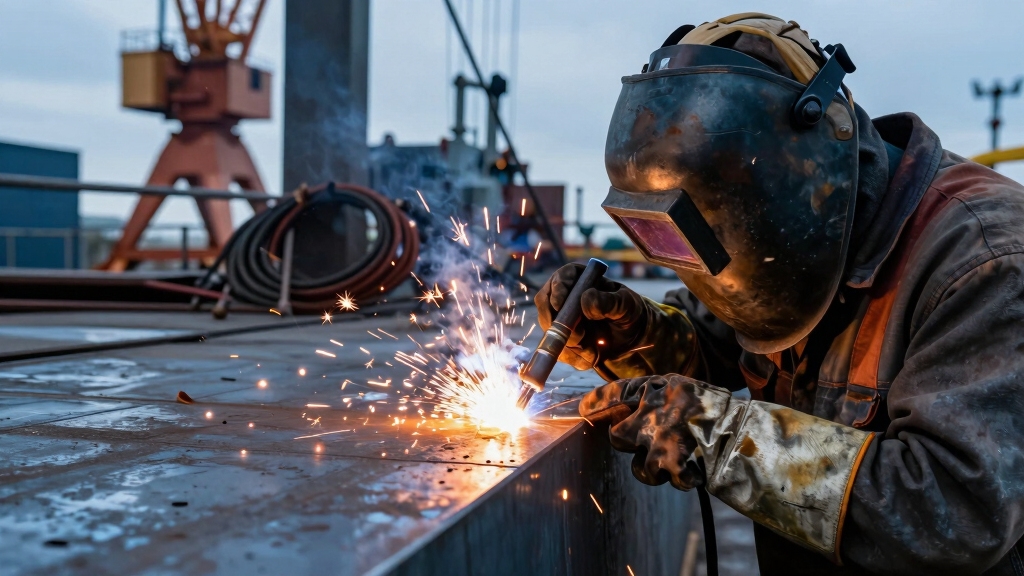
As a shipyard welder, you prepare metal surfaces by removing rust and contaminants to guarantee strong welds.
You’ll use multiple welding techniques like SMAW, GMAW, and GTAW to join steel, aluminum, and alloys in various positions.
You’ll follow strict safety protocols, maintain equipment, and verify weld quality through inspections.
Your work directly impacts vessel safety and compliance with marine standards.
Understanding these core duties sets the foundation to explore more advanced welding practices and industry specifics.
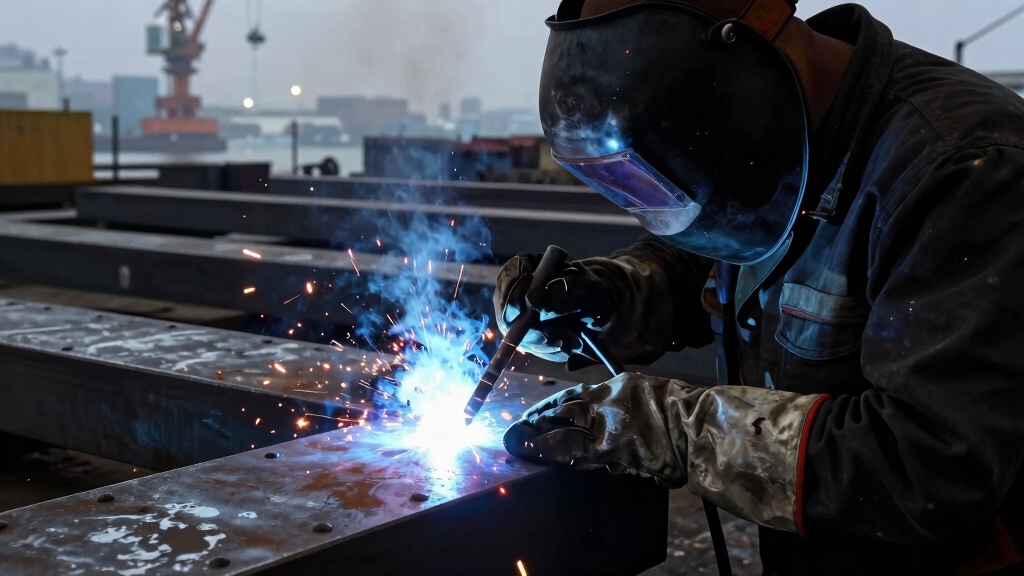
Mastering the core duties of a shipyard welder means preparing metal surfaces meticulously, welding components in various positions, and inspecting every joint for quality and structural integrity.
Master essential shipyard welding skills: surface prep, versatile welding, and thorough joint inspection for lasting strength.
You start by cleaning and removing rust or contaminants to guarantee proper adhesion. Then, you weld using flat, horizontal, vertical, and overhead positions, adapting your technique to each.
After welding, you carefully inspect every seam to detect defects, guaranteeing they meet structural standards. You’re also responsible for maintaining and repairing your welding equipment to avoid downtime.
Keeping your workspace organized and clean is essential for safety and efficiency. Additionally, you update welding logs regularly to document progress and compliance.
These tasks demand precision, attention to detail, and disciplined execution for reliable ship construction and repair. Understanding and controlling heat input and cooling rates is essential to maintain weld integrity and minimize distortion in shipyard applications.
In shipyard projects, you’ll often find yourself welding metals like steel, aluminum, stainless steel, and even copper alloys. It’s pretty common, right? But here’s the thing: using approved filler materials is super important. Why? Because it helps maintain the structural integrity and corrosion resistance of each weld.
Now, when it comes to selecting the right filler, it’s not just a matter of preference. It’s essential to ensure that your welds meet those strict marine industry standards. Plus, let’s be real—your work needs to endure some pretty harsh conditions out there. So, taking the time to choose the right materials really pays off in the long run! Using filler metals like ER309L helps balance corrosion resistance and mechanical properties when welding dissimilar metals such as carbon steel to stainless steel.
Shipyard welders commonly work with a variety of metals critical to vessel integrity and performance. You’ll frequently weld steel for hulls and decks due to its strength and durability.
Stainless steel offers corrosion resistance for specialized components, while aluminum is favored for lightweight structures. Copper-nickel alloys and bronze are used in marine environments for their anti-corrosive properties.
Understanding each metal’s properties guides your welding technique and equipment choice. Proper surface preparation and preheating are essential when welding dissimilar metals such as cast iron to steel, to reduce thermal stresses and cracking risks through heat management.
| Metal Type | Common Use | Key Property |
|---|---|---|
| Steel | Hull plates, structural | High strength, weldable |
| Stainless Steel | Piping, fittings | Corrosion resistance |
| Aluminum | Superstructures | Lightweight, corrosion-resistant |
| Copper-Nickel | Heat exchangers, piping | Marine corrosion resistance |
| Bronze | Bearings, propellers | Wear resistance |
Guaranteeing weld integrity starts with selecting approved filler materials that meet strict industry standards. You’ll use fillers compatible with base metals like steel, stainless steel, aluminum, and copper alloys to guarantee strength and corrosion resistance.
These fillers must comply with classification codes from organizations such as the American Welding Society (AWS) or ABS. For steel, low-hydrogen electrodes or flux-cored wires are common, minimizing cracking risks.
Aluminum welding demands ER-series filler rods designed for specific alloys. You’ll verify filler metal specifications against project blueprints and material certifications to maintain vessel safety and durability.
Using unapproved or incompatible fillers can cause weld defects, jeopardizing structural integrity. Adhering to approved filler standards guarantees your welds withstand marine environments and meet rigorous quality assurance tests essential for shipbuilding.
Additionally, following a qualified welding procedure specification (WPS and PQR) ensures that filler materials and welding parameters consistently produce reliable and code-compliant welds.
You know, working as a shipyard welder means you’ll often find yourself in some pretty tight spaces. It can be a challenge to move around, so you really have to be careful and strategic in how you maneuver.
And let’s not forget about the weather! Since much of the work is outdoors, you’ll have to deal with whatever Mother Nature throws at you. Rain, wind, or extreme heat can all impact the quality of your welds and your safety too.
That’s why it’s super important to stick to safety protocols. Not only do they keep you safe, but they also help ensure that everything runs smoothly on the job. So, always keep that in mind!
When working in confined areas, it’s critical to follow confined space procedures to maintain breathable air and ensure clear communication for your safety.
When working in confined spaces, you face limited mobility and restricted access that demand heightened awareness and strict adherence to safety protocols.
You must continuously monitor air quality to avoid hazardous gases and guarantee proper ventilation.
Maneuvering welding equipment in tight quarters requires precision to maintain weld quality while preventing injury.
Your movements are constrained, so planning tool placement and welding sequences is critical.
Communication with your team is essential, often relying on radios or hand signals due to noise and space limits.
You wear personal protective equipment designed for confined environments, including respiratory protection.
Emergency exit routes must be clear, and you need training in confined space entry procedures.
These challenges require you to be vigilant, methodical, and safety-conscious throughout every weld.
Additionally, using insulated gloves and boots is crucial to minimize the risk of electric shock in such hazardous environments.
After managing the confined space challenges, you’ll encounter the variable conditions of outdoor environments that directly affect welding processes and safety.
Temperature fluctuations can alter metal expansion, requiring adjustments in welding parameters to prevent warping or cracking.
Wind disrupts shielding gases in processes like GMAW and GTAW, increasing the risk of weld contamination and porosity.
Rain or high humidity can cause moisture buildup on surfaces, leading to hydrogen-induced cracking or weld defects.
You must monitor weather conditions continuously and adapt techniques, such as using windbreaks or preheating metals, to maintain weld quality.
Additionally, sunlight glare and changing light conditions impact visual inspections, so you’ll need to ensure adequate lighting.
Managing these environmental factors is essential to produce structurally sound and durable welds on ship components.
Moreover, understanding the influence of thermal conductivity on weld cooling rates is crucial when working outdoors, as it affects the final weld integrity.
Consistently adhering to safety protocols is critical for shipyard welders working in hazardous and confined environments. You must follow OSHA regulations and shipyard-specific standards to mitigate risks like fires, toxic fumes, and electrical hazards.
Wearing appropriate personal protective equipment (PPE) including respirators, flame-resistant clothing, gloves, and eye protection is non-negotiable. You’ll also conduct thorough inspections of welding equipment before use, ensuring proper grounding and functionality.
Maintaining clear communication with team members and using proper ventilation systems helps control exposure to harmful gases. Confined spaces require strict lockout/tagout procedures and atmospheric testing prior to entry. Additionally, using an auto darkening welding helmet is essential to protect eyes from intense arc light and harmful radiation during welding.
Focus on these key steps:
Meticulous preparation minimizes weld flaws and maximizes joint strength.
This ensures compliance with strict shipyard standards.
It is also critical to remove zinc coating from the weld zone to reduce porosity and harmful fume generation during welding.
You’ll be using some common welding methods in the shipyard, like SMAW, GMAW, and GTAW. These techniques are pretty handy for tackling a range of tasks efficiently.
But it’s not just about knowing how to weld; you also need to adapt these processes to specialized metals like stainless steel, aluminum, and copper alloys.
Why is that important? Well, it’s all about maintaining structural integrity. If you don’t match the right technique to the right material, you could run into serious issues down the line. So, mastering these welding techniques really helps you meet the precise demands of shipbuilding and repair. It’s all part of ensuring the job gets done right!
Additionally, understanding positional welding is crucial as you’ll often work in varied orientations such as flat, vertical, and overhead positions common in shipyards.
Shipyard welders regularly rely on several key welding methods to meet the demanding standards of marine construction and repair.
You’ll use these processes to guarantee structural integrity and durability in harsh marine environments. Mastery of each method allows you to adapt based on metal type, thickness, and position.
These methods form the foundation of your welding expertise in shipyards.
Master specialized metal applications by selecting welding techniques tailored to the unique properties of each alloy and component. You’ll work with diverse metals such as stainless steel, aluminum, copper-nickel, monel, and bronze, each demanding precise control of heat input and filler materials.
For example, use Gas Tungsten Arc Welding (GTAW) on thin aluminum to prevent warping. Flux-Cored Arc Welding (FCAW) suits thick steel plates. You must prepare surfaces meticulously, removing rust and contaminants to guarantee weld integrity.
Pay close attention to alloy compatibility and filler specifications to avoid defects like cracking or corrosion. Your expertise guarantees structural soundness in hulls, decks, and superstructures, meeting strict marine standards.
Accurate application of these techniques safeguards vessel durability under harsh ocean conditions.
Although welding techniques vary widely, adapting processes to specific shipyard conditions is essential for guaranteeing strong, reliable joints. You’ll need to adjust parameters based on metal type, thickness, and environmental factors to maintain weld integrity.
Key adaptations include:
Operate welding equipment with care and precision to guarantee both safety and quality in every weld.
Handle welding equipment carefully and precisely to ensure safety and high-quality welds every time.
You must routinely inspect machines like MIG, TIG, and arc welders for proper function, checking cables, connectors, and grounding to prevent malfunctions.
Calibrate settings according to metal type and thickness, ensuring voltage, amperage, and wire feed rates align with weld specifications.
Maintain consumables, replacing worn contact tips, nozzles, and electrodes to sustain consistent arc stability.
Clean equipment after use to remove slag, dust, and debris, extending tool lifespan.
Troubleshoot issues promptly, repairing or reporting faults to avoid downtime.
Proper lubrication of moving parts and adherence to manufacturer protocols safeguards performance.
Your diligence in operating and maintaining welding gear directly impacts weld integrity and production efficiency in the shipyard environment.
Maintaining welding equipment properly sets the stage for producing strong, reliable welds that meet shipyard standards. To guarantee weld quality and safety, you must focus on precise preparation, execution, and inspection. Follow these critical steps:
Mastering essential skills guarantees you meet the demanding standards of shipyard welding with accuracy and efficiency.
You need to expertly read and interpret blueprints, weld symbols, and diagrams to execute precise welds. Proficiency in multiple welding techniques, such as SMAW, GMAW, GTAW, FCAW, and SAW, ensures you can handle diverse materials and positions.
Attention to detail is critical for inspecting weld integrity and preventing defects. You must effectively prepare surfaces, maintain equipment, and manage time under strict deadlines.
Problem-solving skills help you adapt to challenging environments and address weld issues. Additionally, you’ll work in confined, elevated, and sometimes hazardous spaces, so following safety protocols and demonstrating adaptability are non-negotiable for consistent, high-quality results.
To qualify as a shipyard welder, you’ll need specific certifications that verify your skills and compliance with industry standards.
These certifications guarantee you can perform varied welding techniques safely and effectively, meeting stringent marine requirements. Here are four key certifications you should obtain:
Certifications ensure safe, effective welding that meets strict marine industry standards and quality demands.
Securing these certifications is critical to demonstrating your capability and maintaining vessel construction and repair quality.
Because shipyard welding directly affects a vessel’s structural soundness, you must guarantee every weld meets strict quality and safety standards. Your welds join critical components like hull plates, bulkheads, and decks, ensuring the ship withstands ocean pressures and mechanical stresses.
You apply precise techniques: SMAW, GMAW, GTAW, selecting proper filler metals to prevent corrosion and fatigue. Inspecting welds with methods such as x-ray or penetrant testing confirms integrity and detects defects early.
Proper preparation, alignment, and post-weld treatments are essential to avoid cracks or warping. Your role directly influences vessel durability, safety, and compliance with maritime regulations.
It typically takes you 6 months to 2 years to become a certified shipyard welder, depending on your prior experience and training program.
You’ll complete hands-on welding courses and learn various techniques.
You will also earn certifications like MIG, SMAW, and marine-specific processes.
After that, you’ll pass quality assurance tests and gain practical shipyard experience.
Continuous learning and additional certifications may extend this timeline as you specialize or advance.
Like a blacksmith rising through the ranks of a medieval guild, you can advance from entry-level welding to specialized roles such as welding inspector, supervisor, or quality assurance technician.
You’ll gain certifications in advanced welding techniques and leadership skills, enabling you to manage teams or projects.
With experience, you might become a welding engineer or safety coordinator, overseeing compliance and innovation across shipyard operations, ensuring integrity and precision in every weld.
You handle emergency repairs during sea voyages by quickly evaluating damage, often in confined or unstable conditions.
You use portable welding equipment and approved filler materials to restore structural integrity, focusing on critical hull or bulkhead areas.
You apply techniques like SMAW or TIG, ensuring weld quality under pressure.
Safety and precision guide your work, while you document repairs and communicate with the crew to maintain vessel safety until permanent repairs are possible.
Imagine a knight donning armor before battle. That’s how you gear up.
You must wear a welding helmet with a proper shade filter to shield your eyes from harmful rays.
Flame-resistant gloves and a heavy-duty jacket protect your hands and body from sparks and heat.
Steel-toed boots guard your feet, while ear protection blocks loud noise.
Respirators may be necessary to avoid inhaling hazardous fumes, ensuring your safety in every weld.
Weather conditions directly impact your welding schedule by affecting safety and weld quality.
Rain, high humidity, and strong winds can cause delays or require relocating to sheltered areas to prevent weld defects like porosity and cracking.
Cold temperatures may need pre-heating metals, while extreme heat demands hydration breaks.
You must adjust work hours and techniques accordingly, ensuring compliance with safety standards and maintaining weld integrity under varying environmental factors.
So, as a shipyard welder, you’ll be the unsung hero holding ships together literally. You’ll prep metals, master precise welding techniques, and juggle safety standards like a pro.
Forget romance; your sparks and certifications keep vessels seaworthy and crews safe. Without you, those mighty ships would just be expensive floating scrap.
So, embrace the grind. It’s not just welding; it’s naval architecture with a side of fire and smoke.