Phone:
(701)814-6992
Physical address:
6296 Donnelly Plaza
Ratkeville, Bahamas.

Phone:
(701)814-6992
Physical address:
6296 Donnelly Plaza
Ratkeville, Bahamas.

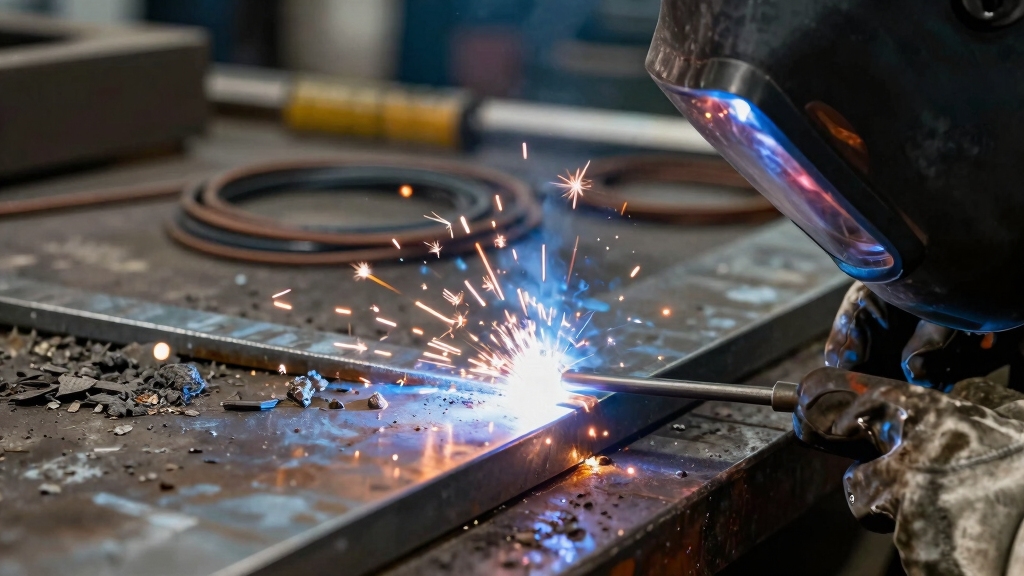
Welding consumables are essential materials like electrodes, filler metals, fluxes, and wires that you use to form and protect welds. They either melt to join metals or shield the molten pool from contamination, ensuring strong, defect-free welds.
Choosing the right consumables affects weld strength, durability, and quality by matching base metals and welding processes. Proper selection and storage optimize performance and reduce rework.
Exploring consumables further reveals how to enhance your welding outcomes efficiently.
Welding consumables typically include electrodes, filler metals, fluxes, and wires that you use to create and protect the weld during the welding process.
Key welding consumables like electrodes, filler metals, fluxes, and wires create and protect your welds.
These materials either melt to form the weld joint or shield it from impurities like oxidation and contamination.
You rely on them to guarantee peak weld strength, durability, and performance by promoting consistent bonding between parent metals.
Selecting the right consumables directly impacts weld quality and homogeneity.
For example, filler metals fill gaps, while fluxes generate protective gases that prevent weld degradation.
Using appropriate consumables also enhances productivity by reducing defects and minimizing rework.
Understanding their precise role helps you tailor your welding approach to specific metals, positions, and processes, guaranteeing reliable, high-quality results every time.
Proper maintenance and timely replacement of consumables such as contact tips and nozzles are essential to maintain consistent welding performance and avoid defects.
Electrodes play a crucial role in creating strong, reliable welds by either melting into the joint or facilitating heat transfer.
You’ll encounter two main electrode categories:
Selecting the right electrode guarantees weld integrity and performance tailored to your application. Proper electrode selection also involves understanding polarity requirements to optimize weld quality and heat distribution.
When you choose consumable wires, understanding their types and specific uses is vital for optimizing weld quality and efficiency.
Solid wires, primarily used in Gas Metal Arc Welding (GMAW), deliver deep penetration and minimal spatter. They’re ideal for mild and stainless steels.
Flux-cored wires come in gas-shielded and self-shielded varieties. Gas-shielded wires require an external shielding gas and provide cleaner welds. Self-shielded wires generate protective gas internally, useful in outdoor or windy conditions.
Submerged Arc Welding (SAW) employs specific wire types paired with granular flux for high deposition rates in heavy industrial applications.
Selecting the appropriate wire depends on base metal, welding position, and environmental factors. Using the correct wire guarantees weld integrity, reduces defects, and maximizes productivity.
Inverter welding machines enable precise current control that complements the use of appropriate consumable wires for optimal weld quality.
In protecting the weld pool from atmospheric contamination, flux plays a crucial role by generating shielding gases and forming a slag layer that prevents oxidation.
When you use welding consumables, flux guarantees weld integrity by:
You’ll find flux incorporated in electrodes, flux-cored wires, and as a powder or paste. Each is designed to optimize weld quality and durability without becoming part of the final weld metal.
Cellulose-based fluxes, for example, produce a forceful spray-type arc that enhances penetration and cleaning action in challenging welding conditions.
Selecting the right welding consumables depends heavily on the type of metal or alloy you’re working with, as each material demands specific properties from the consumables to guarantee peak weld quality.
Choosing welding consumables tailored to your metal type ensures optimal weld strength and quality.
For mild steel, you typically use carbon steel electrodes or solid wires with matching chemistry to ascertain proper fusion and strength.
When working with stainless steel, select consumables with alloy compositions that maintain corrosion resistance and avoid sensitization, often nickel-based filler metals.
Aluminum requires specialized aluminum wires or rods with flux designed to handle its high thermal conductivity and oxide layer.
For cast iron, use nickel-rich consumables to accommodate its brittleness and achieve sound welds.
Always match consumables’ mechanical and chemical properties to the base metal to prevent weld defects, minimize distortion, and optimize joint performance.
Using the recommended ER309L filler metal is crucial when welding dissimilar metals such as carbon steel to stainless steel to ensure corrosion resistance and mechanical integrity.
Although welding consumables vary widely, the American Welding Society (AWS) classifications provide a standardized system that helps you identify the specific properties and intended applications of electrodes, wires, and fluxes.
These classifications are essential for ensuring compatibility and performance.
Using AWS codes helps you select the right consumable for precise welding requirements. Understanding the 7018 electrode designation can be crucial for selecting electrodes with specific strength and low-hydrogen flux characteristics.
Match welding consumables carefully to your welding process to guarantee peak weld quality and efficiency.
Begin by identifying your welding method: SMAW, GMAW, GTAW, or FCAW. Select consumables designed specifically for that process.
Consider base metal compatibility, electrode type, wire composition, and flux requirements. Using AWS classifications helps assure adherence to standards and performance expectations.
For example, SMAW demands stick electrodes like E6011 or E7018, while GMAW requires solid or flux-cored wires suited for your material and position.
| Welding Process | Consumable Type | Typical AWS Classification |
|---|---|---|
| SMAW | Stick Electrodes | E6013, E7018 |
| GMAW | Solid/FCAW Wire | ER70S-6, E71T-1 |
| GTAW | Tungsten Electrodes | WP, WL |
| FCAW | Flux-Cored Wire | E71T-1, E71T-11 |
| SAW | Submerged Arc Wire | F7A2-EM12K |
For stainless steel welding, it is essential to use dedicated filler wires and tools to prevent contamination and ensure corrosion resistance.
When it comes to welding, choosing the right consumables is crucial for achieving the best results. You really want to look for materials that offer peak fusion and strong mechanical properties.
Think about it: the right shielding effect from fluxes or gases plays a huge role in protecting the weld pool from oxidation. This protection is what really helps maintain the integrity of the weld.
Plus, it’s super important to make sure that the consumable you pick is compatible with the parent metal. If they don’t match up well, you might run into defects that can compromise the quality of your weld.
Additionally, selecting the appropriate welding polarity can significantly influence heat distribution and weld quality, impacting electrode wear and penetration depth.
Understanding the properties of welding consumables is essential because they directly influence the strength, durability, and overall quality of the weld.
When you select consumables, consider these critical material properties:
Choosing the right consumables also depends on the welding technique used, as each method requires specific electrode types and shielding gases to ensure joint integrity and minimize defects.
Shielding gases and fluxes play a crucial role in welding consumables by preventing atmospheric contamination from spoiling the weld pool. When you use proper shielding, you effectively block oxygen, nitrogen, and hydrogen, which cause porosity, inclusions, and brittleness.
Flux-coated electrodes release protective gases and slag, stabilizing the arc and refining weld bead shape. Similarly, inert or semi-inert shielding gases like argon or CO2 maintain a clean arc environment, guaranteeing consistent fusion and penetration.
Without adequate shielding, your welds risk reduced tensile strength, increased cracking, and poor toughness. Consequently, selecting consumables with appropriate flux or gas shielding secures peak metallurgical properties, minimizes defects, and enhances overall weld quality.
Your welding’s durability directly depends on this controlled shield during the molten phase, making it indispensable for structural integrity. Small additions of CO2 or O2 to argon shielding gases can significantly improve arc stability and weld bead quality when welding steel.
Although selecting the right welding consumables might seem straightforward, their compatibility with the parent metal critically determines the weld’s mechanical strength and overall quality.
You must make certain the filler metal and electrode chemistry match or complement the base material to avoid weld defects like cracking or porosity. Here’s what you should consider:
When you select the right welding consumables, you directly enhance your welding productivity by minimizing defects and maximizing deposition rates.
Choosing high-quality electrodes, wires, and fluxes tailored to your welding process reduces rework and downtime. This streamlines your workflow and increases output efficiency.
| Consumable Type | Productivity Impact |
|---|---|
| Stick Electrodes | Stable arc, low spatter, faster runs |
| Flux-Cored Wire | High deposition, less cleaning required |
| Solid Wire | Deep penetration, consistent bead |
| Flux | Protects weld, reduces porosity |
Matching consumables to metal and process specifics guarantees peak weld strength and reduces operator adjustment time.
This precision selection ultimately lowers labor costs and boosts your throughput.
Properly selecting and storing welding consumables guarantees consistent weld quality and prevents costly defects caused by contamination or deterioration.
When choosing consumables, make sure compatibility with the base metal and welding process to maintain joint integrity.
Store electrodes, wires, and fluxes in a controlled environment to avoid moisture absorption and oxidation, which degrade performance.
Follow these steps:
Adhering to these practices maintains flux activity, prevents electrode cracking, and guarantees peak weld penetration and strength.
You impact environmental sustainability by choosing welding consumables wisely.
High-quality consumables reduce defects and rework, cutting energy and material waste.
Selecting consumables that produce less spatter and fumes minimizes harmful emissions.
Using flux-cored wires or solid wires designed for specific metals improves efficiency, lowering resource consumption.
Also, opting for consumables that comply with environmental standards helps you limit pollution and enhances overall process sustainability in welding operations.
Did you know that improper handling of welding consumables causes 30% of workplace injuries in welding?
You need to wear gloves and eye protection to avoid burns and sparks.
Store electrodes and wires in dry, ventilated areas to prevent moisture contamination.
Always use proper ventilation to reduce hazardous fumes from fluxes.
Follow AWS guidelines for safe handling and disposal to maintain a safe, efficient welding environment.
You generally can’t reuse welding consumables like electrodes, wires, or flux because they degrade or get contaminated during welding.
However, some scrap metal from unused wire or flux can be recycled as raw material, reducing waste.
Make sure to handle recycling according to local regulations and separate consumables by type for efficient processing.
Reusing consumables risks weld quality and safety, so always use fresh materials for critical applications.
Think of welding consumables as athletes performing in a heatwave. Temperature swings directly affect their strength and reliability.
When temperatures rise, electrodes and wires can overheat, causing inconsistent melting or burning off flux prematurely. This weakens the weld.
Low temperatures may cause cracking or poor fusion, as filler metals become brittle.
You must control temperature closely to maintain proper melting characteristics, shielding effectiveness, and overall weld integrity for peak performance.
You’ll find branded welding consumables usually cost more due to stringent quality control, consistent performance, and certifications.
Generic options are cheaper but may vary in composition and reliability, potentially increasing defects or rework.
While branded products reduce welding defects and improve strength, generic consumables can save upfront costs but risk weld quality and productivity.
Balancing cost versus performance depends on your project’s criticality and tolerance for variability.
You might think choosing welding consumables is just about matching materials, but it’s far more critical. The right consumables directly influence weld strength, quality, and productivity.
By understanding electrodes, wires, flux, and their compatibility with your welding process and metals, you’ll avoid defects and costly rework.
Invest time in selecting and storing consumables properly; you’ll see improved performance and durability in every weld you make. Don’t underestimate their impact on your results.