Phone:
(701)814-6992
Physical address:
6296 Donnelly Plaza
Ratkeville, Bahamas.

Phone:
(701)814-6992
Physical address:
6296 Donnelly Plaza
Ratkeville, Bahamas.

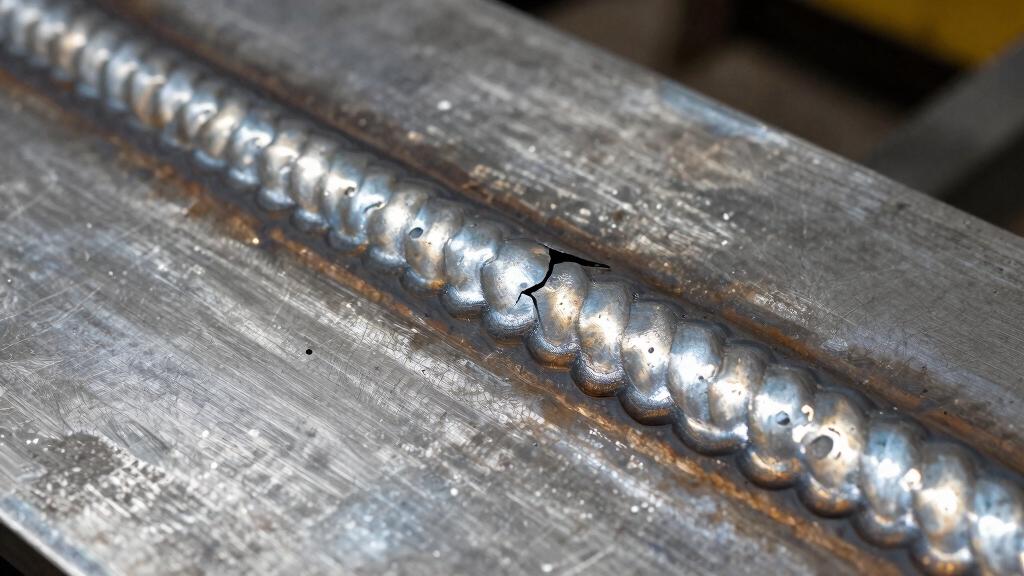
Weld defects are imperfections that weaken your welded joints, affecting strength and safety. They include cracks, porosity, lack of fusion, and undercuts, often caused by improper heat, contamination, or poor technique.
Detecting these defects through visual checks or ultrasonic testing helps maintain structural integrity. Preventing them requires controlling welding parameters and materials.
Understanding how these flaws form and how to identify and fix them guarantees your welds meet required standards and perform reliably.
Weld defects are imperfections that compromise the integrity and performance of welded joints. Understanding them is crucial for anyone involved in welding or inspection.
Recognizing weld defects is essential for ensuring the strength and reliability of welded joints.
These defects alter the mechanical properties and can introduce stress concentrations, leading to premature failure under load. When you identify a weld defect, you must recognize how it affects joint strength, ductility, and toughness.
Defects disrupt the uniform load transfer and often serve as initiation points for cracks or corrosion. By comprehending the nature of these imperfections, you can implement proper detection, evaluation, and repair strategies.
This knowledge guarantees that welded structures meet design specifications and safety standards. It prevents costly downtime and catastrophic failures in critical applications. Your ability to discern these issues directly impacts structural reliability and service life.
Effective weld inspection techniques, including non-destructive testing, are essential to detect and evaluate these defects early and ensure weld quality.
Recognizing how defects form is key to preventing them from compromising joint integrity.
Cracks arise from rapid cooling and shrinkage stresses, often triggered by high carbon content or arc strikes.
Porosity results from trapped gases due to contaminated materials or insufficient shielding gas.
Lack of fusion or penetration occurs when heat input or angle is inadequate, leaving incomplete joins.
Undercuts form from excessive current or travel speed, creating stress concentrators.
Inclusions, like slag or tungsten particles, embed within the weld due to improper cleaning or process control.
Overlap, spatter, and distortion stem from poor technique and excessive heat, affecting weld shape and strength.
Understanding these origins helps you adjust parameters, materials, and procedures to guarantee weld quality and structural reliability.
Zinc vaporization during welding can also cause porosity and weld contamination if not properly controlled with appropriate welding techniques.
Detecting weld defects early requires a systematic inspection approach that combines visual examination with specialized nondestructive testing methods.
Start by carefully inspecting the weld surface for undercuts, overlaps, spatter, and visible cracks. Use magnification tools to identify fine porosity or surface irregularities.
For subsurface flaws like inclusions, cracks, or lack of fusion, employ magnetic particle inspection (MPI) or dye penetrant testing (DPT) to reveal discontinuities near the surface.
Ultrasonic testing (UT) or radiographic inspection (RT) provide volumetric analysis, detecting internal defects such as slag inclusions or incomplete penetration.
Maintain consistent inspection parameters and document findings precisely to guarantee weld integrity meets design specifications.
Understanding the deep penetration capability of welding electrodes like 6010 rods helps in recognizing potential root pass defects during inspection.
Once you’ve identified common weld defects through inspection, the next step is to implement strategies that minimize their occurrence.
You must control heat input, maintain proper angles, and ensure clean materials. Use low hydrogen electrodes for carbon steels and adequate shielding gas to prevent porosity.
Adjust current and speed to avoid undercut and overlap. Proper interpass cleaning reduces slag inclusions.
| Defect | Key Prevention | Welding Parameter Control |
|---|---|---|
| Cracks | Slow cooling, low hydrogen | Preheat, controlled cooling |
| Porosity | Clean materials, shielding | Dry electrodes, gas flow |
| Lack of Fusion | Adequate heat, angle | Current, travel speed |
| Undercut | Reduce current, slow speed | Arc length, electrode angle |
Using electrodes with a low-hydrogen iron-powder coating can significantly reduce hydrogen-induced cracking risks and improve overall weld quality.
Adhering to these practices enhances weld integrity and reduces costly repairs.
Address welding defects promptly by analyzing their root causes and applying targeted corrective measures. When troubleshooting, you need to identify the defect type, assess welding parameters, and adjust techniques accordingly.
Proper selection of welding methods and parameters is critical to minimize distortion and ensure joint integrity during the welding process.
Yes, you can repair many weld defects without removing the entire weld. For example, you can grind out cracks, undercuts, or lack of fusion areas locally and then re-weld those spots.
Porosity and spatter often require surface cleaning and localized repair. However, severe defects like extensive cracking may demand full weld removal for structural integrity.
Always assess defect type and severity before deciding the repair approach to assure safety and compliance.
Different welding processes influence defect types by their heat input and shielding methods.
For example, SMAW, FCAW, and SAW often show porosity and slag inclusions due to flux usage.
TIG and PAW minimize inclusions but risk tungsten contamination.
High heat in processes like SAW can cause undercut or distortion.
Low heat or incorrect angles in SMAW leads to lack of fusion.
You should select processes and parameters to match your material and defect control needs.
Yes, some metals are more prone to specific weld defects.
For instance, high-carbon steels tend to crack due to rapid cooling and shrinkage stresses, so you need slow cooling and low-hydrogen filler.
Aluminum and magnesium alloys often suffer from porosity because of their oxide layers and gas entrapment.
Stainless steels are susceptible to lack of fusion if you don’t maintain proper heat input.
Understanding each metal’s behavior helps you tailor welding parameters to minimize defects.
Environmental conditions directly affect your weld quality by influencing contamination and cooling rates.
High humidity or moisture can cause porosity due to trapped gases, while wind may disrupt shielding gas coverage, leading to oxidation or inclusions.
Cold temperatures accelerate cooling, increasing crack risks.
Dust and dirt introduce impurities, causing defects like slag inclusions.
You must control environmental factors; use windshields, dry materials, and maintain proper temperature to guarantee strong, defect-free welds.
You know what they say: “An ounce of prevention is worth a pound of cure.” Post-weld heat treatment reduces defects by relieving residual stresses and tempering the weld zone.
It prevents cracks caused by shrinkage and rapid cooling, enhances ductility, and aids in hydrogen diffusion to avoid embrittlement.
Understanding weld defects is essential since up to 30% of welding failures stem from preventable flaws. By recognizing common defects and their causes, you can inspect and address issues before they compromise structural integrity.
Applying best practices not only reduces rework but also enhances safety and efficiency in your projects. Staying vigilant and proactive guarantees your welds remain strong and reliable, ultimately saving time and costs in the long run.