Phone:
(701)814-6992
Physical address:
6296 Donnelly Plaza
Ratkeville, Bahamas.

Phone:
(701)814-6992
Physical address:
6296 Donnelly Plaza
Ratkeville, Bahamas.

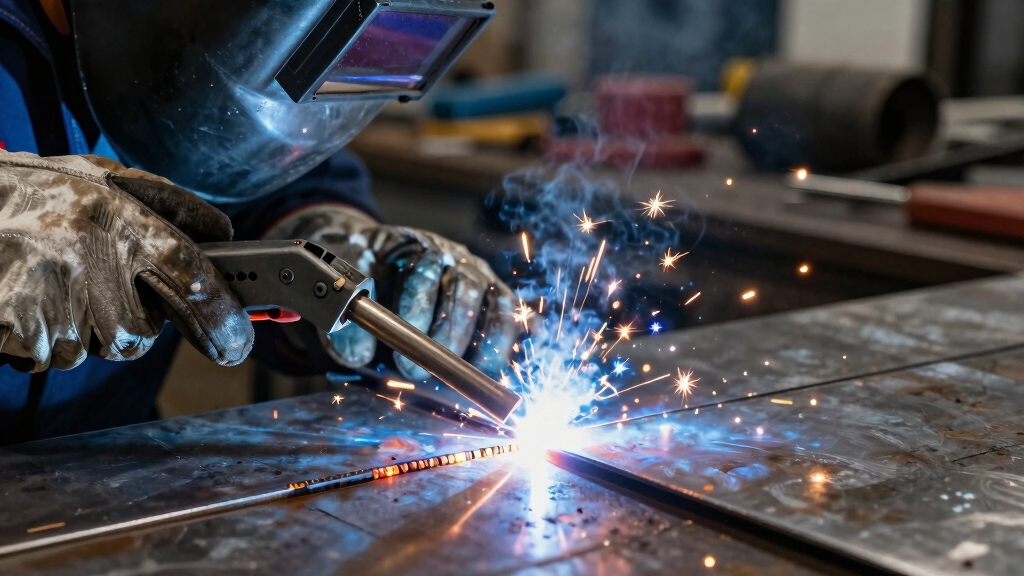
To reduce spatter when MIG welding, keep your contact tip and nozzle clean. Guarantee liners are smooth for consistent wire feed. Adjust voltage slightly lower while increasing wire speed to stabilize the arc. This helps to avoid excessive amperage.
Use a 75% Argon / 25% CO2 gas blend for steel and the correct filler wire matching your material. Maintain a proper travel angle and steady technique to control the weld pool.
These steps cut down spatter effectively, and exploring further will sharpen your understanding.
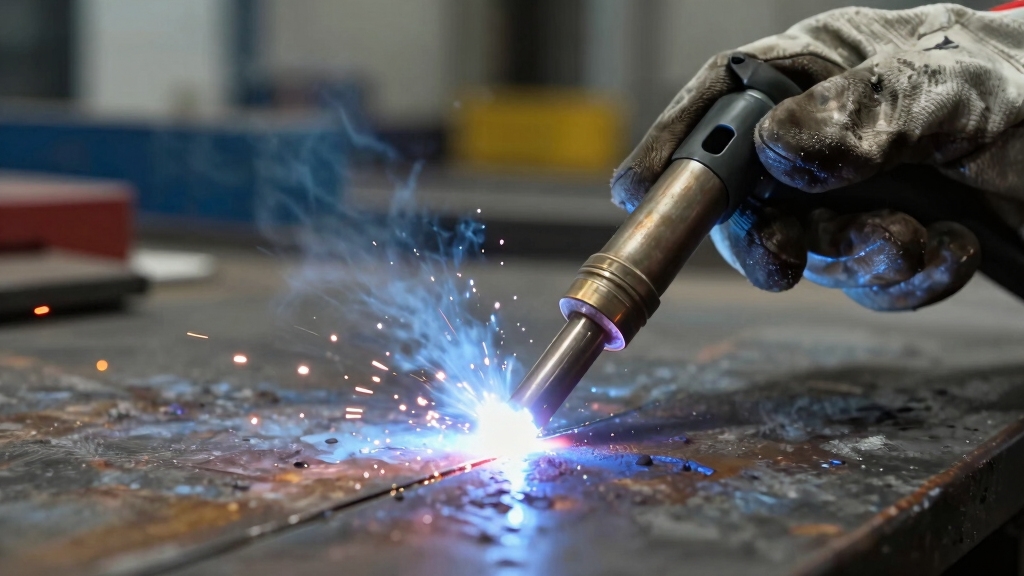
Although MIG welding is a versatile and efficient process, spatter remains a common issue that can compromise weld quality and increase cleanup time.
MIG welding is efficient but often challenged by spatter, impacting weld quality and cleanup efforts.
You’ll find that spatter primarily results from instability in the welding arc caused by incorrect machine settings such as voltage, amperage, or wire feed speed.
When these parameters don’t match the material thickness and welding conditions, the weld pool becomes turbulent, ejecting molten droplets.
Additionally, improper shielding gas mixtures or mismatched filler materials can disrupt arc stability, further increasing spatter.
Understanding these causes allows you to adjust your technique and equipment to maintain a stable arc, minimize molten metal ejection, and reduce spatter buildup.
Correct parameter optimization directly improves weld consistency and reduces the time spent on post-weld cleanup.
Using pulsed MIG transfer can increase speeds while minimizing spatter by maintaining a stable arc and steady deposition rates.
Maintain your MIG welding equipment meticulously to guarantee peak performance and minimize spatter.
Regular cleaning and maintenance prevent contamination and assure stable arc conditions, which are critical for spatter reduction.
Focus on these key areas:
Additionally, controlling heat input during welding is essential to reduce spatter and prevent weld defects.
When you optimize voltage and wire feed speed based on material thickness, you stabilize the arc and markedly reduce spatter. Incorrect settings cause arc instability, leading to excessive spatter.
If you notice spatter, try slightly lowering voltage while increasing wire speed to achieve a more stable arc. Adjusting wire feed speed alone can resolve about 80% of spatter issues by ensuring consistent metal deposition and reducing weld pool turbulence.
Avoid setting amperage too high, as it destabilizes the weld pool, increasing spatter. Monitor the weld bead closely and fine-tune the parameters incrementally.
Balancing these settings maintains a steady arc, improves penetration, and minimizes spatter formation, enhancing weld quality and reducing cleanup time. This precision is essential for clean, efficient MIG welding results.
Additionally, using small additions of CO2 or O2 to argon can significantly improve arc stability and reduce spatter during MIG welding.
Choosing the right shielding gas plays a critical role in reducing spatter and guaranteeing a stable arc during MIG welding.
Using the proper gas mixture protects the weld pool from atmospheric contamination and stabilizes the arc, directly impacting spatter levels.
For steel welding, a 75% Argon / 25% CO2 (C25) blend is optimal for minimizing spatter, while pure CO2 tends to increase it due to higher arc volatility.
Avoid reactive or semi-reactive gases that can elevate heat and cause instability. Key considerations include:
Proper gas choice is essential for cleaner, more efficient MIG welds.
However, when welding stainless steel, using 75/25 argon-CO2 gas may increase spatter and degrade weld quality due to its oxidizing nature.
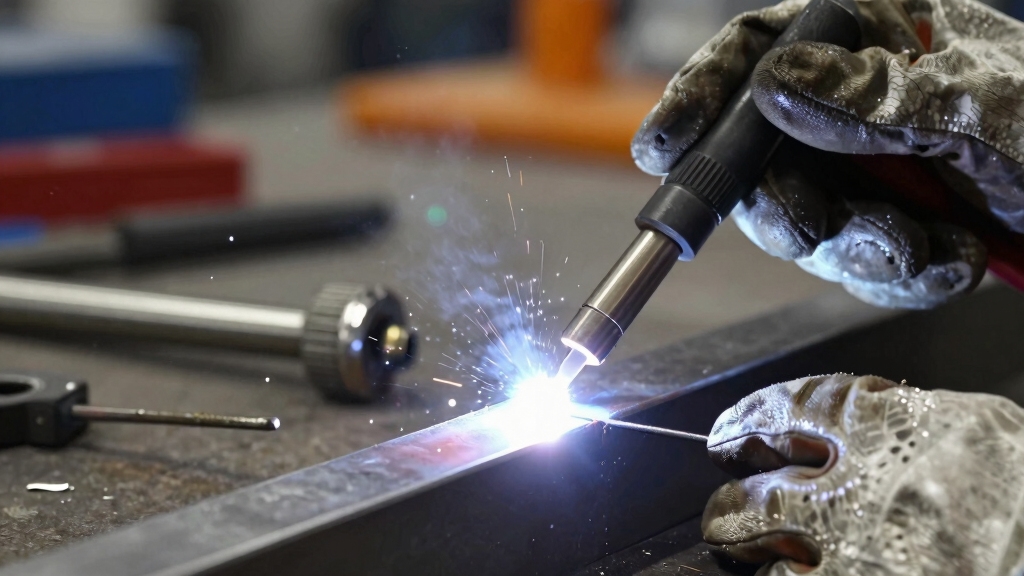
After selecting the appropriate shielding gas, focus on matching your filler materials to both the base metal and welding equipment.
Use ER70S-6 wire for steel MIG welding, as it’s proven to generate less spatter compared to alternatives. For aluminum, ER5356 filler wire helps reduce spatter effectively.
Make sure the wire diameter and composition correspond precisely to your MIG gun and machine specifications to maintain arc stability. Mismatched filler metals disrupt the arc, causing increased spatter.
Additionally, adopt consistent welding techniques like maintaining a travel angle between 5 to 15 degrees and using a pulling motion to control the weld puddle.
Combining properly selected filler metals with precise technique stabilizes the arc and greatly cuts down spatter production during MIG welding. Selecting the right shielding gas mixture also plays a crucial role in minimizing spatter and ensuring arc stability.
No, anti-spatter sprays won’t damage your welding equipment if you use them properly. They’re designed to prevent spatter from sticking to surfaces, making cleanup easier.
However, avoid excessive application, especially near contact tips or inside the nozzle. Buildup can affect gas flow or electrical contact.
Always apply sprays sparingly and follow manufacturer guidelines to maintain peak equipment performance and prevent potential issues.
You’ll find that maintaining a travel angle between 5 and 15 degrees can reduce spatter by controlling weld puddle dynamics effectively.
This slight angle optimizes arc stability and molten metal flow, minimizing spatter formation. Angles outside this range disrupt the weld pool, causing turbulence and increased spatter.
Yes, using smaller wire diameters like 0.023 to 0.030 inches helps reduce spatter on thin metals by promoting a stable arc and controlled heat input.
Larger wires increase heat and can cause excessive spatter. Always match wire diameter to your MIG gun and machine specs for peak performance.
This precision guarantees better arc stability, less spatter, and improved weld quality on thin materials.
You should use Direct Current Electrode Positive (DCEP), also called reverse polarity, for MIG welding to prevent spatter.
This polarity directs electrons toward the workpiece, stabilizing the arc and promoting cleaner welds with less spatter.
Make certain your torch and ground connections are correctly set to DCEP.
Incorrect polarity can cause arc instability and increase spatter, so always verify your machine’s settings before welding to maintain peak performance.
You should replace consumables like contact tips, nozzles, and liners regularly based on wear, contamination, or buildup signs to minimize spatter.
Inspect them before each welding session and swap out any damaged or clogged parts immediately.
Using clean, high-quality consumables matched to your machine guarantees stable arc and consistent wire feed, which directly reduces spatter.
Neglecting timely replacement often leads to poor arc stability and increased spatter during MIG welding.
To reduce spatter when MIG welding, you need to fine-tune your settings and maintain your equipment regularly. For example, a welder adjusting voltage from 22V to 19V and lowering wire speed saw spatter drop by 40%, resulting in cleaner welds and less post-weld cleanup.
By understanding causes, selecting proper shielding gas, and using suitable filler materials, you’ll achieve smoother, more efficient welding every time. Keep these factors balanced for prime spatter control.