Phone:
(701)814-6992
Physical address:
6296 Donnelly Plaza
Ratkeville, Bahamas.

Phone:
(701)814-6992
Physical address:
6296 Donnelly Plaza
Ratkeville, Bahamas.

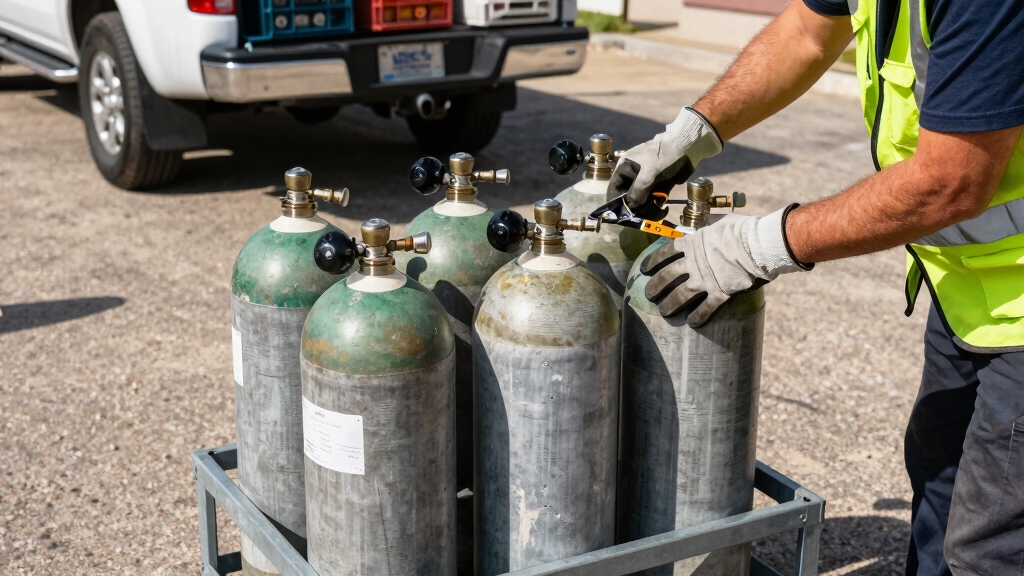
You must fully depressurize oxygen cylinders in a well-ventilated area by opening the valve slowly until the gauge reads zero, guaranteeing residual oxygen is under 3%.
Never remove valves or regulators while pressurized, and carefully detach them afterward. Label cylinders “Depressurized” and confirm compliance with hazardous waste rules before disposal.
Use authorized recycling or manufacturer take-back programs, verifying facility acceptance. Avoid common mistakes to guarantee safety and legal compliance.
The following sections explain each step and option in detail.
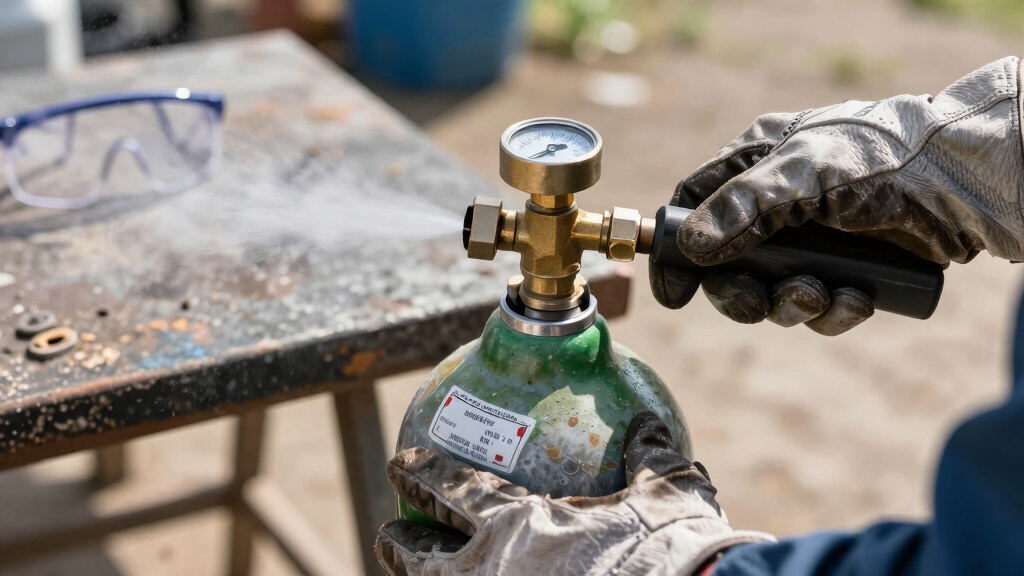
Before you begin depressurizing an oxygen cylinder, make sure you’re in a well-ventilated area to avoid inhaling residual oxygen.
Open the cylinder valve slowly to release the gas, watching the pressure gauge closely. Continue releasing oxygen until the gauge reads zero, indicating the cylinder is empty.
Repeat this process if necessary to make certain complete depressurization. Never attempt to remove the valve while the cylinder remains pressurized, as this poses a severe explosion risk.
Use appropriate tools designed for safe handling during the depressurization process to maintain control and prevent accidents. Always prioritize safety and avoid rushing the procedure.
Proper depressurization is critical to preventing hazards and preparing the cylinder for safe disposal or further processing.
Because oxygen can displace air, ensuring proper ventilation is essential to avoid asphyxiation risks during the procedure.
Before you think about disposing of an oxygen cylinder, it’s a good idea to check the manufacture date first. This helps you figure out if it’s time for retirement. You also want to make sure that the cylinder has been requalified, so you can be confident it meets safety regulations.
Next, you’ll want to measure the residual oxygen levels. This step is super important to make sure the cylinder is properly depressurized. Following these steps is key to keeping things safe and staying compliant with regulatory standards.
When you inspect the manufacture date stamped on an oxygen cylinder, you’ll determine if it has reached the end of its service life and requires retirement.
Cylinders typically have a defined lifespan set by regulatory bodies and manufacturers, often around 5 to 15 years.
Using a cylinder beyond this period risks structural integrity and safety.
Carefully locate the stamped date, usually on the neck or shoulder, and compare it against current regulations and manufacturer guidelines.
If the cylinder is outdated, mark it clearly for removal from service.
Avoid using cylinders with unclear or missing manufacture dates, as they pose unknown hazards.
This step is critical in your overall assessment to guarantee safe handling and compliance with disposal protocols.
Stay cautious and never overlook this inspection.
Maintaining detailed records and continuity documentation of cylinder inspections helps ensure compliance and safe disposal practices.
You should always verify the requalification status of an oxygen cylinder to make certain it meets safety standards and regulatory compliance.
Check the cylinder’s stamped markings for the last test date and make sure it falls within the prescribed interval for requalification, typically every five years.
Inspect the cylinder carefully for any visible damage, corrosion, or wear that could compromise its integrity.
Confirm that the cylinder bears valid certification labels or stamps from authorized inspection agencies.
Do not proceed with disposal if the cylinder lacks current requalification or shows signs of structural issues; such cylinders require specialized handling.
Proper ventilation and respiratory protection should be ensured when handling cylinders to prevent inhalation hazards from any residual gases or contaminants.
Confirming the cylinder’s requalification status guarantees it meets safety requirements, but evaluating the residual oxygen levels is the next step to verify the tank’s condition.
You should depressurize the cylinder in a well-ventilated area by carefully opening the valve and releasing residual oxygen until the pressure gauge reads zero.
Repeat this process until the tank is completely empty, ensuring no liquid residue remains.
Keep in mind that residual oxygen must be limited to 2.5 cm or 3% by weight to comply with RCRA empty container standards.
Never remove the valve while the cylinder is pressurized, and always use appropriate tools for safe handling. This careful measurement confirms the cylinder is safe for disposal or recycling without risk of explosion or contamination.
Proper handling and monitoring of gas cylinders are essential, similar to how control circuits in inverter welding machines ensure stable and safe operation.
Begin by ensuring the oxygen tank is fully depressurized before attempting to remove any components.
Confirm the pressure gauge reads zero, releasing residual oxygen in a well-ventilated area using the appropriate tools.
Never try to remove valves from pressurized tanks due to explosion risk.
Once depressurized, carefully unscrew and remove the regulator, then proceed to detach the valve using proper wrenches or tools designed for this purpose.
Handle parts cautiously to avoid damage or injury.
After removal, dispose of regulators and valves separately according to local regulations, checking if recycling centers accept them.
Prevent future use by marking the cylinder clearly after component removal.
Following these steps guarantees safety and compliance when removing regulators and valves from oxygen tanks for disposal.
Always wear protective gloves to safeguard your hands from potential hazards during the removal process.
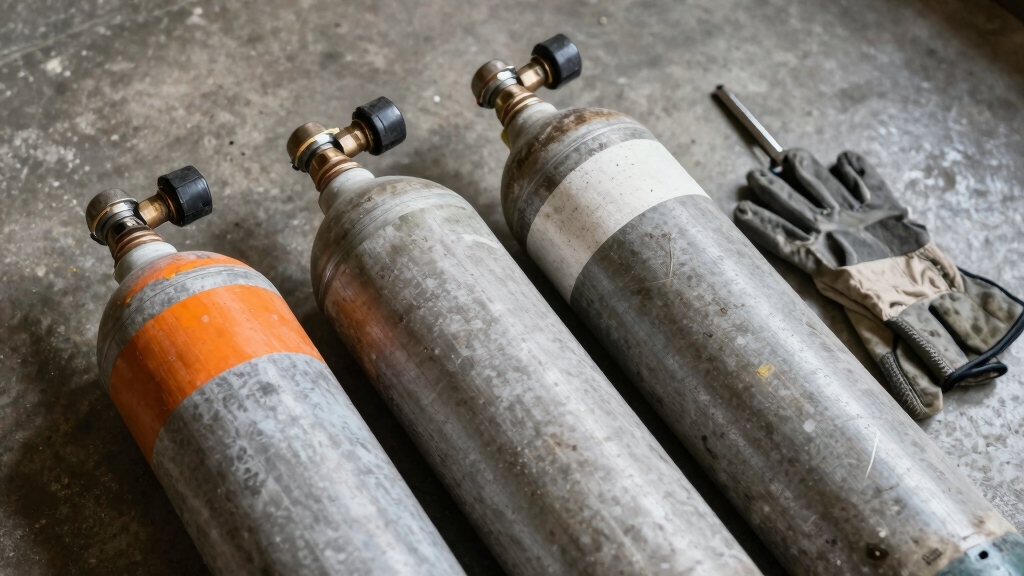
After removing the regulators and valves, focus shifts to properly labeling and marking the depressurized oxygen cylinders to prevent any future use or mishandling.
First, clearly label each cylinder as “Depressurized” using durable, weather-resistant markers or tags. Include identification that the cylinder is designated for scrap metal recycling or disposal.
Clearly mark each cylinder as “Depressurized” for safe recycling or disposal with durable, weather-resistant tags.
Where applicable, attach disposal instructions to guide handlers and comply with local regulations. Use medical waste-specific containers or bags with visible labels when required.
Make sure all markings are legible and conform to your local waste authority’s guidelines to avoid confusion and legal issues.
This step is critical to guarantee safety during transport and recycling, preventing accidental pressurization or reuse and ensuring you adhere strictly to regulatory standards for hazardous materials management.
Additionally, ensure the cylinders are completely dry before labeling to maintain the integrity of any applied tags or markers and avoid dilution of inks or adhesives, a practice consistent with proper surface preparation.
Hey there! So, it’s really important to understand that oxygen cylinders are considered hazardous waste. Why? Well, it’s mainly because of the pressure they hold and any leftover contents inside them.
Now, when it comes to handling these cylinders, you definitely want to stay on the right side of the law. That means complying with both federal and state regulations, like the ones outlined in 40 CFR 261.7. Trust me, you don’t want to run into any penalties for improper disposal!
To make sure everything goes smoothly, always follow the authorized disposal procedures. This not only keeps you safe but also ensures that you’re acting legally.
So, keep that in mind when dealing with oxygen cylinders! Proper welding safety practices emphasize the importance of handling pressurized gases carefully to prevent accidents.
Classifying oxygen cylinders as hazardous waste demands your strict attention to regulatory details to guarantee safe and legal disposal.
These cylinders often contain residual oxygen and pressurized gas, which subjects them to hazardous waste rules under the Resource Conservation and Recovery Act (RCRA).
You must confirm that cylinders meet the “empty” criteria: pressure gauge reads zero and residual content is within 3% by weight or 2.5 cm liquid residue to avoid misclassification.
Even after depressurization, oxygen cylinders are often designated hazardous due to their pressure and potential chemical residues.
Never dispose of them as regular waste or recycling. Instead, handle classification carefully, referencing 40 CFR 261.7 and local regulations.
Proper classification protects you from hefty fines and environmental risks tied to improper disposal.
While handling oxygen cylinder disposal, you must strictly follow hazardous waste regulations to guarantee safety and legal compliance.
These cylinders fall under hazardous waste due to pressure and residual oxygen. Improper disposal can lead to severe fines.
You need to confirm complete depressurization in a well-ventilated area before disposal.
Comply with the Resource Conservation and Recovery Act (RCRA) 40 CFR 261.7 standards.
Avoid discarding cylinders in regular trash or standard recycling bins.
Follow state and federal guidelines for labeling and documentation.
Consult local waste management authorities for authorized handling and recycling options.
Adhering to these rules protects you from legal penalties and prevents environmental hazards associated with oxygen cylinder disposal.
Additionally, using appropriate protective equipment such as gloves and eye protection is crucial to avoid injuries during handling.
Manufacturers often offer take-back programs that simplify disposing of oxygen cylinders safely and compliantly.
To use these programs, first make certain your cylinder is fully depressurized and free of residual oxygen, following proper venting procedures in a well-ventilated area.
Next, remove regulators and valves as required, and clearly label the cylinder as empty and non-reusable.
Contact the manufacturer directly or visit their website to confirm program availability, packaging requirements, and shipping instructions.
Use the provided documentation to track your shipment and maintain compliance with local hazardous waste regulations.
Manufacturer take-back programs reduce environmental risks and liability by ensuring cylinders are handled by trained professionals.
Always follow manufacturer guidelines strictly to avoid hazards and legal complications during disposal.
Proper preparation and handling prevent surface contamination that could pose safety risks during transport and disposal.
Before you get started with recycling your oxygen cylinder, it’s important to figure out if it’s made of steel or aluminum. This is crucial because the handling methods differ for each material.
Once you’ve identified the type, make sure the cylinder is completely depressurized and free of any residues. It’s also a good idea to clearly mark the cylinder to prevent anyone from mistakenly trying to reuse it.
And don’t forget to reach out to authorized recycling facilities that accept these specific materials. This will help you stay compliant with safety and legal requirements.
Proper cleaning and removal of corrosion, especially on aluminum cylinders, is essential to maintain structural integrity before disposal.
Start by accurately identifying the material composition of oxygen cylinders to guarantee safe and compliant recycling. Knowing whether your cylinder is steel or aluminum is essential because each requires different handling and processing methods.
To determine recyclability, check manufacturer stamps or labels indicating material type. Look for magnetic properties; steel is magnetic, aluminum is not.
Inspect for corrosion or damage that may affect recyclability. Confirm the cylinder is empty and depressurized before further steps.
When preparing steel and aluminum oxygen cylinders for recycling, you must first make sure they’re fully depressurized by releasing any residual oxygen safely in a well-ventilated area.
Open the valve carefully, monitoring the pressure gauge until it reads zero, repeating as needed to guarantee complete emptying.
Never attempt to remove the valve while the cylinder is pressurized, as this poses an explosion risk.
After depressurization, inspect the cylinder’s manufacture date and condition to confirm eligibility for recycling.
Remove the regulator and valve using appropriate tools, disposing of these parts according to local guidelines.
Clearly mark the cylinder as depressurized and intended for scrap metal recycling to prevent accidental reuse.
Following these steps precisely guarantees safety and compliance with hazardous waste regulations during cylinder preparation.
Having prepared your oxygen cylinders correctly, the next step is to identify recycling facilities authorized to handle steel and aluminum cylinders safely.
You must assure these centers comply with local, state, and federal regulations to avoid legal complications.
Start by contacting your local waste management office or environmental agency for a verified list.
You can also check with manufacturers’ take-back programs.
Verify acceptance policies for depressurized cylinders.
Confirm separate handling of valves and regulators.
Inquire about hazardous waste certifications.
Review proximity and transport requirements.
Choosing the right facility protects you from penalties and assures environmental safety.
Don’t assume all scrap metal recyclers accept oxygen cylinders; always verify first.
Tracking down local facilities equipped to handle oxygen cylinder disposal and recycling is essential to ensure compliance with safety and environmental regulations.
Start by contacting your city’s waste management department or state environmental agency for authorized sites. Confirm that facilities accept depressurized cylinders and associated parts like valves and regulators.
Many scrap metal recyclers won’t handle pressurized tanks, so verify acceptance policies beforehand. Use the table below to compare facility types:
| Facility Type | Key Considerations |
|---|---|
| Municipal Waste Centers | Check hazardous waste capabilities |
| Metal Recycling Yards | Confirm acceptance of cylinders |
| Medical Waste Handlers | Suitable for oxygen-specific waste |
| Manufacturer Programs | May offer take-back services |
Prioritize facilities with clear protocols for oxygen cylinder handling to ensure safe, legal disposal.
After identifying appropriate facilities for oxygen cylinder disposal, you must avoid common errors that compromise safety and regulatory compliance.
Handling oxygen cylinders carelessly can lead to hazardous situations and legal issues. To ensure proper disposal, steer clear of these mistakes:
Careless handling of oxygen cylinders risks safety and legal troubles; proper disposal is essential to avoid these pitfalls.
Don’t skip depressurizing tanks completely before transport or disposal.
Avoid removing valves or regulators while cylinders remain pressurized.
Never discard cylinders in regular trash or unapproved recycling bins.
Don’t ignore inspection for damage, expiration, or residual oxygen levels.
Avoid failing to label or mark cylinders as depressurized and ready for disposal.
Before disposing of oxygen cylinders, make sure you follow strict safety measures to prevent accidents and regulatory violations.
Always depressurize the tank fully in a well-ventilated area, using the proper tools to avoid sparks or damage.
Never attempt to remove the valve while the cylinder is pressurized.
After depressurization, carefully remove and dispose of regulators and valves separately according to local guidelines.
Clearly mark the cylinder as empty and label it for scrap metal recycling to prevent future misuse.
Confirm compliance with all federal and state regulations, including residue limits under RCRA.
Consult your local waste authority to assure authorized handling and avoid hefty fines.
Prioritize safety and regulatory adherence throughout the process to protect yourself and the environment.
You shouldn’t refill an oxygen cylinder yourself at home. Handling pressurized oxygen requires specialized equipment and training to guarantee safety and compliance with regulations.
Improper refilling risks explosion, leaks, and serious injury. Only certified professionals in authorized facilities should refill cylinders, following strict guidelines.
Always consult your supplier or a licensed service to manage oxygen refills safely and legally. Never attempt DIY refilling.
Think of your oxygen cylinder as a steadfast guardian whose watch typically lasts about 5 to 15 years. You’ll want to check the manufacture date and requalification status regularly.
Like a soldier who retires when worn or damaged, your cylinder must be retired once it shows signs of wear or fails safety checks.
Always prioritize safety; don’t guess its lifespan, verify to avoid hazardous risks and guarantee compliance.
If you accidentally puncture an oxygen cylinder, you risk a sudden, violent release of pressurized oxygen that can cause explosions or fires.
You must immediately evacuate the area and avoid sparks or flames.
Never try to repair or handle it yourself.
Contact emergency services and trained professionals for safe containment.
Always treat punctured cylinders as hazardous, since mishandling can result in serious injury or property damage.
Yes, you can choose alternatives like oxygen concentrators, which extract oxygen from ambient air and don’t require pressurized cylinders.
They’re safer for home use since they eliminate risks tied to high-pressure tanks. Portable oxygen concentrators offer mobility, too.
However, always consult your healthcare provider before switching devices to make certain it meets your oxygen therapy needs safely and effectively.
Avoid using unauthorized substitutes that lack medical approval.
Temperature changes gently remind you that stored oxygen cylinders are sensitive companions.
When temperatures rise, internal pressure increases, which can stress the cylinder and its valves, potentially risking safety.
Conversely, cold temperatures cause pressure drops, affecting oxygen delivery.
You must store cylinders in stable, moderate environments, avoiding extreme heat or cold.
Always monitor temperature effects carefully to preserve cylinder integrity and guarantee your safety.
Disposing of oxygen cylinders demands your full attention to safety and regulations. Have you made certain every step, from depressurizing to proper labeling, is done correctly? Skipping precautions can cause serious hazards. Always remove valves carefully, check for residual oxygen, and follow local disposal rules.
Recycling metal parts responsibly protects both you and the environment. By staying cautious and informed, you minimize risks and handle oxygen cylinders the right way every time. Safety isn’t optional; it’s essential.