Phone:
(701)814-6992
Physical address:
6296 Donnelly Plaza
Ratkeville, Bahamas.

Phone:
(701)814-6992
Physical address:
6296 Donnelly Plaza
Ratkeville, Bahamas.

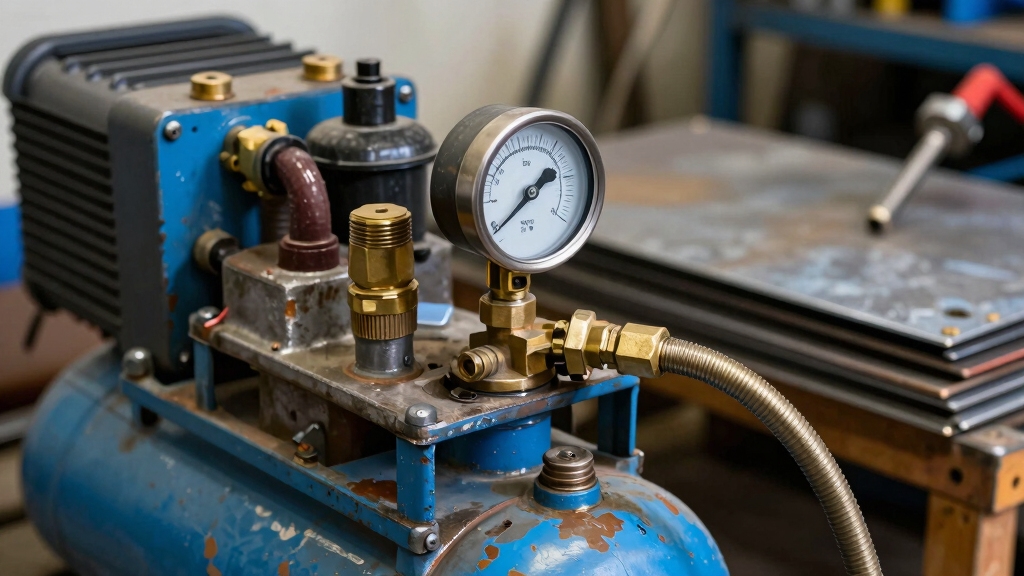
You can expect your welding air compressor to last between 10 and 20 years, depending largely on the type and maintenance. Oil-flooded rotary screw compressors, designed for continuous duty, often reach 100,000 hours or about 20 years.
Reciprocating models typically last closer to 10 years with proper care. Environmental factors like dust and temperature also matter. Proper upkeep and matching compressor capacity to welding demands extends lifespan.
Explore how usage and maintenance choices directly impact your compressor’s durability.
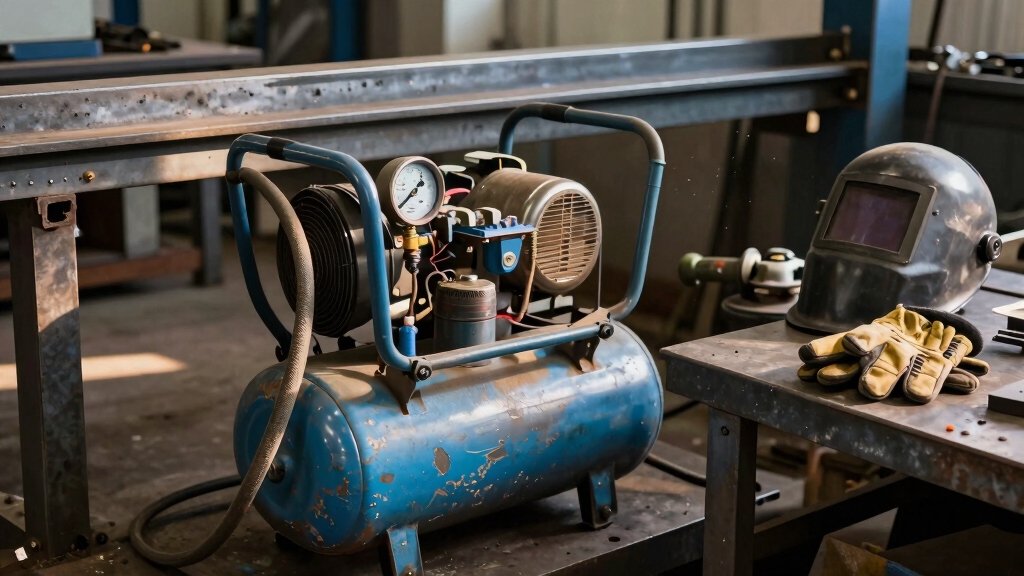
When you rely on an air compressor for welding, its lifespan depends heavily on the type and maintenance regimen.
Industrial compressors average 15 years, with well-maintained units lasting between 5 and 20 years.
Reciprocating compressors typically endure about 10 years under proper care, while rotary screw compressors reach 100,000 hours or more, translating to over a decade of use.
Centrifugal compressors can last up to 20 years or 150,000 hours if maintained correctly.
Usage patterns influence longevity: continuous-use compressors accumulate hours steadily, whereas start-stop units may suffer from increased wear.
Environmental conditions and maintenance schedules play critical roles. Regular oil changes, filter replacements, and moisture drainage prevent premature failure.
Additionally, integrating an energy-efficient inverter system can enhance compressor performance and extend operational lifespan by reducing power losses during welding tasks.
Typically, selecting the right air compressor type markedly impacts welding equipment longevity and performance.
Choosing the right air compressor type significantly enhances welding equipment durability and efficiency.
For welding applications demanding durability, oil-flooded rotary screw compressors excel, offering over 100,000 operational hours and up to 20 years of service due to continuous lubrication and thermal regulation.
Rotary vane compressors also provide impressive longevity, reaching 20-25+ years with consistent maintenance.
Meanwhile, reciprocating compressors, though common, average around 50,000 hours and require more frequent servicing to sustain lifespan.
Oil-free rotary screws deliver cleaner air but with reduced durability, typically lasting 10-15 years.
Choosing a compressor rated for 100% duty cycle, like welding-specific rotary screws, ensures continuous operation without premature wear.
Ultimately, prioritizing compressor types engineered for sustained, high-demand cycles maximizes lifespan and maintains stable output critical for welding quality.
Additionally, ensuring your compressor matches the duty cycle requirements of heavy-duty welding equipment prevents overheating and extends both compressor and welder life.
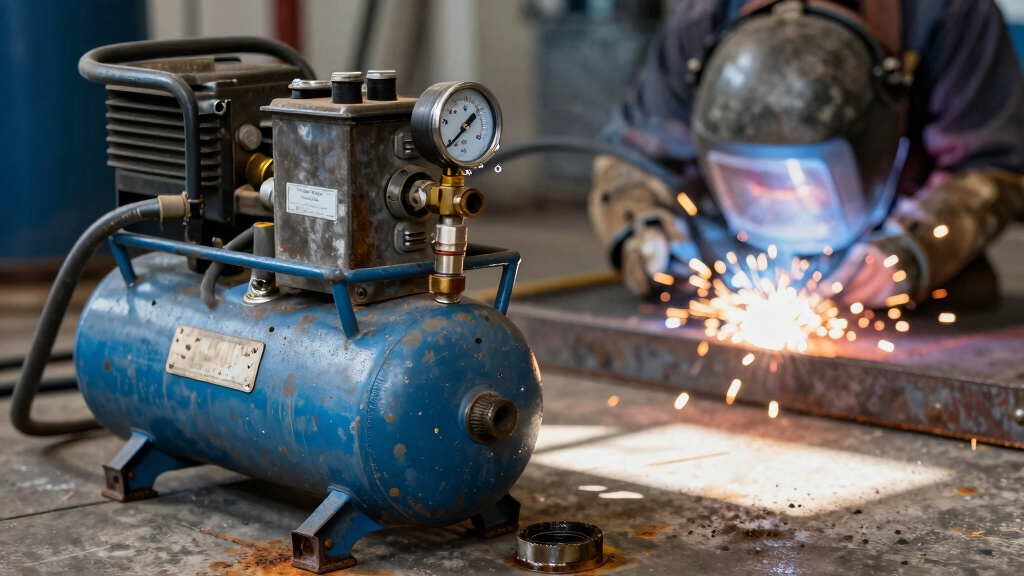
The way you use your welding compressor really affects how long it lasts. If you’re frequently starting and stopping it, that can put a lot of mechanical stress on the machine. On the flip side, if you’re using it continuously, you’re just building up those runtime hours.
Then there are the environmental factors to consider. Things like dust, humidity, and temperature can really take a toll on your compressor. If these conditions aren’t managed properly, you could see component wear happen much faster than it should.
Regular maintenance such as keeping the air supply clean and lubricated, draining moisture traps, and inspecting internal parts is essential to prolong compressor life and ensure optimal performance and durability.
Regularly operating your welding air compressor markedly influences its lifespan and performance. Frequent use accumulates operational hours, directly affecting wear rates on critical components.
Continuous-duty compressors, designed for high-frequency cycles, typically endure longer than start-stop models, which handle intermittent use better. However, overusing a compressor beyond its rated duty cycle increases mechanical stress and thermal load, accelerating deterioration.
Conversely, underloading causes rapid cycling, which increases component fatigue. To optimize longevity, match your compressor’s loading to its design specifications—commonly between 50-100% load for 8,000 hours annually.
Monitoring duty cycles and avoiding pressure and runtime extremes reduces premature failures. Fundamentally, precise control of usage frequency balances wear and operational efficiency, extending your compressor’s functional lifecycle under typical welding conditions.
Integrating proper equipment maintenance routines aligned with welding fabrication processes further helps in maximizing compressor durability.
While managing usage frequency helps optimize your compressor’s lifespan, environmental conditions exert a significant influence on its durability and performance.
You must consider how dust, temperature, and ventilation impact your welding compressor’s longevity.
Understanding the thermal limits of plasma cutters and related equipment helps in setting operational parameters to avoid excessive heat stress on compressors and prolong their service life.
Because welding compressors operate under demanding conditions, maintaining them meticulously is vital to maximize their lifespan.
Maintaining welding compressors carefully is crucial to ensure durability and reliable performance over time.
You should change oil every 500 to 1,000 hours to guarantee lubrication efficiency in oil-lubricated models.
Replace air filters regularly, weekly if working in dusty environments, to prevent clogging and maintain airflow.
Daily moisture drainage from tanks is essential to avoid internal rust and corrosion. Inspect hoses weekly for wear or leaks and tighten fasteners monthly to maintain system integrity.
Replacement of separator elements every 2,000 to 8,000 hours helps sustain air purity and compressor efficiency.
Adhering to these maintenance routines reduces wear, prevents downtime, and sustains optimal pressure output, ultimately extending your welding compressor’s operational life and improving energy efficiency.
Additionally, managing the heat stress of equipment during operation can prevent overheating and ensure consistent compressor performance.
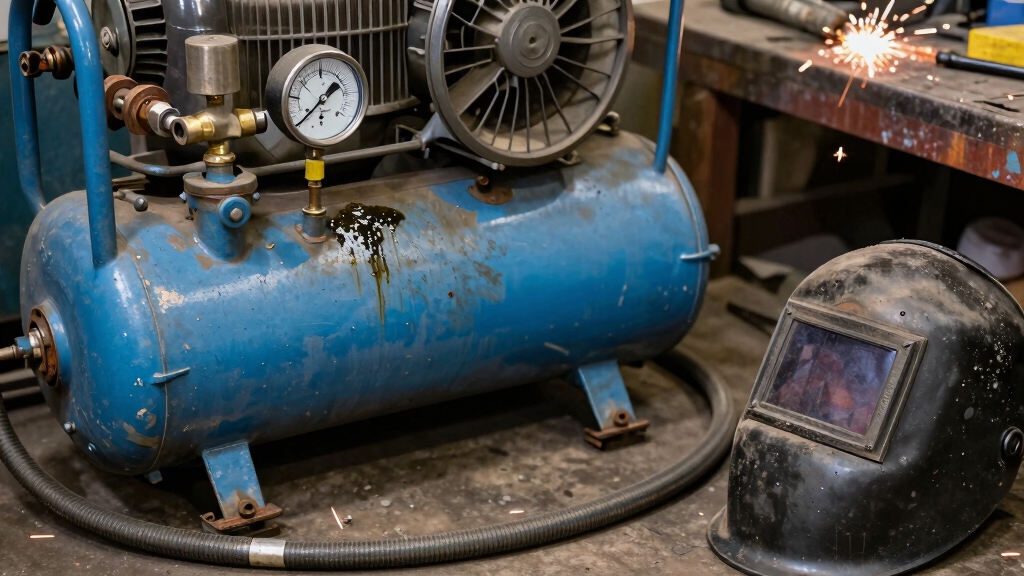
You can tell your welding compressor needs repair if it starts making strange noises that just don’t sound right.
It’s like when your car starts to make a weird noise, you know something’s off.
Also, if you notice pressure fluctuations that go beyond what’s specified, that could mean there’s some wear on the internal components or even some leaks happening.
And let’s not forget about visible oil leaks.
If you see oil leaking, it’s a sign that the seals are failing.
You really want to address that right away to avoid causing more damage down the line.
Keeping an eye (and ear) on these things can save you a lot of trouble later!
Additionally, just like proper maintenance of welding gloves prolongs their lifespan, regular upkeep of your compressor can prevent costly repairs.
Frequently, unusual noises from your welding air compressor indicate underlying mechanical issues that require prompt attention. Identifying these sounds early helps prevent costly failures and downtime.
Listen for:
Addressing these noises promptly through diagnostic checks and maintenance prevents further damage. Regular auditory monitoring combined with scheduled inspections guarantees peak compressor performance and prolongs operational lifespan, vital for welding applications demanding consistent air pressure and reliability.
Additionally, maintaining a clean workspace and proper tool maintenance helps avoid damage and ensures smooth operation.
Often, pressure fluctuations in your welding compressor signal underlying mechanical or operational issues that require immediate attention.
You should monitor pressure gauges closely for inconsistent readings or rapid pressure drops during operation, which may indicate leaks, faulty valves, or worn piston rings.
Additionally, irregular cycling of the compressor motor often reflects pressure instability caused by malfunctioning pressure switches or regulators.
These fluctuations reduce welding quality and strain components, accelerating wear.
To diagnose, inspect hoses, fittings, and seals for leaks, and verify the pressure switch calibration. Ignoring these signs risks compressor failure and costly downtime.
Addressing pressure instability promptly secures consistent air delivery, protects system integrity, and extends your compressor’s service life by maintaining optimal operating conditions under welding workloads.
Proper maintenance and installation torque are crucial for avoiding premature failures that can shorten compressor component lifespan.
Visible oil leaks reliably indicate that your welding compressor requires immediate attention and potential repair.
When you spot oil pooling or streaking on the compressor’s exterior, it signals seal failure, gasket deterioration, or component wear. Ignoring these leaks risks contamination, reduced lubrication, and eventual compressor failure.
To assess the severity, focus on these key factors:
Promptly addressing oil leaks preserves compressor efficiency, prevents costly downtime, and extends operational lifespan. Proper maintenance and inspection protocols, including attention to mechanical wear and seal integrity, are essential for long-term compressor reliability.
When selecting an air compressor for continuous welding, you need to prioritize models designed for 100% duty cycle operation, such as welding-rated rotary screw compressors.
These units deliver sustained airflow without overheating or requiring frequent rest, vital for uninterrupted welding.
Focus on compressors with oil-flooded rotary screw technology for longevity. Expect up to 100,000 hours or 20 years under continuous load.
Evaluate compressor pressure ratings to match your welding demands precisely, avoiding excessive stress that shortens lifespan.
Consider environmental resistance features like advanced filtration to handle dust and debris common in welding shops. Also, guarantee the system supports easy maintenance access for routine tasks.
Maximizing the lifespan of your welding compressor requires adhering to strict maintenance schedules and operating protocols tailored to your compressor type and usage environment.
Extending your welding compressor’s life hinges on diligent maintenance and following precise operational guidelines.
To guarantee peak longevity, focus on these key actions:
Yes, you can use a portable air compressor for welding projects, but make sure it meets specific requirements.
It must provide consistent pressure and adequate airflow for your welding equipment. Portable units often suit small-scale or intermittent tasks but might struggle with continuous, high-demand welding.
Check the compressor’s duty cycle, pressure rating, and tank volume. Proper maintenance and matching the compressor’s output to your welding needs are vital to avoid performance issues or premature wear.
Air compressor noise level directly impacts your welding work by affecting communication and concentration.
Excessive noise can cause distractions, leading to errors or safety risks. It also contributes to hearing fatigue, reducing your efficiency over time.
To maintain precision, use compressors with lower decibel ratings or install sound-dampening enclosures.
Proper noise control guarantees consistent weld quality and a safer, more comfortable work environment, enhancing overall productivity and operator well-being.
Like a well-oiled machine, you must treat welding compressors with care to ensure safety. Always ground the compressor to prevent electrical shocks.
Wear hearing protection since noise levels can be high. Inspect hoses and connections regularly for leaks or damage.
Keep the area ventilated to avoid overheating and harmful fume buildup. Drain moisture daily to prevent rust. Follow manufacturer guidelines precisely and never exceed duty cycles to avoid equipment failure.
Yes, you can use energy-efficient air compressors designed for welding.
Look for rotary screw models with variable speed drives that adjust motor speed to match demand, reducing energy waste.
Oil-free rotary screws also offer efficiency with lower maintenance.
Make certain the compressor supports continuous duty cycles and maintain proper ventilation to optimize energy use.
Regular maintenance, like timely filter and oil changes, further improves efficiency and minimizes operating costs over time.
Seasonal temperature changes directly impact your compressor’s efficiency and lifespan.
Colder temperatures thicken lubricants, increasing wear and reducing startup performance. Heat can cause overheating and oil breakdown.
You’ll need to adjust maintenance schedules, like more frequent oil and filter changes, and ensure proper ventilation.
Monitoring pressure and load is vital, as temperature fluctuations can alter air density, affecting output and potentially stressing components over time.
You can expect a well-maintained welding air compressor to last between 8 to 15 years, depending on usage and environment. Curiously, compressors running in peak conditions with regular maintenance show a 30% longer lifespan than those neglected.
By choosing the right type and sticking to a strict upkeep schedule, you’ll maximize your compressor’s efficiency and durability. Keep an eye on performance indicators to catch issues early and guarantee continuous, reliable welding operations.