Phone:
(701)814-6992
Physical address:
6296 Donnelly Plaza
Ratkeville, Bahamas.

Phone:
(701)814-6992
Physical address:
6296 Donnelly Plaza
Ratkeville, Bahamas.

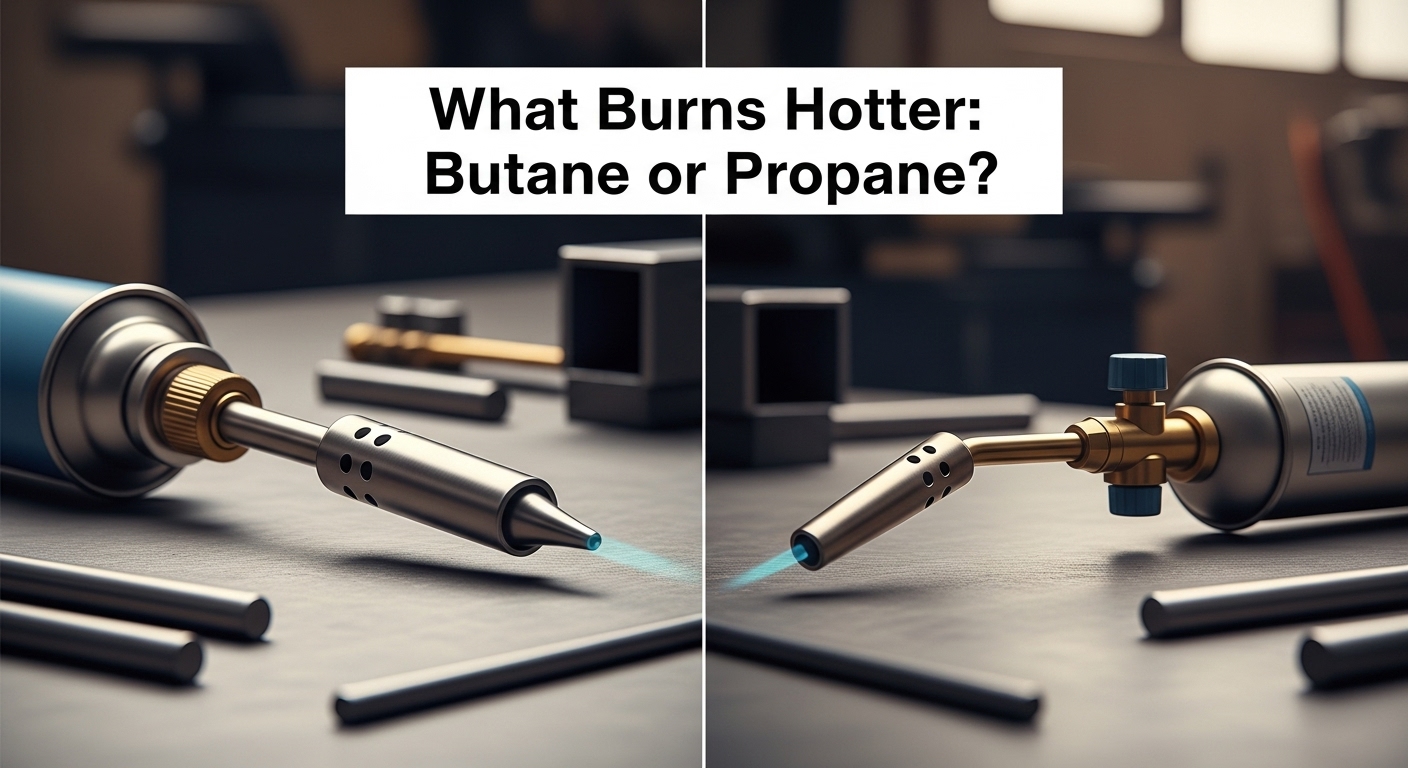
You’ll find propane burns markedly hotter than butane, with a maximum flame temperature around 2800°F versus butane’s roughly 1760°F.
Propane’s lower boiling point guarantees consistent vaporization and more efficient oxygen use, producing a hotter, more stable flame ideal for high-heat work like brazing metals.
In contrast, butane suits indoor or moderate-heat tasks due to its higher boiling point and safety profile. Understanding these differences clarifies which fuel fits your heating or cooking demands best.
| Property | Propane | Butane |
|---|---|---|
| Max Flame Temperature | 2800°F (1538°C) | 1760°F (960°C) |
| Boiling Point | -43.6°F | 30.2°F |
| Heat Output (BTU/lb) | 19,768 | 19,494 |
| Flame Velocity | Higher (~0.38 m/s) | Lower (~0.28 m/s) |
| Oxygen Efficiency | Better combustion, hotter flame | Higher oxygen demand, cooler flame |
| Metal Heating Efficiency | Faster and more effective | Moderate, slower heating |
| Indoor Stability | Less stable at room temp, best outdoors | Stable indoors, safer for portable devices |
Because propane has a noticeably lower boiling point of -43.6°F compared to butane’s 30.2°F, it vaporizes more readily in cold environments. This ensures consistent fuel delivery and stable combustion even at subfreezing temperatures.
You’ll find propane’s volatility essential when operating in cold climates, as it maintains a gaseous state where butane remains liquid. This prevents fuel starvation and translates directly into reliable performance for outdoor heating, cooking, and industrial applications.
Additionally, propane’s ability to vaporize efficiently reduces the need for pressurization in storage containers under low-temperature conditions. This enhances safety and operational stability.
For you, this means propane’s physical properties optimize combustion processes in environments where butane’s higher boiling point limits usability and performance. This makes propane the superior choice for cold-weather applications.
Moreover, propane torches typically max near 2,000°C (3,600°F), providing sufficient heat for many practical uses even without oxygen enrichment.
When comparing the combustion temperatures of propane and butane, propane consistently burns hotter, reaching flame temperatures around 2800°F. In contrast, butane peaks closer to 1760°F.
This significant difference stems from propane’s chemical structure and combustion efficiency, allowing it to release more heat per unit mass. Propane’s higher flame temperature enhances its suitability for tasks requiring intense heat, such as brazing and metalwork.
Although both gases have similar theoretical heating values, propane’s elevated flame temperature results from a more efficient combustion process and faster flame velocity. Consequently, propane transfers heat more effectively, making it preferable for applications demanding rapid and sustained high temperatures.
Butane’s lower peak temperature limits its use where intense heat is critical, confining it mostly to lighter heating tasks and portable fuel applications.
Although propane and butane are similar liquefied petroleum gases, their differing oxygen requirements markedly influence their flame characteristics.
You’ll notice that butane demands more total oxygen for complete combustion. This dilutes its flame with room-temperature nitrogen and oxygen, lowering flame temperature.
Propane, by contrast, utilizes oxygen more efficiently, achieving higher flame temperatures and better heat transfer. This disparity affects practical applications, where propane’s flame is hotter and more concentrated.
| Property | Propane | Butane |
|---|---|---|
| Oxygen volume needed | Less per fuel volume | More per fuel volume |
| Total oxygen required | Lower | Higher |
| Flame temperature | Higher | Lower |
| Flame dilution effect | Minimal | Significant |
Did you know that propane burns at a significantly higher flame temperature than butane? It can reach up to 2800°F, while butane only gets to about 1760°F. That’s quite a difference!
This higher temperature really impacts how quickly metals can be heated. Propane’s ability to utilize oxygen more efficiently also plays a role in this. As a result, it heats metals like silver and copper much faster and more effectively.
Since propane burns at a higher temperature than butane, it heats metals faster and more efficiently in practical applications.
Propane flames can reach about 2800°F (1538°C) under ideal conditions, compared to butane’s maximum near 1760°F (960°C).
This higher flame temperature results from propane’s more efficient oxygen utilization and combustion dynamics, enabling quicker heat transfer to metals.
Although both gases have similar theoretical heat values, propane’s flame velocity and temperature enhance its heating capability, especially for metals requiring elevated temperatures like copper or brass.
Butane’s lower flame temperature limits its effectiveness for such tasks.
When you need rapid, intense heat for metalworking, propane’s superior flame temperature clearly provides an advantage.
This makes it the preferred choice for applications demanding faster metal heating and higher thermal output.
In comparison, plasma cutters achieve much higher temperatures, often exceeding 20,000°C, by using ionized gas plasma to melt metals almost instantly.
Propane’s higher flame temperature directly translates to greater metal heating efficiency compared to butane.
When you heat metals, propane’s maximum flame temperature (~2800°F) enables faster heat transfer and quicker melting than butane’s ~1760°F flame.
This temperature advantage makes propane more suitable for applications needing rapid, intense heating like brazing or silver melting.
| Fuel Type | Max Flame Temp (°F) | Heating Efficiency |
|---|---|---|
| Propane | 2800 | High |
| Butane | 1760 | Moderate |
| Heat Output (BTU/lb) | 19,768 (Propane) | 19,494 (Butane) |
| Flame Velocity | Higher (Propane) | Lower (Butane) |
| Suitable Metals | Brass, Bronze, Silver | Limited to low-melting metals |
You’ll notice propane’s combination of flame temperature and velocity markedly improves metal heating speed. Using the right shielding gas can similarly improve heat transfer and weld quality in metalworking processes.
Although both propane and butane require oxygen for combustion, their differing oxygen demands markedly affect flame temperature and heating efficiency.
Butane demands more total oxygen for complete combustion, causing excess nitrogen and oxygen to remain at room temperature, which dilutes the flame temperature.
Propane, conversely, utilizes oxygen more efficiently, achieving higher practical flame temperatures—up to about 2800°F compared to butane’s 1760°F.
This higher temperature enables propane to heat metals faster and more effectively, especially for applications requiring temperatures above 930°C, such as brazing.
Additionally, propane’s higher flame velocity enhances heat transfer rates, further accelerating metal heating.
Consequently, the oxygen role in combustion directly influences which fuel burns hotter and heats metals faster, making propane the superior choice where high flame temperature and efficient heat transfer are critical.
In welding, maintaining an inert atmosphere around the metal is essential to prevent oxidation and ensure strong, clean joints during high-temperature processes.
When it comes to high-heat applications, propane really stands out as the more efficient option. Why is that? Well, it burns at a higher flame temperature than butane, reaching impressive levels of up to 2800°F!
But that’s not all. Propane also has superior oxygen utilization, which means the combustion process is more complete. This results in a hotter, more stable flame—definitely a plus when you need reliable heat.
When you need a higher flame temperature for tasks like brazing or melting metals, propane delivers superior performance compared to butane. Propane’s maximum flame temperature reaches about 2800°F, markedly higher than butane’s 1760°F. This difference impacts your ability to efficiently heat materials with high melting points.
Consider these factors:
Propane’s flame velocity and heat transfer rate enhance heating speed. Butane’s lower flame temperature limits use on metals requiring >930°C. Propane achieves practical temperatures suitable for brazing brass and copper.
Butane’s combustion dilutes flame heat due to excess room-temperature gases. Propane’s higher heat output (19,768 BTU/lb) supports sustained high-heat applications.
Choosing propane grants you more efficient and effective high-temperature results for demanding thermal tasks. Similar to how propane’s superior heat transfer benefits welding thicker aluminum with helium-argon mixtures, propane’s higher flame temperature makes it ideal for high-heat applications.
Since oxygen availability directly influences combustion efficiency, propane’s superior oxygen utilization gives it a distinct advantage in high-heat applications.
When propane combusts, it requires less total oxygen volume relative to fuel quantity for complete oxidation compared to butane.
Butane’s combustion demands more oxygen, introducing excess nitrogen and room-temperature gases that dilute the flame and lower its effective temperature.
This dilution reduces energy concentration, decreasing heat intensity.
Propane’s more efficient oxygen consumption results in a hotter, more focused flame, enhancing thermal transfer rates critical in brazing and metalwork.
You’ll find propane achieves practical flame temperatures exceeding 930°C, suitable for demanding tasks, while butane’s oxygen needs limit its peak temperature.
This precise oxygen-to-fuel balance explains why propane maintains higher combustion efficiency, outperforming butane in applications requiring sustained, intense heat output.
Additionally, understanding the heat levels generated by different welding heat sources helps explain why propane’s flame temperature is advantageous for metalwork requiring intense heat.
Experience shows that propane transfers heat to materials faster than butane, making it more efficient for high-heat applications.
When you use propane, you benefit from a combination of higher flame temperature and velocity. This accelerates heat transfer rates vital for tasks like brazing or melting metals.
This efficiency arises despite similar theoretical heat values between the gases.
Consider these key factors:
Choosing propane means faster, more efficient heating in demanding, high-temperature work. Maintaining consistent surface temperature during heating optimizes the heat transfer efficiency and prevents material damage.
Although propane and butane have similar theoretical heat values, flame speed plays a critical role in determining their practical heating performance.
You’ll find that propane’s higher flame speed results in faster heat transfer, improving efficiency in applications requiring rapid temperature rise.
Butane’s slower flame velocity dilutes heat transfer, limiting its effectiveness despite comparable energy content.
| Property | Propane | Butane |
|---|---|---|
| Flame Speed (m/s) | Higher (~0.38) | Lower (~0.28) |
| Heat Output (BTU/lb) | 19,768 | 19,494 |
| Max Flame Temp (°F) | ~2800 | ~1760 |
Understanding these metrics helps you select the right fuel for peak heating speed and energy efficiency.
When you use butane indoors, its high boiling point of 30.2°F plays a crucial role in maintaining fuel stability and safety.
Butane’s boiling point of 30.2°F ensures stable, safe fuel use indoors by minimizing vaporization risks.
This characteristic prevents butane from vaporizing excessively at typical room temperatures, reducing risks associated with gas leaks and pressure build-up.
Its liquid state at moderate temperatures guarantees consistent fuel delivery in portable devices.
Key technical advantages include:
These factors make butane a safer and more reliable choice for indoor heating and cooking applications where controlled, stable fuel behavior is critical.
Proper handling and ventilation during use are essential to ensure safety and prevent exposure to harmful fumes.
Butane’s high boiling point makes it ideal for indoor use, but propane excels in conditions demanding higher heat output and efficiency.
You’ll find propane outperforms butane when heating metals like silver or brazing copper, thanks to its higher flame temperature and superior heat transfer rate.
Propane vaporizes efficiently even in sub-zero temperatures, making it reliable outdoors. Butane struggles below 30°F, limiting its practical heating range.
| Factor | Propane | Butane |
|---|---|---|
| Max Flame Temp (°F) | ~2800 | ~1760 |
| Boiling Point (°F) | -43.6 | 30.2 |
| Heat Output (BTU/lb) | 19,768 | 19,494 |
Use propane when you need consistent, high-intensity heat or work in cold environments. Otherwise, butane suits controlled indoor applications better. Plasma cutting aluminum requires careful control of heat input and gas selection to minimize thermal distortion and achieve clean cuts, illustrating the importance of managing thermal distortion control when working with metals.
Since propane delivers higher heat efficiency and greater availability, you can expect it to be less expensive than butane in most markets.
Propane’s lower cost stems from its widespread use and production scale. When budgeting, consider these cost-related factors:
Additionally, the energy density differences between propane and butane influence their storage and transport costs.
Understanding these elements helps you accurately assess the total cost implications between propane and butane for your heating or cooking setup.
Choosing between propane and butane for heating or cooking depends largely on your specific application conditions and performance requirements.
Selecting propane or butane hinges on your heating or cooking needs and environment.
If you need fuel for outdoor use or in cold climates, propane’s lower boiling point (-43.6°F) guarantees reliable vaporization and consistent performance.
Propane also burns hotter, reaching flame temperatures around 2800°F, making it more effective for tasks requiring rapid heating or higher thermal output.
Conversely, butane’s higher boiling point (30.2°F) limits its use in low temperatures but suits indoor or portable cooking needs where storage safety is a concern.
Its slightly lower heat output and flame temperature suffice for typical cooking but may underperform in heavy-duty heating.
Ultimately, select propane for versatility and power; choose butane for controlled indoor environments and lighter applications.
You can use butane safely in enclosed spaces due to its higher boiling point and suitability for indoor conditions.
Propane, however, isn’t recommended indoors because it vaporizes easily at low temperatures and can accumulate, creating a hazardous environment.
Always make certain proper ventilation when using either gas indoors to prevent oxygen depletion and accumulation of combustible gases.
Prioritize safety by following manufacturer guidelines and local regulations for indoor use of LPG fuels.
When you choose between propane and butane, think of their emissions as subtle shadows rather than glaring lights.
Both release carbon dioxide and trace pollutants, but propane generally emits slightly less greenhouse gases due to its more efficient combustion.
You’ll find propane’s cleaner burn results in fewer incomplete combustion byproducts, making it a greener option.
Yet, both still contribute to atmospheric changes, so using them responsibly matters for minimizing environmental impact.
You should store propane outdoors or in well-ventilated areas due to its low boiling point and flammability risk. Keep cylinders upright and away from heat sources.
Butane, with a higher boiling point, can be stored indoors but still requires ventilation and secure containment.
Always check for leaks, avoid open flames near storage, and use approved containers. Handle both gases carefully to prevent pressure build-up or accidental ignition.
If you’re switching between propane and butane appliances, you’ll notice compatibility matters. Propane operates at a higher pressure, so appliances designed for butane may not handle it safely without adjustment.
Butane’s lower vapor pressure suits indoor devices, but propane’s versatility fits outdoor and colder environments. You’ll need specific regulators, jets, and fittings tailored to each gas, ensuring efficiency and safety.
Always check manufacturer specs before swapping fuels.
You’ll find butane performs better as a refrigerant or propellant due to its higher boiling point. This allows it to remain stable and efficient at typical indoor temperatures.
Propane, with its lower boiling point, vaporizes quickly, making it less ideal for these uses. Butane’s properties enable consistent pressure in small containers, making it preferred in consumer products like aerosol sprays.
Propane suits heating applications more than refrigeration or propulsion.
When choosing between propane and butane, you need to take into account their burning temperatures, efficiency, and application environment.
Propane burns hotter and performs better in colder conditions due to its lower boiling point, making it ideal for high-heat tasks.
Butane, with its higher boiling point, suits indoor use and milder climates. So, which fuel aligns best with your specific heating or cooking needs? Understanding these traits guarantees you pick the most effective and economical option.