Phone:
(701)814-6992
Physical address:
6296 Donnelly Plaza
Ratkeville, Bahamas.

Phone:
(701)814-6992
Physical address:
6296 Donnelly Plaza
Ratkeville, Bahamas.

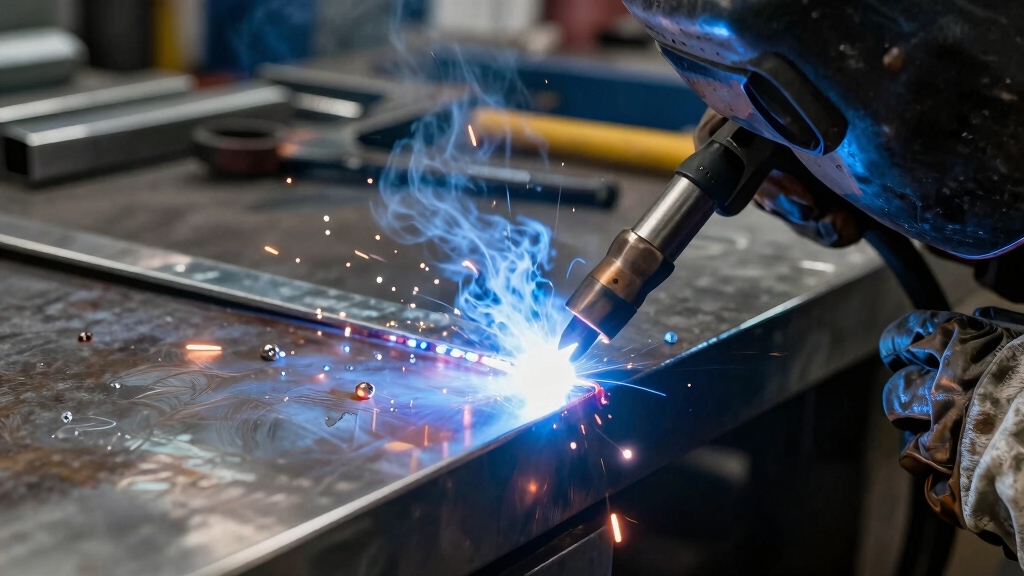
Yes, you can weld stainless steel with a MIG welder effectively by selecting the proper shielding gas, usually a tri-mix or 98% argon with 2% CO₂.
Use dedicated stainless steel wire such as 308L or 316L. Prepare your metal carefully to avoid contamination.
Maintain precise heat control with moderate travel speed and use a push technique with appropriate consumables.
These steps guarantee corrosion resistance and weld integrity. Understanding these factors equips you to achieve superior stainless welds.
MIG welding frequently stands out as an efficient method for joining stainless steel due to its versatility and ease of use.
You can weld various metals, including 304 and 316 stainless steel, mild steel, aluminum, and nickel alloys. This makes it suitable for applications like household repairs and fire pits. Proper shielding gas selection is crucial to prevent oxidation and maintain corrosion resistance.
The semi-automatic and fully automatic modes enhance control, while portable equipment supports maintenance and repair work.
You’ll appreciate how continuous wire feed simplifies the process, allowing basic training in under an hour and freeing both hands for precise manipulation. This is because the continuous wire feed melts the wire, transferring droplets across the arc to the weld pool, ensuring smooth material addition.
Faster welding speeds and minimal cleanup increase productivity. Precise voltage and wire speed adjustments enable tight heat control, preserving the chromium layer and preventing oxidation. This ensures strong, corrosion-resistant joints with clean, spatter-free welds at a lower cost.
Achieving strong, corrosion-resistant welds on stainless steel starts with meticulous surface preparation. Begin by removing contaminants such as oils, free iron, and surface defects from cutting or storage.
Employ mechanical cleaning methods like grinding with fine grit to eliminate heat tint and chromium-depleted layers.
Alternatively, use stainless steel wire brushes or Scotch Brite pads to remove oxides. For stubborn discoloration, chemical cleaning with pickling solutions containing nitric and hydrofluoric acids restores the chromium oxide passive layer.
After cleaning, rinse thoroughly to remove residues and ensure a stable, clean surface. Visual inspection under minimum lighting requirements helps verify cleanliness before welding.
Then apply a neutralizing spray to halt acid activity and stabilize the surface.
Finally, wipe with acetone or a stainless steel cleaner to guarantee a pristine surface.
Proper preparation maximizes corrosion resistance and weld integrity before MIG welding begins.
When welding stainless steel, selecting the appropriate shielding gas directly influences arc stability, weld penetration, and the final bead quality. It is crucial to use correct shielding to prevent loss of corrosion resistance caused by welding disrupting chromium oxide. Using improper gas mixtures like 75/25 argon-CO2 can cause oxidation and carbide precipitation that degrade weld integrity.
Choosing the right shielding gas is crucial for optimal arc stability, penetration, and bead quality in stainless steel welding.
For thin stainless steel, a 98% Argon/2% Carbon Dioxide mix minimizes warping and spatter, ensuring a stable arc.
Thicker material benefits from a tri-mix of Argon, Helium, and Carbon Dioxide, which enhances penetration and produces a rounded bead profile.
Alternatively, 99% Argon with 1% Oxygen provides superior arc stability and minimizes undercutting across thicknesses.
Adjust your gas flow rate between 20–30 cubic feet per hour to maintain consistent coverage and avoid turbulence or atmospheric contamination. Ambient temperature also affects gas performance, so monitoring flow rates during welding helps ensure adequate shielding gas coverage.
Avoid pure CO2 due to excessive spatter, and note that helium blends, while effective, may increase costs.
Always align gas choice with material thickness and weld parameters for peak results.
Selecting the correct filler wire is critical for guaranteeing weld integrity and corrosion resistance in stainless steel applications. For 304 and 304L base metals, choose 308L wire with 20% chromium and 10% nickel for optimal compatibility and 120,000 PSI tensile strength.
Proper welding preserves rust resistance; incorrect techniques can cause oxidation at the weld joint, so it is important to maintain proper welding techniques. Use 316L wire when welding 316 or 316L grades; its molybdenum content enhances resistance to chlorides and seawater corrosion.
For dissimilar metal joints between stainless and carbon steel, 309L wire balances expansion rates and resists cracking. Consider specialized wires like 347 for carbide precipitation prevention or ER2209 for duplex stainless steels.
Match the wire grade to your base metal and application conditions, including temperature and corrosion exposure. Choose solid ER wires for thin sheets and flux-cored E wires for sections thicker than 3 mm to guarantee consistent feed and minimal spatter.
Additionally, controlling heat input during welding is essential to prevent microstructural changes that could compromise corrosion resistance and mechanical properties.
Setting up your MIG welder for stainless steel is pretty straightforward, but there are a few key steps you’ll want to follow.
First things first, you’ll need to select the right shielding gas. I’d recommend going for tri-mix gas; it really does wonders for providing ideal arc stability and penetration. This gas mix, typically 90% helium, 7.5% argon, and 2.5% CO2, helps maintain the weld’s corrosion resistance by minimizing oxidation and contamination (shielding gas composition). Using a shielding gas blend with small CO2 additions improves arc stability and bead profile compared to pure argon.
Once you’ve got your gas sorted out, the next step is to install dedicated stainless steel V-knurled drive rolls. This is super important because it ensures that you have consistent wire feeding and helps to prevent any contamination.
These little adjustments might seem minor, but trust me, they’re essential for achieving those clean, defect-free welds you’re aiming for. Maintaining constant gas purity and proper flow rates also helps avoid weld defects and ensures optimal performance.
How do you guarantee peak weld quality when working with stainless steel using a MIG welder? Selecting the correct shielding gas is critical. Argon-rich mixtures assure arc stability and minimal oxidation. Adding CO2 or helium adjusts penetration and bead profile per material thickness and grade. Keep CO2 below 5% to maintain corrosion resistance.
Controlling heat input during welding is essential to prevent carbide precipitation and preserve the stainless steel’s corrosion resistance. Argon’s inert shielding atmosphere displaces oxygen and nitrogen, preventing oxidation and porosity for cleaner welds.
| Material Thickness | Gas Mixture | Purpose |
|---|---|---|
| Up to 14 gauge | 98% Ar / 2% CO2 | Minimize heat distortion |
| Over 14 gauge | Tri-mix (Ar/He/CO2) | Increase penetration |
| All thicknesses | 99% Ar / 1–2% O2 | Improve puddle fluidity |
| High yield strength steel | 92% Ar / 8% CO2 | Control burnthrough |
Maintain a 20–30 CFH flow rate and 0.5–3 seconds post-flow for optimal shielding. Proper gas flow rates ensure consistent shielding and prevent contamination-related defects.
After choosing the appropriate shielding gas for stainless steel MIG welding, attention must turn to preparing the drive rolls and related equipment. Proper drive roll selection and installation guarantee smooth wire feeding and prevent contamination. Miller offers a V-Groove drive roll kit specifically designed for .035 inch stainless steel wire, which ensures optimal feeding performance.
Follow these steps:
Regularly inspect and maintain drive rolls and liners to sustain peak performance during welding.
Consistently employing a push technique with a slight gun angle optimizes weld bead appearance and guarantees effective puddle wetting when MIG welding stainless steel. You should maintain a forehand push angle of about 10 to 15 degrees to enhance visibility and prevent burn-back on the wire tip.
Using a stringer bead motion instead of a weave minimizes carbide precipitation and promotes uniform penetration. Avoid perpendicular or drag angles, as they reduce edge wetting and bead quality.
Adjust inductance settings to around 20% when using tri-mix shielding gas to control arc heat and puddle fluidity. Also, make certain your gun setup includes V-knurled drive rolls and a dedicated stainless liner to maintain consistent wire feed and prevent contamination.
Since stainless steel is an alloy of iron and carbon with chromium, it requires careful handling to preserve its corrosion resistance during welding. Maintaining proper gas purity and flow rates during welding also helps ensure consistent weld quality and prevents contamination. This methodical approach guarantees clean, strong welds with optimal aesthetics.
Mastering heat control and travel speed is essential when MIG welding stainless steel to prevent common defects such as warping, carbide precipitation, and oxidation. Utilizing DCEN polarity can help achieve deeper penetration and reduce electrode wear during welding.
You must carefully balance amperage and voltage to guarantee proper penetration without overheating the material. Using smaller wire diameters or pulsed MIG modes can help reduce heat input, especially on thin sections.
Managing your travel speed is equally critical: move too slowly, and you risk excessive heat buildup; too fast, and you may lack fusion. Additionally, maintaining a steady, consistent arc is crucial for stable welding performance.
Follow these key steps:
This methodical approach guarantees sound, defect-free welds.
When it comes to welding stainless steel, one of the most important things to keep in mind is to use dedicated tools just for that purpose. This helps prevent iron contamination, which can really mess with the corrosion resistance of your welds.
Before you even start welding, make sure to clean the metal surface thoroughly. A wire brush works wonders, along with the right solvents to get rid of any rust, grease, or dirt. It’s all about ensuring a clean slate for your welds. Proper surface preparation also reduces the risk of weld defects like porosity and contamination.
Also, remember to keep your tools separate and follow proper cleaning methods. Using a stainless-specific wire brush is essential to avoid cross-contamination and maintain weld quality. This won’t only help maintain the integrity of your welds but also minimize the risks of contamination. Trust me, taking these steps seriously will pay off in the long run!
Although stainless steel welding demands meticulous preparation, using dedicated tools is essential to preventing contamination that compromises weld quality. Ensuring that tools are exclusive to stainless steel prevents carbon steel particles from embedding and triggering rust or weld defects.
Focus on these essentials:
Maintaining proper shielding gas coverage during and after welding is also crucial to prevent oxidation and preserve weld quality.
Strict adherence to dedicated tools preserves corrosion resistance and weld integrity for professional, defect-free stainless steel MIG welds.
Using dedicated tools for stainless steel welding markedly reduces contamination risks.
However, preventing cross contamination requires a broader approach. You must segregate work areas, handle materials carefully, apply protective coverings, adhere to operational best practices, and enforce strict quality controls.
Physical separation of stainless and carbon steel zones prevents airborne particle transfer. Carbon steel dust generated by grinding or machining can settle on premium alloys, compromising their corrosion resistance and structural integrity, so avoiding carbon steel dust contamination is critical. Additionally, use nylon slings, plastic wraps, and color-coded tools to maintain purity.
| Aspect | Practice | Purpose |
|---|---|---|
| Work Areas | Separate stainless/carbon steel | Avoid airborne contamination |
| Material Handling | Use nylon slings, shims | Prevent surface damage |
| Protective Coverings | Plastic wrap, clean rags | Block grit and dust |
| Operational Rules | No sliding on incompatible surfaces | Maintain mill finish |
| Quality Control | Color-coded tools, labeled storage | Prevent mix-ups and errors |
This systematic control guarantees contamination-free stainless steel welds.
Proper cleaning methods play a vital role in preventing contamination and ensuring high-quality stainless steel welds.
To achieve optimal results, focus on these three critical steps:
Adhering to these precise cleaning protocols ensures contamination-free welds with superior corrosion resistance and structural integrity.
Yes, you can MIG weld stainless steel outdoors without shielding gas by using self-shielded flux-cored arc welding (FCAW) wire.
This wire produces its own protective gas during combustion, shielding the weld from contaminants.
However, you must control wire speed and heat carefully to reduce porosity and spatter.
Keep in mind, this method suits small repairs but compromises corrosion resistance and weld quality compared to gas-shielded MIG welding.
You need a welding helmet meeting ANSI Z87.1 with an auto-darkening lens and adjustable shades to protect your eyes from sparks and intense light.
Wear flame-resistant jackets, pants, and heat-resistant boots to prevent burns.
Use heavy-duty MIG gloves made of treated leather with reinforced stitching for hand protection.
Don’t forget a properly fitted respirator with P100 or ABEK1 filters to guard against stainless steel fumes.
Use hearing protection during welding operations.
Think of welding stainless steel like tuning a musical instrument. The thickness dictates your settings.
For thinner steel under 1.2mm, you’ll use lower voltage (14-16V) and slower wire speed (150-200 IPM) to avoid burn-through.
As thickness increases to 3.2-4.8mm, raise voltage to 17-20V and wire speed accordingly.
For 6.4mm and above, push voltage to 20-26V with faster wire speed and larger wire diameter.
Always adjust amperage 10-15% lower than mild steel.
Yes, you can weld dissimilar metals to stainless steel with a MIG welder, but you need to select the correct filler metal that matches or bridges both materials.
Use compatible wire like 309 stainless for joining stainless to carbon steel.
Maintain proper shielding gas to prevent contamination and control heat input carefully to avoid warping or cracking.
Clean and prep both metals thoroughly, and dedicate equipment to stainless welding to guarantee quality results.
Imagine spotting tiny bubbles on your weld like air pockets trapped in glass. Those bubbles, or porosity, often signal failed shielding gas coverage.
You’ll also notice weak spots from lack of fusion, shallow penetration, or inconsistent bead width. Cracks, spatter, and undercutting reveal poor arc control.
Craters and irregular bead profiles expose voltage or technique flaws. These signs mean your stainless steel MIG weld isn’t structurally sound and needs adjusting.
Welding stainless steel with a MIG welder isn’t just possible; it’s a precision dance of technique and preparation.
By carefully cleaning your metal, choosing the right shielding gas and filler wire, and controlling heat and travel speed, you’ll avoid common pitfalls like contamination and weld defects.
With the right setup and steady hands, your stainless steel welds will shine like a well-oiled machine, delivering strength and durability every time you strike the arc.