Phone:
(701)814-6992
Physical address:
6296 Donnelly Plaza
Ratkeville, Bahamas.

Phone:
(701)814-6992
Physical address:
6296 Donnelly Plaza
Ratkeville, Bahamas.

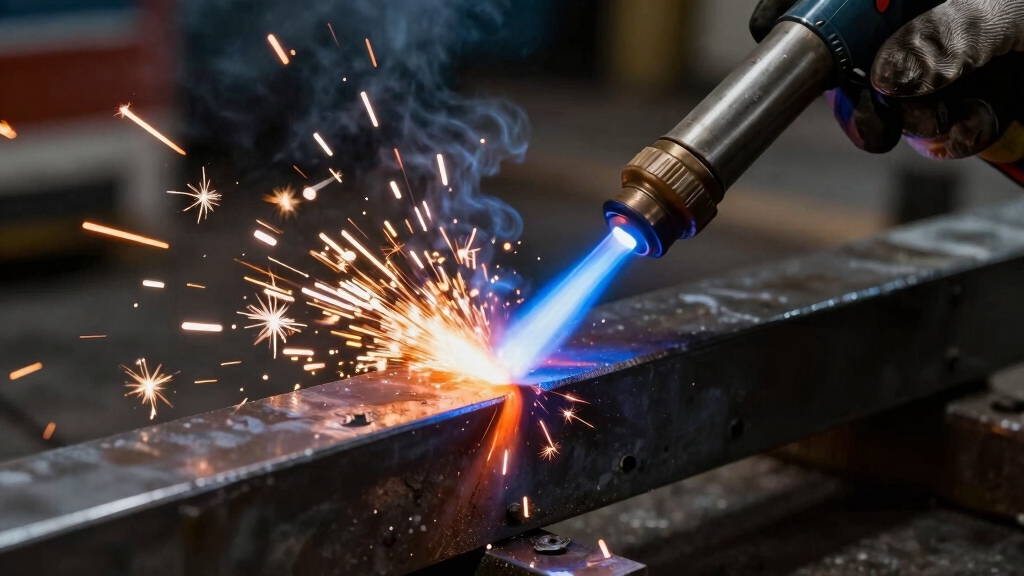
You can expect plasma cutters to generate temperatures exceeding 20,000°C (36,000°F), sometimes reaching up to 25,000°C (45,000°F).
This creates an intensely focused plasma jet that melts metal rapidly.
This extreme heat results from ionizing gas at high voltage and forcing it through a constricted nozzle, achieving both high temperature and velocity for precise cutting.
Understanding how variables like gas type, amperage, and torch angle influence these temperatures will sharpen your cutting efficiency and quality.
Although plasma cutters operate at extreme temperatures that can exceed 20,000°C (36,032°F), understanding their exact heat levels requires examining factors like gas type, current, and pressure. These elements directly influence the plasma arc’s intensity and temperature.
Plasma cutter temperatures exceed 20,000°C, influenced by gas type, current, and pressure for optimal arc intensity.
You’ll find plasma arcs typically reach between 20,000°C and 25,000°C (36,032°F to 45,000°F), with some cutters measured up to 30 electron volts (eV), translating roughly to 40,000°F (22,000°C).
Gas choice, such as nitrogen or oxygen, affects thermal conductivity and ionization, altering heat generation. Increasing amperage intensifies the arc, while adjusting air pressure further amps up temperature.
The plasma forms when gas is superheated past 20,000°C and is forced through a copper orifice to maintain velocity and shape. These precise conditions enable rapid, millisecond liquification of metals without preheating, showcasing the cutter’s remarkable thermal efficiency.
Proper amperage adjustment is crucial to tailor the cutter’s power to material thickness and minimize thermal distortion during cutting.
When you apply a high-voltage electrical charge to ionize gas, you create a plasma arc that generates temperatures reaching around 30,000°C.
This extreme heat results from the conversion of electrical energy directly into thermal energy within the plasma medium.
Ionization breaks gas molecules into charged particles, forming plasma, a highly energetic state that conducts electricity efficiently.
The plasma arc concentrates energy into a small, focused area on the workpiece, maximizing heat density and enabling rapid melting.
Additionally, the power source’s voltage and amperage settings, along with gas pressure, influence arc intensity.
This combination of ionization, energy concentration, and controlled electrical input explains why plasma cutter temperatures are so extreme.
It allows them to cut through various metals with precision and efficiency.
The design of the plasma cutter system ensures precise control over temperature and energy output, preventing uncontrollable heat spread and maintaining safety within the system design.
Plasma cutters achieve these high temperatures by forcing compressed gas through the torch nozzle while an electric arc ionizes it between the electrode and workpiece, creating a focused plasma jet that reaches up to approximately 40,000°F.
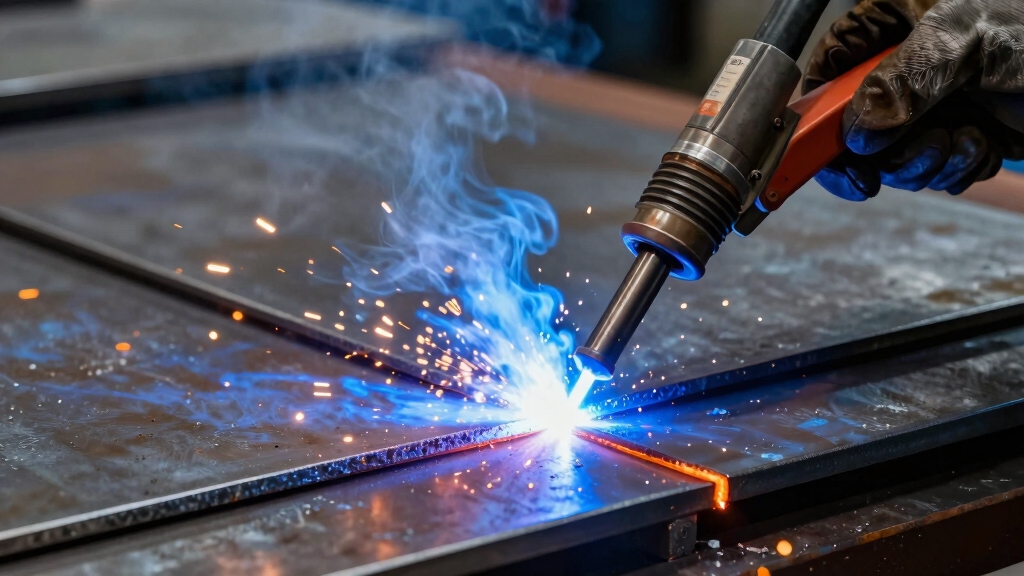
As the thickness of the material increases, you’ll need to ramp up the plasma arc temperature to ensure that you get enough melting and penetration. It’s all about making those adjustments to the amperage settings because thicker materials really require higher energy density for those clean, effective cuts. Selecting the right amperage & power source class is crucial to match the material thickness and achieve optimal cutting performance.
Plus, keeping a close eye on temperature control is super important. It helps you maintain both cut quality and operational efficiency, no matter the thickness you’re working with. Since plasma arc temperatures can reach up to ~40,000°F, precise control of the heat input is essential for consistent results. So, always remember to make those tweaks as needed!
Because plasma cutters rely on generating intense heat to melt materials, the thickness of the workpiece directly influences the required temperature. As material thickness increases, you must supply proportionally higher temperatures to achieve effective melting and penetration.
Plasma cutter manuals or charts provide starting values for current and speed to help match the heat output to the material thickness. Proper heat management techniques such as thermal energy dissipation are crucial to prevent warping and maintain cut quality during extended cutting operations.
Thicker sections demand elevated energy density, often attained by increasing amperage, which intensifies the plasma arc temperature beyond the standard 20,000°C baseline. For example, cutting material over 1″ thick typically requires amperage between 105–130 to maintain sufficient heat input.
Insufficient heat leads to incomplete cuts or slower speeds, while excessive heat risks material distortion. Understanding this relationship helps you optimize cutting parameters, ensuring the plasma arc generates adequate thermal energy relative to thickness without compromising cut quality or efficiency.
This precise heat control is essential for consistent, high-quality plasma cutting results. Trial and error adjustments are often necessary to fine-tune feed rate and current based on specific material and thickness.
Adjusting plasma cutter temperature hinges largely on material thickness, which dictates the necessary heat input for effective cutting. Thinner materials require reduced amperage and voltage to avoid warping or excessive melting.
Thicker metals demand higher settings to maintain arc stability and penetration. It is important to regularly inspect and replace torch consumables such as the plasma tip to maintain cutting performance and avoid damage when adjusting settings. Managing heat input carefully also helps prevent grain size enlargement that can weaken the heat-affected zone.
| Material Thickness | Amperage Range | Nozzle Size | Torch Angle | Gas Pressure (psi) |
|---|---|---|---|---|
| Thin (≤ 1/8″) | 15-20 A | Small (1mm) | Perpendicular | 50-55 |
| Medium (1/8″-1/2″) | 20-40 A | Medium | Perpendicular | 55-60 |
| Thick (≥ 1/2″) | 40-60 A | Large | Perpendicular | 60-65 |
| Manual Precision | ≤ 20 A | Small | Drag Torch | 50-55 |
| Hard Materials | Elevated | Custom | Adjusted | Optimized |
Optimize settings based on thickness for precise cuts and consumable longevity.
When selecting gases for plasma cutting, understanding their distinct thermal and ionization properties is essential because they directly influence arc temperature and cut quality.
Nitrogen and oxygen differ in thermal conductivity and ionization potential; nitrogen optimizes smooth, high-quality cuts on stainless steel and aluminum. Argon’s high ionization energy stabilizes the plasma arc, contributing to precise and consistent cutting performance.
Nitrogen and oxygen vary in thermal properties, with nitrogen enhancing smooth, quality cuts on stainless steel and aluminum.
Oxygen enhances mild steel cuts but limits compatibility with non-ferrous metals.
Argon, especially when mixed with hydrogen, increases energy density and arc stability, producing clean cuts on thick stainless steel and aluminum.
Hydrogen also acts as a thermal conductor, rapidly cooling molten metal.
Compressed air offers a cost-effective solution but with less precision.
You’ll find that gas composition, flow rate, and pressure collectively regulate plasma jet temperature and intensity, impacting penetration, surface finish, and operational efficiency. Plasma jets operate at extremely high temperatures, reaching up to around 25,000°C jet temperature, which enables rapid melting and cutting of metals.
Selecting the right gas mix is vital for performance and cost management.
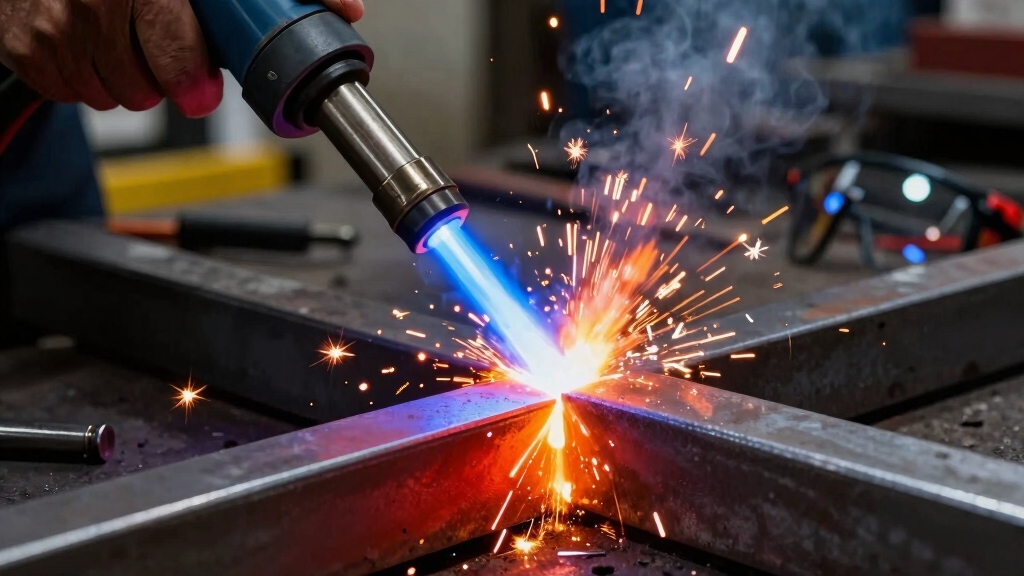
Although plasma cutters generate temperatures exceeding 20,000 °C (36,032 °F), which surpass the surface temperature of the sun by nearly four times, understanding how this heat output compares to other common heat sources provides essential context for evaluating their cutting capabilities and material compatibility.
Proper operation relies on effective cooling system components such as the torch, motor, pump, and heat exchanger to prevent rapid overheating and part wear. Additionally, maintaining optimal arc stability is crucial for consistent cutting quality and equipment longevity.
Compared to oxyacetylene torches, which reach around 3,200 °C (5,792 °F), plasma arcs are nearly ten times hotter, enabling them to cut a wider range of metals with greater speed.
While lightning can peak at 30,000 °C (54,032 °F), plasma jets at 25,000 °C (45,032 °F) approach but don’t exceed these extreme temperatures.
This superior heat intensity allows plasma cutters to efficiently sever metals requiring temperatures from 6,000 °F to 25,000 °F, balancing cutting speed with material integrity.
Did you know that plasma cutters can reach temperatures over 25,000°C? That’s incredibly hot! This extreme temperature allows them to melt metal quickly and with precision. The high heat must be carefully managed to avoid warping or weakening the surrounding metal during the cut, demonstrating the importance of heat input control.
What really makes it work is the ionized gas. It creates a focused and electrically conductive channel, which helps to direct heat right where it’s needed—in the workpiece. CNC technology applied in the late 1980s–1990s greatly improved cutting flexibility and precision, enabling on-demand shape cutting primarily in flat X-Y cutting.
This clever combination of high temperatures and efficient gas dynamics really speeds up the cutting process. It maximizes energy transfer and helps remove material quickly. Pretty fascinating, right?
Plasma cutters generate temperatures reaching up to 40,000°F (22,000°C), enabling rapid metal cutting by concentrating immense heat into a focused arc.
This extreme temperature can exceed the sun’s surface heat by four to five times, melting conductive metals like steel, aluminum, and stainless steel almost instantly.
You control arc intensity through factors such as air pressure, gas flow rate, and torch angle, which optimize ionization and thermal conductivity.
The plasma arc’s heat, combined with a high-velocity gas stream, swiftly removes molten metal, ensuring clean, precise cuts.
Depending on gas composition—oxygen, nitrogen, or argon—cutting speed and quality vary, with argon producing the hottest plasma.
This temperature range typically falls between 36,000°F and 43,000°F, allowing efficient cutting on materials up to 2 inches thick and beyond with advanced systems.
Plasma cutting is especially effective for thin to medium-thickness metals, making it a preferred method over oxy-fuel for many industrial applications due to its high-velocity gas stream. Its industrial versatility matches well with automated processes, enhancing throughput and precision.
Generating an ionized gas channel is key to how plasma cutters achieve rapid metal cutting.
You start by forcing compressed gas—air, oxygen, nitrogen, or argon—through a constricted nozzle while a high-voltage spark ionizes the gas atoms. This ionization transforms the gas into plasma, a conductive fourth state of matter, enabling an electrical arc to flow from the electrode through the plasma to the grounded workpiece.
The plasma temperature can reach 45,000°F (25,000°C), providing the intense heat needed to cut through metal. Using inert gases like argon can improve arc stability and reduce oxidation during cutting.
The nozzle’s constriction accelerates the plasma jet via the venturi effect, producing a high-velocity stream that melts and ejects molten metal and slag efficiently.
You maintain arc stability with a focused plasma column, while shielding gas protects cut edges. This precise gas ionization and jet dynamics enable plasma cutters to slice metals quickly and cleanly, even on thick or rusted surfaces. Proper gas flow rates and purity are critical to maintaining consistent arc stability and cut quality.
When you adjust the torch angle and standoff distance, you directly influence the concentration and temperature of the plasma arc.
Holding the torch perpendicular (90 degrees) focuses plasma energy, maximizing temperature for clean, deep cuts.
Tilting the torch between 30-60 degrees alters the gouge profile, creating wider, shallower cuts but reduces plasma concentration.
Maintaining a near standoff distance concentrates heat by minimizing arc stretch; too great a distance raises voltage and lowers temperature, causing angular bevels.
Consistent standoff height—typically 1.5 to 2 times the cutting height—protects consumables and preserves arc stability.
Combining a perpendicular angle with ideal standoff maximizes plasma temperature, while deviations require precise speed and slag control to maintain cut quality and thermal efficiency. Additionally, adjusting the torch height and amperage in unison helps shape the arc stretch and gouge profile, optimizing cutting performance through controlled torch parameters.
Although the intense heat produced during cutting demands robust safeguards, selecting the right safety gear is essential to protect yourself from burns, sparks, and harmful radiation.
Robust safeguards and proper safety gear are vital to shield against burns, sparks, and harmful radiation during cutting.
Plasma cutting generates extreme temperatures, intense UV/infrared radiation, and flying debris, necessitating all-encompassing personal protective equipment (PPE). It operates at approximately 20,000°C, which underscores the need for diligent protective measures.
You must prioritize equipment that shields your eyes, skin, hands, and respiratory system while ensuring durability and compliance with safety standards.
Key safety gear includes:
When you’re using a plasma cutter, it’s really important to get the heat setting just right for the thickness of the material you’re cutting. If you don’t, you might end up warping the material, and nobody wants that! Plus, getting it right helps your consumables last longer, which is always a win.
Now, let’s talk about gas types. The kind of gas you choose can really affect the arc temperature and the quality of your cuts. So, take a moment to think about what you’re working on and pick the gas that best suits your application.
And don’t forget about the amperage and gas pressure settings. Optimizing these can make a big difference in energy efficiency, and the best part? You won’t have to compromise on performance! For example, adjusting the internal air regulator to around 70–75 PSI can improve cut quality and consistency. So, make sure to adjust those settings to get the most out of your plasma cutter.
Selecting the appropriate heat setting on your plasma cutter hinges on accurately matching amperage and air pressure to the material thickness. Thicker materials demand higher amperage and increased air pressure to maintain cut quality and speed.
For instance, 20A at 40-50 PSI suits 5mm steel, while 45A at 60-70 PSI handles 12mm thickness effectively. You should conduct test cuts to fine-tune settings, considering variables like cut smoothness and dross.
Increase amperage progressively with thickness for best penetration. Adjust air pressure within recommended PSI ranges per thickness. Use manufacturer charts as initial guides for amperage and PSI.
Perform test cuts to evaluate bevel, kerf, and dross presence. Record and replicate precise settings for consistent results across jobs.
How do you determine the best gas type and heat setting for your plasma cutter? It depends on the material and desired cut quality.
Compressed air suits mild steel and aluminum up to 1 inch, offering economical, clean cuts. Oxygen excels on mild steel, enabling fast, precise cuts but raises costs. It is important to note that compressed air creates plasma with a lower current than other gases, which affects cut characteristics.
Nitrogen balances quality and consumable life on stainless and aluminum, ideal for thicker metals. Specialized mixes like Hydrogen-Nitrogen and Argon-Hydrogen deliver high temperatures and superior finishes for stainless steel and thick non-ferrous metals.
| Gas Type | Preferred Use & Heat Setting |
|---|---|
| Compressed Air | Thin to medium steel, economical, moderate heat |
| Oxygen | Mild steel, fast cuts, higher heat |
| Nitrogen | Stainless, aluminum, thicker metals, high heat |
| H2-N2 (F5) | Stainless steel, oxide-free, very high heat |
| Ar-H2 (H35) | Thick stainless/aluminum, highest heat, precise |
Choosing the appropriate heat setting for your plasma cutter directly impacts cutting quality and energy efficiency. You need to balance amperage with material thickness to avoid overheating and reduce energy waste.
Start with a higher amperage, then fine-tune based on travel speed and cut quality. Maintaining the correct torch height guarantees consistent arc voltage, improving cut precision and conserving power. Automated CNC plasma cutters provide incredible accuracy and repeatability, helping maintain optimal heat settings for various metals.
Regular system checks and consumable maintenance prevent inefficiencies caused by worn parts or poor air supply.
Match amperage precisely to metal thickness to prevent excessive heat.
Maintain a 1/16-inch to 1/8-inch torch standoff for peak arc voltage.
Adjust travel speed for clean cuts without dross buildup.
Inspect and replace consumables regularly to sustain cutting efficiency.
Monitor air supply and system components for stable performance.
When you control the temperature of a plasma cutter precisely, you directly enhance cutting efficiency by optimizing heat application and minimizing material distortion.
Adjusting amperage and gas flow rate allows you to tailor plasma temperature to material thickness and composition. This ensures clean cuts without excessive heat.
Proper torch positioning and travel speed maintain temperature uniformity, reducing waste and equipment wear. Additionally, advancements in nozzle design provide greater arc restriction and plasma density, further improving temperature control.
Water-cooling safeguards components during high-amperage operations, sustaining stable temperatures.
The following table summarizes critical parameters influencing cutting efficiency:
| Parameter | Effect on Temperature | Efficiency Benefit |
|---|---|---|
| Amperage | Increases plasma arc heat | Cuts thicker materials faster |
| Gas Flow Rate | Modulates heat concentration | Improves cut quality |
| Torch Angle | Focuses plasma jet | Enhances temperature control |
| Travel Speed | Controls heat exposure | Limits material distortion |
| Cooling System | Prevents overheating | Prolongs equipment lifespan |
You should replace plasma cutter consumables every 1 to 3 hours of cutting, depending on wear.
Monitor the nozzle and electrode closely, as they wear fastest. Replace electrodes when pit depth hits 1/16 inch, and swap out shield caps if holes appear plugged.
Check the swirl ring and retaining cap intermittently, replacing them only if damaged.
Proper cutting parameters and air quality extend consumable life, so inspect regularly to maintain cut quality.
You can’t safely cut non-metal materials with plasma cutters. They’re designed to slice through metals only.
Trying to cut wood, plastic, or glass with a plasma cutter is like throwing a lightning bolt at a brick wall: no arc forms, no cut happens, and you risk fires, toxic fumes, and electrical shocks.
Always stick to conductive metals, remove coatings, and follow strict safety precautions to avoid catastrophic hazards and equipment damage.
You need to perform daily inspections of torch bodies, safety triggers, and cables, repairing any damage immediately.
Weekly, clean machine exteriors, rails, and Z-axis areas, and test safety switches.
Monthly, maintain air filters, check O-rings, and clean consumables.
Quarterly, inspect hoses and wires for leaks, deep clean interiors, replace worn parts, and lubricate moving components.
Finally, schedule an annual professional safety inspection to guarantee peak plasma cutter performance.
Ever wondered why your plasma cuts worsen on hot days? Ambient temperature directly impacts cutting quality by altering air system performance and material temperature.
Higher temperatures cause wider kerfs, increased bevel, and heavy dross due to poor air quality and heat buildup. You need to maintain 90-100 PSI with clean, dry air and adjust parameters carefully.
Proper ventilation and coolant management are crucial to control heat and preserve cut precision despite temperature fluctuations.
Yes, plasma cutters suit portable and field work well.
You’ll benefit from models weighing 20-50 pounds with compact designs that fit in toolboxes or trunks.
Battery-powered options and integrated handles enhance mobility.
They operate on 110-120V power, compatible with generators, and maintain arc stability outdoors.
However, you must guarantee a dry compressed air source and prepare for noise and consumable wear in harsh environments.
Plasma cutters generate temperatures hotter than the surface of the sun, reaching up to 30,000°F, slicing through metal like a hot knife through butter.
Understanding how factors like material thickness, gas type, and torch angle influence heat is vital for precision and safety.
By mastering temperature control and using proper gear, you can optimize cutting quality and efficiency. Remember, managing this intense heat isn’t just skill; it’s your cutting-edge advantage.