Phone:
(701)814-6992
Physical address:
6296 Donnelly Plaza
Ratkeville, Bahamas.

Phone:
(701)814-6992
Physical address:
6296 Donnelly Plaza
Ratkeville, Bahamas.

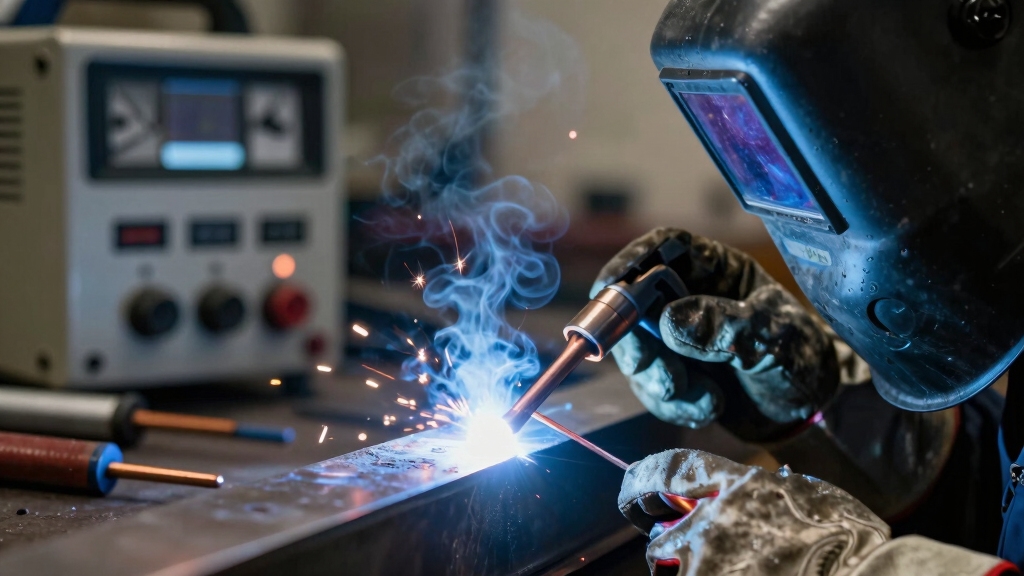
In TIG welding, you’ll most often use DCEN (direct current electrode negative) because it focuses about 70% of heat into the workpiece. This gives you deep penetration and a stable arc while preserving tungsten life.
DCEP (direct current electrode positive) cleans oxides but overheats the electrode, risking premature wear. For aluminum and magnesium, AC polarity alternates cleaning and penetration phases.
Understanding how polarity affects heat distribution and electrode wear helps you optimize weld quality and efficiency.
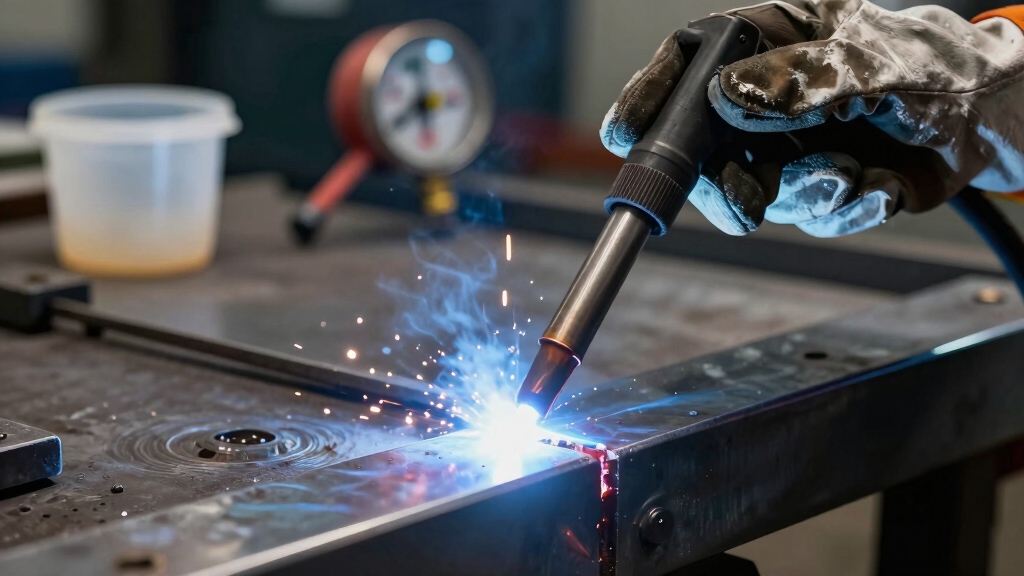
Although TIG welding offers various polarity options, understanding DCEN, or Direct Current Electrode Negative, is fundamental.
Mastering DCEN polarity is key to optimizing TIG welding performance and achieving superior results.
It directs electrons from the tungsten electrode to the workpiece, concentrating arc energy on the latter.
In DCEN, the tungsten electrode connects to the negative terminal, and the workpiece to the positive.
This configuration makes the workpiece the anode, where roughly 70% of arc heat deposits.
This heat distribution yields deeper penetration and a wider heat-affected zone, ideal for thicker materials requiring strong fusion.
Reduced electrode heating prolongs tungsten life and supports higher amperage use without overheating.
DCEN creates a stable arc with precise control and consistent bead formation.
It also produces a broader heat-affected zone compared to DCEP, which is beneficial for penetration.
It’s the default choice for about 70–90% of TIG applications, particularly for ferrous metals and jobs where oxide cleaning is unnecessary.
Selecting the appropriate tungsten electrode type based on polarity and current improves arc stability and welding quality.
While DCEN polarity focuses heat on the workpiece for deep penetration, DCEP or reverse polarity shifts most heat to the tungsten electrode by connecting it to the positive terminal.
This causes roughly two-thirds of the heat to concentrate at the electrode, resulting in a shallower weld penetration and a wider weld pool with a larger heat-affected zone. The thermal conductivity of the electrode material plays a key role in how heat is distributed during DCEP welding.
You’ll notice DCEP provides a cleaning action by removing oxide layers, making it suitable for thin metals and improving metal deposition. This polarity is commonly used for aluminum and magnesium welding due to its cleaning benefits.
However, the increased electrode heating accelerates tungsten wear, requiring larger diameter electrodes and water cooling to prevent damage.
Though its lower heat input reduces base metal distortion, DCEP’s tendency to cause tungsten inclusions and electrode melting limits its use in standard TIG welding.
When you weld aluminum or other non-ferrous metals, AC polarity plays a crucial role by combining effective oxide cleaning with controlled penetration. The alternating current’s electrode-positive half-cycle removes stubborn oxides, improving weld quality and reducing defects.
Proper control of heat input during welding also helps prevent burn-through or weak fusion, which are common challenges with aluminum.
Meanwhile, the electrode-negative half-cycle guarantees adequate penetration for fusion. You can fine-tune AC balance and frequency to match alloy and thickness needs, optimizing cleaning intensity and heat input.
This heat control is critical because aluminum oxide melts at a much higher temperature than the base metal.
Key applications include:
Aerospace and automotive industries, where oxide-free joints are critical.
Shipbuilding and piping, requiring consistent weld quality on aluminum alloys.
Fabrication of thin or moderately contaminated parts, minimizing pre-cleaning efforts.
When it comes to welding, the way heat is distributed can really vary based on the polarity you’re using. So, let’s break it down a bit. With DCEN, which stands for Direct Current Electrode Negative, about 70% of the arc heat actually goes right into the workpiece.
This is great for promoting deep penetration, making your welds stronger. This polarity is often preferred for welding materials that require good penetration and heat control.
On the flip side, we’ve DCEP, or Direct Current Electrode Positive. In this case, most of the heat gets concentrated on the electrode itself.
This can affect things like the life of your tungsten and the overall shape of the weld bead. Reverse polarity is generally avoided in TIG welding due to electrode melting issues.
It’s pretty interesting how this heat distribution plays such a crucial role in weld quality. It impacts everything from how deep the penetration is to the size of the heat-affected zone, and even the risk of distortion in your workpiece.
Typically, heat concentration patterns in TIG welding vary markedly depending on the polarity chosen. This directly affects weld penetration, bead profile, and heat-affected zone characteristics. The arc welding torch design and shielding gas also influence heat stability and distribution.
When you select DCEN, heat focuses deep within the workpiece, creating narrow penetration and a localized, smaller lateral heat-affected zone (HAZ). DCEN is preferred for thicker materials due to its ability to produce deep, strong welds.
Conversely, DCEP shifts heat toward the electrode and workpiece surface, producing shallow, wider welds with a broader HAZ and accelerated tungsten wear.
AC polarity balances these effects, alternating heat between the base metal and electrode to combine penetration with oxide cleaning. Adjusting AC balance settings allows welders to fine-tune heat input and optimize performance for different metals.
DCEN delivers approximately two-thirds of arc heat to the base metal, optimizing penetration and electrode longevity.
DCEP concentrates heat on the electrode and surface, reducing penetration but enhancing cleaning action.
AC polarity’s adjustable balance modulates heat distribution, controlling penetration depth and HAZ width dynamically.
Understanding heat distribution between the electrode and workpiece is crucial for optimizing TIG welding performance across different polarities. Managing heat input effectively can help avoid distortion and defects, especially in thin or heat-sensitive materials, improving overall weld quality.
In DCEN, about 67% of heat concentrates on the workpiece, enabling deeper penetration and efficient fusion. This polarity also provides a stable arc, which is essential for producing high-quality welds.
This stability translates well into automation processes, where consistent arc performance is critical for repeatable results.
Only 33% heats the electrode, preserving tungsten tip integrity and extending its life. This thermal balance reduces the need for water cooling or larger tungsten diameters.
Conversely, DCEP directs roughly 66% of heat to the electrode, increasing tungsten erosion and necessitating larger or cooled electrodes. It is less common in TIG welding but is useful for its surface cleaning capabilities. However, it yields shallower welds with wider beads due to reduced workpiece heating.
AC alternates these effects, combining DCEN’s penetration with DCEP’s cleaning action, though it raises average electrode temperature. This requires specialized tungsten alloys. Understanding these heat partitions guides polarity selection based on penetration needs and electrode longevity.
Heat distribution in TIG welding polarities directly shapes weld quality by controlling penetration depth, bead profile, and heat-affected zone characteristics.
Choosing DCEN focuses about 70% of heat on the workpiece, yielding deep penetration and a narrow bead, ideal for thick materials.
It is the recommended polarity for most metals in TIG welding because the tungsten electrode stays cool and the arc concentrates heat effectively on the workpiece.
DCEP reverses this, concentrating heat on the electrode and surface, producing a wider, shallower bead with a larger heat-affected zone (HAZ). AC alternates rapidly between these, balancing penetration with surface cleaning.
Proper eye protection with the correct shade lens is essential when working with these arcs due to intense UV and IR radiation exposure.
Key impacts include:
Selecting the correct welding polarity directly influences arc stability, penetration depth, and oxide removal, depending on the material you’re working with.
Choosing the right welding polarity ensures optimal arc stability, penetration, and effective oxide removal for each metal type.
For aluminum and magnesium, AC polarity is preferred to manage oxide layers effectively. This balances penetration with cleaning action; incorporating a higher positive balance ratio or brief DCEP pulses stabilizes the tungsten tip.
AC alternates polarity which helps in combining the cleaning and penetration effects during welding. Due to aluminum’s high thermal conductivity, controlling heat input during AC welding is critical to prevent warping and distortion from rapid heat dissipation.
Stainless steel benefits from AC to minimize heat-affected zones, though DCEN is preferable for deep, precise penetration. This utilizes straight polarity to concentrate heat. Careful polarity selection also helps mitigate risks of intermetallic compound formation when welding dissimilar metals like stainless steel and aluminum.
Titanium also favors AC for controlled thermal input but relies on DCEN for deep weld penetration and low spatter.
Carbon steel mainly uses DCEN, focusing heat at the workpiece for narrow, deep penetration while reducing electrode wear.
In each case, tungsten type and polarity choice correlate directly to the thermal and chemical properties of the base metal.
When working with varying material thicknesses, you’ll find that polarity choice critically affects how heat distributes within the weld.
Thicker materials benefit from DCEN (electrode negative), which drives deeper penetration by concentrating heat into the joint. This ensures strong fusion. Conversely, thinner sections often require DCEP (electrode positive) or AC to moderate heat input and avoid burn-through or distortion.
For very thin metals, using smaller diameter electrodes and low amperage settings helps prevent warping and burn-through during stick welding.
Consider these key points:
Adjust your amperage and travel speed accordingly to optimize weld quality and minimize thermal distortion.
Understanding how polarity influences electrode wear and lifespan is essential for optimizing TIG welding performance.
When you use DCEN, about 30% of the arc heat concentrates on the tungsten electrode, raising its temperature but causing lower erosion rates and slower tip recession compared to DCEP.
This polarity is preferred for TIG because it produces deeper penetration while preserving electrode integrity due to the heat distribution. Gloves made from Kevlar stitching are often used to handle high-temperature welding tasks safely.
In contrast, DCEP shifts more heat to the electrode, accelerating tungsten ablation, tip balling, and geometric degradation. This demands more frequent regrinding or replacement.
AC polarity alternates heating, reducing continuous thermal stress and electrode wear, though repeated cycling still leads to tip rounding.
You can mitigate wear by selecting larger-diameter electrodes and employing water cooling under higher heat loads.
Remember, faster erosion correlates with reduced weld quality and electrode lifespan.
Carefully balancing polarity and cooling strategies is key to maintaining consistent arc control and extending tungsten usability.
Achieve ideal weld quality on ferrous metals by using DCEN polarity, which directs about 70% of the heat to the workpiece for deep, controlled penetration.
This polarity guarantees stable arc performance, precise weld pools, and minimized tungsten erosion, critical for welding carbon and stainless steels. Proper shielding gases also play a vital role in maintaining arc stability.
By concentrating heat on the base metal, DCEN facilitates deep fusion with minimal electrode wear, sustaining arc stability throughout the welding process. This polarity also affects weld penetration, arc stability, and electrode life, making it essential for optimal welding outcomes.
Key benefits you gain with DCEN include:
Avoid DCEP for ferrous TIG welding as it overheats the tungsten, causing contamination and unstable arcs.
DCEN remains the technical standard for peak ferrous TIG weld integrity.
Non-ferrous metal welding frequently demands careful polarity selection to balance oxide removal and heat input.
For aluminum and magnesium, AC is standard because its alternating cycle combines oxide cleaning during positive half-cycles with effective penetration on negative half-cycles.
The use of unbalanced AC waveforms allows fine-tuning of the cleaning action versus heat input to optimize weld quality and electrode life alternating current units.
Using DCEN alone enhances penetration but lacks oxide removal, often causing poor wetting.
DCEP provides strong cleaning via ion bombardment but accelerates tungsten wear.
Adjusting AC waveform balance lets you optimize cleaning versus penetration.
Magnesium alloys respond similarly, with AC preferred for thin sections; DCEN suits low-oxide conditions.
Copper and brass, having less tenacious oxides, weld well with DCEN for heat concentration, though DCEP can aid cleaning when surface contamination exists.
Your choice must consider oxide stability, alloy composition, and process parameters to achieve weld integrity and efficiency.
Yes, polarity markedly affects the welding arc color.
When you use DCEN, the arc produces cleaner welds with minimal oxidation, resulting in lighter arc colors.
Switching to DCEP increases oxidation, causing blue or purple hues due to more intense atmospheric reactions.
AC polarity balances these effects, reducing deep oxidation colors by breaking oxide layers.
If you notice darker shades, it often signals excessive positive cycle or polarity mismatch, impacting weld quality.
Polarity does influence your welding machine’s electrical consumption, acting like a thermostat adjusting heat output.
Using DCEN directs more heat into the workpiece, requiring less current for penetration, making it more energy-efficient.
Conversely, DCEP wastes energy by heating the electrode, increasing power draw.
AC alternates, balancing heat and cleaning, often demanding more power to maintain stability.
Polarity directly affects weld cooling rates by controlling heat distribution.
With DCEN, you concentrate 70% of heat on the workpiece, raising weld pool temperature and slowing cooling. This reduces martensite risk in low alloy steels.
DCEP places less heat on the base metal, accelerating cooling, which is ideal for thin materials.
AC polarity balances heat, moderating cooling rates for aluminum.
Understanding this helps you optimize weld quality and minimize distortion.
Imagine a robotic TIG system welding aerospace components with DCEN polarity for precise control.
You’ll find no fundamental polarity difference between robotic and manual TIG welding; both primarily use DCEN to concentrate heat on the workpiece.
However, robotic systems benefit from reduced arc length sensitivity and enhanced repeatability.
Yes, polarity settings directly impact post-weld inspection methods.
You’ll find DCEN creates deeper penetration, affecting radiographic and ultrasonic testing by altering defect size and orientation.
DCEP’s cleaning action changes surface appearance, influencing visual and liquid penetrant inspections.
AC cycling modifies weld bead profiles and surface roughness, complicating NDT interpretation.
When welding with TIG, choosing the correct polarity profoundly affects performance and precision.
DCEN delivers deep, direct heat ideal for ferrous metals, while DCEP offers surface-focused control suited for non-ferrous applications.
Alternating current balances these benefits but demands skillful handling.
By analyzing material type, thickness, and electrode wear, you’ll optimize outcomes, ensuring superior strength and stability.
Understanding polarity’s pivotal role propels your proficiency, producing perfect, professional welds consistently.