Phone:
(701)814-6992
Physical address:
6296 Donnelly Plaza
Ratkeville, Bahamas.

Phone:
(701)814-6992
Physical address:
6296 Donnelly Plaza
Ratkeville, Bahamas.

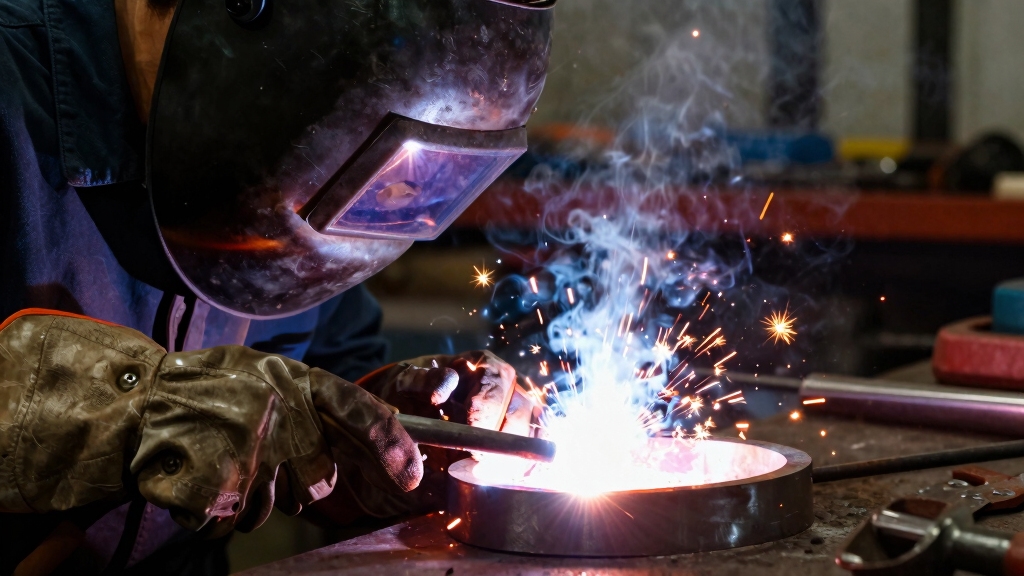
When you weld, temperatures near the arc can exceed 6,000°F. Your heavy PPE traps heat, raising your core temperature markedly.
Combined with high ambient temperatures, especially in confined spaces or direct sunlight, this places you at risk for dangerous heat stress levels.
Your gear and work environment can push heat exposure from moderate to very high bands, necessitating hydration, rest, and cooling strategies.
Understanding these heat risks and controls helps protect your health and performance on site.
Understanding heat index levels is essential for managing heat risks in welding environments.
You’ll find heat index bands categorize risk from Lower (<91°F) to Very High (>115°F), guiding necessary safety measures. Gloves made of heat-resistant materials are vital to protect welders from these varying temperature risks.
At moderate levels (91–103°F), you should increase hydration breaks and shade availability.
High ranges (103–115°F) demand more protective actions like extended rest and active cooling.
Above 115°F, aggressive controls such as rescheduling work or moving tasks to cooler hours become necessary. It is important to recognize that welding arc temperatures often exceed 6,000°F, adding significant thermal load beyond ambient heat.
Remember, direct sunlight or heavy PPE can raise effective heat risk by one band, so always apply higher-level controls in such conditions.
Since welding adds radiant heat not captured by basic heat index readings, using Wet Bulb Globe Temperature (WBGT) assessments and continuous monitoring guarantees more accurate risk evaluation on-site.
It’s really important to keep an eye on Threshold Limit Values (TLVs) when you’re welding. You see, welding can create fumes that vary quite a bit, and that really depends on the materials you’re using and how much heat you’re applying. In particular, zinc coatings on steel vaporize at relatively low temperatures, producing potentially hazardous zinc oxide fumes that must be controlled.
For instance, OSHA has set an exposure limit of 5 mg/m³ for total welding fume, which is there to help ensure safe working conditions. But here’s the catch: during those times of intense heat, you might experience short-term spikes that can go above those limits. Employers are required to meet these regulatory limits to protect workers and may face fines if exposures exceed permissible levels.
Although welding generates various fumes, the exposure limits set by organizations like ACGIH, OSHA, and NIOSH provide critical benchmarks to control airborne contaminants. These limits vary by fume type and welding conditions. Proper respiratory protection and ventilation are essential to prevent hazardous zinc oxide fume inhalation.
For example, manganese exposure is tightly regulated due to health risks, with ACGIH setting respirable fraction TLV at 0.02 mg/m³, while OSHA allows a ceiling of 5 mg/m³. Note that welding stainless steel produces hexavalent chromium, with extremely low TLVs. Employers are required to use air sampling and implement engineering controls to ensure these limits are not exceeded, protecting worker health through effective exposure controls.
| Fume Type | ACGIH TLV (mg/m³) | OSHA PEL (mg/m³) |
|---|---|---|
| Iron oxide | 5 | 5 (total fume) |
| Zinc oxide | 2 | |
| Manganese | 0.02 (respirable) | 5 (ceiling) |
| Chromium (VI) | 0.005 | 0.005 |
| Nickel | 1.5 |
You must consider process type and exposure duration to maintain safe levels.
When working in welding environments, you face significant heat challenges that require strict adherence to threshold limit values (TLVs) and awareness of welding conditions.
Excessive heat exposure impairs your body’s cooling mechanisms, increasing risks of heat rash, cramps, exhaustion, and even fatal heat stroke. From 2011–2019, 344 U.S. worker deaths were attributed to environmental heat exposure, underscoring the severity of these hazards worker deaths. Proper ventilation and regular breaks are critical to managing heat stress during prolonged welding sessions.
Protective gear, while essential, traps heat and raises internal temperatures, especially in summer or confined spaces. Selecting flame-resistant clothing that balances protection and breathability can help reduce heat buildup without compromising safety.
You must balance PPE use with heat management strategies to maintain safety and productivity.
Key welding heat challenges include:
Welders frequently encounter various heat stress symptoms due to prolonged exposure to high temperatures and the insulating effects of protective gear.
You may experience heat exhaustion marked by heavy sweating, intense thirst, dizziness, headache, rapid heartbeat, and hyperventilation. Wearing heat-resistant gloves can help manage hand temperature and reduce heat stress during welding.
Heat cramps can cause painful muscle spasms in your abdomen, arms, or legs, especially after strenuous work and heavy sweating.
Heat rash appears as red pimples or blisters under your clothing in hot, humid conditions due to blocked sweat ducts. Protective clothing can impede heat dissipation and create microenvironments that trap heat.
Heat syncope manifests as dizziness, light-headedness, nausea, and fainting, often from standing too long in heat; elevating your legs helps recovery.
Recognizing these symptoms early is vital to prevent escalation to heat stroke, which includes hot, dry skin, confusion, and absence of sweating, demanding immediate medical attention.
It’s important to understand that heatstroke fatalities among welders tend to spike during the hottest months of summer. When you combine high temperatures with the intensity of the work, it creates a perfect storm for danger. In fact, construction workers, including welders, experience a heat-related injury rate nearly four times higher than other industries.
In fact, if you look closely at the timing of these incidents, you’ll notice that July and August see a significant number of fatal events. This really emphasizes the need for effective risk management during those critical periods. Welders must also maintain cardiovascular endurance to reduce the risk of heat-related illness during intense work.
If safety precautions aren’t taken seriously—like making sure welders take hydration breaks and ensuring proper ventilation—the chances of a fatal heat-related incident increase significantly. So, it’s crucial to prioritize these measures to keep everyone safe while they work.
Although fatal heat-related incidents among welders are relatively rare, documented cases highlight significant risks associated with prolonged exposure to extreme heat during welding operations. The use of argon gas as an inert shielding gas can indirectly influence welder safety by stabilizing the welding arc and reducing spatter, which helps maintain a controlled and predictable work environment.
You face heightened danger especially when working long shifts in hot environments while wearing heavy, non-breathable PPE. Fatalities often involve rapid onset of heatstroke, with core body temperatures exceeding 42 °C, leading to collapse and multi-organ failure.
Key risk factors include:
It is important to note that many welding injuries and fatalities are linked to unsafe conditions, which can compound the risks of heat-related incidents.
When starting on a new job site, you face a markedly increased risk of heat-related incidents, as nearly half of fatal cases occur on a worker’s first day.
Additionally, 80% of these incidents involve workers with four days or less on site, highlighting the vulnerability of those unfamiliar with heat stress signs.
Despite scheduled breaks in air-conditioned trailers, heat stress can progress unnoticed, even when temperatures reach 90°F with 69°F dew point. Employers must maintain detailed continuity logs to track worker conditions and prevent heat-related injuries.
You must recognize that initial exposure to high heat and physical exertion without acclimatization increases risk markedly.
Fatal incidents often arise before workers identify their heat stress tipping point, emphasizing the critical need for early monitoring and intervention during the initial days on site to prevent heat-related fatalities among welders.
Employers must ensure continuous observation during these early days to identify and mitigate heat stress before it becomes fatal.
Since heat-related hazards escalate rapidly without proper safeguards, failures in safety precautions have directly contributed to numerous fatal incidents among welders. The vaporization of coating materials like zinc during welding can increase the risk of harmful fume inhalation if not properly controlled, adding to health hazards.
In oilfield welding, lack of heat stress management and training led to nine heatstroke deaths from 2014 to 2019, mostly in Texas. You must recognize that welding’s bulky PPE and arc-generated heat intensify risk, especially for new workers. Electric shock, identified as the most serious welding hazard, can also compound dangers in high-heat environments.
Key failures include:
To prevent fatalities, you need rigorous heat management programs that integrate training, acclimatization, and emergency preparedness. Incorporating fume control measures can also reduce toxic exposure risks during welding operations.
Among the various welding techniques, unique heat sources define the process and influence the quality of the weld.
Different welding methods use distinct heat sources that shape the process and determine weld quality.
When you work with arc welding, electric arcs reach temperatures up to 6,000°F. Plasma arc welding soars to 30,000°F using ionized gas plasma.
Gas flame methods, like oxyfuel welding, generate flames exceeding 4,500°F by combusting oxygen and acetylene.
Thermit welding relies on exothermic chemical reactions producing 3,500°F to fuse metals without external power.
Laser and electron beam welding focus intense light or electron streams for precise, high-temperature fusion with minimal heat-affected zones.
Other specialized methods, such as induction and resistance welding, generate heat through magnetic fields or electrical resistance.
The oxy-acetylene flame’s hottest zone, the inner cone, can reach temperatures around 6,000°F, making it critical for effective metal fusion.
Each source’s distinct thermal dynamics affect weld penetration, temperature distribution, and material fusion. This shapes the weld’s structural integrity.
Managing heat exposure effectively is critical for welders to maintain safety and performance in high-temperature environments. You must use appropriate personal protective equipment (PPE) like flame-resistant, breathable fabrics and helmets with enhanced airflow to minimize thermal burden. Protective clothing must also retain its properties in tough, everyday welding environments to ensure consistent heat protection.
Cooling PPE such as belt fans or cooling vests can markedly reduce heat stress. Beyond PPE, hydration and physiological controls are essential to prevent heat illness. Engineering controls also play an indispensable role by improving ventilation and providing shade.
Key protective measures include:
These strategies collectively safeguard you from heat-related risks during welding tasks.
When you increase heat input during welding, you directly influence the microstructure and mechanical properties of the weld. This, in turn, affects overall performance and productivity. Higher heat input enlarges grain size, reduces acicular ferrite, and lowers impact toughness, especially at subzero temperatures.
Fine inclusions, such as MgAl2O4, act as anchors during the welding thermal cycle, inhibiting austenite grain growth and promoting acicular ferrite formation, which improves toughness by segmenting austenite grains inclusion-induced nucleation.
However, it also improves welding efficiency by reducing passes and increasing deposition rates. You must balance heat input to optimize mechanical properties and productivity while preventing defects.
| Heat Input (kJ/cm) | Effect on Welding Performance |
|---|---|
| 150 | Maintains toughness; good efficiency |
| 350 | Coarsened grains; reduced toughness |
| Medium (0.67 kJ/mm) | Ideal HAZ mechanical properties |
| High | Larger bead; fewer passes; higher speed |
Adjust heat input carefully to guarantee structural integrity and welding productivity.
Although welding is essential in many industries, you must recognize that exposure to welding fumes and heat poses significant health hazards.
Welding fumes are classified as a Group 1 carcinogen by IARC, increasing your risk of lung, larynx, and urinary tract cancers, especially when working with stainless steel.
The development of lung cancer is thought to be driven primarily by chronic inflammation and immunosuppression rather than direct genetic damage.
Cardiovascular risks include elevated blood pressure and ischemic heart disease, even at low dust concentrations.
Respiratory diseases such as occupational asthma, COPD, and welder’s lung are common due to inhalation of toxic metals and iron oxide.
Key health hazards include:
Understanding these risks helps you prioritize safety and health protection measures.
Because welding generates intense radiant and ambient heat, you need targeted strategies to prevent heat stress and maintain safety.
Engineering controls like local ventilation and directed cooling systems, such as helmet air delivery or belt-mounted fans, significantly reduce temperatures, sometimes by up to 50°F under helmets.
For example, the Miller CoolBelt belt-mounted cooling system can lower temperatures under the welding hood by up to 17 degrees.
Use portable shade, spot air-conditioning, and schedule heavy welding during cooler times to lower ambient heat.
Organize work with paced work–rest cycles, rotate personnel, and require pre-shift acclimatization to limit cumulative heat exposure.
Select lightweight, breathable flame-resistant PPE and incorporate active cooling apparel, such as cooling vests or supplied-air respirators, to enhance heat dissipation.
Maintain formal heat-safety plans with monitoring and authority to stop work if heat-related symptoms arise.
Combining environmental controls, administrative tactics, and PPE optimizes heat stress management in welding environments.
Humidity raises your heat stress during welding by slowing sweat evaporation, which impairs your body’s cooling.
This leads to a rapid increase in core temperature and dehydration, especially in hot, humid environments.
Your protective gear traps heat and moisture, worsening the effect.
As a result, you face higher risks of heat exhaustion and impaired motor function.
To manage this, you need frequent hydration, shaded breaks, and cooling strategies to maintain safety and performance.
When the heat’s on, you want breathable natural fabrics like FR cotton or treated cotton that wick moisture and resist sparks without trapping heat.
Lightweight FR synthetics such as Nomex or Drifire keep you cool while blocking flames. For durability, lightweight cowhide leather works well against sparks.
Specialized aluminized fabrics like AMI-FLEX offer radiant heat protection. Choosing these materials helps you stay safe and comfortable, even when the mercury’s rising.
No, hydration alone can’t prevent heat-related illnesses in welders. You need to replace fluids steadily while combining hydration with scheduled breaks, cooling PPE, and environmental controls.
Relying solely on water risks dehydration if electrolyte loss isn’t addressed. OSHA emphasizes integrating hydration with rest cycles, acclimatization, and ventilation.
To effectively reduce heat stress, you should implement a thorough approach including cooling gear, shaded breaks, and work schedule adjustments alongside proper hydration.
Longer welding shifts increase your heat stress risk by exposing you to sustained radiant heat and physical exertion, raising core body temperature and dehydration chances.
As shift lengthens, fatigue, muscle cramps, and impaired concentration worsen, boosting injury likelihood.
To mitigate this, you should follow acclimatization guidelines, implement work/rest cycles based on Wet Bulb Globe Temperature, and adjust shifts to cooler hours.
Ensure hydration and cooling PPE use throughout extended periods.
Yes, you can use specific cooling technologies designed for welders.
Powered-air helmets and helmet-mounted fans blow ambient air across your face and neck, reducing under-hood heat by up to 17°F.
Body-worn cooling vests with phase-change materials or battery-powered fans lower skin temperature effectively.
Water-cooled torches help by reducing heat transferred to your hands during high-amperage welding, improving comfort and extending work duration safely.
You might think welding just gets hot, but it can feel like you’re standing inside a furnace set to max!
The intense heat from arcs, molten metal, and confined spaces pushes your body to the brink.
Ignoring proper protective gear or heat management isn’t just risky; it’s like playing with fire on a volcano.
Stay vigilant, use cooling strategies, and respect the heat to keep your performance sharp and your health intact.