Phone:
(701)814-6992
Physical address:
6296 Donnelly Plaza
Ratkeville, Bahamas.

Phone:
(701)814-6992
Physical address:
6296 Donnelly Plaza
Ratkeville, Bahamas.

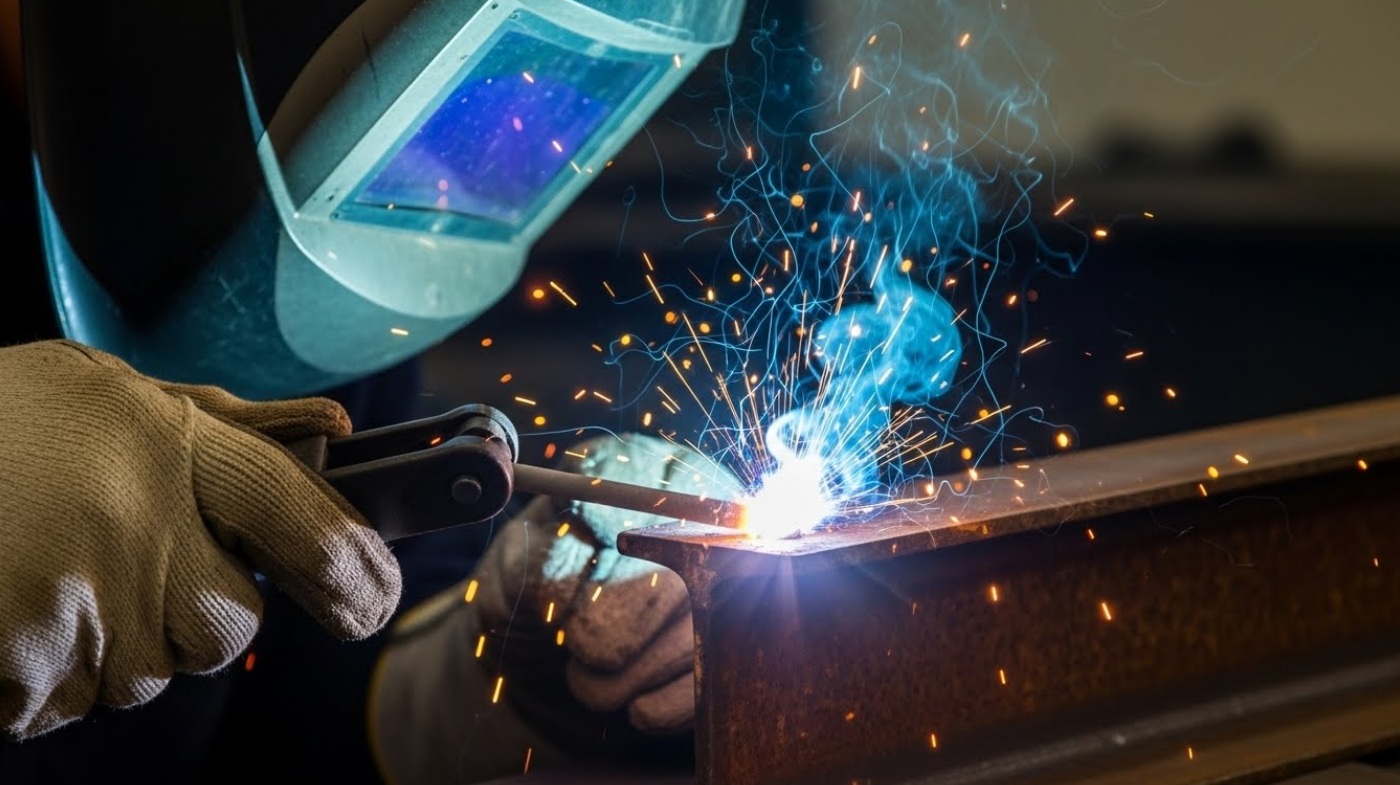
For stick welding, you’ll typically use lens shades ranging from 9 to 14, depending on your amperage.
If you’re welding between 60 and 160 amps, shade 10 generally offers the right balance of protection and visibility.
Higher amperages above 250 amps require shades 12 to 14 to shield against intense UV and IR radiation.
Using the proper shade reduces eye strain, prevents injuries, and guarantees compliance with safety standards.
Understanding electrode types and helmet features further refines your shade choice for peak safety and performance.
When selecting a stick welding shade, you need to understand that the shade number indicates how much light and radiation the lens blocks.
The shade number shows the level of light and radiation blocked by the welding lens.
Shade numbers typically range from 9 to 14, with higher numbers providing darker lenses that block more light, UV, and IR radiation.
For standard stick welding, shades 10 to 12 are most common, balancing protection and visibility.
Your choice depends primarily on welding amperage: under 60 A, shades 9–10 are preferred despite OSHA’s minimum of 7; between 60–160 A, shade 10 is recommended; 160–250 A requires shades 10–12; and above 250 A, shades 12–14 offer optimal safety. Wearing gloves is essential safety gear to prevent thermal injuries and electrical shocks.
It is important to consider that the correct shade selection also helps prevent eye strain and reduces fatigue during work, ensuring both safety and comfort.
Always make sure your shade meets or exceeds OSHA and ANSI standards to protect your eyes effectively during welding.
When you’re stick welding, one thing you absolutely can’t overlook is eye protection. Seriously, the intense UV and IR radiation that comes from the welding process can be really harmful. That’s why it’s so important to have a good welding helmet and lenses that meet ANSI safety standards. They’re designed to block out that harmful radiation and keep you safe from flying particles. Stick welding runs hotter than MIG or TIG, producing more heat and radiation, which increases the importance of proper eye protection stick welding heat. Additionally, stick welding galvanized steel can generate hazardous zinc oxide fumes that pose respiratory and skin exposure risks, so comprehensive protection is essential.
Now, if you skip out on these protections, you’re putting yourself at risk for some pretty serious stuff. We’re talking corneal burns and photokeratitis, which can be quite painful. Plus, there’s the potential for long-term vision impairment, and that’s something nobody wants to deal with. So, make sure you gear up properly before you start welding!
Understanding the risks of eye damage in stick welding is essential for protecting your vision from severe and sometimes permanent harm. Exposure to ultraviolet and infrared radiation can cause arc eye, retinal injuries, and even ocular melanoma. It is important to note that UV flash burns from welding arcs can affect not only the welder but also other workers within a 50-foot radius if proper protection is not used. Additionally, welders must wear helmets with proper welding filters to reduce exposure to harmful radiation.
Additionally, metal sparks and chemical fumes pose direct physical and chemical threats to your eyes. Using proper eye protection markedly reduces these risks, as momentary exposure can cause lasting damage.
| Eye Damage Type | Cause |
|---|---|
| Arc Eye | UV radiation, corneal burn |
| Retinal Injuries | Brief UV/IR exposure |
| Foreign Body Injury | Metal sparks, airborne debris |
| Chemical Irritation | Fumes, cleaning agents |
Although stick welding poses significant risks to your eyes, adhering to ANSI safety standards guarantees effective protection against these hazards.
The ANSI Z87.1 standard certifies impact-resistant eyewear that withstands rigorous Drop Ball Impact Tests, assuring lens and frame durability.
ANSI Z49.1 mandates wearing helmets with proper shading and filter lenses matching welding operations. Compliance with OSHA regulations further enforces the use of correct shade numbers and certified protective gear. For stick welding, selecting the appropriate shade number depends on the welding current, with shade 10 suitable for low-current and shades 12–14 required for high-current applications, ensuring optimal eye protection shade selection.
Key ANSI safety factors include:
In addition, using helmets with argon shielding gas can improve arc stability and reduce eye strain during welding.
Because stick welding arcs emit intense ultraviolet (UV) and infrared (IR) radiation, protecting your eyes from these harmful rays is critical to prevent immediate injuries like photokeratitis and long-term damage such as cataracts. Choosing gloves and protective gear that offer heat resistance complements your overall safety approach.
You must wear helmets with the correct shade filter: #10 minimum up to 200 amps, increasing to #14 for higher amperages to effectively block UV and IR radiation. Use safety glasses beneath helmets for side protection and avoid contact lenses.
It is also essential to ensure that your eye and face protection meet CSA Z94.3-20 standards to provide reliable filtering and impact resistance.
| Radiation Type | Risks |
|---|---|
| UV | Photokeratitis (arc eye), cataracts |
| IR | Heat damage to eye tissues |
| Insufficient Protection | Eye pain, redness, tearing |
Proper eye protection guarantees safety and welding precision.
Selecting the correct welding shade directly depends on the amperage you’re working with, as it determines the intensity of the arc’s brightness and radiation. Higher amperage produces more intense light, requiring darker shades for adequate eye protection without sacrificing visibility. It is important that the equipment meets OSHA standards to ensure the shade number is appropriate for the welding process and amperage. Maintaining proper eye protection also aligns with industry safety requirements to prevent long-term damage.
Matching shade to amperage prevents eye strain and retinal damage while ensuring you see the weld pool clearly.
Keep these key points in mind:
Amperage under 60 amps needs at least shade 7. Medium (60-160 amps) requires shade 9-10.
Higher amperages (160-180 amps) often call for shade 10-11. Above 180 amps, shades 11-13 are typical.
Electrode size influences amperage and hence shade; larger electrodes demand darker shades.
Variable shade helmets help adjust protection dynamically to amperage changes for ideal safety and visibility.
When you work with different amperage levels and material thicknesses in stick welding, choosing the appropriate shade becomes critical to protect your eyes while maintaining clear visibility. Proper eye protection is essential due to the intense UV and IR radiation emitted during welding.
Lower amperages on thin materials require lighter shades, while higher amperages and thicker materials need darker shades for peak safety. Ambient lighting and arc visibility also influence your shade choice. Using the correct lens shade reduces eye strain and safeguards against harmful UV and IR radiation.
| Welding Application | Recommended Shade Range |
|---|---|
| Light duty (up to 40 amps) | 8 – 10 |
| Medium duty (40-175 amps) | 10 – 12 |
| Heavy duty (175+ amps) | 14+ |
Start with a darker shade and adjust down if necessary, ensuring compliance with OSHA and ANSI standards for eye protection. Additionally, selecting the right shade helps prevent welding defects caused by improper arc visibility and reduces the risk of long-term eye damage.
As you choose electrodes for stick welding, understanding their material composition and flux type is crucial since these factors directly influence arc brightness and intensity. This, in turn, determines the appropriate shade level for eye protection.
Different electrode types create varying arc conditions that affect visibility and required lens darkness. Low-hydrogen electrodes like E7018 produce denser arc shielding, demanding specific shade levels due to reduced brightness. However, these electrodes require moisture-free storage to maintain their low-hydrogen properties and prevent weld defects. Proper heat management during welding also influences arc stability and brightness.
Cellulosic electrodes (E6010) generate intense, penetrating arcs with high visible brightness, requiring darker shades. Rutile-coated electrodes (E6013) offer stable arcs with moderate brightness, allowing lighter shade usage.
Iron powder content increases arc intensity but decreases visible brightness, influencing the best shade selection. Selecting the correct shade depends on these electrode-driven arc characteristics to guarantee effective eye protection.
Although welders often focus on technique and equipment, using an incorrect welding helmet shade can cause serious health risks that affect both eyes and skin. Underwater welders, for example, must maintain rigorous fitness and medical clearance to avoid neurological risks exacerbated by improper protection.
Using a shade too light exposes your eyes to harmful UV and infrared radiation, risking photokeratitis, retinal damage, and long-term vision impairment.
Conversely, excessively dark lenses impair visibility, causing eye strain and reducing weld precision.
Inadequate shading also leaves skin vulnerable to UV-induced burns, inflammation, and increases cancer risk.
Improper shade use frequently leads to intermittent ocular inflammation and chronic conditions like cataracts, while delayed symptom onset complicates treatment.
Neglecting ANSI Z87.1 or ISO standards and failing to adjust shade for welding type or ambient light further elevates injury risks.
To protect your ocular and skin health effectively, always select the correct shade per welding parameters and safety guidelines.
Additionally, since shade numbers indicate the lens darkness level ranging from 1 to 14, choosing the appropriate number is crucial for balancing protection and visibility.
Because welding demands both safety and efficiency, auto-darkening welding helmets offer significant advantages over traditional passive models. They provide continuous protection against ultraviolet and infrared radiation, regardless of lens state, ensuring your eyes remain safe without manual adjustment. Choosing gloves that fit correctly is just as crucial to protect your hands with proper glove sizing and enhance overall safety.
These helmets boost productivity by eliminating the need to flip the helmet up between welds, allowing you to focus on your work with minimal interruption. Adjustable sensitivity and delay settings let you tailor the helmet’s response to your specific welding environment and technique. Many models also feature adjustable delay, which helps control how long the lens stays dark after the arc stops, improving comfort during different welding processes.
Additionally, their versatility supports multiple welding tasks, reducing equipment changes.
When selecting the right welding shade for your stick welding project, you need to match the shade number closely with your amperage to guarantee peak eye protection and visibility.
For low amperage (40-140 amps), shade 10 suffices. Medium amperage (140-200 amps) requires shades 11 to 12. High amperage above 200 amps demands shades 13 or 14 to reduce arc glare effectively. According to practical guidance, starting with your helmet at maximum darkness and then backing off one shade at a time helps find the perfect balance between protection and visibility practical rule of thumb.
Start with a shade darker than necessary, then adjust for optimal visibility to prevent eye strain and accommodate unexpected arc flares. Consider environmental lighting and material thickness; daytime or thicker materials may need darker shades.
Always use helmets meeting ANSI standards and consult experienced welders or safety experts to fine-tune your choice. Balance protection and clear weld pool visibility.
Yes, you can use stick welding shades for other welding types, but it depends on the process and amperage.
Stick shades, usually Shade 10-14, can be too dark for TIG or low-amperage MIG welding, reducing visibility.
They’re generally unsuitable for oxyfuel welding, which needs lighter shades.
For versatility and safety, consider variable shade helmets that adjust automatically to different welding intensities, improving both eye protection and weld pool visibility.
You notice tiny scratches clouding your lens during a weld. That’s your cue to replace it.
For professional use, swap the outside cover lens every 3–5 days and the inside lens monthly. Anti-fog lenses need changing every 2–4 weeks.
Always inspect lenses regularly for damage or reduced clarity. If your auto-darkening function falters, replace the lens immediately to maintain peak protection and visibility.
Yes, legal regulations require you to use welding shades that meet OSHA and ANSI standards.
OSHA’s 29 CFR 1910.252 mandates filter lenses with specific shade numbers to protect your eyes during welding.
You must select shades based on welding current, electrode size, and process intensity, following OSHA’s Table E-1.
Employers must provide compliant eye protection, and you can opt for darker shades if visibility allows, ensuring maximum safety and legal compliance.
No, welding shade lenses don’t protect you from sparks and spatter; they only filter harmful light radiation like UV and infrared.
To shield yourself physically, you need a helmet shell made of heat- and impact-resistant materials, plus flame-resistant clothing, gloves, and face shields.
Make sure your helmet fits well and consider additional gear like spatter guards or balaclavas to minimize exposure.
Always inspect your PPE regularly to maintain effective protection.
Shade selection subtly shapes your helmet’s heft and harmony.
While shade level itself seldom shifts the shell’s weight, auto-darkening shades add slight sensor and screen substance.
You’ll feel comfort through careful calibration: correct shades curb eye strain and neck stress, reducing fatigue.
Ergonomic engineering, like balanced bands and breathable padding, bolsters your ease, ensuring even extended welding stays strain-free.
Choosing the right stick welding shade is your shield against sparks and strain. It’s a precise balance between visibility and protection.
As amperage climbs or electrode types shift, your shade must dance in tune to guard your eyes without dimming your view. Don’t gamble with health; let auto-darkening helmets be your vigilant allies. With the right shade, you weld not just metal, but safety and clarity into every arc you strike.