Phone:
(701)814-6992
Physical address:
6296 Donnelly Plaza
Ratkeville, Bahamas.

Phone:
(701)814-6992
Physical address:
6296 Donnelly Plaza
Ratkeville, Bahamas.

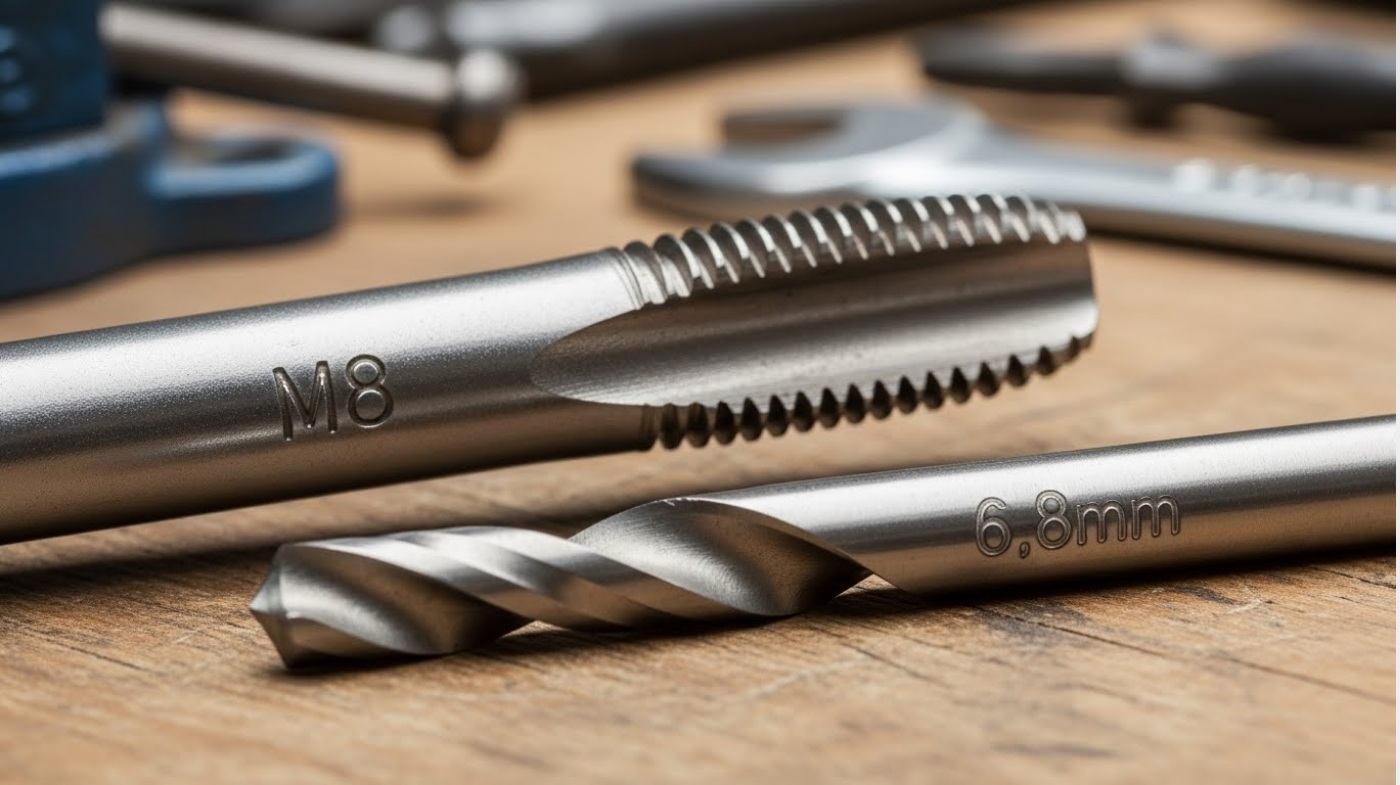
For tapping an M8 thread, you’ll want a drill bit size that matches the specific thread pitch to guarantee proper engagement and strength.
For a standard M8 x 1.25 tap, use a 6.8–6.9 mm drill bit (about 17/64″), while finer pitches like M8 x 1.0 call for closer to 7.0–7.1 mm.
Make sure to drill slightly deeper than the thread length and choose high-speed steel or cobalt bits for harder materials.
Keep following for detailed guidance on drill selection and tapping technique.
When selecting a drill bit for tapping an M8 thread, how do you determine the correct size? The key factor is the thread pitch, which dictates the tap drill diameter.
For standard M8 x 1.25 threads, use a 6.7mm drill bit or the closest fractional size, 17/64″. For fine threads, M8 x 1.0, select a 7.0mm drill bit or 9/32″.
For M8 x 1.25, use a 6.7mm or 17/64″ drill; for M8 x 1.0, choose 7.0mm or 9/32″.
Extra fine M8 x 0.75 threads require a 7.2mm bit, also close to 9/32″. Coarse M8 x 1.5 threads call for a smaller 6.5mm drill bit, roughly 17/64″.
Finally, for very fine M8 x 0.5 threads, a 7.5mm or 19/64″ drill bit is appropriate. Choosing the precise drill bit guarantees proper thread formation and strength.
When it comes to tapping M8 threads, aiming for around 70–75% thread engagement is key. This range ensures you get the best strength without putting too much strain on the tap during the cutting process.
Now, let’s talk about drill depth. It plays a crucial role here because it decides how many full threads the hole can actually hold. So, finding that sweet spot between engagement percentage and drill depth is essential. The general rule of thumb for steel is to have thread engagement between 1.0 and 1.5 times the base diameter to avoid stripping and ensure strength recommended thread engagement.
It helps you achieve a strong, reliable fastening while also keeping the tapping effort manageable. Using the correct tool size measurement can further enhance precision in drilling and tapping operations.
In short, a bit of balance goes a long way in making sure everything works smoothly!
Although selecting the correct drill bit size for M8 tapping depends on various factors, achieving an ideal thread engagement percentage is crucial for joint strength and reliability.
Thread engagement measures the portion of the fastener’s thread that securely mates with the tapped hole. For M8, a standard 75% engagement balances strength and ease of tapping, requiring a 6.8mm drill bit.
You can adjust engagement from 50% to 80% based on material and application: softer materials demand higher engagement, while steel typically uses lower percentages to reduce stripping risk.
The most common M8 thread pitch used in coarse tapping is 1.25 mm.
Calculate engagement by subtracting the product of thread pitch and engagement percentage from the major diameter. Maintaining specified engagement guarantees consistent mechanical performance and resistance to vibration loosening in your assembly.
Selecting the correct drill depth directly influences the quality of thread engagement for an M8 tap. Properly clamping and supporting the workpiece during drilling ensures accurate depth control and prevents damage.
You must drill at least 2-3 thread pitches deeper than the intended thread length to accommodate the tap’s chamfer, typically 6.25-7.5mm for M8 x 1.25 threads. This guarantees full thread formation and prevents the tap from bottoming out prematurely.
Measure drill depth from the surface, not the thread start. Using a depth gauge or marking the drill bit helps maintain consistent and precise drilling depth.
Under-drilling by more than 0.5mm risks incomplete threads and weak engagement, while over-drilling beyond 1mm can reduce part strength, especially in thin materials. Cleaning chips before tapping prevents depth errors and reduces burr formation.
Use a depth gauge or mark your drill bit to maintain accuracy. Adjust depth based on material hardness—slightly deeper for soft metals, precise control for hard or brittle materials.
Cleaning chips before tapping prevents depth errors. For an M8 x 1.25 tap, the recommended drill size is a metric drill bit of 6.9mm, ensuring proper thread formation and fit.
When balancing strength and effort in M8 tapping, understanding thread engagement and drill depth is crucial to guarantee secure fastening without excessive labor.
Thread engagement depends on both the length of engagement and the percentage of threads engaged, typically set at 75% for most materials. Proper preparation such as degreasing and surface cleaning helps ensure optimal thread quality and reduces tapping defects.
Drill depth must accommodate this while avoiding over-tapping that increases torque and risks fastener failure.
Key considerations include:
Material type: Softer materials like aluminum require deeper engagement (up to 2.5× diameter) and smaller drill bits. The nut member material strength directly influences the required engagement length for optimum joint strength.
Drill size: Standard M8 tap drills at 6.8 mm balance strength and effort, adjusted per material.
Engagement length: Aim for 1.5× screw diameter to guarantee adequate thread contact without excessive tapping effort.
Choose the right drill bit type to guarantee peak performance and thread quality when preparing holes for M8 taps.
High-Speed Steel (HSS) bits are standard for general metal and plastic applications. For tougher jobs, cobalt HSS bits provide increased heat resistance and durability.
Cobalt HSS bits suit harder materials, such as stainless steel, offering enhanced heat and wear resistance.
Titanium Nitride (TiN) coated bits extend tool life and reduce friction during repetitive tapping.
For very hard materials, carbide bits provide superior hardness but require careful handling due to brittleness. Selecting the appropriate bit also helps maintain tool longevity under demanding conditions.
Combination drill/tap bits allow drilling and tapping in one step for M8 x 1.25 threads, improving efficiency. When drilling for an M8×1.25 tap, the recommended drill bit size is typically 6.8 mm, following the standard 75% engagement rule.
Selecting the correct shank style—straight, hex, or quick-change—ensures compatibility with your tool and improves torque transfer.
To match metric drill sizes for M8 taps with imperial equivalents, you’ll focus primarily on the 17/64” drill bit for the common M8 x 1.25 thread pitch.
For M8 x 1.25 taps, the 17/64″ drill bit is your go-to imperial equivalent.
This size closely approximates the standard 6.9mm metric drill bit, measuring about 6.75mm in diameter.
For the less common M8 x 1.0 tap, there isn’t a widely accepted imperial drill size; 9/32” (7.14mm) sometimes appears but lacks standard endorsement.
Key points to weigh:
17/64″ is the standard imperial equivalent for M8 x 1.25 taps.
9/32″ may occasionally substitute for M8 x 1.0 but isn’t standard.
Decimal conversions (e.g., 6.9mm ≈ 0.2717″) clarify size matches.
Use tap drill charts to confirm imperial equivalents for your specific tap pitch.
When selecting drill bits and taps, consider the material hardness to ensure proper thread engagement and tool longevity.
When it comes to selecting the right drill bit for an M8 tap, it’s all about matching the bit size to the tap pitch. This ensures that your threads engage properly. A handy formula to remember is tap diameter minus thread pitch. By using this, you can maintain the correct hole size, which in turn optimizes the strength and durability of your threads.
Now, let’s talk about why precise thread engagement is so important. If the fit is too tight or too loose, it can really compromise the load capacity of the connection. Plus, it can affect the longevity of your tools. So, taking the time to choose the right drill bit is definitely worth it!
For metric taps like M8, it is essential to use a metric drill bit that matches the specified drill size for the tap pitch to achieve optimal thread quality.
Although selecting the correct drill bit size depends on thread pitch, understanding the relationship between pitch and drill diameter is crucial for achieving ideal thread strength with an M8 tap.
For M8 taps, coarser pitches (1.25mm) require smaller drill bits (6.9mm) compared to finer pitches (1.0mm), which need a slightly larger bit (7.1mm). This guarantees a 75% thread depth, balancing strength and ease of tapping.
Key considerations include:
Choosing drill size by pitch ensures peak thread engagement and tool longevity. Additionally, maintaining proper surface preparation and avoiding microdefects during drilling helps prevent corrosion initiation that can weaken threaded connections over time.
When selecting the correct drill bit for an M8 tap, understanding thread engagement is critical because it directly influences the strength and reliability of the bolted joint.
Proper engagement prevents stripping and guarantees failure occurs in tension, not shear. Aim for 65-75% engagement, balancing strength and ease of assembly. Wearing protective gloves during tapping and drilling processes can help prevent hand injuries and improve grip and tool control.
Thread engagement is defined as the amount of thread in contact when two threads are joined, which is a key measure of how securely a fastener is held in place.
| Factor | Impact |
|---|---|
| Engagement Length | Must be ≥ bolt diameter |
| Material Strength | Softer materials need longer |
| Load Type | Dynamic loads require more |
Choosing a drill bit that allows ideal engagement means selecting one that produces a hole size enabling sufficient thread depth.
Too small a hole causes excessive torque; too large reduces engagement and weakens the joint. Adjust drill size based on application, material, and thread pitch to guarantee maximum joint integrity.
Consistently selecting the correct drill bit size is essential for achieving accurate threads with an M8 tap.
Choosing the right drill bit size is crucial for precise M8 tap threading.
Start by verifying the tap’s thread pitch to choose the right drill: 6.9mm for M8 x 1.25 or 7.1mm for M8 x 1.0 guarantees 75% thread depth.
Prepare your workpiece carefully: mark the center with a punch, secure it firmly, and clean the surface.
Use sharp HSS bits and moderate speeds to avoid overheating and bit wear.
For effective tapping, apply cutting fluid and turn the tap clockwise, backing off periodically to clear chips.
Always check thread depth with a gauge.
Key tips include:
Yes, you can reuse an M8 tap for multiple holes, but you should monitor its condition closely. Inspect for wear, chips, and dull edges before each use.
Limit reuse based on material hardness and hole count, typically 20 to 50 holes for general purposes. Use proper lubrication and correct tapping speed, and avoid excessive force to extend tap life.
When thread quality degrades, replace or regrind the tap to maintain reliable results.
When tapping M8 threads, apply cutting oil directly onto the tap before starting.
Use a brush or spray to guarantee even coverage on the tap’s cutting edges and the workpiece.
Reapply lubricant frequently during tapping, especially for deep holes.
For steel, choose sulfurized oil; for aluminum, use tapping fluid or water-soluble coolant.
Maintain lubrication to reduce friction, prevent tool wear, and guarantee accurate, clean threads.
You’ll find steel ideal for M8 tap drilling due to its strength and machinability.
Stainless steel works but demands slower speeds and proper lubrication to avoid galling.
Aluminum taps easily with sharp tools and coolant to prevent clogging.
Brass is soft and taps well if lubricated to prevent tearing.
Plastics require low speeds and sharp taps to avoid melting or cracking.
Choose your material based on these factors for peak thread quality.
When a broken tap in your M8 hole feels like a stubborn knot, use a specialized tap extractor to grasp and carefully twist it out.
First, apply penetrating oil to loosen debris. If extraction fails, drill out the broken tap precisely with a slightly smaller bit, then re-tap the hole carefully.
Always work methodically to avoid damaging the threads and consider replacement tap kits for thorough remediation.
Yes, M8 taps are compatible with stainless steel, including grades 304 and 316.
You’ll want to use specialized HSS-EX taps with steam oxide coating for enhanced durability and cutting efficiency.
Their spiral fluted combo geometry ensures smooth chip evacuation, while optimized flank geometry prevents feeding issues.
Using these taps, you can achieve consistent thread quality even in tougher stainless steel materials, provided you follow proper tapping techniques and select suitable tap features.
Now that you know the correct drill bit sizes for various M8 thread pitches and the importance of proper thread engagement, aren’t you ready to achieve strong, precise threads every time?
Choosing the right drill bit, whether metric or imperial, and understanding drill depth ensures peak thread strength.
Remember, matching your drill bit to the tap type and material is essential for accuracy and durability. Follow these guidelines methodically, and your M8 tapping will be flawless.