Phone:
(701)814-6992
Physical address:
6296 Donnelly Plaza
Ratkeville, Bahamas.

Phone:
(701)814-6992
Physical address:
6296 Donnelly Plaza
Ratkeville, Bahamas.

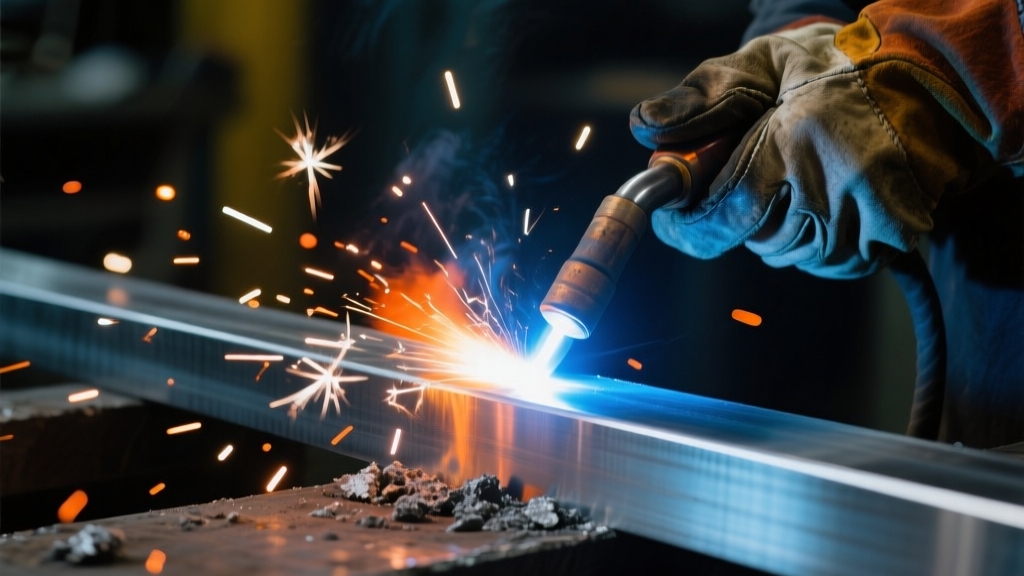
Yes, you can cut stainless steel with a plasma cutter efficiently by using the right equipment, gas mixtures, and settings.
You’ll want to match amperage and torch speed to your material’s thickness, typically employing nitrogen or argon-hydrogen gas for clean edges and reduced oxidation.
Proper standoff distance and pilot arc ignition improve cut quality and consumable life. Plasma cutting excels from thin sheets up to thick plates around 50 mm. Understanding these details will help optimize your stainless steel cutting results.
Plasma cutting technology uses a high-temperature plasma arc to melt stainless steel and blow away molten metal. This enables fast and precise cuts across a wide range of thicknesses. The process utilizes a concentrated, conductive jet of ionized gas that delivers intense heat to a small spot on the metal, creating a narrow kerf.
You can efficiently cut stainless steel from thin sheets up to several inches thick. Precision plasma systems handle stainless steel up to 40mm, while high-amperage units reach 100mm. With edge start technology, cuts up to 160mm are achievable. Plasma cutting is one of the best ways to cut stainless steel due to its cost-effectiveness and speed.
This method produces narrow kerfs, minimizing the heat-affected zone and reducing distortion. This preserves material integrity. Thermal distortion control is achieved by matching amperage and travel speed to material thickness, helping to maintain the quality of the cut. Plasma cutting is recognized for its speed, cost-effectiveness, and versatility across stainless steel grades and thicknesses.
When it comes to cutting stainless steel with a plasma cutter, there are a few key features you really want to look out for. First off, high-frequency ignition is essential. It helps ensure stable arc initiation, which is super important for making those clean cuts. You’ll also want to have precise amperage adjustment; this lets you tailor the cutter’s power based on the thickness of the material you’re working with. Proper heat control during cutting helps minimize distortion and maintains the integrity of the stainless steel edges.
Now, let’s talk about gas combinations. Choosing the right gas is crucial. Mixing nitrogen or hydrogen with the right shielding gases can make all the difference in achieving clean edges and that top-notch surface finish. It’s not just about the cut; it’s about the quality of the finish too! Using nitrogen gas is recommended over compressed air to prevent oxidation and streaking on stainless steel surfaces. By understanding these core features, you can make sure you get consistent, high-quality cuts no matter what stainless steel project you’re tackling.
Although high-frequency ignition mechanisms have historically provided reliable arc starting in plasma cutters, their use in stainless steel cutting presents notable challenges. Choosing the correct electrode type can significantly impact arc stability and cutting precision.
This ignition relies on a high-voltage, high-frequency spark to ionize gas between the electrode and nozzle, requiring torch contact with the metal.
While effective in initiating the pilot arc, high-frequency emissions generate electromagnetic interference (EMI), disrupting nearby electronic and computer equipment.
This interference renders high-frequency systems incompatible with CNC plasma cutters, risking damage to sensitive electronics at ignition.
For stainless steel cutting, modern plasma cutters favor pilot arc technology without high-frequency components, ensuring stable ignition without EMI.
When selecting equipment, prioritize non-high-frequency pilot arc systems to maintain operational compatibility, protect electronics, and achieve precise, high-definition cuts on stainless steel surfaces.
Additionally, plasma cutters like the FORCECUT 40D offer advanced features such as Full Pilot Arc capability and dual voltage operation to enhance cutting performance and versatility.
Selecting the correct amperage plays a key role in achieving clean, precise cuts on stainless steel. You need to increase amperage as material thickness grows—around 20A for 5mm, 35-40A for 8-10mm, and up to 50A for 15mm thickness. Manufacturer-provided guidelines are valuable resources to determine the recommended amperage range for various metal thicknesses. Proper heat management is critical in metal cutting processes to prevent distortion and maintain material integrity.
Using too low amperage on thick steel causes incomplete cuts and dross. Too high amperage on thin steel leads to distortion and excessive melting. Start with manufacturer-recommended settings, typically 30-35A for thin gauges, and adjust incrementally.
Remember, higher amperage speeds up cutting but risks warping if not balanced with proper speed. Your plasma cutter’s voltage and design also limit amperage capacity. Maintaining consistent heat input helps ensure optimal cut quality and reduces the risk of warping or microstructural changes.
220V units support higher amperage than 110V. Precise amperage control enhances consumable life and cut quality. Always calibrate settings carefully for each job.
When it comes to cutting stainless steel with a plasma cutter, choosing the right gas combination can make or break your results. You’ll want to take into account these three key options:
Because the choice of gas mixtures directly influences cut quality, speed, and consumable life, you need to carefully match plasma and shield gases to your stainless steel thickness and desired finish. Proper surface preparation and cleanliness, similar to practices used with weld-through primers, help maintain optimal cutting conditions and prevent contamination.
For thin stainless steel under 5 mm, nitrogen plasma gas combined with nitrogen shield gas offers a non-oxidizing, economical solution producing clean cuts.
Between 5 and 12 mm thickness, F5 (95% N2, 5% H2) plasma gas paired with nitrogen shielding optimizes edge sharpness and cut speed while minimizing dross.
For stainless steel thicker than 12 mm, use argon-hydrogen (65% Ar, 35% H2) plasma gas with nitrogen shield to attain the hottest plasma arc and a chrome-like edge finish.
Make certain gas purity, correct flow rates, and compatible equipment to prevent contamination and torch damage, enabling superior, consistent stainless steel cuts. Industrial plasma systems employing dual/multi-gas systems allow gas mixing to combine desired speed and quality characteristics, enhancing cut performance across thickness ranges.
Fine-tuning amperage and torch speed is essential to achieve clean, efficient cuts across varying stainless steel thicknesses. You’ll need to adjust these parameters carefully for optimal results:
Always match amperage to consumable ratings and machine capabilities to extend component life while achieving precise cuts.
To get that consistent cut quality on stainless steel, it’s all about keeping your torch speed steady.
You really want it to match the material thickness and the amperage settings just right.
When you start your cuts, be sure to use the right lead-in and piercing technique.
This helps you establish a stable arc and keeps those edge imperfections at bay.
Getting these basics down will make a big difference.
It can significantly reduce dross buildup and ensures that you’re getting those clean, accurate cuts every time you work.
Also, remember to maintain a proper standoff distance of about 1/16″ to 1/8″ to increase cutting capacity and extend consumable life.
Additionally, wearing heat-resistant gloves is important when handling hot materials during plasma cutting to protect your hands from burns and injuries.
Consistently maintaining a steady torch speed is essential for achieving clean, precise cuts on stainless steel. Inconsistent speed leads to dross buildup and uneven edges, compromising your cut quality.
To optimize torch speed, keep these points in mind:
Experiment with speeds around 1600 mm/min at 130 amps for 10 mm material as a baseline. Fine-tune to achieve the highest speed that still produces clean, precise cuts.
Although cutting stainless steel with a plasma cutter demands careful control throughout, mastering lead-in and piercing techniques markedly enhances cut quality from the very start.
Begin by positioning the torch close to the metal edge, initiating a pilot arc without touching the surface to prevent consumable damage. Proper surface preparation and cleanliness can also reduce defects and improve cut quality.
Use non-oxidizing plasma gases like argon-hydrogen blends combined with nitrogen shield gas to reduce oxidation and produce bright, clean edges.
Maintain a consistent torch height and angle of around 15°–20° opposite the cutting direction during lead-in and perpendicular during piercing to stabilize the arc and assure smooth penetration. Incorporating automatic torch height control can further improve cut consistency and protect consumables.
Control gas flow precisely to avoid arc blowouts and dross formation.
For thicker stainless steel, adjust amperage and piercing duration accordingly. Monitoring and adjusting parameters helps prevent surface pitting and oxidation caused by inconsistent arcs.
When managing piercing and lead-in strategies, you must carefully control torch height, gas flow, and arc initiation to achieve clean stainless steel cuts.
Start by setting the pierce height slightly above the material surface to avoid nozzle damage. Maintain a steady perpendicular torch angle for even plasma flow. Use high-frequency or pilot arc starts to guarantee consistent arc initiation and reduce consumable wear.
These controls minimize heat distortion and produce precise, clean stainless steel cuts. Additionally, understanding the thermal conductivity differences among metals can help optimize cutting parameters for better results.
Understanding the thickness limits of plasma cutting systems is essential for selecting the right equipment for your stainless steel projects.
Entry-level CNC plasma cutters handle up to 12 mm (0.5 inches), while mid-range models cut between 25 mm and 32 mm (1 to 1.25 inches).
Entry-level CNC plasma cutters cut up to 12 mm; mid-range models handle 25-32 mm thickness.
High-end industrial HD plasma systems can slice through 50 to 60 mm (2 to 2.36 inches).
Handheld cutters typically manage up to 38 mm (1.5 inches), but industrial automated units may reach 150 mm, albeit rarely due to cost.
The amperage directly influences thickness capacity: 50 amps cut around 20 mm; 100 amps handle up to 40 mm.
Gas mixtures also matter—nitrogen suits thin to medium cuts, while hydrogen-argon mixes improve quality on thicker stainless steel.
For best results, match your plasma cutter’s power and gas setup to your material’s thickness.
CNC plasma tables are commonly used in fabrication shops to cut stainless steel components precisely and efficiently.
When you’re deciding on a cutting method for stainless steel, like plasma, laser, oxy-fuel, or waterjet, it’s important to think about a few key factors: precision, speed, and thermal effects.
Plasma cutting is awesome for quickly slicing through thicker materials, but keep in mind that it does create a heat-affected zone. This isn’t the case with waterjet cutting, which is a cold process, or laser cutting, which is known for its incredible precision. Plasma cutters require powerful systems to cut through thick stainless steel sheets effectively. Wearing proper welding gloves is essential for safety when working with plasma cutters due to sparks and heat.
Now, let’s talk about oxy-fuel cutting. It’s generally not the best choice for stainless steel since it can cause oxidation, which can mess up your cuts. That’s why plasma cutting often comes out on top as a more versatile option for a variety of applications. So, when you’re weighing your options, plasma might just be the way to go!
Although both plasma and laser cutting effectively handle stainless steel, they differ markedly in precision, speed, and application scope.
You’ll find laser cutting excels in producing smoother edges with ±0.1 mm accuracy, ideal for intricate designs. This is because laser cutting uses a high-power laser beam to cut stainless steel sheets with precision.
Plasma cutting offers rougher edges and ±0.5 mm accuracy, better suited for thicker materials.
1. Speed & Efficiency: Laser cutting is faster on sheets up to 12 mm and maintains quality for complex shapes.
Plasma cutting excels on thicker sections above 12 mm but slows down as thickness increases.
2. Heat Impact: Laser cutting creates a minimal heat-affected zone, preserving material integrity.
Plasma cutting generates more heat distortion and microstructural changes.
3. Cost & Maintenance: Laser systems have higher upfront costs but lower consumable use and maintenance.
Plasma cutters are cheaper initially but require frequent consumable replacements and more upkeep.
Choose plasma cutting if you need to work with stainless steel or other electrically conductive metals up to around 2 inches thick, as it offers high precision and versatility across various materials. Plasma cutting is also suited to industrial CNC applications due to its high speed and precision.
Plasma cutting outperforms oxy-fuel on thin to medium metals, delivering faster cuts—up to 12 times quicker on thin sheets—and cleaner edges with minimal heat distortion.
Oxy-fuel cutting excels on thicker carbon steel above 2 inches but is ineffective on stainless steel. It also requires preheating and produces more slag and heat-affected zones, risking metallurgical changes.
Plasma systems use electricity and compressed gas, reducing flammable gas hazards inherent to oxy-fuel.
While oxy-fuel can operate without electricity, plasma’s speed, precision, and cleaner cuts make it the preferred choice for stainless steel applications requiring tight tolerances and minimal post-cut cleanup.
Plasma and waterjet cutting each bring distinct advantages to stainless steel fabrication, depending on your project’s thickness, speed, and finish requirements.
When choosing between them, consider:
Regularly maintaining your stainless steel cutting equipment guarantees consistent performance and extends its lifespan.
Start by clearing scrap and dross from the cutting table after each use to prevent buildup and slag fusion.
Clean torch nozzles and tips frequently to avoid clogging, which degrades cut quality and risks torch damage.
Inspect consumables, including torch tips, electrodes, nozzles, and shields, often. Replace them promptly if you notice wear, overheating, or burn marks.
Make sure your air supply is clean, dry, and oil-free to prevent moisture contamination that impairs cutting.
Maintain gas flow systems and monitor pressure levels precisely, especially when using nitrogen as a shield gas to reduce oxidation.
Regularly inspect and replace worn slats to keep the table level and prevent warping caused by high heat during stainless steel cutting slat maintenance.
Finally, routinely check electrical connections, cables, and mechanical components for wear or damage to sustain cutting accuracy and avoid performance interruptions.
When working with stainless steel, fabricators benefit from cutting methods that maximize speed and accuracy while preserving material quality. Plasma cutting excels by offering:
You need a welding helmet with the correct shade lens to protect your eyes from intense arc rays.
Wear flame-resistant gloves and clothing to guard against sparks and burns.
Use a NIOSH P-100 respirator to limit exposure to hexavalent chromium fumes, especially in confined spaces.
Make sure proper grounding of equipment, inspect electrical connections, and avoid wet environments.
High-top safety boots and face shields complete your essential protective gear when plasma cutting stainless steel.
Ambient temperature affects plasma cutting stainless steel like a thermostat controlling heat flow.
When it’s colder, cooling accelerates, shrinking the heat-affected zone (HAZ) and reducing distortion.
In warmer conditions, slower cooling enlarges the HAZ and risks warping.
You’ll need to adjust plasma current and cutting speed accordingly to maintain arc stability and cut quality.
Gas density and plasma jet behavior also shift with temperature, impacting precision and dross formation.
Yes, plasma cutting stainless steel can affect its corrosion resistance.
The intense heat may cause chromium depletion near the cut edge by forming chromium carbides or nitrides, weakening corrosion protection.
Oxide layers from air plasma also create rough edges prone to corrosion.
To minimize this, you should optimize gas selection using nitrogen or argon/hydrogen blends and apply proper post-cut treatments to preserve the steel’s integrity and corrosion resistance.
Like tuning a finely crafted instrument, you’ll start troubleshooting your plasma cutter by inspecting consumables for wear and proper fit.
Check air supply lines for moisture or blockages, ensuring pressure matches specs.
Confirm solid grounding and secure electrical connections to avoid arc instability.
Adjust cutting parameters, amperage, speed, and voltage to match material and thickness.
Regular maintenance and precise setup keep your cutter performing smoothly, preventing common malfunctions.
You should dispose of stainless steel slag by first allowing it to air-dry.
Then collect it in covered containers to prevent contamination.
Handle slag using gloves and safety glasses, ensuring proper ventilation to minimize dust inhalation.
Test for hazardous content if generating large quantities, as local regulations may require.
Finally, recycle slag through authorized scrap metal processors whenever possible.
This avoids landfill disposal and supports environmental and economic sustainability.
You might think cutting stainless steel with a plasma cutter is a walk in the park. Just point, shoot, and slice.
But as you’ve seen, it’s a precise dance of amperage, gas mixtures, and torch speed. Neglect those details, and you’ll have more sparks than clean cuts.
So, if you want stainless steel perfection rather than a fiery mess, mastering these technical nuances isn’t optional—it’s essential. Plasma cutting isn’t magic; it’s skill.